




Benefits of Adaptive Footwear for Children
Table of Contents
- What Adaptive Footwear Is and Who It Helps
- How Easy-On Shoes for Kids Simplify Daily Routines
- Adaptive Shoes for Kids: Comfort, Fit, and Support
- Adaptive Footwear for Children with Autism: Sensory and Motor Benefits
- Supporting Orthotics and Special Foot Needs with Adaptive Shoes for Orthotics
- Independence, Confidence, and Reduced Caregiver Stress
- Safety, Durability, and Long-Term Value
- Frequently Asked Questions
Last Updated: October 10, 2026
What Adaptive Footwear Is and Who It Helps
Adaptive footwear for children refers to shoes designed with features that make them easier to put on, take off, and wear comfortably throughout the day.
Children with fine motor challenges, developmental delays, autism, foot deformities, orthotics, or braces benefit from adaptive footwear. Even typically developing children gain independence when they can dress themselves without adult help, a milestone parents genuinely value during busy mornings.
Research shows that flexible footwear allowing natural foot movement is considered beneficial for foot development according to a 2024 systematic review.
How Easy-On Shoes for Kids Simplify Daily Routines
Shoe tying often becomes the bottleneck in morning routines, requiring fine motor control many young children haven't developed.
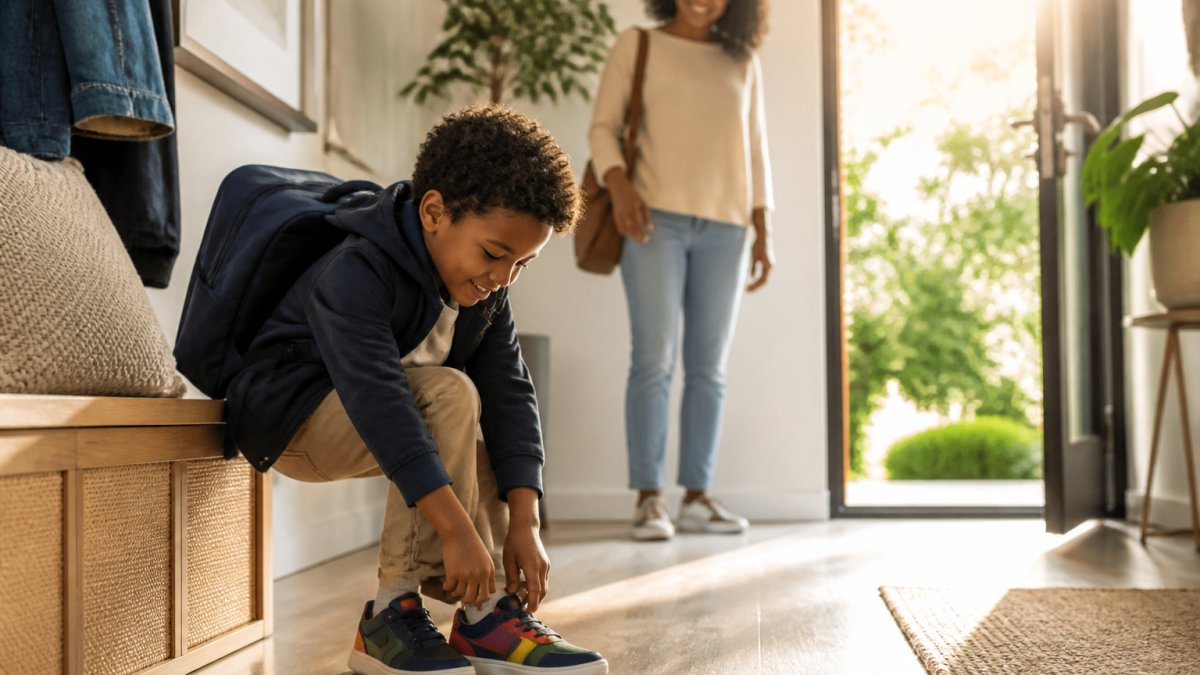
Parents report that mornings become noticeably calmer when shoe preparation takes 10 seconds instead of 10 minutes.
Slip-on designs prevent heel damage and extend shoe life. uLace Kiddos laces, available in styles like Canvas and Medium Grey, transform any sneaker into a convenient slip-on without damage.


Adaptive Shoes for Kids: Comfort, Fit, and Support
Adaptive shoes for kids prioritize comfort with soft, breathable materials and designs that don't pinch or restrict, feeling like a natural extension of the foot.
Proper fit is critical for developing feet. Adaptive designs offer adjustable features that prevent the discomfort of tight shoes or the fall risk of loose ones.
Secure Fastening and Adjustable Closures
Adaptive closures like hook-and-loop straps, elastic systems, and magnetic fasteners let you customize the fit precisely, accommodating swelling or layered socks without retying.
Secure fastening prevents shoes from slipping off during active play, reducing trip risk and allowing children to participate fully in sports and outdoor activities.
Mobility and Natural Foot Development
Restrictive footwear limits how a child's foot naturally moves and strengthens. Research from the University of Sydney found that light, flexible school shoes support better balance and movement in children aged 9-12. Adaptive shoes prioritize this flexibility. They allow the foot to bend, flex, and move naturally, supporting the muscle and bone development that happens during childhood.
Easy-on adaptive shoes encourage children to change footwear based on activity, supporting better foot health throughout the day.
Adaptive Footwear for Children with Autism: Sensory and Motor Benefits
Children with autism often experience sensory sensitivities and motor coordination challenges that make standard shoes intolerable. Sensory needs and motor abilities vary widely, so understanding your child's specific profile helps you choose adaptive footwear that actually works.
Sensory Sensitivities: Identifying Your Child's Triggers
Many children with autism experience heightened sensitivity to touch, texture, pressure, or seams:
Seams and Tags: Internal seams and manufacturer tags can cause distress. Look for shoes with minimal seams, flat-lock stitching, or tag-free construction.
Material Texture: Smooth, soft materials like cotton blends, microfiber, or seamless knit uppers are better tolerated than rough or stiff fabrics.
Pressure and Tightness: Observe how your child responds to different levels of tightness and adjust closures accordingly.
Temperature and Moisture: Breathable materials and moisture-wicking linings reduce discomfort from sweat and heat.
Motor Challenges: Matching Closures to Ability
Match the closure type to your child's current motor ability to prevent frustration and support independence.
Limited Dexterity or Fine Motor Delay: Elastic laces or pull-on designs require minimal hand coordination. Test closures before buying; if your child struggles, the shoe won't be used independently.

Moderate Fine Motor Skills: Larger hook-and-loop straps (at least 1 inch wide) are easier to grasp. Some children benefit from a combination: elastic for quick on-and-off, with a hook-and-loop strap for added security during active play.
Developing Independence: Adaptive closures remove barriers to eventual independence and allow practice without lace frustration.
Sensory-Friendly Material Recommendations
When shopping, prioritize:
- Seamless or minimal-seam construction in the toe box and heel.
- Soft, smooth uppers without rough edges, stiff overlays, or textured patterns that might irritate.
- Tag-free or internal-tag design so nothing scratches or bothers the foot.
- Breathable linings to reduce moisture and heat buildup.
- Flexible soles that don't feel rigid or restrictive as the child walks.
Many adaptive shoe brands now offer sensory-friendly options, though you may also find suitable shoes in mainstream children's shoe lines if you focus on material and construction quality.
When Sensory and Motor Challenges Overlap
Some children experience both sensory sensitivities and motor delays. In these cases:
- Prioritize the closure system that matches motor ability; a shoe your child can actually put on is better than a sensory-perfect shoe they cannot use.
- Test materials and closures together before buying; a sensory-friendly shoe with a closure your child cannot manage will sit unused.
- Be prepared to try multiple options; what works for one child may not work for another, even with similar diagnoses.
- Involve your child in the selection process if possible; their comfort and willingness to wear the shoe matters more than any single feature.
When to Seek Professional Input
If your child experiences significant distress around shoes despite trying multiple adaptive options, consult an occupational therapist. They can assess sensory sensitivities, motor skills, and behavioral responses to help identify shoes or modifications that might work. Some occupational therapists also work with shoe manufacturers or can recommend brands known to work well for children with autism.
Supporting Orthotics and Special Foot Needs with Adaptive Shoes for Orthotics
Children who wear orthotics, braces, or custom insoles face a fitting challenge that standard shoes cannot solve. An orthotic adds bulk inside the shoe; a brace may require extra width or depth; a custom insert changes how the foot sits. Adaptive footwear designed with these needs in mind removes the guesswork and prevents the common mistake of buying a shoe one or two sizes larger just to force an orthotic inside. Choosing wide-fit shoes for orthotics can accommodate added bulk and support a more secure fit without relying on a larger size.
Practical Fitting Checklist for Orthotics and Braces
Before purchasing adaptive shoes for a child with prescribed orthotics or braces, use this checklist to confirm compatibility:
Depth and Internal Space
- Ask the shoe retailer or manufacturer for internal shoe depth (measured from insole to the top of the toe box). Compare this to the combined height of the child's foot plus the orthotic.
- Removable insoles are essential. The shoe must allow you to remove the factory insole and replace it with the orthotic without the foot sliding forward or the heel lifting.
- Confirm that the orthotic fits flat inside the shoe without bunching, folding, or pressing against the sides of the shoe box.
Width and Side Clearance
- Measure the child's foot width at the widest point (usually across the ball of the foot). Add the orthotic's width if it extends beyond the foot.
- Check that the shoe's width accommodates both foot and device without compression. A shoe that's snug on the foot alone may be dangerously tight once the orthotic is inserted.
- For children wearing ankle-foot orthotics (AFOs) or other braces, confirm that the shoe opening is wide enough to slip the brace on and off without forcing or twisting the device.
Closure Range and Adjustability
- Adaptive closures (hook-and-loop straps, elastic systems, or magnetic fasteners) must allow enough adjustment to accommodate swelling, layered socks, or the bulk of a brace.
- Test the closure range: can it tighten enough to keep the shoe secure during activity, and loosen enough to allow easy entry without forcing the child's foot?
- For children in rigid braces, ensure the closure can be loosened fully so the shoe can be slipped on without bending or stressing the brace.
Heel and Ankle Support
- A firm heel counter prevents the foot from sliding inside the shoe as the child walks or runs. This is especially important for children with orthotics, where movement inside the shoe can shift the device and reduce its effectiveness.
- Check that the heel height and collar design do not press against the top of a brace or cause skin irritation where the brace meets the shoe.
Working with Your Child's Orthotist or Podiatrist
If your child has been prescribed orthotics or braces, involve the prescribing professional in shoe selection when possible. Many orthotists and podiatrists can recommend specific shoe models or brands known to work well with the devices they prescribe.
If you're unsure whether a shoe will work, ask the orthotist or podiatrist before buying. A shoe that doesn't accommodate the orthotic properly can reduce its therapeutic benefit and create pressure points that lead to skin breakdown or blisters.
Signs a Shoe Is Not Working with an Orthotic
Watch for these red flags during the first week of wear:
- The child complains of pain, pressure, or discomfort in areas where the orthotic meets the shoe.
- Visible red marks, blisters, or skin irritation appear on the foot or ankle.
- The orthotic shifts or moves inside the shoe during walking or running.
- The child's gait changes or becomes uneven, suggesting the shoe is not supporting the orthotic as intended.
- The shoe feels loose on the foot even when the closure is fully tightened, indicating the shoe is too large for the orthotic to fit securely.
If any of these occur, stop wearing the shoe and consult the orthotist or podiatrist. A poor fit can undo the benefits of the orthotic and create new problems.
Independence, Confidence, and Reduced Caregiver Stress
Understanding the benefits of adaptive footwear for children reveals that the psychological impact of independence is profound. A child who can dress themselves without help experiences genuine pride. They're not waiting for a parent or teacher to tie their shoes. They're not the kid who needs extra time to get ready.
For caregivers, the relief is equally real. Parents and teachers spend less time on shoe management and more time on activities that matter. Caregivers report lower stress during morning and transition routines. That reduction in daily friction improves relationships and makes the whole day better for everyone involved.
Safety, Durability, and Long-Term Value
A shoe that stays on the foot is a safe shoe. Adaptive footwear reduces trip and fall risk by staying secure during active play. The secure fit also means children can participate fully in sports, recess, and outdoor activities without worrying about losing their shoes.
Durability matters when you're buying shoes for a growing child. Adaptive designs that don't require constant heel-crushing to slip on last longer. A shoe that maintains its shape and structure throughout the day costs less to replace. Quality adaptive shoes represent genuine long-term value.
Adaptive footwear for children transforms daily routines by removing friction from something as simple as putting on shoes. With easy elastic laces available in neutral colors like Canvas and Black, you can transform any sneaker your child loves into a convenient slip-on. Get started with uLace Kiddos and watch your morning routine become genuinely simpler.
Frequently Asked Questions
What is adaptive footwear for children?
Adaptive footwear is designed with features that make shoes easier to put on and take off, such as wide openings, adjustable closures, and flexible materials. These shoes are built to accommodate children with varying mobility levels, sensory sensitivities, or physical challenges. Unlike traditional shoes requiring tying, adaptive footwear often uses hook-and-loop fasteners or elastic laces, making them ideal for children who struggle with fine motor skills or those who need quick, independent dressing.
How do adaptive shoes for kids with autism help?
Children with autism often benefit from sensory-friendly materials and easy entry features. Adaptive footwear for children with autism typically uses soft, non-irritating fabrics and eliminates pressure points that can cause discomfort. The easy-on design reduces morning stress for both child and caregiver, while adjustable closures allow a customized fit that accommodates sensory sensitivities. Many children with autism also have fine motor challenges, making traditional lace-tying difficult, adaptive shoes solve this problem entirely.
Can adaptive shoes work with orthotics or braces?
Yes, adaptive shoes for orthotics are specifically designed with removable insoles and extra shoe depth to accommodate custom orthotic inserts or foot braces. When choosing adaptive shoes for orthotics, look for wide openings that allow easy insertion of the orthotic device and adjustable closures that provide secure fastening without pressure. Always verify the shoe's depth and width measurements match your child's orthotic requirements before purchasing.
Do adaptive shoes support natural foot development?
Research shows that flexible footwear allowing natural foot movement is beneficial for foot development in children. Adaptive shoes that are lightweight and offer good balance support can promote healthy bone and muscle development. However, proper fit is critical, shoes should provide adequate arch support while allowing the foot to move naturally. If your child has specific developmental concerns, consult a pediatrician or podiatrist to ensure the adaptive shoes you choose support their individual needs.