




Best Elastic Shoelaces 2026: Top No-Tie Picks
Table of Contents
- Quick Comparison: Best Elastic Shoelaces at a Glance
- Benefits of No-Tie Shoelaces for Every Lifestyle
- Flat vs. Round vs. Silicone Elastic Shoelaces: Which Style Fits You?
- Top Elastic Shoelace Picks for 2026
- How to Install Elastic Shoelaces in Minutes
- Shoe-Specific Compatibility: How to Lace Shoes Without Tying
- Durability, Tension Retention, and Long-Term Wear
- Which Elastic Shoelace Should You Pick?
Last Updated: August 20, 2026
Elastic shoelaces have evolved significantly since their introduction. At uLace, we've spent years helping people transform their favorite sneakers into slip-ons. The best elastic shoelaces 2026 offers are smarter, more durable, and more style-conscious than anything available five years ago. Below, we break down the top picks by use case so you can find the right fit without guesswork.
Quick Comparison: Best Elastic Shoelaces at a Glance
Elastic shoelaces are no-tie lace systems made from stretchy material that allow shoes to be slipped on and off without untying. They replace traditional laces and provide a snug, adjustable fit through tension rather than knots.
| Product | Best For | Style | Locking Mechanism | Standout Feature |
|---|---|---|---|---|
| uLace Classic | Best Overall | Flat modular | Eyelet tension | Customizable color segments |
| Zubits Magnetic | Limited Mobility | Strap closure | Magnetic click | Hands-free, no bending |
| Laceez | Kids | Flat elastic | Eyelet tension | Designed for child independence |
| FootMatters Curly | Budget Pick | Spiral/coil | Coil retention | One size fits all |
| Walter's All Season | Casual Wear | Flat elastic | Eyelet tension | Everyday comfort focus |
Quick Picks:
- Best Overall: uLace Classic, modular design, wide color range, original no-tie system
- Best for Limited Mobility: Zubits Magnetic, hands-free magnetic closure, zero bending required
- Best for Kids: Laceez, promotes independent dressing, secure and colorful
- Best Budget: FootMatters Curly, affordable spiral design, one-size approach
- Best for Casual Wear: Walter's All Season Stretch Lace, comfortable everyday option
Benefits of No-Tie Shoelaces for Every Lifestyle
No-tie shoelaces solve a problem most people don't realize is costing them time and energy until they switch.
Accessibility and Adaptive Design
Elastic shoelaces are one of the most practical adaptive footwear solutions available. For people with arthritis, limited hand mobility, Parkinson's disease, or post-surgical restrictions, tying laces is genuinely difficult. The Americans with Disabilities Act guidance on accessible footwear accommodations highlights how small design changes significantly improve daily independence for people with physical limitations.
The slip-on conversion eliminates the need to bend, grip, or apply fine motor control. One uLace customer, age 72, described it simply: "I just slip my foot through my shoes and that's it." For people with wide feet or foot swelling conditions, customizable tension means the shoe conforms to the foot rather than the other way around.
Performance and Everyday Convenience
For active individuals, the knot-free design removes a real safety hazard. Untied laces cause thousands of falls annually, according to CDC data on fall prevention and footwear safety. Elastic laces stay put and don't drag on the ground or come undone mid-run.
The time savings add up quickly. Slip-on ease means shoes go on in seconds. For parents managing morning routines with multiple kids or travelers moving through airport security repeatedly, that friction reduction is meaningful. Well-designed systems with proper eyelet compatibility and tension adjustment deliver a snug fit that holds through a full day of activity.
Flat vs. Round vs. Silicone Elastic Shoelaces: Which Style Fits You?
The three main styles of elastic shoelaces look and behave differently, and the wrong choice for your shoe type will frustrate you quickly.
Flat elastic laces are the most common and versatile. They sit flush in the eyelets, maintain a traditional lace appearance, and work well with most casual sneakers and athletic shoes. uLace Classic falls into this category with its modular flat segments.
Round elastic laces have a cylindrical profile that threads more easily through narrow eyelets. They're better for dress shoes or boots where flat laces look out of place. The round profile also distributes pressure more evenly across the top of the foot.
Silicone laces are waterproof, UV-resistant, and extremely durable. Many triathlon athletes favor silicone for fast transitions and weather resistance. The tradeoff: they can look less polished on casual sneakers and tension adjustment is less forgiving than woven elastic.
Top Elastic Shoelace Picks for 2026
The market for elastic shoelaces has grown considerably, but only a handful of products deliver on their promises. These five have proven track records across different use cases.
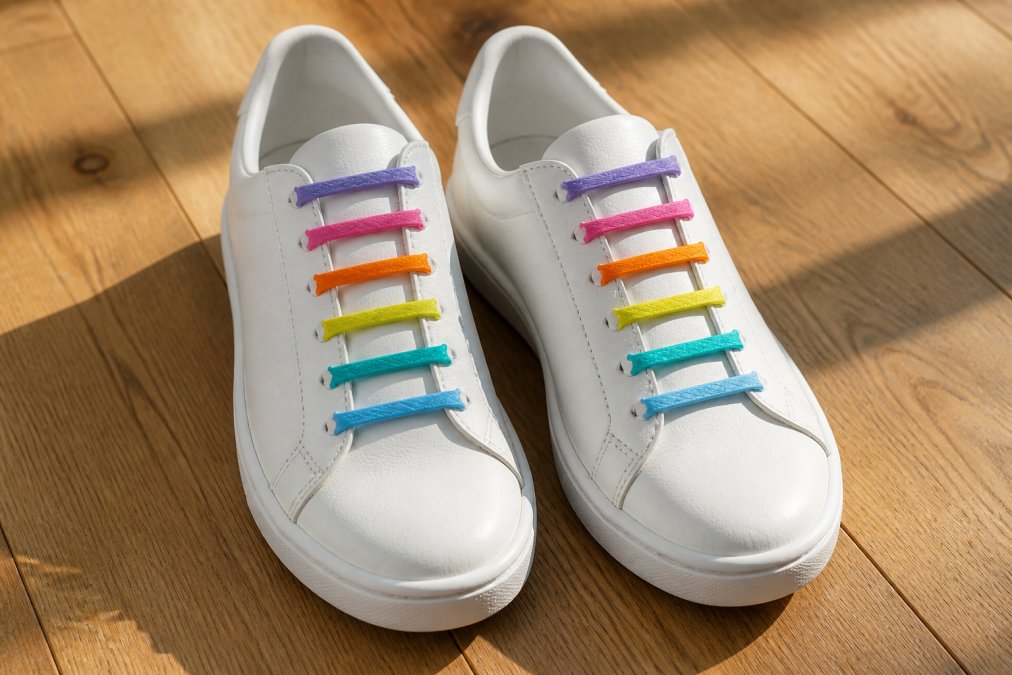
1. uLace Classic No-Tie Shoelaces, Best Overall
uLace is the original creator of no-tie elastic shoelaces, and the Classic remains the benchmark. The modular design uses individual lace segments that thread through each eyelet pair independently. You can mix colors, replace a single segment if it wears out, and customize tension eyelet by eyelet.
The material is woven from yarn-dyed threads and high-quality lycra, giving it a traditional fabric look rather than a plasticky appearance. It stretches enough for easy slip-on access while retaining enough resistance to keep the shoe secure during activity. Available in four sizes: Classic, Slims, Shorts, and Kiddos. Getting the right size is critical because a lace sized for a standard adult sneaker will gap and bunch in a slim low-profile shoe.
Pros:
- Modular segments allow color customization and easy partial replacement
- Woven material looks like traditional laces
- Easy push-and-pull installation, no tools required
- Fast shipping from the USA
Cons:
- Requires purchasing multiple packs for full customization across several pairs
- Some users find segment tabs noticeable in very slim eyelets
2. Zubits Magnetic Shoe Closures, Best for Limited Mobility
Zubits take a fundamentally different approach. Rather than replacing laces entirely, they attach to existing shoelaces and use a magnetic closure system to snap the shoe open and shut. The result is a wide shoe opening that requires zero hand dexterity to operate.
Three size options scale by hold strength: Size 1 for kids and elderly users, Size 2 for youth and adults, Size 3 for large adults and sports use. The magnets are rated to never lose strength. Some users report the magnetic closure separating during high-intensity lateral movement, but for walking, light exercise, and everyday wear, Zubits perform well.
Pros:
- Completely hands-free on/off with a simple magnetic click
- Creates a wide shoe opening for easy foot entry
- Works with existing laces, no full replacement needed
- Ideal for arthritis, post-surgery recovery, and fine motor challenges
Cons:
- May not hold during intense athletic activity
- Requires initial threading onto existing laces
3. Laceez No-Tie Elastic Laces, Best for Kids
Laceez focuses specifically on children's footwear. The elastic tension is calibrated for smaller shoes with fewer eyelets, and the color range appeals to kids who want some say in how their shoes look.
The practical benefit for parents is independence. Kids who can't yet tie laces can still manage their own shoes, which speeds up morning routines and builds self-confidence. The secure fit keeps the shoe from slipping during playground activity.
Pros:
- Promotes independent dressing for children
- Eliminates untied lace tripping hazards
- Colorful options kids want to wear
- Maintains neat appearance through the school day
Cons:
- Primarily sized for children, limiting adult options
- Less tension adjustment range than adult-focused systems
4. FootMatters Curly Elastic Laces, Best Budget Pick
The spiral design is FootMatters' signature. Instead of threading through eyelets, the coil wraps around the lace hooks and holds itself in place through tension. Installation is fast, and the one-size-fits-all approach removes sizing confusion.
The coil aesthetic is polarizing. Where FootMatters excels: accessibility for people recovering from surgery or managing conditions that make bending painful. The quick installation and removal process is simpler than any other system.
Pros:
- Extremely fast installation, no threading required
- One size works across most adult shoe sizes
- Good option for post-surgery or temporary mobility limitations
- Widely available through major retailers
Cons:
- Less tension control than eyelet-based systems
- Spiral aesthetic doesn't suit all shoe styles
5. Walter's All Season Stretch Lace, Best for Casual Wear
Walter's positions itself as an everyday comfort solution. The All Season Stretch Lace is designed for casual sneakers where the priority is comfortable wear over hours of walking.
The "all season" claim refers to material durability across temperature ranges. Standard elastic can stiffen in cold weather and lose tension in heat. Walter's formulation maintains consistent stretch in varied conditions.
Pros:
- Comfortable for extended daily wear
- Consistent tension across temperature ranges
- Straightforward installation for casual shoes
Cons:
- Lacks specialized locking mechanisms of athletic-focused systems
- Limited style customization compared to modular options
How to Install Elastic Shoelaces in Minutes
Installing elastic shoelaces is straightforward, and most people complete their first pair in under ten minutes.
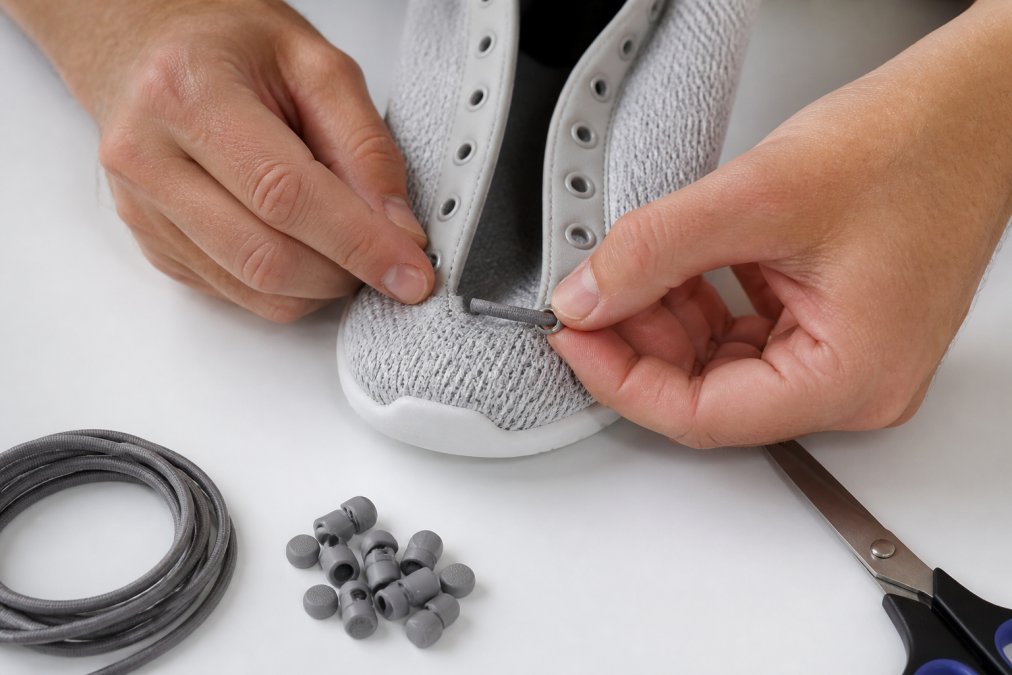
For modular systems like uLace Classic:
- Remove your existing laces completely
- Start at the bottom eyelets, threading one segment through both holes of the first eyelet pair
- Pull the segment until both ends are even, then tuck the small tabs inside the shoe
- Repeat for each eyelet pair, working your way up the shoe
- At the top eyelets, tuck the final tabs securely inside the tongue
- Put the shoe on and test the tension before finalizing
Setup typically takes five to eight minutes per shoe on the first attempt, and under three minutes once you've done it once.
For coil systems like FootMatters:
Coil laces wrap around the lace hooks rather than threading through eyelets. Start at the bottom hook, wrap the coil up each side alternating left and right, and trim any excess at the top.
For magnetic systems like Zubits:
Thread the Zubits onto your existing laces before lacing the shoe. Lace normally, then snap the magnetic closure to test the hold strength.
Shoe-Specific Compatibility: How to Lace Shoes Without Tying
Compatibility is critical because proper lace tension directly affects foot support and comfort. According to American Podiatric Medical Association guidance on footwear fit, the wrong lace system for a given shoe type can create problems beyond aesthetics.
Shoe-Specific Compatibility Guide:
| Shoe Type | Compatible Styles | Recommended System | Notes |
|---|---|---|---|
| Standard low-top sneaker | Flat, round, silicone, coil | Any modular flat system | Most versatile, all styles work |
| High-top sneaker | Flat elastic, round elastic | Modular flat with extra segments | Needs more segments for upper eyelets |
| Wide-width shoes | Flat elastic | Modular with adjustable tension | Choose longer segments for wider eyelet spacing |
| Running shoes | Flat elastic, silicone | Silicone or performance flat | Prioritize tension retention over appearance |
| Casual canvas shoes | Any | Coil or flat | Coil works well with hook-style closures |
| Dress shoes | Round elastic | Round elastic only | Flat and silicone look out of place |
| Cleats | Not recommended | N/A | Standard elastic systems not designed for cleat usage |
High-Tops, Wide Widths, and Athletic Shoes
High-top compatibility requires additional lace segments and consistent tension through the upper portion to prevent ankle instability. Modular systems like uLace handle this well because each eyelet pair is independently tensioned.
Wide-width shoes present a different challenge. The eyelet spacing is wider, which means standard segment lengths may not provide enough overlap for a secure hold. Most modular systems offer longer segment options specifically for wide-width shoes. If your shoes are already tight when laced normally, elastic laces will actually help: the stretch allows the shoe to open wider for entry while maintaining a snug fit once your foot is inside.
Athletic shoes designed for running benefit from elastic laces with higher tension retention. The foot expands slightly during impact, and a lace that can't accommodate that movement will either feel too tight at rest or too loose during activity. Silicone laces handle this best.
Durability, Tension Retention, and Long-Term Wear
The difference between a lace that lasts six months and one that lasts three years is significant over multiple pairs of shoes.
Elastic fatigue: All elastic materials lose some tension over time through repeated stretching. High-lycra-content woven laces like uLace Classic tend to retain tension longer than thin rubber or silicone alternatives because the woven structure distributes stress across more fibers.
UV degradation: Silicone laces offer the best UV protection. Woven elastic laces are more susceptible to UV degradation if shoes are stored in direct sunlight regularly.
Eyelet wear: Metal eyelets with sharp edges can fray woven elastic over time. Check the lace contact points every few months if your shoes have rough eyelets.
Practical lifespan expectations: Many users report woven elastic laces lasting one to two years with daily wear. The modular design of uLace Classic offers a real long-term advantage: if one segment fails, you replace that segment rather than the entire set.
Which Elastic Shoelace Should You Pick?
The right elastic shoelace depends on three things: who's wearing the shoe, what activity the shoe is for, and how much the lace's appearance matters.
For most adults who want slip-on convenience without sacrificing how their sneakers look, uLace Classic is the clear answer. The modular design, woven material, and wide color range make it the most complete solution on the market. uLace has been refining this system since 2009, and that experience shows in the details.
For seniors or anyone with limited hand mobility, Zubits Magnetic removes every physical barrier to putting on shoes. For kids, Laceez hits the right balance of security and independence. For budget-conscious buyers who need a fast fix, FootMatters Curly delivers without complication. For casual everyday wear where comfort is the priority, Walter's All Season Stretch Lace is a solid option.
Not sure which size or style fits your specific shoe? The uLace quiz walks you through the decision in under two minutes based on your shoe type, eyelet count, and use case.
Take the Quiz to find your perfect elastic shoelace fit.
Choosing the right no-tie lace system shouldn't require an engineering degree. The options above cover every major use case, from adaptive footwear for mobility challenges to performance gear for triathlons to simple everyday convenience. uLace Classic stands out as the best overall pick because of its modular design, durable woven material, color customization, and proven track record since 2009. If you're ready to stop tying and start slipping, get started with uLace and turn any sneaker into a hassle-free slip-on today.
Frequently Asked Questions
Do elastic shoelaces really work for daily wear?
Yes. Quality elastic shoelaces hold their shape and tension through regular daily use. Woven designs made with lycra or similar stretch materials maintain a snug fit without loosening throughout the day. The key is matching the lace style to your shoe type, modular segment laces like uLace work well across most sneaker styles, while coiled or silicone options suit casual low-profile shoes. Proper installation also makes a significant difference in how secure and comfortable the fit feels long-term.
Are elastic laces suitable for children and seniors?
Elastic shoelaces are among the most practical footwear upgrades for both groups. Children gain the ability to put on and remove shoes independently, which builds confidence and speeds up morning routines. Seniors and anyone with arthritis, joint pain, or limited bending ability benefit from slip-on convenience without sacrificing a secure fit. One real uLace customer noted: 'I'm 72 and it's hard for me to bend over all the time to tie my shoelaces... Now I just slip my foot through my shoes and that's it.'
Do elastic laces lose their tension over time?
All elastic materials stretch with repeated use, but quality matters enormously here. Laces made from woven yarn-dyed threads with high-grade lycra cores hold tension far longer than thin silicone or low-density rubber alternatives. Modular segment designs, where individual pieces can be replaced, extend the overall lifespan of the setup. Exposure to extreme heat, prolonged UV light, and harsh detergents accelerates breakdown, so hand-washing and air-drying is the recommended care method for most elastic lace types.
How do you install no-tie shoelaces on sneakers?
Most elastic shoelaces install in under five minutes. For segment-style laces like uLace, remove your existing laces, then thread one segment through each eyelet pair using a simple push-and-pull method, no tools needed. Each segment clips or tucks into the eyelet to stay in place. For single-strand elastic laces with a toggle lock, thread the lace through all eyelets as you would a standard lace, then feed both ends through the locking mechanism and trim or tuck the excess. Check tension before wearing and adjust as needed.
What makes uLace different from other elastic shoelace brands?
uLace is the original creator of no-tie elastic shoelaces, in business since 2009 and featured on Shark Tank where it secured investment from Mark Cuban. The modular design sets it apart: each eyelet gets its own individual lace segment, so you can mix colors, replace single pieces, and customize patterns without relacing the entire shoe. The laces are made from woven material with lycra for durability, and they ship from the USA. Other providers typically offer single-strand systems with less customization and fewer size options.
This article was written using GrandRanker