




Best Slip-On Sneakers for Arthritis 2026
Table of Contents
- Why Slip-On Sneakers Matter for Arthritis
- Key Features to Look for in Arthritis-Friendly Footwear
- How to Convert Your Favorite Sneakers to Slip-Ons
- Best Orthopedic Shoes for Seniors with Joint Pain
- Adaptive Footwear for Arthritis: What Podiatrists Recommend
- Slip-On vs. Traditional Laces: The Stability Question
- Frequently Asked Questions
Last Updated: October 6, 2026
Why Slip-On Sneakers Matter for Arthritis
Arthritis affects how you move, bend, and manage daily tasks. When joint pain makes tying laces difficult, slip-on sneakers arthritis relief becomes essential. According to the Arthritis Foundation's 2026 Shoe Guide, 329 survey respondents with arthritis identified footwear features as a critical factor in managing pain and maintaining independence.
The challenge isn't just convenience, it's biomechanics. Stability sneakers with dense, cushioned midsoles and heels effectively control motion and overpronation in patients with arthritis. Rocker-bottom soles reduce toe-off pressure, which matters when every step causes discomfort.
At uLace, we understand that the sneakers you love shouldn't require painful bending to put on. Our elastic no-tie laces transform any sneaker into a slip-on, eliminating the need to bend over while keeping your feet secure and supported. This simple change addresses one of the biggest barriers to staying active: the struggle to get shoes on without triggering joint pain.
Key Features to Look for in Arthritis-Friendly Footwear
The right slip-on sneakers arthritis support depends on specific design elements. Not all slip-on sneakers provide the necessary stability, patients should prioritize features like wide toe boxes, removable insoles, and rocker-bottom soles rather than just ease of entry.
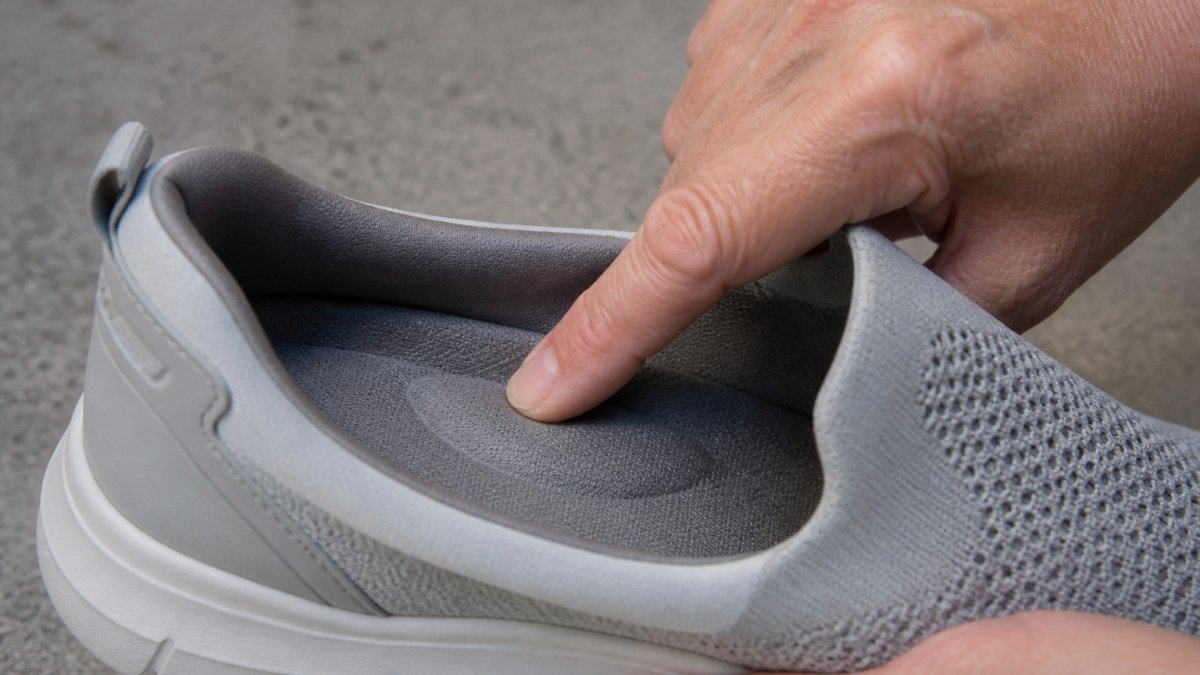
Arch support is non-negotiable. Flat insoles shift pressure to your joints. Look for sneakers with built-in arch support or removable insoles, removable ones let you swap in custom orthotics if you need them. This flexibility matters because arthritis varies person to person.
Cushioning technology absorbs impact before it reaches your joints. Dual-density midsoles work better than single-layer foam because they distribute pressure more evenly. Research from Verywell Fit's 2026 sneaker testing methodology found that shoes incorporating running-shoe technology provide superior comfort for daily wear compared to standard casual slip-ons.
Heel counter stability prevents your foot from rolling inward or outward. A firm heel counter keeps your ankle aligned, reducing strain on the joints in your foot and ankle. Wide-width options matter too, swollen joints need room without forcing your foot into a shoe that's too tight overall.
Breathable mesh prevents moisture buildup that causes skin irritation. When you can't bend down easily to dry your feet, breathability becomes a practical health concern, not just comfort.
| Feature | Why It Matters for Arthritis | What to Check |
|---|---|---|
| Arch support | Reduces pressure on foot joints | Built-in or removable insole |
| Cushioning | Absorbs impact before reaching joints | Dual-density midsole preferred |
| Heel counter | Prevents foot rolling and ankle strain | Firm, structured design |
| Wide toe box | Accommodates swollen joints | At least half-size wider than normal |
| Removable insole | Allows custom orthotic integration | Easy to pop out without tools |
| Rocker sole | Reduces toe-off pressure | Visible curve from heel to toe |
How to Convert Your Favorite Sneakers to Slip-Ons
You don't need to abandon the sneakers you already own. Converting them to slip-ons takes minutes and costs under $15 per pair.
uLace Shorts ($12.99) and uLace Classic ($6.49) replace traditional laces with elastic that stretches as you slip your foot in, then contracts to hold your shoe secure. The installation is straightforward: remove your regular laces, thread the elastic through the eyelets using the same path. No special tools. No damage to the shoe.

This approach solves a real problem: forcing your foot into a sneaker without untying damages the heel counter and stretches the shoe's structure. Over time, that damages the support you need. Elastic laces let you slip on and off without that repeated stress.
The beauty of conversion is that you keep sneakers you trust. If a particular brand provides the arch support and cushioning your feet need, you're not forced to hunt for a new model. You're just removing the tying hassle.
Best Orthopedic Shoes for Seniors with Joint Pain
Seniors face a compounding challenge: arthritis pain stacks on top of balance and mobility changes, so the best orthopedic shoes for seniors have to deliver stability and easy entry at the same time. The features that matter most are a firm heel counter, a wide toe box, a removable insole, and a rocker or mildly curved outsole that reduces toe-off pressure.
According to Naples Podiatrist guidance for 2026, rocker-bottom stability sneakers featuring a wide toe box and removable insole are the top-recommended footwear category for managing foot arthritis. That combination addresses the two moments when arthritis pain typically peaks: pushing off the toe and absorbing heel strike.
Here is how several commonly recommended models line up on the features seniors actually need:
| Model | Entry Style | Insole | Width Options | Notable Feature |
|---|---|---|---|---|
| Skechers GoArch Fit 2.0 Slip-Ins | Hands-free step-in | Removable | Medium, Wide | Arch Fit insole system with podiatrist-designed arch support |
| Vionic Walk Slim Guide Sneaker | Slip-on with adjustable strap | Removable | Medium, Wide | Firm heel counter and orthotic-friendly footbed |
| Brooks Glycerin 22 SE Sneaker | Slip-on with elastic lacing | Removable | Medium, Wide, Extra Wide | Running-shoe midsole cushioning in a slip-on format |
| New Balance 1080v14 Slip-On | Slip-on with knit collar | Removable | Multiple widths including Extra Wide | Fresh Foam midsole with a roomy toe box |
| HOKA Bondi SR | Slip-on with pull tab | Removable | Medium, Wide | Max-cushion midsole and slip-resistant outsole |
A few practical notes on each:
- Skechers GoArch Fit 2.0 Slip-Ins are highlighted by foot specialists as a stable, podiatrist-recommended pick for seniors. The step-in heel design means you can put them on without bending, and the arch support is built into the removable insole.
- Vionic Walk Slim Guide Sneaker is recognized as a top-rated choice for women over 50, providing specialized support for those with mobility and comfort needs. The adjustable strap lets you fine-tune the fit as swelling changes through the day.
- Brooks Glycerin 22 SE Sneaker brings running-shoe DNA to a slip-on silhouette, which matters because running midsoles are engineered for repeated impact absorption rather than casual wear.
- New Balance 1080v14 Slip-On is one of the few true slip-ons available in Extra Wide, which is essential if you have bunions or significant swelling.
- HOKA Bondi SR pairs maximum cushioning with a slip-resistant outsole, a combination that helps with fall prevention on tile and hardwood.
Height and weight matter too. A heavier person needs more cushioning to absorb impact, and a taller person may benefit from extra ankle support. Generic "senior shoes" often miss these details. The best approach is starting with your specific needs, foot shape, weight, and balance confidence, then finding shoes that address them.
Adaptive Footwear for Arthritis: What Podiatrists Recommend
Podiatrists approach arthritis footwear differently than casual shoe reviewers. They focus on biomechanics, not just comfort.
uLace Shorts - Peachy Orange →
"They have extra arch support, and the company takes biomechanics seriously." -- Hillary Brenner, Podiatric Surgeon (Yahoo Shopping, 2026)
This perspective matters because comfort and biomechanical support aren't always the same thing. A shoe can feel soft but provide poor arch support. Or it can feel firm but distribute pressure unevenly.
Research indicates that shoes with higher levels of cushioning are associated with a lower risk of muscle injuries, with brands such as HOKA, Vionic, and New Balance frequently cited as leaders in this comfort-focused category for 2026. These brands understand that arthritis isn't just about the joint itself, it's about how force travels through your entire leg and spine.
Removable insoles matter more than most people realize. If you have custom orthotics from your podiatrist, you need shoes that let you swap them in. Many "orthopedic" shoes have insoles glued in, which defeats the purpose.
The slip-on conversion approach aligns with podiatric thinking because it preserves whatever biomechanical support your current shoes provide while removing the bending requirement. You're not starting over with an untested new shoe. You're optimizing what already works for your feet.
Slip-On vs. Traditional Laces: The Stability Question
This is the question people worry about most: Will my foot slip out during activity? The answer depends on which of three distinct closure systems you are actually wearing, and most roundups blur them together.
True slip-ons have no laces, straps, or buckles at all. You step in and go. The trade-off is that nothing actively pulls the shoe against your midfoot, so your heel can lift during push-off and your foot can slide forward on descents.
Adaptive lacing looks like a slip-on but is not hands-free. These shoes use a dial, a hook-and-loop strap, or a bungee system that still requires you to reach down and adjust tension.
Elastic lace conversion replaces traditional laces with elastic that stretches as you slip your foot in, then contracts to hold your shoe secure. You get the compression of laces without the tying step, and you keep the shoe's original structure, including the heel counter and midsole.
Here is how the three compare on the dimensions that matter for arthritis:
| Closure Type | Hands-Free Entry | Midfoot Compression | Adjustability | Best For |
|---|---|---|---|---|
| Traditional laces | No | High, but with discrete pressure points | High | Sports, high-impact activity |
| Adaptive lacing (dial, strap, bungee) | No, still requires reaching down | Moderate to high | Moderate | Users who can still bend but want faster fastening |
| Elastic lace conversion | Yes | High, distributed across the midfoot | Low after setup | Daily wear, arthritis management |
| True slip-on (no closure) | Yes | Low | None | Casual wear, short distances |
The stability difference comes down to pressure distribution. Traditional laces create discrete pressure points where the lace crosses. Elastic laces distribute pressure more evenly across a wider area.
Testing stability matters. If you are using slip-on sneakers for sports or active movement, start with shorter walks and pay attention to how your foot feels. Most people find that properly fitted elastic laces provide all the stability they need for daily wear.
Frequently Asked Questions
What are the best slip-on sneakers for people with arthritis?
The best slip-on sneakers for arthritis feature rocker-bottom soles, wide toe boxes, removable insoles, and dual-density midsoles that reduce impact. A survey of 329 individuals with arthritis showed they prioritize easy entry, arch support, and cushioning. Stability sneakers with dense, cushioned midsoles and heels are effective for controlling motion and overpronation in arthritis patients. Converting your favorite sneakers using elastic no-tie laces like uLace eliminates bending and allows you to choose any style you love.
How can I make my favorite sneakers easier to put on if I have arthritis?
Elastic no-tie laces transform any sneaker into a slip-on without damaging the shoe. Simply remove your original laces and install elastic replacements. This solution works with virtually any sneaker style, giving you hands-free entry and exit. No bending, no tying, and your shoes maintain their original appearance. uLace offers multiple styles starting at $6.49, making it an affordable way to adapt your existing footwear collection.
What features should I look for in shoes for arthritic foot pain?
Prioritize cushioning, arch support, and gait stability. Look for shoes with removable insoles so you can add custom orthotics if needed, wide toe boxes to accommodate swelling, and breathable mesh for daily comfort. Heel counters provide motion control, while flexible outsoles reduce pressure during toe-off. Rocker-bottom soles help reduce stress on arthritic joints by improving walking mechanics.
Do slip-on sneakers provide enough arch support and stability for arthritis?
Yes, when designed correctly. Modern slip-on sneakers now incorporate running-shoe technology, including dual-density midsoles and structured heel counters that provide the same arch support and impact reduction as traditional laced shoes. Research shows slip-on sneakers with dense, cushioned midsoles are effective for controlling overpronation and joint pain. The key is selecting models with orthopedic features rather than basic casual slip-ons. Elastic no-tie laces maintain the security of traditional laces while adding slip-on convenience.
Are slip-on sneakers better for seniors with limited mobility?
Yes, slip-on sneakers eliminate the need to bend over or use fine motor skills to tie laces, making them ideal for seniors with arthritis, limited mobility, or balance concerns. They reduce fall risk by allowing quick entry and exit without struggling with laces. Easy-entry shoes also improve independence and confidence. Converting existing sneakers with elastic laces like uLace offers seniors the comfort and style they already love without the hassle of traditional lacing.