




Convenient Shoelaces for Busy Parents: 2026 Guide
Table of Contents
- Why Convenient Shoelaces Are a Morning-Routine Game Changer
- No Tie Shoelaces for Kids: What Parents Need to Know
- How to Install No-Tie Laces in 5 Minutes
- Benefits of Slip-On Shoes for Children
- Choosing Convenient Shoelaces: uLace Kiddos Colors and Styles
- Shoe Compatibility, Maintenance, and Durability for Busy Families
- Frequently Asked Questions
Last Updated: September 10, 2026
Why Convenient Shoelaces Are a Morning-Routine Game Changer
The average school morning involves a narrow window of time, and shoelaces eat into it more than most parents realize (the CDC). Convenient shoelaces are elastic, no-tie lacing systems that replace standard strings with stretchable strands, letting a shoe slip on and off without a single knot. At uLace, we have been making this style of lacing since 2009, and the parents who use it consistently describe the same benefit: fewer minutes lost, fewer arguments, fewer bent-over retying sessions at the front door.
Here is what some guides get wrong. They frame no-tie laces as a small convenience, a nice-to-have upgrade for kids who cannot tie yet. In practice, the change can be structural. When a child can put on their own shoes without help, the parent can stop being the bottleneck in the morning sequence.
The difference can be noticeable in routine terms. One less task per child, twice a day, can add up across a school year. And the shoes themselves can last longer, because nobody is forcing a heel in with the laces still tight.
Below, we break down how these laces work, how to install them in about five minutes, and how to pick the right set for your family.
No Tie Shoelaces for Kids: What Parents Need to Know
No tie shoelaces for kids are elastic laces that stretch enough to let a foot slide in and out while still holding the shoe snug during play. They replace the traditional lace entirely, so there is no bow to come undone and no trailing end to trip over.
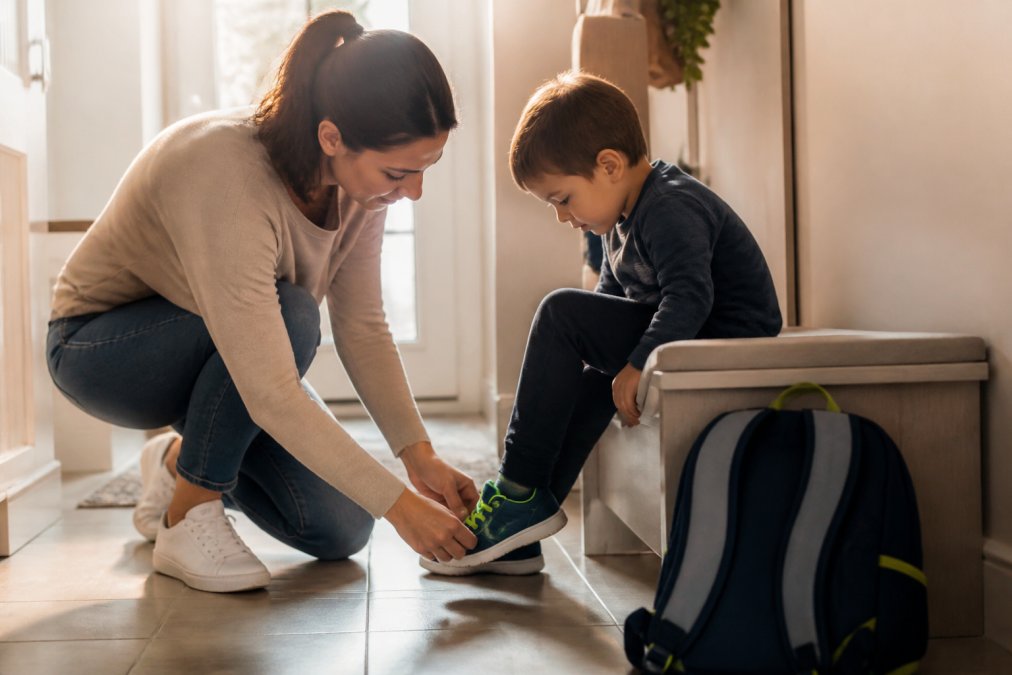
The mechanism is simple. Each lace runs through the existing eyelets and is held by a small locking mechanism or a pre-set tension point. The stretch does the work that a knot used to do.
A common mistake is assuming these are only for children who have not learned to tie. Plenty of kids who can tie perfectly well still benefit, because tying takes time and the knot loosens during recess. The real value is independence: a child who can manage their own footwear gets out the door faster and stops asking for help.
One nuance worth knowing: elastic laces work best when the shoe is the right size. If a shoe is already too tight across the instep, no lacing system will fix that. Fit the shoe first, then upgrade the laces.
How to Install No-Tie Laces in 5 Minutes
Installation takes about five minutes per pair and requires no tools. You remove the old laces, thread the elastic strands through the eyelets, and set the tension once. The steps below are the same whether you are lacing a low-top sneaker, a mid-top basketball shoe, or a canvas shoe, but the eyelet count and the anchor point change the details.
Here is the full sequence:
- Pull the original laces out completely, including any hidden sections under the tongue. On most kids' sneakers there are five to seven pairs of eyelets; count them before you start so you know how much lace you are working with.
- Thread the first elastic lace from the bottom eyelet upward, alternating sides as you go. For a standard criss-cross pattern, feed the lace up through the bottom-left eyelet, across to the bottom-right, then up through the next right eyelet, and so on.
- Repeat with the second lace on the opposite side so the strands cross. Some systems use a single continuous strand; check the packaging to see whether your set is a two-strand or one-strand design before you commit to a pattern.
- Feed both ends through the locking mechanism or anchor point at the top. On low-top sneakers the anchor usually sits at the top eyelet; on mid-tops it sits higher, which changes how much slack you need to leave.
- Pull to set your preferred tension, then trim any excess if the system calls for it. Leave about an inch of tail past the anchor so you have room to re-tighten later.
- Slide the shoe on and off a few times to confirm the fit feels snug but not tight.
Expected result: the shoe slips on with a firm push of the foot and stays put during normal walking and running.
If the shoe feels loose after installation, tighten the anchor point by one notch. If it feels tight across the top of the foot, loosen it. The adjustment is the whole point of the system, and it takes seconds once the laces are in.
Matching the laces to the shoe you actually own
Compatibility is where most no-tie systems succeed or fail, so it is worth checking before you buy. Elastic laces work with standard eyelet patterns on sneakers, tennis shoes, and most canvas shoes. They are not designed for dress shoes with decorative lacing or for boots with heavy hardware such as speed hooks or D-rings.
A few shoe-specific notes:
- Low-top sneakers (five to six eyelet pairs): the simplest install. Use the standard criss-cross pattern and anchor at the top eyelet.
- Mid-top and high-top sneakers (seven to nine eyelet pairs): you will need a longer lace set. Anchor higher up the ankle for a snugger feel, and expect to re-set tension once after the first week as the elastic settles.
- Canvas shoes: the eyelets are often smaller and the fabric is softer, so thread carefully to avoid tearing the eyelet lining. A blunt-tip needle or a small piece of tape on the lace end helps.
- Wide feet: if the shoe already feels tight when laced normally, the fix is a half-size up in the shoe, not a different lace. Elastic laces stretch, but they cannot create room that the shoe does not have.
For eyelet compatibility, count the pairs of holes on the shoe. Most kids' sneakers have five to seven pairs, which is well within the range these laces handle.
Benefits of Slip-On Shoes for Children
Slip-on convenience changes more than the morning rush. When a shoe goes on in one motion, children gain a small but real piece of independence, and parents stop being the default shoe-tying service.
The safety angle matters too. Untied laces are a tripping hazard on stairs, playgrounds, and school hallways (the CDC). A no-tie system removes that risk entirely, because there is nothing to come loose.
The accessibility angle most guides skip
This is where the conversation usually stops, and it is where the real value lives. Shoe-tying can be one of the last self-care skills to develop for young children, as it stacks several fine motor tasks at once: pinching a thin lace, crossing the strands, forming a loop, and pulling it tight without letting go (healthychildren.org). For a child with fine motor delays, low muscle tone, or a developmental coordination condition, that sequence can be challenging to master, and the daily repetition can turn into a source of frustration for the whole family.
Elastic laces with a locking mechanism remove that barrier. The child still practices the parts of dressing that build independence, such as opening the shoe, pushing the foot in, and pulling the heel up, but the fine motor bottleneck disappears. Once the shoe stops being the hard part, kids may be more willing to try other self-dressing tasks, because the morning no longer starts with a failure. comfortable stylish shoes.
The same design helps adults in the household. A 72-year-old customer told us plainly: "I'm 72 and it's hard for me to bend over all the time to tie my shoelaces. Now I just slip my foot through my shoes and that's it." Parents with arthritis, back issues, or a healing injury often end up buying a second set for their own shoes after installing the first one on a child's.
How the two systems behave day to day
| Factor | Traditional Laces | Convenient Shoelaces |
|---|---|---|
| Time to put on | 30-60 seconds | 5-10 seconds |
| Comes untied during play | Common | Not possible |
| Tension adjustment | Retie the bow | Slide the anchor |
| Tripping risk | Yes, when loose | Minimal |
| Independence for kids | Requires practice | Immediate |
| Fine motor demand | High | Low |
| Usable by kids with motor delays | Often not, without help | Yes, independently |
Choosing Convenient Shoelaces: uLace Kiddos Colors and Styles
Picking the right set comes down to two things: shoe type and your child's preference. uLace Kiddos laces are designed for kids' sneakers and tennis shoes, and they come in a range of colors so the upgrade does not have to look like a compromise.
Every Kiddos set is priced at $5.99, sold as a one-time purchase. That is the full cost, with no subscription and no replacement schedule to track.
A quick look at what is available:
- uLace Kiddos - White and Canvas: neutral options that disappear into the shoe and work with almost any sneaker.
- uLace Kiddos - Light Grey and Medium Grey: the practical middle ground for school shoes that need to stay presentable.
- uLace Kiddos - Shocking Pink, Rainbow, Blue Teal, Kelly Green, Army Green, and Scarlet Red: for kids who want the laces to be the loudest part of the outfit.
The Rainbow set is the one that tends to get requested by name. It turns a plain pair of sneakers into something a child actually wants to put on, which matters more than parents expect when the goal is a faster morning.

Shoe Compatibility, Maintenance, and Durability for Busy Families
Compatibility is where most no-tie systems succeed or fail, so it is worth checking before you buy. Elastic laces work with standard eyelet patterns on sneakers and tennis shoes. They are not designed for dress shoes with decorative lacing or for boots with heavy hardware.
For eyelet compatibility, count the pairs of holes on the shoe. Most kids' sneakers have five to seven pairs, which is well within the range these laces handle. If your child has wide feet and the shoe already feels tight when laced normally, the fix is a half-size up in the shoe, not a different lace. Elastic laces stretch, but they cannot create room that the shoe does not have.
On durability, the main enemy is not wear from walking. It is dry rot, which happens when elastic sits in a hot car or a damp gym bag for months. Two habits prevent it: let the shoes air out instead of leaving them in a closed bag, and hand-wash the laces with mild soap if they get visibly dirty. Avoid the dryer entirely, since heat breaks down the elastic.
For families buying laces for several pairs of shoes at once, the practical math is simple. A set costs $5.99, it installs in minutes, and it does not need to be replaced on a schedule. The strands hold tension until the elastic itself ages out, which for many families means a full school year or longer.
When kids force their feet into laced shoes without untying them, the heel counter can break down and the shoe can lose its shape. Slip-on lacing removes the reason to force anything, so the sneakers you already bought can last longer.
Frequently Asked Questions
Are no-tie shoelaces safe for toddlers?
Yes, when installed correctly. Elastic laces keep a snug fit without long loops that drag on the ground, which reduces tripping hazard for toddlers still building balance. Choose a kids-specific set like uLace Kiddos, which is sized for smaller sneakers and uses a locking mechanism that holds tension. Check the fit every few weeks as feet grow. If a lace feels too loose or the shoe slides off the heel, tighten the tension adjustment or size up the lace set.
How do elastic laces stay secure during active play?
Elastic laces use a locking mechanism or tension clip that holds the lace in place once you set it. Because the lace stretches with the foot, it keeps a secure fit during running, jumping, and playground time without loosening the way a bow knot can. Parents who worry about shoes flying off mid-play should test the tension by pulling gently on the tongue before sending kids out the door.
Can you use no-tie laces on any type of sneaker?
Most sneakers with standard eyelets work with elastic laces. The key is eyelet compatibility: count the eyelet pairs on the shoe and match them to the lace set. Low-top sneakers, high-tops, and canvas shoes all work. Shoes with unusual closures, such as velcro straps or zippers instead of eyelets, may not fit standard no-tie laces. If you are unsure, check the product page for a shoe compatibility guide before ordering.
Do no-tie shoelaces help children become more independent?
They can. When kids can slip shoes on without an adult tying a bow, they take one more step in their morning routine on their own. This matters for children with fine motor skills still developing, and for kids with motor skill challenges who find traditional laces frustrating. The slip-on convenience removes a daily barrier, and many parents report fewer morning battles once kids can handle their own footwear.
The morning routine is a fixed cost. How much of it you spend on shoes is not. If you are tired of retying the same pair of sneakers before the school bus arrives, uLace makes laces that turn any kids' sneaker into a slip-on: a five-minute install, a snug stretchy fit, and colors from neutral grey to full rainbow, all at $5.99 a set. Get started with uLace and give your family back the minutes that shoelaces keep taking.