




Durable Elastic Shoelaces for Running: 2026 Review
Table of Contents
- Durable Elastic Shoelaces for Running: Quick Comparison
- How We Evaluated These Elastic Shoelaces
- uLace ProFormance Review: The Durable Elastic Shoelaces for Runners
- Benefits of Elastic Laces for Runners
- How to Install Elastic Shoelaces on Running Shoes
- How to Tie a Shoe Laces Without Tying: Tension and Locking Tips
- Long-Term Wear, Biomechanics, and Sustainability
- Conclusion: Are Durable Elastic Shoelaces for Running Worth It?
- Frequently Asked Questions
Last Updated: September 12, 2026
Durable Elastic Shoelaces for Running: Quick Comparison
Durable elastic shoelaces for running solve what traditional cotton laces create: constant retying, shifting pressure points, and lace ends that work loose over distance.
The short answer: uLace ProFormance offers heavy-duty stretch material with a spring-loaded toggle that locks tension without knots. Every pair costs $14.99, ships from the USA, and installs in minutes with no tools.

| Option | Price | Best For | Locking Style |
|---|---|---|---|
| uLace ProFormance (Black) | $14.99 | Daily training, tempo runs | Spring-loaded toggle |
| uLace ProFormance (White) | $14.99 | Clean look, road shoes | Spring-loaded toggle |
| uLace ProFormance (Neon Yellow) | $14.99 | Low-light visibility | Spring-loaded toggle |
| uLace ProFormance (Royal Blue) | $14.99 | Matching team kits | Spring-loaded toggle |
Below: how these laces perform, how to install them, and where elastic lacing beats traditional laces.
How We Evaluated These Elastic Shoelaces
We judged each lace on four criteria: tension retention, material durability, installation simplicity, and fit across shoe types. Tension retention is important: a lace that loosens mid-run changes foot stability and can cause blisters or a slipped heel (acsm.org).
Material quality is important. A stretch material that rebounds after hundreds of cycles keeps a snug fit; one that sags turns a running shoe into a loose slipper. We also considered eyelet compatibility, since some laces are too thick for narrow eyelets or too thin to grip wide ones.
Installation simplicity is also a factor: a lace that takes twenty minutes and a tutorial to thread is less convenient than one using a simple push-and-pull method.
uLace ProFormance Review: The Durable Elastic Shoelaces for Runners
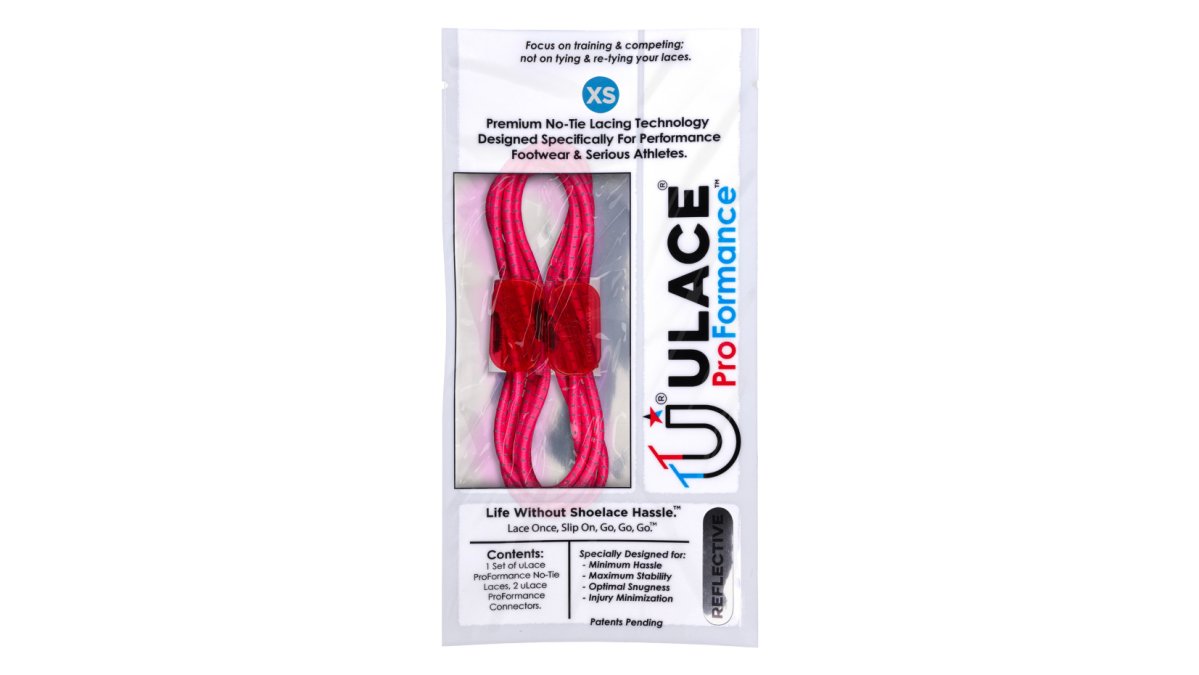
uLace ProFormance is a no-tie elastic lace system for runners who want slip-on convenience without losing heel lock. Each set pairs heavy-duty elastic cord with a spring-loaded toggle, so tension adjusts one-handed rather than with a double knot.

The ProFormance line is the brand's performance-focused option, distinct from general-purpose no-tie laces. It comes in ten colors, including Black, White, Scarlet Red, Royal Blue, Neon Yellow, Neon Orange, Shocking Pink, Bright Purple, Gold, and Bright Green, all priced at $14.99.
Standout Features
The toggle is the headline: a spring-loaded mechanism holds tension where you set it, so there's no re-tying mid-run and no double knots working loose. The cord uses a durable stretch material that rebounds after each step.

Installation uses a simple push-and-pull method: thread the lace through the eyelets, feed both ends into the toggle, and pull to your preferred tension. No tools or special technique.
Color range includes ten options for runners matching shoe colorways or team kits.
Pros and Cons
Pros:
- Spring-loaded toggle holds tension without knots
- Ten color options at a single price point
- Simple push-and-pull installation
- Slip-on conversion for any lace-up running shoe
- Ships from the USA
Cons:
- One-time purchase cost is higher than a basic replacement lace
- Toggle adds a small amount of bulk at the top of the lacing
- Runners who prefer traditional double-knot feel may need an adjustment period
Who It's For
ProFormance suits runners who train regularly and want quick-on, quick-off convenience without sacrificing a secure fit. It also works for anyone with limited hand mobility who finds traditional tying difficult, and for parents converting kids' sneakers into slip-ons.
Benefits of Elastic Laces for Runners
Elastic laces for runners can offer consistent pressure distribution. Traditional laces may concentrate tension at the knot and top eyelets; elastic cord can spread that load across the whole lacing path, potentially reducing hot spots on the instep.
A second benefit can be circulation: elastic laces stretch with foot swelling during a long run, maintaining a snug fit without cutting off blood flow.
Slip-on convenience is also a benefit. Quick-on, quick-off lacing shortens transition time and can eliminate the bend-over motion that bothers runners with back or knee issues.
- Foot stability: even tension keeps the heel locked in place
- Circulation: stretch accommodates swelling without going slack
- Convenience: no knots to tie, no lace ends to tuck
- Neatness: no dangling, dirty shoestrings dragging on the ground
How to Install Elastic Shoelaces on Running Shoes
Installing elastic shoelaces on running shoes takes about five minutes per shoe and no tools, replacing your existing laces with elastic cord and a locking mechanism to convert a lace-up shoe into a slip-on.
What you'll need: one set of elastic laces, your running shoes, and five minutes.
- Remove the original laces from both shoes.
- Thread one end of the elastic lace through the bottom eyelet, working upward in a crisscross pattern.
- Feed both lace ends through the locking toggle or anchor.
- Pull to your preferred tension, then test by slipping the shoe on.
- Trim excess length if the lace ends dangle, and tuck them under the lacing.
Expected result: the shoe slips on and off without untying, and the heel stays locked when you walk or run.
How to Tie a Shoe Laces Without Tying: Tension and Locking Tips
"Tying" an elastic lace comes down to two jobs: setting the right tension once, then trusting the locking mechanism to hold it. With a toggle system the process is a single pull, but getting that pull right the first time separates a lace that disappears into your routine from one you fight with every run.
Why elastic tension behaves differently than cotton
Cotton laces hold tension through friction at the knot; elastic laces hold it through the cord's own rebound plus the locking mechanism. Elastic cord relaxes once your foot is inside the shoe and the cord warms against your skin, a lace that feels perfect on the bench may run looser on the road. Consistent tension remains the primary challenge for any runner seeking stability, a requirement that extends well beyond footwear to the broader selection of top rated athletic gear.
The practical rule: set tension with the shoe on your foot, not off it, then walk or jog briefly and re-check before a long run.
The three-zone tension method
Rather than one global tension, think in three zones:
- Bottom zone (first two eyelets). Snug. Anchors the mid-foot and supports the arch; too loose and the whole lacing shifts forward during push-off.
- Middle zone (next two to three eyelets). Moderate. Many runners may over-tighten here and create pressure on the top of the foot. Leaving a little give can be beneficial.
- Top zone (final eyelets and toggle). Firm but not tight. This is where the heel lock can be achieved; a slightly firmer top zone can help keep the heel seated without compressing the extensor tendons.
Set each zone at the eyelet, not by cranking the toggle, the toggle is the final lock, not the primary tension control.
Step-by-step tension setting
- Put the shoe on with the lace threaded and the toggle loose.
- Pull the lace snug at the bottom two eyelets and hold.
- Work upward, setting middle and top zones to the firmness described above.
- Pull the toggle until it locks. You should feel resistance, not a hard stop.
- Walk ten steps. If the heel lifts, tighten the top zone one notch. If the top of your foot tingles or goes numb, loosen the middle zone.
- Jog 30 seconds. Elastic cord relaxes with warmth, re-check and adjust once more before a long run.
Locking tips that prevent mid-run loosening
- Double-pass the top eyelet. Thread the lace through the top eyelet twice before feeding it into the toggle. The extra pass acts as a heel lock and stops the tongue sliding down during fast transitions.
- Keep the toggle off the instep. Position it slightly to the side of the top eyelet so it doesn't press on the top of the foot under the tongue.
- Trim, then tuck. Cut excess cord to about two inches past the toggle and tuck the ends under the lacing; dangling ends catch on pedals, trail debris, and treadmill belts.
- Re-set after washing. Hand-washing relaxes the cord, so re-set tension from scratch.
- Carry a spare toggle on race day. Toggles are the one component that can fail mid-race; a spare weighs almost nothing and takes seconds to swap.
Adjusting on the fly
For runners who want to change tension mid-run, common on long efforts as feet swell, a toggle system lets you do it one-handed without stopping: pull the toggle to tighten, or press the release and pull the cord to loosen. Practice on easy runs so it's automatic before race day.
Long-Term Wear, Biomechanics, and Sustainability
The long-term performance of elastic laces is important for runners. The question for a runner logging many miles a week is what happens over time, when some cords may fail and durable cords prove themselves.
What actually wears out first
Potential failure points in elastic lacing systems can include:
- Cord rebound loss. The elastic core loses its snap before the outer sheath shows visible damage. You may notice it as a lace that feels snug when you pull the toggle but goes slack within the first mile.
- Toggle spring fatigue. The spring may weaken after many compression cycles. A toggle that once held tension with a light pull may start slipping under load.
- Eyelet abrasion. The cord rubs against plastic or metal eyelets every step, and the outer weave frays at the highest-friction eyelets, typically the bottom two and the top one.
A durable system built from heavy-duty elastic cord with a woven polyester or nylon sheath can resist these issues longer than bare rubber: the sheath can take the abrasion, and the elastic core can keep its rebound.
A simple maintenance routine that extends life
No special products needed. A five-minute routine every few weeks keeps elastic laces performing closer to new:
- Wipe the cord. A damp cloth removes grit that works into the weave and accelerates abrasion. Do this after muddy or dusty runs.
- Hand-wash, never machine-wash. Warm water with a drop of mild dish soap, then air-dry away from direct heat; hot water and dryer heat degrade elastic cores.
- Inspect the toggle. Pull the lace through a few times and feel for a weak hold. If it slips, the spring is fatigued, replace the toggle or the set.
- Rotate lace sets. Keeping two sets and swapping them every few months gets noticeably longer service from each, because the cord recovers between uses.
- Re-thread, don't re-tension. If a lace feels stretched out, pull it fully out and re-thread from the bottom eyelet rather than cranking the toggle tighter; re-threading redistributes wear across the cord.
With that routine, a well-built elastic lace set can last a full training season or more across one pair of shoes, and may migrate to a second pair when the first retires.
Biomechanics: how lacing pattern changes the run
Elastic laces can save time and may change how force moves through the shoe, and the lacing pattern can be important.
- Standard crisscross. Even tension across the instep. Can be beneficial for neutral runners and everyday training, distributing pressure away from the top eyelets where traditional laces may concentrate load.
- Heel lock (runner's loop). Thread the lace back through the top eyelet on each side to create a loop before feeding it into the toggle. This can help pull the heel into the heel counter and may reduce rear-foot slip, which can be beneficial for runners prone to heel or Achilles blisters.
- Ladder or parallel lacing. Runs straight across rather than crisscrossing. Can be useful for a high instep or prominent navicular bone, because it may remove diagonal pressure over the top of the foot.
- Two-zone tension. Lower eyelets snug for arch support, upper eyelets slightly looser to avoid compressing the extensor tendons.
A pattern that can be used by marathoners is a heel lock at the top with a slightly looser mid-foot, which may help keep the heel planted without cutting circulation as the foot swells over long distances.
Sustainability: durability as the greenest option
A single durable elastic set lasting multiple seasons across multiple pairs of shoes can displace many disposable cotton or synthetic laces, each with its own manufacturing and shipping footprint.
Material sourcing varies widely: some cords use recycled polyester sheaths, others virgin nylon or bare rubber. If sustainability matters, look for stated recycled content in the sheath and a cord designed to be re-threaded rather than thrown away when tension fades. Buying one set that outlasts three cheap sets is a bigger environmental win than any single material claim.
American College of Sports Medicine guidance on running footwear
U.S. Consumer Product Safety Commission footwear standards
Conclusion: Are Durable Elastic Shoelaces for Running Worth It?
The case for durable elastic laces comes down to whether you value a secure, adjustable fit that holds up over mileage. Some elastic laces may sag, slip, and require replacement; a durable set with a proper locking mechanism can help keep tension where you set it and turns any running shoe into a slip-on.
uLace ProFormance offers heavy-duty elastic cord with a spring-loaded toggle, ten colors at $14.99, and a simple push-and-pull install. The brand has made no-tie laces since 2009 and backs every order with the uLace Guarantee.
If you're tired of re-tying mid-run, dangling lace ends, or bending over every morning, it's worth the switch.
Frequently Asked Questions
Do elastic shoelaces stay tight during long runs?
Yes, when they're tensioned correctly. Durable elastic shoelaces for running use a spring-loaded toggle or locking mechanism that holds the lace in place once you set it. The stretch material flexes with your foot instead of loosening, so the fit stays secure through marathon training or trail sessions. Check the tension after the first mile and adjust the toggle if needed, then it should hold for the rest of the run.
Are elastic laces better than traditional laces for marathons?
For many runners, yes. Elastic laces eliminate the need to stop and retie mid-race, which matters in fast-paced transitions and long events. They also distribute pressure more evenly across the top of the foot, which can reduce hot spots. Traditional laces offer finer tension control, but elastic options with a locking mechanism give a secure fit without the bulk of a bow.
How do you install no-tie elastic shoelaces?
Installation takes about five minutes. Thread the elastic lace through your shoe's eyelets using the same crisscross pattern as standard laces, then feed both ends through the toggle and the included clip. Push the clip down to the eyelet, trim any excess lace, and slide the toggle to set your tension. No knots are required, and the laces stay in place for slip-on use.
Do elastic laces lose their tension over time?
Quality elastic laces can lose some rebound after many months of daily use, especially if they're over-stretched. Durable polyester and heavy-duty elastic blends hold their shape longer than cheaper stretch material. To extend life, avoid pulling the lace past its natural stretch limit and check the locking mechanism periodically. Most runners get a full season or more from a well-made pair.
Can you use elastic laces for trail running?
Yes, and many trail runners prefer them. Elastic laces keep the shoe snug over uneven ground, and the stretch material accommodates foot swelling on long, hot runs. Water-resistant options help in wet conditions, and the no-tie design means less chance of a lace snagging on branches. Pair them with a shoe that has a secure heel lock for the best result on technical trails.
Runners deal with loose laces, pressure points, and constant retying every season, and traditional cotton laces will never solve that. uLace ProFormance gives you a spring-loaded toggle, heavy-duty elastic cord, and ten color options at $14.99, all backed by the uLace Guarantee and fast shipping from the USA. Get started with uLace and turn the sneakers you already love into hassle-free slip-ons.