




Elastic Laces vs. Traditional Shoestrings: Comfort Compared
Table of Contents
- How Elastic Laces Provide a More Comfortable Fit
- Flat vs. Round Shoelaces: Which Works Better
- Best Laces for Athletic Shoes: Material and Design
- How to Lace Running Shoes for Comfort and Security
- Shoelace Alternatives: Why Elastic Laces Stand Out
- Fit, Tension, and Foot Security: What the Research Shows
- Durability and Long-Term Value of Elastic Laces
- Frequently Asked Questions
Last Updated: October 5, 2026
How Elastic Laces Provide a More Comfortable Fit
When you slip your foot into a sneaker with elastic laces comfortable fit, you immediately notice the difference. There's no fumbling with knots. No pressure points from traditional shoestrings cutting into the top of your foot.

Elastic laces work by distributing pressure more evenly across the instep and midfoot. Traditional shoestrings create concentrated pressure points where they cross over the foot. Elastic laces, by contrast, conform to the natural contours of your foot while maintaining a consistent, gentle hold.
The comfort advantage becomes even clearer for specific populations. Seniors who struggle to bend over and tie laces find that elastic laces eliminate that daily frustration entirely. People with arthritis or fine motor challenges no longer face the pain of manipulating traditional laces.
What makes this comfort sustainable is that elastic laces don't go slack over time the way traditional laces do. You tie a regular shoelace in the morning, and by afternoon it's come loose. With elastic laces, the tension remains constant throughout the day.
Flat vs. Round Shoelaces: Which Works Better
The shape of your shoelace matters more than most people realize. Flat laces and round laces perform differently in terms of how they distribute pressure, how easily they slip, and how they look on the shoe.
Round laces are the traditional standard. They're thinner, they tie easily, and they're what most people grew up using. The downside is that round laces can cut into the top of your foot when pulled tight, creating pressure points.
Flat laces distribute pressure over a wider area. When you tie a flat lace snugly, the broader surface spreads the force across more of your foot's skin, reducing localized pressure. This is why many athletic shoes come with flat laces, they're designed for performance.
Elastic laces eliminate this debate entirely. They're typically flat or semi-flat in profile, which means they inherit the pressure-distribution benefit of flat laces. But because they don't rely on knots to stay secure, they avoid the loosening problem altogether. The elastic material itself does the securing work.

For athletic footwear specifically, the flat-versus-round question becomes less relevant when you're using elastic laces. The elastic material provides consistent tension regardless of its cross-sectional shape. What matters is that the laces stay put throughout dynamic movement, running, jumping, cutting side to side, and elastic laces excel at that.
Best Laces for Athletic Shoes: Material and Design
Athletic shoes demand laces that can handle repetitive stress, moisture, and the constant tension changes that come with movement. Not all lace materials are equal.
Cotton laces are breathable and comfortable, but they absorb sweat and can degrade quickly under athletic stress. They're fine for casual wear, but they're not ideal for serious athletic use.
Polyester and nylon blends are more durable. They resist moisture, they hold up to repeated stretching, and they don't fray as easily as cotton. Many performance athletic shoes come with polyester laces for this reason.
Elastic laces take durability a step further by using materials specifically engineered to withstand repeated stretching without losing their tension. The best elastic laces for athletic shoes combine stretch with reinforced stitching at stress points. This means they won't snap or lose elasticity after a few weeks of heavy use.
The design matters too. Laces with a textured surface grip better than smooth ones, which reduces slipping inside the shoe. Laces with reinforced ends prevent fraying and make installation easier. And laces with graduated elasticity, meaning they stretch more in the midfoot and less at the heel, provide better support across different parts of your foot.
When you're shopping for laces for athletic shoes, look for materials that balance stretch, durability, and grip. Elastic laces designed specifically for performance sports check all three boxes.
How to Lace Running Shoes for Comfort and Security
Proper lacing technique can transform how your running shoes feel and perform. Even with traditional laces, the way you lace your shoes affects comfort, security, and injury prevention.
Start by understanding the basic lacing patterns. The most common is the standard crisscross, where you thread the lace over and under alternating eyelets. This works fine for casual wear, but it creates uneven pressure distribution. A better approach for running shoes is the heel-lock technique, where you create a loop near the ankle to lock your heel in place.
The bar-lacing method is another option. Instead of crisscrossing, you thread the lace horizontally across the shoe, then vertically up to the next eyelet. This creates more even pressure distribution across the entire foot.
Here's the practical reality: if you're using traditional laces, you'll need to adjust your technique based on your foot shape and how your shoes fit. This constant adjustment is why many runners eventually switch to elastic laces, you install them once, and they adapt to your foot's natural shape without requiring technique adjustments.
With elastic laces, the installation process is simpler. You thread them through the eyelets the same way you would traditional laces, but instead of tying a knot, you secure them with the lace's built-in locking mechanism. The elastic does the work of maintaining consistent tension across your entire foot.
| Lacing Technique | Best For | Pressure Distribution | Adjustment Frequency |
|---|---|---|---|
| Standard crisscross | Casual wear | Uneven | Multiple times daily |
| Heel-lock | Running, stability | Moderate | Once per session |
| Bar lacing | Even pressure | Very even | Once per session |
| Elastic laces | All athletic use | Consistent | One-time installation |
Shoelace Alternatives: Why Elastic Laces Stand Out
Beyond traditional laces and elastic laces, there are other shoelace alternatives on the market. Understanding how they compare helps you make the right choice for your needs.
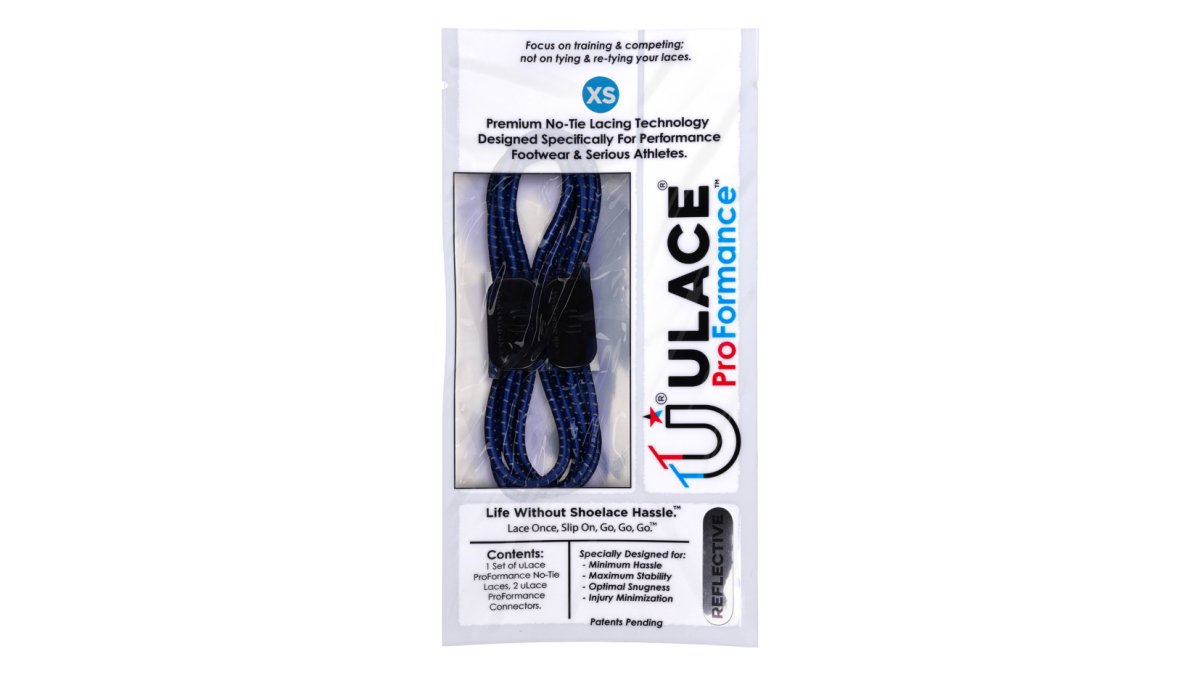
uLace ProFormance - Performance No-tie Laces - Black →
Some alternatives use velcro straps instead of laces. These work well for young children and people with severe mobility limitations, but they're not ideal for athletic use. Velcro loses its grip over time, especially when exposed to moisture and dirt.
Magnetic closures are another option. They're convenient and they look sleek, but they're typically only available on specialty shoes, and they don't offer fine-tuned adjustability.
Slip-on shoes without any lacing system are convenient for casual wear, but they don't provide the same level of foot security and support that laces do. Your foot can shift inside the shoe during activity, which creates discomfort and increases injury risk.
Elastic laces stand out because they combine the security and adjustability of traditional laces with the convenience of slip-on shoes, delivering an elastic laces comfortable fit that works with any shoe. You get the best of both worlds. Unlike velcro, elastic laces don't degrade with use.
The reason elastic laces have become so popular is simple: they solve real problems that other alternatives don't address. They're durable, they work with the shoes you already own, and they eliminate the daily hassle of tying and retying laces.
Fit, Tension, and Foot Security: What the Research Shows
A systematic review published in the Journal of Sports Science and Medicine identified that good fit is considered a prerequisite for shoe comfort, and that shoelace systems can help secure the foot.
Tension is the key variable. Too loose, and your foot slides inside the shoe, creating friction and blisters (the American Academy of Dermatology). Too tight, and you restrict blood flow and create pressure points. The sweet spot is a snug fit that holds your foot securely without cutting off circulation.
Traditional laces require constant adjustment to maintain optimal tension. You tie them in the morning at a certain tightness level, but as you move throughout the day, walking, sitting, standing, running, the tension changes. Laces loosen slightly with activity, then you re-tighten them. This cycle repeats constantly.
Elastic laces maintain consistent tension automatically. As your foot moves inside the shoe, the elastic material stretches and contracts with your foot, keeping the pressure constant. This is particularly valuable during athletic activity, where foot movement is most dynamic.
For people with specific foot shapes or conditions, this consistency matters even more. Wide feet need different tension than narrow feet. High arches need different support than flat feet. High-volume feet (where the top of your foot is fuller) need different tension than low-volume feet.
Durability and Long-Term Value of Elastic Laces
When you're evaluating shoelace options, durability directly impacts long-term value. Traditional laces wear out faster than you might think. They fray at the ends, they lose elasticity in the knots, and they eventually break or become too worn to tie effectively.
Elastic laces are engineered to last longer. The material is designed to withstand repeated stretching without degrading. The stitching at stress points is reinforced to prevent fraying. And because there are no knots, there's no point of concentrated wear that causes failure.
That's a significant durability advantage over traditional laces.
From a value perspective, the math is straightforward. If you replace traditional laces every 9 months at a cost of a few dollars per pair, you're spending money regularly to maintain your shoes.
Beyond the financial calculation, there's the convenience factor. You install elastic laces once and forget about them. You don't need to keep spare laces on hand. You don't need to worry about laces breaking mid-activity.
uLace ProFormance laces are engineered specifically for this kind of durability. They're designed to maintain their stretch and security through thousands of wear cycles.

The choice between elastic laces and traditional shoestrings isn't just about comfort, though that's certainly important. It's about whether you want to spend your time managing your laces or actually enjoying your shoes. Explore uLace ProFormance options and find your perfect fit today.
Frequently Asked Questions
Do elastic shoelaces provide a more comfortable fit than traditional shoelaces?
Elastic laces offer comfort through adjustable tension and a snug fit without the pressure points created by traditional knots. Research in the Journal of Sports Science and Medicine confirms that shoe fit is a prerequisite for comfort and that lacing systems can secure the foot effectively. Elastic laces eliminate the need to bend over to tie, reduce foot movement inside the shoe, and prevent the discomfort of loose or overly tight traditional laces. The stretch allows your foot to settle naturally while maintaining support throughout athletic activity.
What makes elastic laces a better shoelace alternative than other options?
Elastic laces transform any sneaker into a slip-on without damaging the shoe or requiring you to force your foot in. Unlike traditional shoestrings, they provide consistent tension that adapts to foot swelling during activity. They work with virtually any shoe type, require no tying, and stay secure during dynamic movement. The ease of installation, a simple push-and-pull method, makes them accessible for children, seniors, and people with mobility or fine motor challenges. They also keep your sneakers looking neat and prevent dangling, dirty laces.
Are elastic laces secure enough for running and sports?
Yes. Elastic laces are designed to stay secure during athletic movement because they distribute pressure evenly across the foot rather than creating tight pressure points like knots do. They prevent foot slippage inside the shoe and maintain a consistent hold throughout your activity. Many athletes and active individuals rely on elastic laces for training and sports without experiencing lace failure. The secure fit also means you won't need to stop and retie during your workout or game.
Will elastic laces work with wide feet or tight-fitting shoes?
Elastic laces are designed to stretch and accommodate different foot shapes and sizes. If your shoes are already tight when laced normally, elastic laces actually make them easier to slip on because the stretch allows your foot to enter without forcing. Once on, they adjust to your foot's natural width and provide a snug, supportive fit. This makes them especially helpful for people with wide feet, swollen feet, or those who struggle with traditional lacing systems. The adjustable tension means they work across a range of shoe types and fits.