




Elastic Laces for Elderly Mobility: 7 Everyday Benefits
Table of Contents
- Why Elastic Laces Make a Real Difference for Elderly Mobility
- No-Tie Shoelaces for Seniors: Easier Mornings, Less Bending
- Elastic Laces for Arthritis: Grip, Dexterity, and Independent Dressing
- Comfort, Pressure Distribution, and Fewer Blisters
- How to Install Elastic Shoelaces Step by Step
- No-Tie Laces for Walking Shoes: Secure Fit and Fall-Risk Awareness
- Who Should Use Elastic Laces and Who Should Be Cautious
- Maintenance, Replacement, and Everyday Wear Checks
- Frequently Asked Questions
Last Updated: October 17, 2026
Why Elastic Laces Make a Real Difference for Elderly Mobility
The benefits of elastic laces for elderly mobility start with one simple fact: footwear affects how safely older adults move, stay balanced, and feel about their day. Research indexed by PubMed's footwear and fall-prevention literature notes that shoe choice can shape mobility, safety, and well-being in older adults.
Most guides sell convenience and stop there. For a 75-year-old with stiff hands or a bad back, the real win is independence: shoes that go on without a fight, stay put, and come off without a tug-of-war.
Below, we break down seven everyday benefits, plus fitting steps, safety cautions, and who should think twice.
What Elastic Laces Actually Are
Elastic laces are stretchy cord-style laces that replace standard ties, letting you slip shoes on and off without tying a knot. They hold tension through stretch rather than a bow, so the shoe stays snug while your foot slides in.
Most sets use short segments that thread through the eyelets and lock in place. No dangling ends. No loops to trip on. No bending.
No-Tie Shoelaces for Seniors: Easier Mornings, Less Bending
Mornings are where no-tie shoelaces for seniors earn their keep. One customer, now 72, told us plainly: "It's hard for me to bend over all the time to tie my shoelaces...
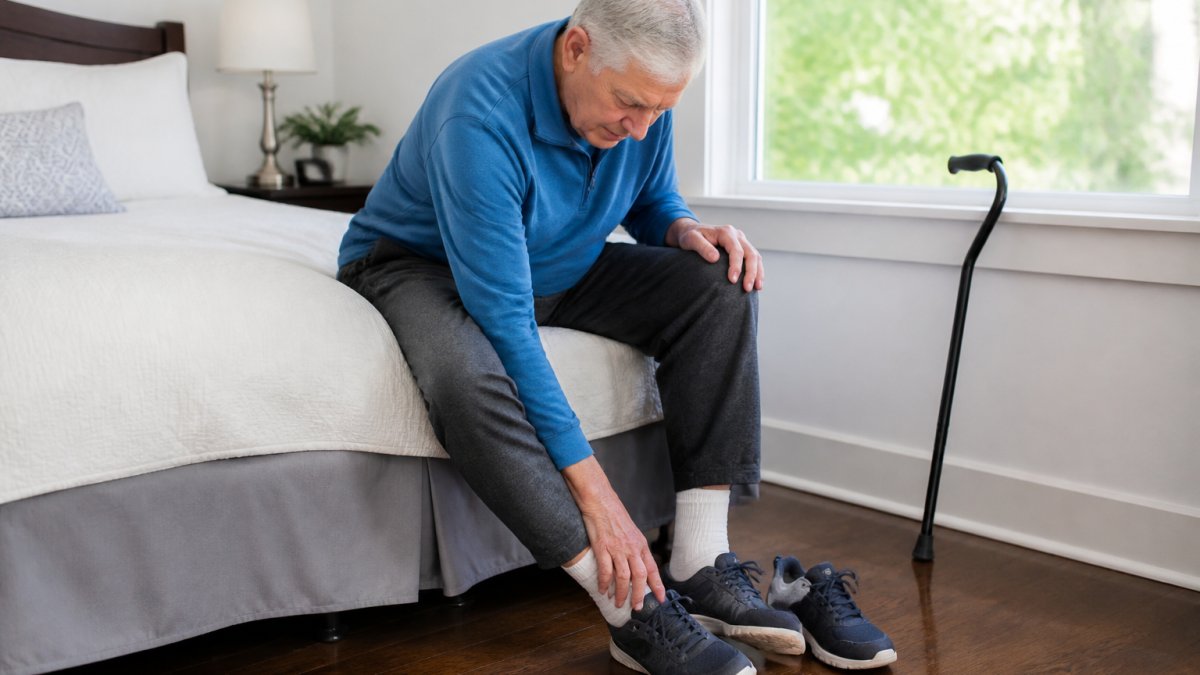
That is the whole pitch, and it is not small. Bending to tie shoes strains the back and neck, especially in the morning when joints are stiff. Skipping that motion removes a daily risk.
What changes in practice:
- Shoes go on in one motion, standing or seated
- No kneeling, no reaching, no holding a bow steady
- Fewer reasons to skip shoes and risk a barefoot slip
How Elastic Laces Work
Elastic laces work by stretching across the top of the foot and holding tension through a lock or anchor point instead of a tied bow. When you push your foot in, the lace gives.
That stretch is the mechanism. Hong and coauthors (2011), indexed by PubMed's running mechanics research, reported that shoelaces changed perceived comfort and reduced maximum pronation and plantar pressure during running.
The practical takeaway: lace tension matters, and elastic laces let you set it once.
Elastic Laces for Arthritis: Grip, Dexterity, and Independent Dressing
Arthritis in the hands turns a simple bow into a ten-minute struggle. Elastic laces for arthritis skip the bow entirely, which is why they matter for anyone with limited dexterity. Tying demands grip strength and fine control: pinching a thin cord, crossing it, forming a loop, pulling it tight. When those fade, dressing becomes a chore someone else has to help with.
The payoff goes beyond the shoe. Dressing yourself is a dignity issue, and it is one of the first things people lose when hands stop cooperating.
Comfort, Pressure Distribution, and Fewer Blisters
Comfort is where elastic laces quietly beat traditional strings. Standard laces cinch hard in one spot when you pull them tight; elastic laces spread that pull across the whole stretch. Better pressure distribution means fewer pressure points on the top of the foot, less rubbing, and less friction, and friction causes chafing and blisters.
A few comfort wins you will notice:
- The lace gives as your foot swells through the day
- No hard knot pressing into the instep
- No loose ends collecting dirt or catching on furniture
Foot swelling is normal for older adults, especially by afternoon. A lace that stretches with the foot handles that shift better than one that does not.
How to Install Elastic Shoelaces Step by Step
Installing elastic shoelaces takes about five to ten minutes per shoe. Here is the process we recommend for older adults and caregivers.
What you'll need: one set of elastic laces, the shoes, and good lighting.
- Remove the old laces and pull them fully free of every eyelet.
- Start at the bottom eyelet nearest the toe and thread the first lace segment through.
- Work upward one eyelet at a time, keeping tension even on both sides.
- Push and pull each segment into place until it sits flat against the shoe.
- Lock the final segment at the top eyelet using the anchor or lock piece.
- Test the fit by sliding your foot in and out twice.
- Adjust tension by loosening or tightening one segment at a time.
Expected result: the shoe slides on with a firm push and stays snug without a bow.
Choosing Compatible Shoes and Lace Styles
Shoe compatibility decides whether elastic laces work well. Most sneakers with standard eyelets take them fine.
Match the lace style to the shoe:
- Classic sets suit everyday sneakers and casual shoes
- Short sets fit lower-profile shoes with fewer eyelets
- Performance sets are built for athletic shoes and active use
Our uLace Classic in Black at $6.49 is the everyday starting point. The uLace ProFormance at $14.99 is the pick for walking and sport shoes that see more strain.


If a shoe has very wide eyelet spacing, check the fit before committing. A lace that is too short will not anchor; one that is too long will bunch.
No-Tie Laces for Walking Shoes: Secure Fit and Fall-Risk Awareness
Secure fit is the safety story. No-tie laces for walking shoes hold the foot steady, which supports balance during daily walking.
That distinction matters because footwear is a recognized modifiable factor in fall risk. Guidance from the Journal of the American Geriatrics Society on footwear for older adults and from the Centers for Disease Control and Prevention's STEADI fall-prevention resources converges on a few shoe features that support safer walking: a low, broad heel; a thin, firm midsole that lets the foot feel the ground; a secure fastening; and a tread pattern that grips without grabbing.
What a secure lace fit actually contributes:
- Heel control. A shoe that holds the heel against the back of the counter stops the foot from sliding forward on descents and stairs.
- Less in-shoe movement. A foot that shifts inside the shoe changes how the sole meets the ground, which is the last thing you want on uneven pavement.
- No trailing ends. Standard bows work loose; a loop that flops can be stepped on. Elastic laces eliminate the bow and the loop.
There is also a less obvious benefit: fewer reasons to go barefoot or in slippers outdoors. Many older adults kick off tight shoes at the door and step onto a porch or into a garage in socks, a well-known slip risk.
A word on the research. Studies of lace tension and comfort, such as the running-mechanics work cited earlier, are not fall-prevention studies. The footwear-and-falls literature is stronger on shoe features than on laces specifically.
Who Should Use Elastic Laces and Who Should Be Cautious
Elastic laces suit most people, but here is a more useful split: who tends to benefit, who needs to check with a professional first, and how to tell the difference.
Good candidates:
- Older adults with limited mobility, back strain, or hip and knee arthritis that makes bending painful
- People with hand arthritis, tremor, or reduced grip strength who struggle with a bow
- Anyone who wants slip-on convenience without giving up supportive sneakers
Check with a clinician or footwear specialist first if any of these apply:
- Significant or fluctuating foot swelling. Edema that changes through the day makes a fixed lace tension unreliable. Elastic laces stretch, which helps, but a shoe that is too tight in the morning and too loose by evening needs a different solution, often a wider shoe or a different closure, not just a stretchier lace.
- Neuropathy or reduced sensation. If you cannot reliably feel pressure on the top of your foot, you may not notice a lace that is too tight until skin breaks down. Set tension conservatively, check the top of the foot after an hour of wear, and ask a podiatrist or diabetes educator for guidance if you have diabetes-related nerve loss.
- Foot deformity. Bunions, hammertoes, and high insteps change where a lace presses. Elastic laces distribute pressure better than a hard bow, but they do not eliminate pressure over a prominent bunion or a rigid hammertoe. A shoe with a deeper toe box may be the better first move.
How to judge fit when sensation is uncertain. After wearing the shoes for an hour, take them off and look at the top of the foot and toes.
A note on shoes, not just laces. Elastic laces cannot rescue a shoe that fits poorly.
The short version: elastic laces are a good fit for most older adults and a great fit for anyone with hand or back limitations, but a poor substitute for professional advice when swelling, nerve loss, deformity, or a brace is part of the picture.
Maintenance, Replacement, and Everyday Wear Checks
Elastic laces last, but they are not permanent. Repeated stretching and daily wear eventually loosen the stretch and soften the lock.
A quick monthly check takes a minute:
- Pull each lace segment to confirm it still holds tension
- Look for fraying or thinning near the eyelets
- Check that the lock piece still grips firmly
Replace the set when the shoe starts feeling loose after a few steps. That is the signal the elasticity has gone.
Frequently Asked Questions
What are the benefits of elastic laces for older adults?
Elastic laces turn regular sneakers into slip-ons, so you can put shoes on and take them off without bending or tying. That reduces back and neck strain and saves time each morning. The stretch also spreads pressure across the top of the foot, which can ease pressure points and lower friction that leads to chafing and blisters. Research on footwear for older adults links better-fitting, easier-to-manage shoes with improved function, less pain, and reduced fall risk. Elastic laces are a low-cost way to get those practical benefits from shoes you already own.
Do no-tie shoelaces for seniors stay secure while walking?
A well-fitted elastic lace system holds tension across the whole lacing area rather than at one knot, so it stays put during normal walking. The key is matching lace tension to the shoe: too loose and the heel slips, too tight and the top of the foot feels pinched. Check the fit by walking a few steps and watching for heel lift or pressure lines. If you walk on uneven ground or have balance concerns, test new laces indoors first and keep the tension slightly firmer than you would for lounging.
Are elastic laces helpful for people with arthritis?
Elastic laces for arthritis address the two hardest parts of lacing: gripping a thin lace and tying a knot. With no-tie laces, you set the tension once and then just push your foot in. That removes fine-motor work from the daily routine, which matters when knuckles are stiff or hands are weak. Choose a style with a firm lace lock or anchored ends so the lace does not loosen over time, and ask someone to help with the first install if gripping the lace is painful. After that, the shoes go on and off hands-free.
How do you install elastic shoelaces in walking shoes?
Start by removing the old laces and threading the elastic lace through the bottom eyelets, working upward in the same pattern as before. Most no-tie systems use a push-and-pull method: feed the lace through each eyelet, then set tension with the included lock or clip. Leave enough stretch to slide your foot in without forcing it, but not so much that the heel lifts. Walking shoes usually need slightly firmer tension than casual sneakers. Test the fit indoors for a day before wearing them outside.
Shoes that fight back make every morning harder, and for older adults that friction adds up. uLace has made no-tie elastic laces since 2009, with easy push-and-pull installation, a wide range of styles and colors, and fast shipping from the USA. Take the quiz to find the right set for your shoes, and let uLace turn the sneakers you love into hassle-free slip-ons.