




How Elastic Laces Help With Foot Swelling Relief
Table of Contents
- Why Your Feet Swell and How Traditional Laces Make It Worse
- How Elastic Laces Help With Foot Swelling: The Mechanics Explained
- The Best Elastic Laces for Swollen Feet: What to Look For
- Benefits of Slip-On Sneakers for Edema and Daily Comfort
- How to Adjust No-Tie Laces for Fluctuating Foot Size
- When Elastic Laces Aren't the Right Choice
- Frequently Asked Questions
Last Updated: October 2, 2026
Why Your Feet Swell and How Traditional Laces Make It Worse
Your feet grow during the day, and your shoelaces were never designed for that. According to a 2024 reel on exercise-induced swelling, foot volume can increase by almost 9% during walking, hiking, or running as blood flow rushes to working muscles. That extra volume has to go somewhere, and a tightly knotted lace has nowhere to give.
This guide from uLace explains how elastic laces help with foot swelling, why static knots work against your circulation, and how to set up a no-tie system that adapts as your feet change size.
The 9% Volume Increase You Feel by Midday
Feet expand with activity, heat, and time on your feet.
That 9% figure sounds small until you do the math. On a size 10 shoe, it is the difference between a comfortable fit and a shoe that pinches across the top. The swelling is normal; the problem is footwear that cannot move with it.
- Morning: feet at their smallest
- Midday: noticeable expansion after walking
- Evening: peak volume, especially after long days
- After exercise: the largest increase of all
How Static Laces Restrict Circulation and Create Pressure Points
Traditional laces lock your foot into one fixed shape. When your foot expands, the lace does not, it presses back. That pressure lands on the bridge of the foot, where nerves and blood vessels sit close to the surface, causing numbness, tingling, and foot fatigue.
Research from the National Center for Biotechnology Information found that walking while wearing elastic compression techniques is effective in reducing edema in patients with chronic venous insufficiency. The takeaway is simple: when footwear flexes with the foot, fluid moves better.
How Elastic Laces Help With Foot Swelling: The Mechanics Explained
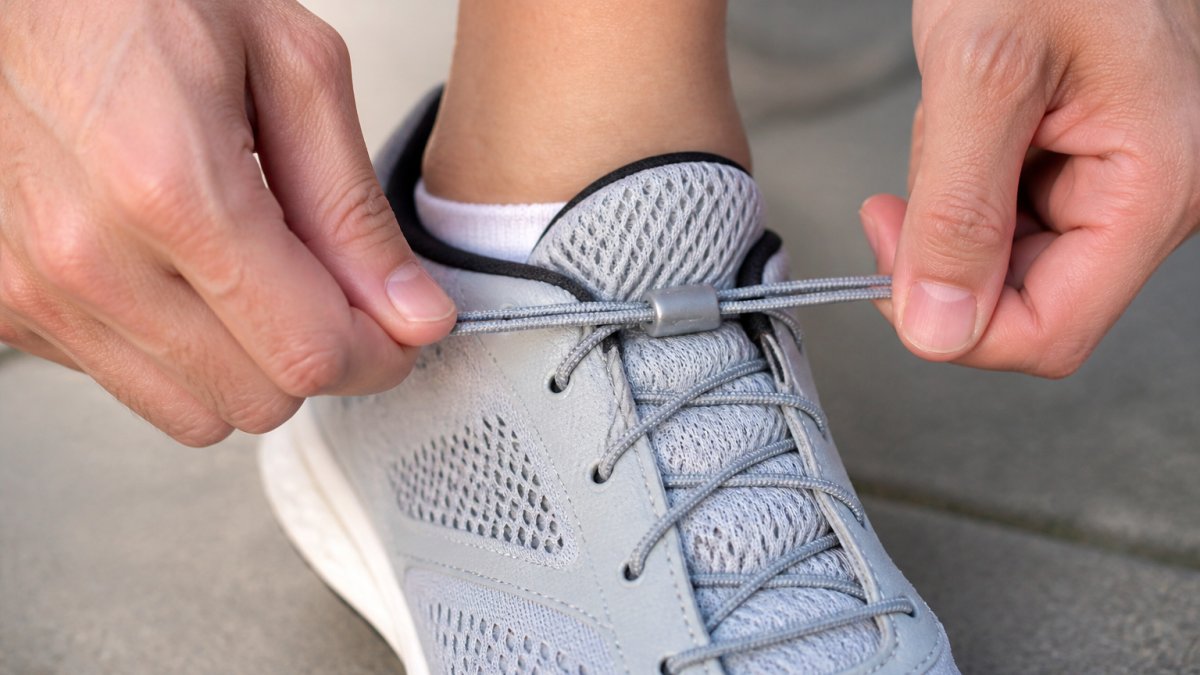
Elastic laces help with foot swelling by stretching as your foot expands, holding steady tension instead of a fixed knot.
Elastic Tension vs. Static Knots: What Changes on Your Foot
A knot is a fixed length; an elastic lace is a range. As your foot volume rises, the lace gives a little; as it settles, the lace recovers and holds the shoe in place. You get a snug fit at 7 a.m. and at 7 p.m. without retying anything.
Research published in MDPI's Applied Sciences journal found that higher and tighter lacing improves foot stability by limiting movement inside the shoe, but that this has to be balanced against swelling needs. Elastic laces are how you hit that balance.
Reducing Pressure on the Bridge of the Foot
The top of your foot is where most lace pain lives. Elastic laces spread tension across the whole lacing area instead of concentrating it in one spot.
That matters for anyone dealing with edema, circulation issues, or simple end-of-day puffiness. A softer, more even hold means fewer pressure points and less foot fatigue.
The Best Elastic Laces for Swollen Feet: What to Look For
The best elastic laces for swollen feet stretch and recover without losing shape, fit shoes with orthotics or wide widths, and hold tension without constant retying. Stretch alone is not enough, recovery keeps the fit secure after weeks of use.
Here is what separates a good set from a disappointing one:
| Feature | What to Look For | Why It Matters |
|---|---|---|
| Stretch | Flexes with foot volume | Prevents binding as feet expand |
| Recovery | Returns to shape after stretching | Keeps the fit snug over time |
| Width | Fits standard and wide eyelets | Works with more shoe styles |
| Length | Matches your shoe's eyelet count | Avoids loose or short ends |
| Finish | Tight, tidy lace ends | Reduces tripping and wear |
Bungee-Style vs. Flat-Elastic: The Material Difference Nobody Explains
Most guides treat "elastic laces" as one product. They are not.
Bungee-style (round, corded). A single elastic core wrapped in a woven sheath, usually 2-3 mm thick.
Flat-elastic (woven ribbon). A wider, flatter band, typically 6-10 mm across, with elastic threads running lengthwise.
Which one for swelling? If your swelling is mild and mostly end-of-day puffiness, bungee-style is usually fine and installs fastest.
Stretch Recovery: The Number That Actually Predicts Longevity
"Recovery" separates a lace that lasts a season from one that lasts a month: how completely the material returns to its original length after being stretched. Field test: stretch a lace to roughly double its resting length, hold ten seconds, release, and lay it flat. A good lace returns to within a few millimeters almost immediately; a poor one stays visibly elongated.
Two material notes worth knowing:
- Natural rubber core vs. spandex/elastane blend. Natural rubber offers excellent snap-back but degrades faster with UV exposure and sweat salts. Spandex-dominant blends trade a little peak stretch for better resistance to repeated cycling and washing.
- Sheath density. A tighter, denser weave resists fraying at the eyelet contact points. Loose weaves look fine new and unravel within weeks.
Compatibility With Orthotics and Wide Feet
Orthotics add volume inside the shoe, and wide feet need more room across the top. Both push against a static lace.
Elastic laces solve this by giving you a customizable fit rather than one fixed setting. They work with arch support inserts because they do not fight the extra height. Two practical points:
- Insoles raise the instep. A full-length orthotic can lift the top of the foot by several millimeters, which is exactly where a static lace bites. Elastic laces absorb that lift without needing a longer lace.
- Wide widths and high insteps pair well with flat-elastic. The broader contact patch spreads pressure over the top of the foot instead of cutting a line across it.
For kids with wide feet, the uLace Kiddos - Medium Grey (https://www.u-lace.com/products/kiddos-medium-grey-no-tie-shoelaces) at $5.99 is built for small feet and simple mornings.

Benefits of Slip-On Sneakers for Edema and Daily Comfort
The benefits of slip-on sneakers for edema come down to two things: the shoe moves with your foot, and you never have to bend down to tie it. Mobility is the quiet benefit, when a shoe slides on without a fight, you wear it more and stop avoiding the stairs or the walk. Consistent movement is further supported by the benefits of compression gear, which helps maintain circulation and reduce the fluid buildup that often hinders active recovery.
Ease of Use for Seniors and People With Mobility Challenges
Bending to tie laces is hard for arthritic hands, stiff backs, and anyone recovering from surgery. A no-tie setup removes that step entirely.
One uLace customer put it plainly: "I'm 72 and it's hard for me to bend over all the time to tie my shoelaces. Now I just slip my foot through my shoes and that's it." That is the easy-on easy-off difference in one sentence.
- No bending, no knot tying
- No dangling laces to trip on
- No dirty strings dragging on the ground
- No forcing your foot in and breaking down the heel
How to Adjust No-Tie Laces for Fluctuating Foot Size
Learning how to adjust no-tie laces takes about five minutes, and you only do it once. After that, the laces hold their setting and flex with your foot on their own. The goal is a fit that stays secure at your foot's smallest size and still gives when it swells, not a single tension that feels good for one hour.
Step-by-Step Tension Calibration
- Lace the shoe loosely first. Thread each lace through the eyelets without pulling tight, leaving ends long enough to work with.
- Slip your foot in. Wear the socks you normally wear with these shoes, sock thickness changes the fit more than most people expect.
- Pull each section to a light tension. Snug, not tight: you should be able to slide one finger under the laces at the midfoot without forcing it.
- Walk 20 steps. Your foot will settle and show you where the pressure sits. Pay attention to the top of the foot, not just the sides.
- Adjust the top section last. The area near your ankle usually needs the least tension; over-tightening here is the most common mistake and the main cause of lace slippage.
- Check the bridge of your foot. You should be able to press the laces down slightly with one finger. If you cannot, back off the middle sections.
- Recheck in the evening. If your feet swell later in the day, loosen the middle sections a touch.
How Much Tension Is 'Right'? A Practical Calibration Guide
Tension is personal, but the failure modes are predictable:
- Too loose: The heel lifts when you walk, the tongue slides sideways, or you feel the shoe shift on turns. Fix by tightening the lower and mid sections, not the top.
- Too tight: You feel a pulse, tingling, or numbness within 10 minutes, or you see a red line across the top of the foot after removing the shoe. Fix by loosening the section directly over the pressure point.
- Just right: The shoe stays put on stairs and quick direction changes, but you can still flex your toes and feel the laces give slightly when you press down on the tongue.
A common pattern is to set the lower two-thirds of the lacing at moderate tension and leave the top eyelets noticeably looser. This keeps the heel locked without clamping the ankle or the instep.
Matching Tension to Activity and Time of Day
Different activities load the foot differently, and the same shoe may need two settings:
- Daily wear and errands: Moderate, even tension. This is the setting you calibrate in the evening when your feet are largest.
- Long walks or standing shifts: Slightly looser across the instep, slightly firmer at the heel. Swelling accumulates over hours, so leave room for it.
- Running or gym work: Firmer overall, but never so firm that the top of the foot goes numb. Test on a short run before a long one.
- Post-surgical or post-injury: Follow your clinician's guidance first. Elastic laces can accommodate a dressing or a swollen foot, but they are not a substitute for prescribed compression or immobilization.
When to Recalibrate
Elastic laces do not need daily attention, but they do drift over time. Recheck your setup when the lace feels noticeably looser than when you set it, you switch sock thickness for the season, you add or remove an orthotic, or you notice the lace ends fraying at the eyelets.
If you are coming from standard laces, expect the first two days to feel different. The shoe will feel slightly looser across the top. That is the flex working, not the lace failing.
When Elastic Laces Aren't the Right Choice
Elastic laces are not right for every foot or every shoe. If you have a diagnosed circulation condition, nerve damage, or a recent foot injury, talk to your doctor before changing your footwear setup, elastic laces manage fit, they do not treat a medical problem. They may also not fit well in dress shoes with very few eyelets, boots that need high rigid ankle support, shoes with stretched or damaged eyelets, or feet with severe structural changes that need custom footwear.
Frequently Asked Questions
Are elastic laces worth it for people with chronic foot swelling?
Yes, for many people with chronic swelling, elastic laces are worth it because they adapt to foot volume changes throughout the day. Research shows foot volume can increase by almost 9% during walking or running. Elastic laces flex with that expansion instead of fighting it, reducing pressure points that static laces create. If you have a medical condition causing severe swelling, check with your doctor first.
How do elastic laces help improve circulation in the feet?
Elastic laces help circulation by avoiding the tight, static binding that traditional laces create across the top of the foot. A 2015 study from the National Center for Biotechnology Information found that walking with elastic compression techniques reduced edema in patients with chronic venous insufficiency. The gentle, consistent tension supports venous return without cutting off blood flow. This is different from medical compression garments, which are tighter and prescribed for specific conditions.
How do I adjust elastic laces for fluctuating foot size throughout the day?
Start by lacing your shoes with moderate tension in the morning when feet are smallest. As the day progresses and feet swell, the elastic gives naturally. For significant swelling, choose laces with a wider stretch range and avoid over-tightening. A snug fit that still allows a finger to slide under the lace is a good target.
Are elastic laces recommended for seniors or those with mobility issues?
Yes, elastic laces are often recommended for seniors and people with mobility issues because they eliminate bending and fine motor tasks like tying knots. For someone with arthritis, this means independent shoe wearing without pain. The secure stretch also prevents the loose, dangling laces that can cause tripping.
Swollen feet make every step harder, and tight laces make it worse. uLace turns the sneakers you already own into slip-ons with elastic no-tie laces that flex as your feet change size through the day. With easy push-and-pull installation, a wide range of colors, and a fit that stays neat and secure, uLace gives you comfort without the bend-and-tie routine. Take the quiz and find the right set for your shoes.