




How to Customize Sneaker Laces: DIY Guide
Table of Contents
- What You'll Need to Customize Sneaker Laces
- Creative Sneaker Lacing Styles That Stand Out
- How to Dye Shoelaces for Custom Colors
- Adding Accessories and Personal Touches
- Best No-Tie Elastic Laces for Easy Customization
- Durability and Maintenance of Custom Laces
- Common Mistakes to Avoid When Customizing
- Frequently Asked Questions
Last Updated: September 1, 2026
What You'll Need to Customize Sneaker Laces
Customizing sneaker laces requires basic materials depending on your chosen technique. For simple lacing pattern changes, you need only your sneakers and patience. For dyeing, gather fabric dye (fiber-reactive dyes work best), a heat source, water, a pot or container, and paper towels for drying (peer-reviewed research). For embroidery, you'll need embroidery thread, a needle, and possibly a small hoop to keep fabric taut. Lace charms and decorative knots require the accessories themselves, beads, charms, or specialty materials available online and in craft stores. A small pair of scissors helps trim excess material cleanly.
The most important tool is a well-lit workspace. Customizing laces demands precision, especially when adding fine details like embroidery or threading small beads. Natural light or a good desk lamp prevents mistakes that are hard to undo.
If you're working with elastic laces like those from uLace, the customization process differs slightly. Elastic laces eliminate the need for traditional tying techniques entirely, letting you focus purely on aesthetic customization, color, charms, and embroidery, without worrying about how the knot holds. This makes uLace an excellent starting point for beginners.
Creative Sneaker Lacing Styles That Stand Out
The way you lace your sneakers dramatically changes their visual impact. Lacing patterns signal whether you prioritize clean minimalism, bold geometry, or intricate detail. Most people never experiment beyond the default crisscross pattern they learned as kids. Changing your lacing pattern costs nothing, takes minutes, and transforms how your sneakers look.
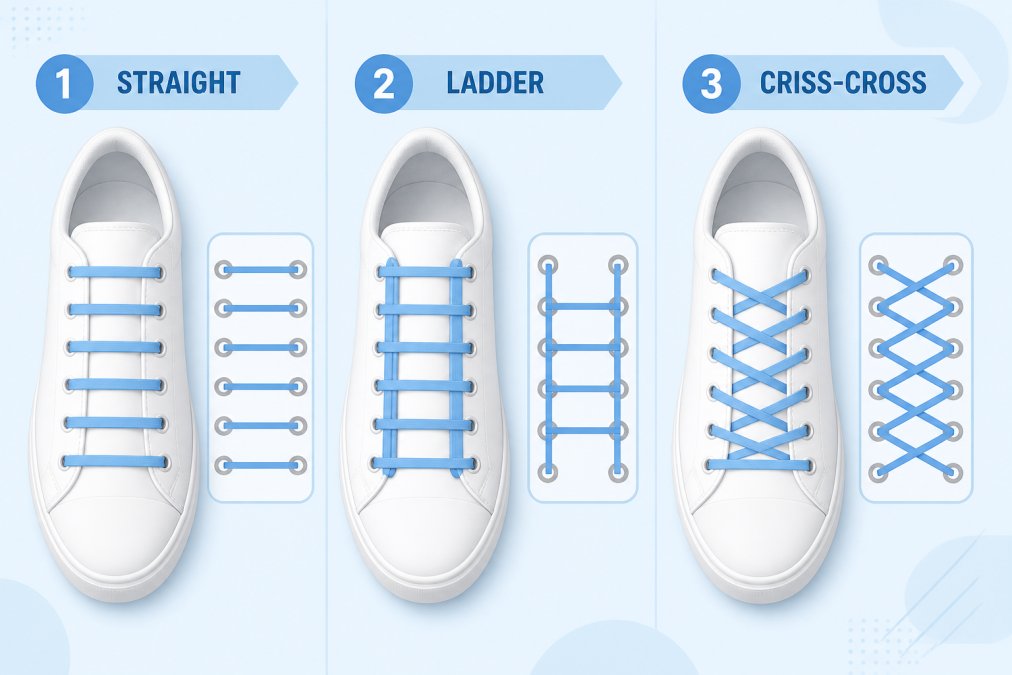
Straight Lacing for Clean Aesthetics
Straight lacing creates horizontal lines that run perpendicular to the shoe's length, producing a minimalist and modern effect. Start at the bottom eyelet on one side and thread straight across to the opposite side's bottom eyelet. Move up one eyelet on each side and repeat. The laces stay hidden inside the shoe, creating clean lines on the exterior.
Straight lacing suits sneakers with strong color blocking or minimal branding, emphasizing the shoe's silhouette rather than competing with it. The real advantage is speed, relacing takes under two minutes once you understand the pattern.
Ladder Lacing for Bold Visual Impact
Ladder lacing creates a geometric stepped pattern that looks more complex than it actually is. Instead of crossing diagonally, the lace runs straight up one side while creating small loops on the other side that resemble ladder rungs. This pattern demands more lace length than standard crisscross, so measure before you start.
Ladder lacing works best on sneakers with visible eyelets. Canvas high-tops and leather basketball-style sneakers showcase this pattern beautifully. The technique requires patience on your first attempt to keep spacing even, but muscle memory takes over with practice.
Criss-Cross and Loop Patterns
Criss-cross variations elevate the basic approach by creating loops at certain points or varying the angle of crosses to create visual rhythm. Loop patterns add texture and dimension by creating intentional loops at specific eyelets rather than pulling the lace completely tight. These variations require experimentation and offer flexibility, you can adjust as you go, responding to how the laces sit and how the shoe looks in real time.
How to Dye Shoelaces for Custom Colors
Dyeing shoelaces opens unlimited color possibilities. Choose fiber-reactive dyes for the most vibrant, long-lasting results on fabric laces (peer-reviewed research). All-purpose dyes work but fade faster with washing and sun exposure.
Fabric Dye Method for Vibrant Results
Remove your laces from the sneaker and wet them thoroughly with cool water. Prepare your dye bath according to package instructions. Submerge the laces completely and stir occasionally to ensure even color absorption. Check the color every 5-10 minutes after the first 15 minutes, pulling them out slightly lighter than your target color since dye continues to set.
Rinse with cool water until the water runs clear. Squeeze out excess water gently without wringing. Lay laces flat on a towel in indirect sunlight to dry completely, allow 24 hours before reinstalling them. Direct heat can damage synthetic fibers.
Pantone Matching and Color Fastness
If you're aiming for a specific shade, color fastness, how well the dye resists fading, becomes critical. Bring a fabric swatch or color chip to your dye selection and mix dyes if necessary to achieve the exact shade.
Test color fastness before committing fully. Dye a small section of lace, let it dry completely, then wash it in hot water with detergent. If the color fades significantly, try a different dye brand or type. Fiber-reactive dyes consistently outperform all-purpose dyes for color retention (peer-reviewed research).
Heat-sealing the dye after application locks color in place. If heat-setting is recommended, use a clothes dryer on medium heat for 15-20 minutes or iron the laces on a low setting with a pressing cloth between the iron and laces.
Adding Accessories and Personal Touches
Accessories transform basic laces into conversation pieces. They signal that you've invested thought and effort into your sneakers' appearance.
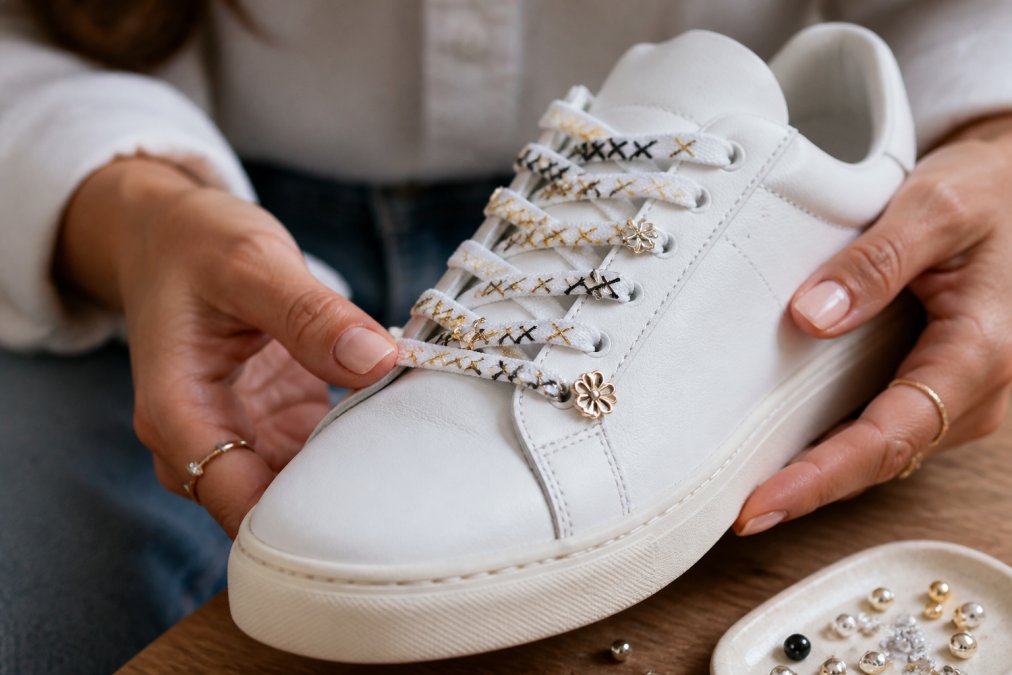
Lace Charms and Decorative Knots
Lace charms are small decorative elements that thread onto your laces, ranging from simple metal beads to elaborate custom-designed pieces. Slide them onto the lace at your chosen position. For laces with aglets (plastic tips), you may need to slide charms on before lacing your sneaker. For laces without aglets, create a small loop, thread the charm through, then pull tight.
Decorative knots add texture and visual interest without additional materials. Tie knots at regular intervals along the lace, or create asymmetrical patterns. Double knots are more secure and create a bolder visual statement. Evenly spaced elements feel intentional and balanced.
Embroidery and Personalized Text
Embroidery elevates customization from casual to crafted. Threading embroidery floss through lace material creates patterns, designs, or text. Start with simple designs like geometric patterns or initials. Use an embroidery hoop to keep the lace taut while you work, preventing puckering and making stitching cleaner.
Personalized text is the ultimate custom touch. Embroider your initials, a meaningful date, or a short phrase. The laces become wearable reminders of something important. For embroidery on elastic laces like uLace, the process is identical but the material behaves slightly differently, maintain consistent tension while stitching to prevent distortion.
Best No-Tie Elastic Laces for Easy Customization
No-tie elastic laces fundamentally change the customization equation. You focus entirely on aesthetic customization, color, accessories, and embroidery, without working within traditional lacing pattern constraints.
uLace offers elastic laces designed to transform any sneaker into a slip-on. Installation is simple: push the lace through the eyelets and pull tight. No knots, no tying, no untying. The advantage for customization is significant, you can add charms, dye the laces, or embroider without worrying about how lacing patterns affect the shoe's function.
uLace offers multiple color options, including uLace Classic - Black and uLace Classic - Rainbow variants, allowing you to choose a base that matches your customization vision. The uLace ProFormance - Performance No-tie Laces - Black and uLace ProFormance - Performance No-tie Laces - White lines provide performance-focused elastic laces for athletic use. For those with mobility challenges, arthritis, or time constraints, elastic laces eliminate the barrier to wearing any sneaker you love.


The elastic material accepts dye similarly to fabric laces, though results may vary slightly. Test dyeing on a small section first. Embroidery works well on elastic laces, though the stretch means you need to maintain consistent tension while stitching.
Durability and Maintenance of Custom Laces
Custom laces require care to maintain their appearance and function. Wash custom laces separately from your sneakers in cool water with mild detergent. Avoid bleach and fabric softeners. Squeeze gently, don't wring or twist.
Dry flat in indirect sunlight. Air drying preserves color vibrancy longer than machine drying. Allow 24 hours for complete drying before wearing. Inspect your laces regularly for wear. Heat-seal embroidered areas with a low-temperature iron to prevent fraying. Check charms monthly and re-secure if needed.
For elastic laces like uLace, maintenance is simpler. Wipe with a damp cloth to remove dirt. The elastic material resists fading better than standard fabric laces. Avoid prolonged sun exposure, which can degrade the elastic over time. Keep custom laces in a cool, dry place away from direct sunlight when not wearing your sneakers.
Common Mistakes to Avoid When Customizing
Underestimating lace length is the most frequent mistake. Patterns like ladder lacing require significantly more lace than standard crisscross. Measure your lace length before committing to a pattern.
Dyeing laces without testing is another common error. Different dye types produce different results on different fiber compositions. Test on a small section first. Ensure complete submersion during dyeing and stir every few minutes to prevent splotchy color.
Embroidery tension is tricky. Too tight and you pucker the lace material; too loose and stitches look sloppy. Practice on scrap material first. Skip the color fastness test and your beautifully dyed laces will fade after one wash, spend 10 minutes testing before wearing.
Adding too many accessories creates visual clutter. Restraint is more effective than abundance. Choose a focal point rather than filling every available space. Forgetting to heat-seal embroidery on fabric laces causes fraying within weeks. This one small step extends the life of your embroidered laces dramatically.
Customizing sneaker laces transforms ordinary footwear into personalized statements. Whether you're experimenting with lacing patterns, dyeing for custom colors, or adding accessories, the process is accessible and rewarding. For those seeking the ultimate in customization convenience, uLace elastic laces eliminate traditional lacing constraints entirely. With uLace, you can focus purely on aesthetic customization while enjoying the security and comfort of a slip-on fit. [TAKE THE QUIZ] to find your perfect fit, and start transforming your favorite sneakers today.
Frequently Asked Questions
What materials work best for DIY sneaker lace customization?
Cotton laces and synthetic fibers are ideal for customization. Cotton absorbs dye well and feels comfortable, while synthetic materials like polyester offer durability and color fastness. For DIY projects, cotton laces are easiest to dye and embroider. If you want low-maintenance customization, consider elastic no-tie laces like uLace, which eliminate tying altogether and come in multiple color options ready to wear.
How do I know which lacing pattern will work with my sneaker type?
Most lacing patterns work with standard eyelets on casual sneakers, athletic shoes, and dress shoes. Straight lacing and ladder lacing suit wider shoes and athletic styles. Criss-cross patterns work best on shoes with 5-7 eyelets per side. Before attempting complex patterns, count your shoe's eyelets and practice on a shoe you wear less often. If you prefer to skip lacing entirely, elastic no-tie laces adapt to any sneaker type without requiring pattern changes.
Can I dye shoelaces without using harsh chemicals?
Yes. Natural fabric dyes derived from plants and food-based materials offer eco-friendly customization. Fabric dye specifically designed for cotton or synthetic materials is milder than industrial dyes and produces vibrant results. Always follow package instructions for water temperature and drying time. For best color fastness, use dyes designed for the specific lace material. If DIY dyeing feels complicated, pre-dyed laces in multiple colors eliminate the process entirely.
How long do customized laces typically last?
Well-maintained customized laces last 6-12 months with regular wear, depending on material quality and activity level. Cotton laces may fray sooner than synthetic materials. Heat sealing the aglets extends lace life. Elastic no-tie laces like uLace offer extended durability because they don't experience the repeated tying and untying stress that wears traditional laces. Store customized laces away from direct sunlight to preserve dyed colors and prevent premature fading.
This article was written using GrandRanker