




How to Make Sneakers Slip On: 7 Methods
Table of Contents
- Why Convert Sneakers to Slip-Ons
- No Tie Shoelaces for Kids: The Easiest Solution
- Elastic Shoelaces for Seniors: Comfort Without Bending
- How to Lace Shoes for Easy Entry: Step-by-Step Techniques
- Using Elastic Lacing Systems for Secure Fit
- DIY Hacks vs. Store-Bought Solutions
- Maintaining Your Slip-On Sneakers Long-Term
- Conclusion
Last Updated: August 27, 2026
Why Convert Sneakers to Slip-Ons
Your kid can't find their shoes. Your parent struggles to bend over. You're running late with laces that won't stay tied. Converting your sneakers to slip-ons solves this: the friction between loving a specific shoe and hating the hassle of wearing it.
You don't need to buy new shoes. The process is straightforward, affordable, and takes minutes. No more bending to tie laces, no more dangling shoestrings, no more broken laces mid-day. For parents managing multiple kids' schedules, seniors dealing with arthritis, or anyone with fine motor challenges, this shift removes a genuine barrier to independence and comfort.
Several methods exist, each with different levels of permanence, cost, and ease. Some are temporary hacks you can undo in minutes. Others are lasting modifications that permanently change how your shoes function.
No Tie Shoelaces for Kids: The Easiest Solution
No-tie shoelaces are elastic laces designed to stay tied permanently, transforming any sneaker into a true slip-on. They're the fastest way to make sneakers slip on, especially for children who lack the fine motor skills to tie traditional laces.
Elastic strands replace standard lace material, allowing the shoe to stretch open enough for your foot to slide in and out while remaining secure during wear. Installation takes under two minutes per shoe: remove standard laces completely, thread elastic laces through each eyelet, tie a knot at each end, and adjust tension so the shoe fits snugly but still allows your foot to slip in and out easily.
For kids, this solves multiple problems at once. Children often can't tie laces reliably until age 5 or 6 (peer-reviewed research). No-tie laces eliminate that developmental hurdle entirely, giving your child independence while ensuring their shoes won't come untied during recess or sports.
When elastic laces lose elasticity, replacement is as simple as the original installation. Products like uLace's elastic no-tie options offer various styles designed specifically for this use case.

Elastic Shoelaces for Seniors: Comfort Without Bending
For seniors and anyone with mobility limitations, elastic shoelaces solve a specific problem: bending to tie laces becomes painful, difficult, or impossible. Arthritis in the hands makes fine motor tasks harder (the NIH). Lower back issues make bending risky. Balance problems make standing on one leg precarious. Elastic laces eliminate these barriers.
A senior who struggles to bend gains genuine independence, they can put on their own shoes without asking for help or risking a fall. The psychological shift matters as much as the physical one. Maintaining independence in daily tasks affects quality of life and self-perception.
Traditional laces often cut off circulation or create pressure points that become painful during extended wear (peer-reviewed research). Elastic laces distribute pressure more evenly across the foot and ankle. They accommodate natural foot swelling that happens throughout the day, automatically maintaining comfort without requiring re-adjustment.
Test by having the wearer walk around for a few minutes. They should feel supported but not squeezed. The elastic should stretch slightly when they flex their foot but return to its original shape.
How to Lace Shoes for Easy Entry: Step-by-Step Techniques
Beyond elastic laces, several manual lacing techniques can make your sneakers easier to slip on and off without permanently modifying them.
The Bunny Ear Method
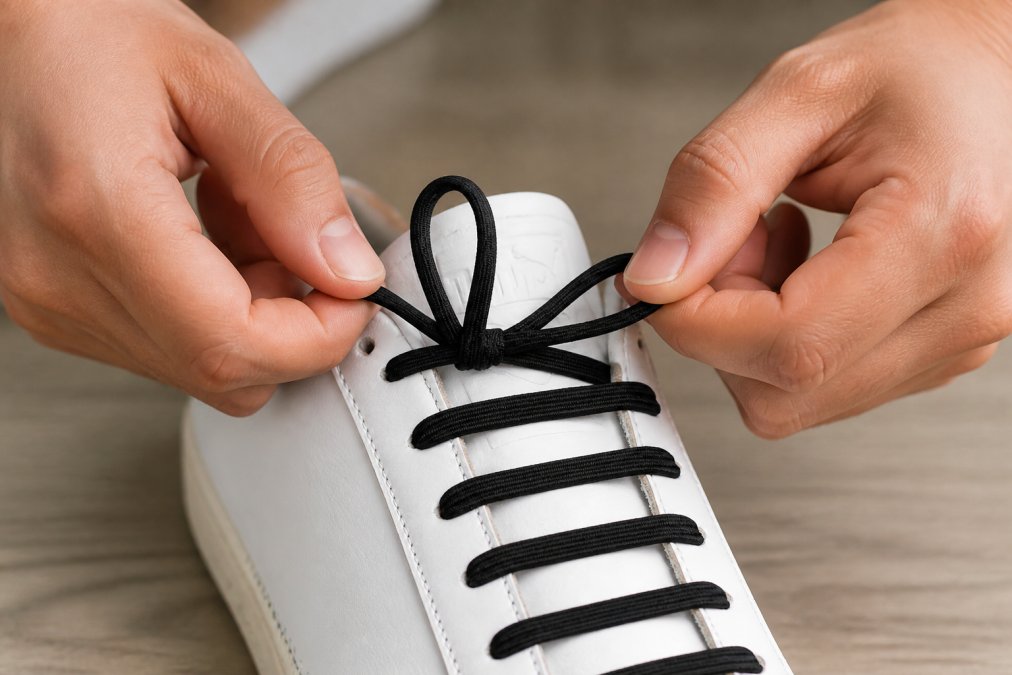
The bunny ear method is the simplest lacing technique for slip-on convenience. Lace your shoe normally through the first few eyelets, pulling the lace snug. Then create two loops (the "bunny ears") with the remaining lace length and tie them together in a bow at the top of the shoe.
The advantage is adjustability. You can loosen the bunny ears when putting on or taking off your shoe, then tighten them for activity. The secure base lacing keeps the shoe from slipping during wear. It's not true slip-on convenience, but it's significantly faster than untying and re-tying traditional laces multiple times per day.
Tucking Laces Under the Insole
This technique permanently converts your shoe to slip-on status without replacing the laces. After lacing your shoe to the desired tightness, remove the insole and tuck the lace ends underneath it. Reinstall the insole on top of the laces. The laces stay tied in place, hidden beneath the insole, while your shoe functions as a slip-on.
The advantage is simplicity and reversibility. You're not cutting or permanently modifying anything. If you decide you want traditional lacing back, simply remove the insole and pull the laces out. This method only works if your shoe's insole is actually removable. Many modern sneakers have permanently glued or molded insoles.
Securing Laces Under the Tongue
Lace your shoe to the desired tightness. Instead of tying a bow at the top, thread the lace ends under the shoe's tongue, securing them with a small knot or by tucking them into the lace pocket if your shoe has one.
This method offers the best of both worlds: true slip-on convenience with the security of laces that won't come loose. Your sneaker maintains a clean, neat appearance. Test by putting the shoe on and off several times to ensure the laces don't slip out from under the tongue during wear.
Using Elastic Lacing Systems for Secure Fit
Elastic lacing systems go beyond simple elastic laces. These are complete lacing solutions designed specifically to provide slip-on convenience while maintaining secure fit and ankle support.
Quality elastic lacing systems use stretchable material that accommodates foot movement while keeping your shoe snug. These systems often include reinforced eyelets, specialized fastening mechanisms, and materials engineered to maintain elasticity over months of use.
Installation is similar to standard elastic laces: thread through eyelets, adjust tension, secure the ends. Better systems distribute tension more evenly across the foot, reducing pressure points. They maintain consistent elasticity longer, resisting gradual loosening.
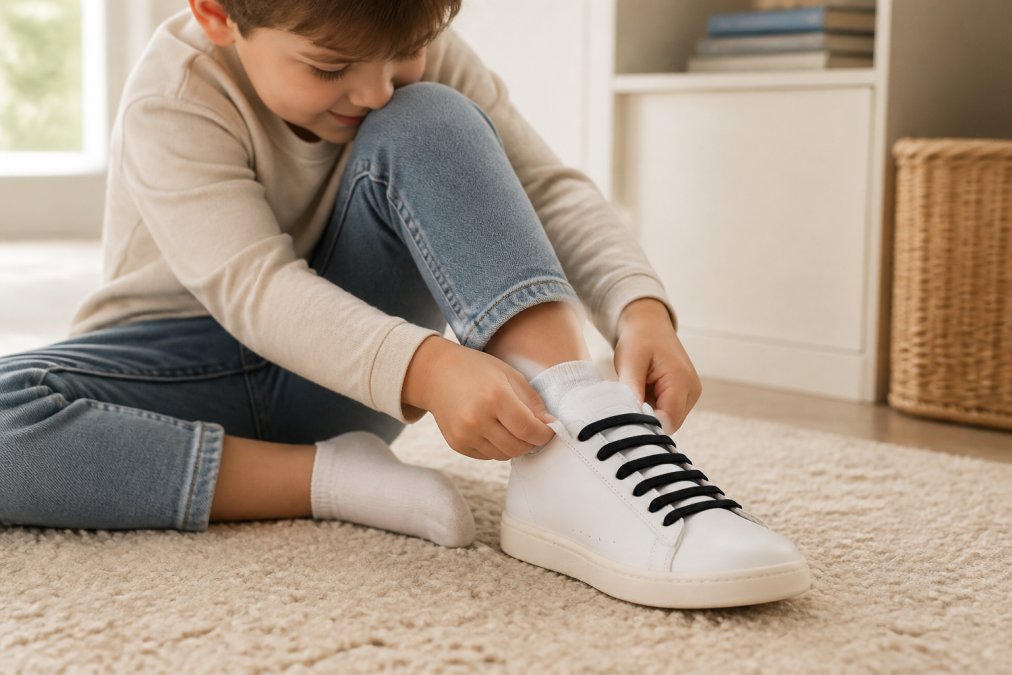
For athletic use, this matters significantly. A runner needs their shoe to stay snug and supportive throughout activity. Quality systems maintain consistent tension across miles of running, reducing foot sliding inside the shoe and preventing blisters.
Durability varies widely. uLace's elastic lacing systems, including the uLace Classic and uLace ProFormance options, are engineered with durability in mind. The Classic version offers affordability for everyday wear. The ProFormance version targets active use with enhanced materials designed to withstand the demands of sports and frequent activity.

DIY Hacks vs. Store-Bought Solutions
The decision between DIY lacing techniques and purchasing elastic lacing systems depends on your specific needs, budget, and how much permanence you want.
DIY methods using your existing laces cost nothing beyond a few minutes of your time. Tucking laces under the insole or tongue works immediately and is completely reversible. The trade-off is that DIY methods often don't feel quite as polished as purpose-built solutions.
Store-bought elastic lacing systems cost between $6 and $15 per pair. They're engineered specifically for slip-on conversion, so they work more smoothly than DIY hacks. The elasticity is consistent, installation is straightforward, and the result feels intentional.
Testing a DIY method first makes sense if you're uncertain whether slip-on conversion is right for you. It costs nothing and takes minutes. If you like the result, upgrading to elastic laces improves the experience.
Store-bought elastic laces work best for: daily regular use, multiple shoe pairs you want to convert consistently, situations where appearance and smooth functionality matter.
Maintaining Your Slip-On Sneakers Long-Term
Converting your sneakers to slip-ons changes how you maintain them, particularly if you've used elastic laces or permanent lacing modifications.
Elastic materials gradually lose elasticity over time. You'll notice it first as a slight increase in how easily your foot slides around inside the shoe during wear. When elasticity fades noticeably, replacement is straightforward: remove the old elastic laces and install new ones.
Cleaning slip-on sneakers requires slightly different care than traditionally laced shoes. Dust and debris can accumulate where the laces thread through the eyelets. Regular light brushing with a soft brush helps prevent buildup. For deeper cleaning, use a damp cloth to wipe around the eyelets, being careful not to soak the elastic material excessively.
Storage matters for long-term elasticity maintenance. Extreme heat and direct sunlight break down elastic materials faster. Store your shoes in a cool, dry place to extend the lifespan of elastic laces.
If you've used the insole-tucking or tongue-tucking methods, maintenance is simpler. These methods don't involve elastic materials, so there's no degradation to worry about. If adhesive was used, inspect periodically to ensure it's still holding.
The shoe's structural integrity isn't compromised by slip-on conversion. You're not removing material or weakening the shoe itself, you're just changing how the lacing system functions. The shoe will maintain its support, cushioning, and overall performance exactly as it did before conversion.
Converting your sneakers from traditional laced shoes to slip-on functionality solves a real problem for busy parents, seniors with mobility challenges, and anyone who values convenience. Multiple methods exist, each with different levels of permanence and polish. The right choice depends on your specific situation and how much you value appearance and smooth functionality versus cost and reversibility. For most people dealing with the daily friction of traditional laces, elastic lacing systems like uLace's no-tie options represent the best balance, affordable, effective, and designed specifically for this conversion. Transform the sneakers you already love into hassle-free slip-ons that work for your lifestyle.
| Method | Installation Time | Reversibility | Best For | Cost |
|---|---|---|---|---|
| Bunny Ear Lacing | 1 minute | Fully reversible | Quick daily convenience | Free |
| Insole Tucking | 2 minutes | Fully reversible | Permanent-looking slip-on feel | Free |
| Tongue Tucking | 2 minutes | Fully reversible | Clean appearance with security | Free |
| Elastic Laces | 3-5 minutes | Semi-permanent | Daily regular use, multiple pairs | $6-15 per pair |
Frequently Asked Questions
Can you really turn laced shoes into slip-ons without damaging them?
Yes. Methods like elastic lacing systems and simple tucking techniques preserve your sneakers' integrity while adding slip-on convenience. Elastic laces work with any shoe type and don't require permanent modification. The key is choosing a method that matches your shoe's eyelets and lacing pattern. uLace elastic laces, for example, install in seconds without tools or alterations.
Are no tie shoelaces for kids safe and secure during sports?
Quality elastic lacing systems are designed specifically for active use and stay secure during running, jumping, and play. Elastic laces provide consistent tension throughout the day without loosening. They prevent the tripping hazard of dangling laces while keeping feet snug inside the shoe. uLace products are tested for durability and security, making them reliable for playground and sports activities.
What's the difference between DIY lacing hacks and elastic shoelaces for seniors?
DIY methods like the bunny ear technique or tucking laces require manual setup each time and may need adjustment. Elastic shoelaces for seniors offer permanent convenience, slip on, slip off, no bending or tying required. Elastic systems provide consistent fit and support throughout the day without maintenance. For individuals with arthritis or mobility challenges, elastic laces eliminate the physical effort entirely.
How long do elastic lacing systems last compared to regular laces?
Quality elastic laces like uLace are engineered to withstand daily wear and maintain tension over time. They typically outlast regular shoelaces because they don't fray, untie, or get caught in machinery. The stretchy material is designed for durability and maintains its elasticity even with frequent slip-on and slip-off use.
This article was written using GrandRanker