




No-Tie Laces for Adults: Your Complete Guide
Table of Contents
- What Are No-Tie Laces for Adults?
- Benefits of Elastic Laces and Why They Matter
- How to Lace Shoes Without Tying: Installation and Setup
- Best No-Tie Shoelaces for Running and Athletic Performance
- Material Types and Durability: What Lasts
- Compatibility and Fit Across Different Shoe Types
- uLace Options for Every Style and Need
- Frequently Asked Questions
Last Updated: September 30, 2026
What Are No-Tie Laces for Adults?
No-tie laces for adults are elastic shoelace systems that transform traditional sneakers into slip-on shoes without the need for tying or untying. These laces use a combination of stretchy cord and locking mechanisms to create a secure fit that adapts to your foot shape. Instead of the standard knot-and-bow method, you simply slip your foot in and out while the elastic tension maintains a snug, comfortable hold.
The concept is straightforward but transformative. You thread the elastic laces through your shoe's eyelets once, then lock them in place. From that point forward, your shoes function like slip-ons. No more bending down to tie. No more dangling laces collecting dirt. Just convenience.
According to The Original Stretch Lace sizing guide, standard adult sneakers typically require 45-inch laces for proper fit, though this varies by shoe type. The elastic shoelace segment is projected to grow at 7.2% annually through 2034, positioning it as the fastest-growing product category within the broader shoelace market Dataintelo Shoelace Market Research Report.
At uLace, we've been perfecting this solution since 2009. Our no-tie laces come in multiple styles and colors, allowing you to customize your sneakers while gaining the slip-on convenience you've been missing. The uLace Guarantee backs every purchase, giving you confidence in your choice.
Benefits of Elastic Laces and Why They Matter
Elastic laces eliminate the friction points that make traditional lacing inconvenient. The primary benefit is obvious: you save time every single day. But the advantages extend far beyond convenience.
For parents managing young children, no-tie laces mean fewer morning battles and faster transitions between activities. Kids can put on their own shoes independently, building confidence while reducing parental stress. For seniors and individuals with mobility limitations, elastic laces remove a genuine barrier to independence. Bending repeatedly to tie laces strains the back and knees. Arthritis makes fine motor movements painful. No-tie systems solve these problems entirely.
The case for accessibility is compelling. 99% Invisible documented a no-tie lace implementation that restored the ability to secure footwear independently for an individual with a hand injury. That's not a minor convenience, that's restoring autonomy.
Elastic laces also protect your shoes. Forcing your foot into a tied sneaker without loosening the laces damages the heel counter and stretches the shoe material. Slip-on conversion eliminates this wear pattern, extending shoe lifespan. Your sneakers stay looking neat and tidy instead of developing creases and deformation from aggressive entry.
Athletes and active individuals benefit from secure fit during movement. The stretchy tension adapts to slight swelling during exercise while maintaining lockdown security. The customizable tension systems available today allow you to adjust fit, creating a personalized pressure profile that traditional laces cannot match.
| Audience | Primary Benefit | Secondary Benefit |
|---|---|---|
| Parents | Faster morning routines | Child independence |
| Seniors | Eliminates bending | Pain-free dressing |
| Athletes | Secure fit during movement | Customizable tension |
| Busy professionals | Time savings | Slip-on convenience |
| Fashion-conscious users | Style customization | Neat appearance |
How to Lace Shoes Without Tying: Installation and Setup
Installing no-tie laces is simpler than most people expect. The process involves threading the elastic cord through your shoe's existing eyelets, then securing it with the locking mechanism. Unlike traditional laces, you do this only once, then enjoy slip-on convenience indefinitely.
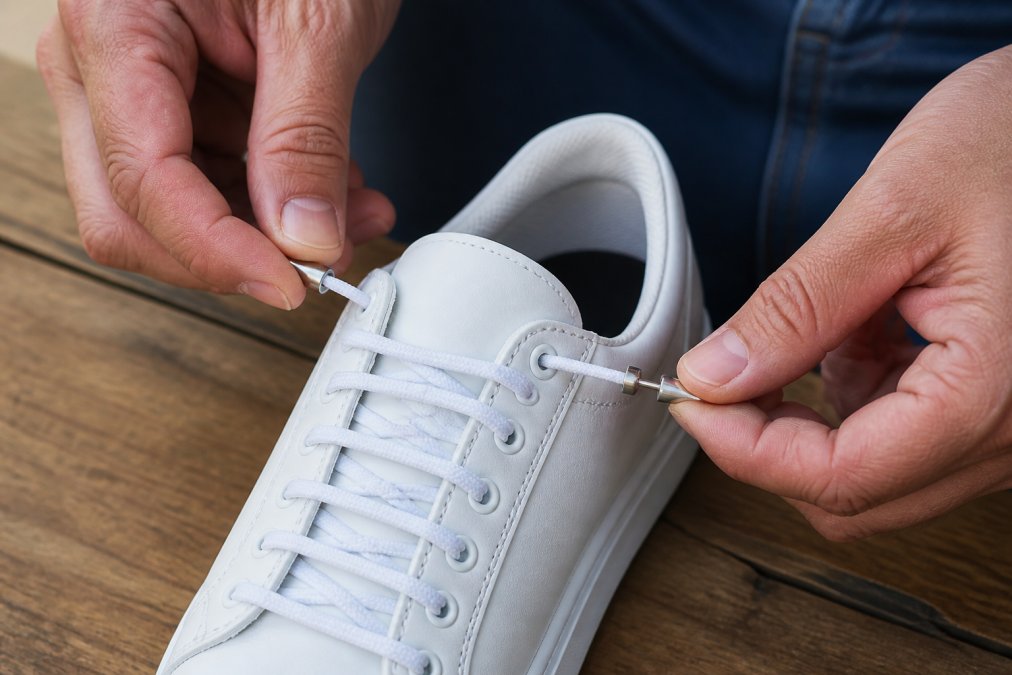
Step-by-Step Installation Process
Start by removing your shoe's original laces completely. You'll now have a clean canvas with empty eyelets. Take your no-tie lace system and begin threading from the bottom eyelets, working your way up toward the shoe's opening.
Push the lace through each eyelet firmly. The elastic should slide through smoothly without resistance. If you encounter friction, ensure the eyelet isn't bent or damaged. Continue this process until you've threaded both lace segments through all eyelets.
Once threaded completely, adjust the lace tension by pulling gently on the loose ends. You want snug contact across the entire foot without cutting off circulation. The elastic should feel secure but not restrictive. This is where personal preference matters, tighter tension provides more lockdown for athletic use, while looser tension prioritizes comfort for casual wear.
Now engage the locking mechanism. Most systems use metal clips or cord locks that you slide down the lace to cinch it tight. Position the lock at a height that feels comfortable when your foot is inside the shoe. Some designs allow you to adjust this position for fine-tuning.
Try on your shoe and walk around for a minute. The fit should feel stable when you walk, with no slipping at the heel. If the shoe feels too loose, tighten the lace slightly and re-engage the lock. If it feels too tight, loosen it incrementally until comfort is achieved.
Common Installation Mistakes to Avoid
The most frequent error is threading the lace too loosely initially. Loose threading creates slack in the system, which translates to poor fit and potential slipping. Thread firmly and deliberately, ensuring each eyelet captures the lace securely.
Another mistake is placing the lock too high on the lace. Position it at mid-shin height for most shoes, allowing the lace to distribute tension evenly across the foot. Locks positioned too high concentrate pressure on the upper foot and ankle.
Don't skip the adjustment phase. Many people thread their laces, lock them, and assume they're done. Real fit optimization requires trying on the shoe, walking around, and making micro-adjustments. What feels right standing still might feel different when you're moving.
Finally, avoid over-tightening. The lace should feel secure, not like a tourniquet. Excessive tension restricts blood flow, causes discomfort, and can actually reduce the shoe's security by creating pressure points that encourage foot slipping.
Best No-Tie Shoelaces for Running and Athletic Performance
Athletic performance demands secure fit without pressure points. Running creates repetitive impact that tests lace security continuously. The best systems for athletic use combine durable elastic cord with reliable locking mechanisms that don't shift during movement.
Runner's World identified Lock Laces as a top recommendation for elastic shoelaces, citing secure fit and ease of use as primary performance factors. Athletic users prioritize lockdown security over maximum comfort, you need your shoe to stay put through every stride.
For running specifically, consider systems with adjustable tension capabilities.
The elastic cord material matters significantly. Premium materials resist stretching and maintain tension over time. Durability translates directly to performance consistency, you want your fit to remain identical whether you're on week one or month six of use.
Water resistance is underrated for athletic use. Wet conditions cause regular laces to slip. Quality elastic laces maintain their grip even when damp, making them ideal for runners who train in variable weather.
Material Types and Durability: What Lasts
Not all elastic laces are created equal. The cord material, clip design, and locking mechanism all influence how long your system remains functional and secure.
Durable nylon cord resists stretching and maintains tension consistency over extended use.
Locking mechanisms outlast plastic alternatives significantly. The clips that hold your lace in place experience constant micro-stress during walking and running.
Quality systems are built for durability and long-term use.
Compatibility and Fit Across Different Shoe Types
No-tie laces work with most sneaker and casual shoe styles, but fit varies based on shoe construction. Understanding these variations helps you choose the right system for your specific footwear.
uLace Options for Every Style and Need
uLace offers multiple product lines designed for different use cases and style preferences. The range ensures you can find the right solution regardless of your shoe type, activity level, or aesthetic preferences.
Frequently Asked Questions
Do no-tie shoelaces actually work for running and athletic activities?
Yes, no-tie shoelaces are designed to provide a secure fit during athletic performance. The elastic material creates consistent tension across your foot, and quality options like uLace ProFormance are engineered specifically for runners and active individuals. However, some users report that while convenient, elastic systems may not provide identical lockdown security compared to traditionally tied laces during high-intensity sports. The key is choosing performance-focused options and ensuring proper installation for maximum stability.
How do I know which length of no-tie laces I need?
Standard adult sneakers, high-top sneakers, and boots may require different lace lengths. Lower-cut shoes with fewer eyelets may work best with shorter laces. uLace offers options in different lengths to match your specific shoe type. If you're unsure, measure your current laces or check your shoe's eyelet count before ordering to ensure the perfect fit.
Are no-tie elastic laces compatible with all sneaker types?
No-tie laces work with most sneakers, but compatibility depends on eyelet count and shoe construction. Canvas shoes, athletic sneakers, and casual footwear typically accommodate elastic laces well. Shoes with very few eyelets or unusual lacing patterns may require adjustment. uLace products are designed for broad compatibility, but checking your specific shoe type before purchase ensures the best results and prevents installation issues.
How long do elastic no-tie laces last with daily wear?
Quality elastic laces are built for durability and long-term use. The elastic material maintains its stretch and tension through regular wear, though longevity depends on material quality and frequency of use. uLace laces are engineered for lasting performance, and many customers report continued functionality after months of daily wear. Proper installation and occasional tension adjustment help maximize lifespan.
What makes uLace different from other no-tie lace brands?
uLace has been the original creator of elastic no-tie shoelaces since 2009, bringing decades of expertise to the category. The brand offers a wide variety of styles and colors, easy push-and-pull installation without special tools, and fast shipping from the USA. uLace products are designed to prevent shoe damage during installation and provide a secure, comfortable fit that keeps sneakers looking neat and tidy all day.