




No-Tie Shoelaces for Elderly: 7 Best Options
Table of Contents
- Why No-Tie Shoelaces Matter for Seniors
- Top No-Tie Shoelace Options for Elderly Users
- How to Install Elastic Shoelaces: Step-by-Step Guide
- Benefits of No-Tie Laces for Arthritis and Mobility
- Adaptive Footwear for Seniors: Safety and Fall Prevention
- Which No-Tie Laces Should You Choose?
- Conclusion
- Frequently Asked Questions
Why No-Tie Shoelaces Matter for Seniors
Tying shoelaces becomes a challenge for many seniors. Bending strains the back, arthritis makes fine motor movements painful, and balance issues create fall risks. No-tie shoelaces eliminate these struggles entirely. At uLace, we've designed elastic lacing systems that transform any sneaker into a slip-on shoe, removing the physical demand that traditional laces require. This simple modification restores independence for people who've adapted their daily routine around footwear frustration.
A senior who can't tie their shoes either depends on someone else for help, avoids going out, or forces their feet into unsupported shoes. No-tie shoelaces address this directly by restoring the ability to put on and take off shoes without bending, twisting, or struggling with dexterity. Unlike slip-ons, elastic shoelaces maintain the compression fit of a properly laced shoe while delivering slip-on convenience.
Top No-Tie Shoelace Options for Elderly Users
Choosing the right no-tie laces depends on your shoe type, budget, and activity level. uLace offers multiple options designed for different needs.
1. uLace Classic - Budget-Friendly Slip-On Solution
Best for: Most seniors seeking affordable, everyday slip-on convenience
The uLace Classic line ($6.49 per pair) delivers what most elderly users need without unnecessary features. These elastic laces work with virtually any sneaker, casual shoe, or walking shoe, transforming them into easy-on, easy-off slip-ons in minutes. Installation takes under five minutes using the simple push-and-pull method.

The Classic design features neutral tension that balances security with ease of entry. Your foot slides in without excessive force, yet the laces stay locked during normal walking. Available in Black, White, Light Grey, and Graydient, they blend seamlessly with most shoe colors. One 72-year-old customer shared: "It's hard for me to bend over all the time to tie my shoelaces... Now I just slip my foot through my shoes and that's it." At $6.49 per pair, you can transform your entire shoe collection for under $50.
2. uLace Slims - Narrow Shoe Specialist
Best for: Seniors with narrow or tight-fitting shoes
Narrow feet often mean traditional slip-ons are too loose, and tight shoes make bending down to tie laces painful. uLace Slims ($5.99 per pair) are engineered specifically for narrow shoe widths, providing a snug fit without requiring oversized shoes. The thinner elastic material fits through lace holes of tight shoes without bunching. Available in Black and White, Slims work best with shoes that already fit snugly.
3. uLace ProFormance - Active Senior Choice
Best for: Seniors who walk regularly, travel frequently, or need maximum security
The uLace ProFormance line ($14.99 per pair) is engineered for higher-impact use, offering reinforced elastic and enhanced tension control. ProFormance laces use durable elastic that resists degradation from sweat, UV exposure, and frequent movement. The tension holds your foot firmly in place during extended walking, uneven terrain, or travel. If you're walking several miles per week, traveling frequently, or dealing with balance concerns, the enhanced security justifies the premium cost.
4. uLace Shorts - Extended Coverage Option
Best for: Seniors who prefer maximum ankle support and extended lace coverage
The uLace Shorts line ($12.99 per pair) uses longer elastic that extends higher up the shoe, creating a more traditional laced appearance while maintaining slip-on convenience. The longer elastic distributes tension more evenly across the foot and lower ankle. Available in Light Grey and neutral colors, Shorts blend naturally with most shoe styles.
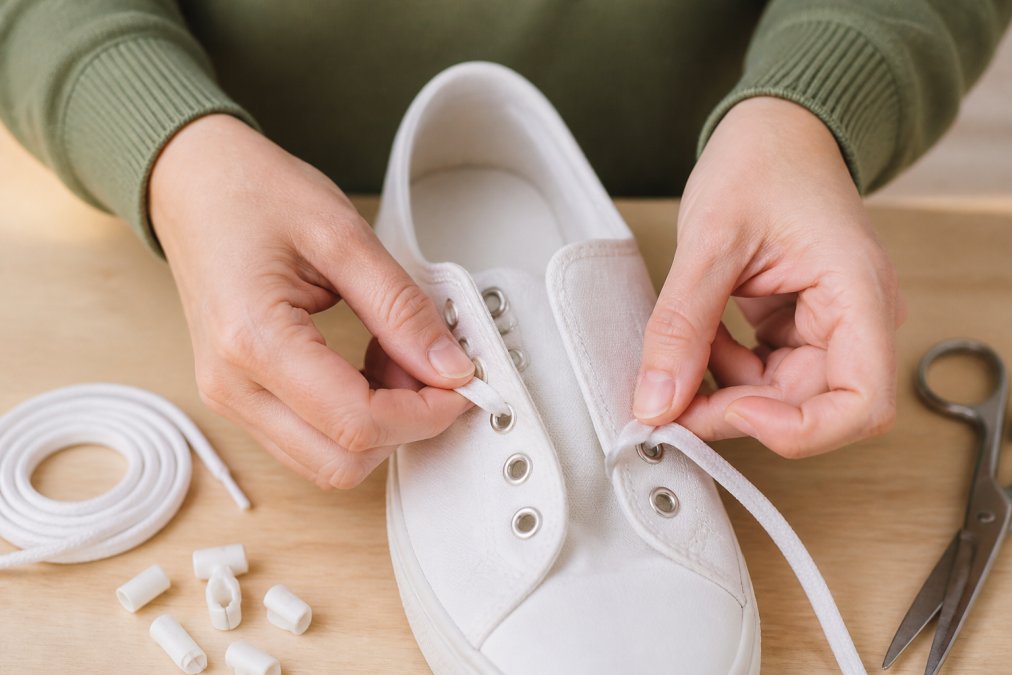
How to Install Elastic Shoelaces: Step-by-Step Guide
Installing no-tie shoelaces takes fewer than five minutes and requires no tools.
Step 1: Remove Your Original Laces
Remove the traditional laces from your shoe completely. Keep the original laces in case you want to revert to traditional lacing later.
Step 2: Thread the Elastic Lace from the Inside
Push one end of your elastic lace through the bottom eyelets from the inside of the shoe. This inside-out approach creates a secure lock that prevents the lace from pulling out during wear.
Step 3: Cross and Continue Threading
Cross the two ends over each other and push each through the next set of eyelets from the inside. Continue this crossing pattern up the shoe.
Step 4: Secure the Top
Once you've threaded to the top eyelets, pull both ends tight so the lace is snug but not uncomfortably tight. Tie the two ends together in a simple knot.
Step 5: Test the Fit
Put your shoe on without untying it. Your foot should slide in smoothly, and the elastic should stretch to accommodate while staying locked in place.
Step 6: Adjust as Needed
Elastic laces may feel slightly different during the first few wears. After a few days, the elastic settles into its final position and the fit becomes consistent.
Benefits of No-Tie Laces for Arthritis and Mobility
Arthritis affects approximately one in four adults, with significantly higher prevalence among seniors (the CDC). The fine motor movements required to tie shoelaces, gripping, pulling, and manipulating the lace material, become painful or impossible as arthritis progresses. No-tie shoelaces eliminate this pain point entirely while maintaining proper support and fit.
Reduced Hand and Finger Pain
Traditional shoelace tying requires gripping, pinching, and pulling movements that stress small joints in your hands and fingers. Elastic shoelaces eliminate these movements. Your foot slides in, the elastic stretches, and the lace stays locked. No gripping, no pinching, no lingering pain.
Improved Independence and Dignity
Many seniors with arthritis reach a point where they can't tie their own shoes and must ask for help. No-tie laces restore the ability to put on and take off shoes without assistance, affecting mental health and self-esteem positively.
Better Ankle and Foot Support Than Slip-Ons
Traditional slip-on shoes offer convenience but often lack the support of properly laced shoes. No-tie elastic laces provide the compression fit and support of a real laced shoe while delivering slip-on convenience, which is especially important for seniors with balance concerns.
Reduced Bending and Back Strain
Bending over to tie shoelaces puts stress on your lower back. No-tie laces eliminate the need to bend at all. You sit on a chair or bed, slide your foot into the shoe, and you're done.
Adaptive Footwear for Seniors: Safety and Fall Prevention
Falls are the leading cause of injury among seniors, and improper footwear contributes significantly to fall risk (the CDC).

How Footwear Affects Fall Risk
Loose shoes cause your foot to shift inside the shoe during walking, disrupting proprioception, your body's sense of where your foot is in space (peer-reviewed research). This disruption increases stumbling risk. Properly fitting shoes that stay locked in place reduce these risks significantly. No-tie shoelaces solve both problems: they create a secure fit and eliminate balance challenges of bending over to tie.
The Importance of Proper Fit and Compression
A shoe that fits loosely offers no support. A shoe that's too tight cuts off circulation. The ideal shoe provides compression fit that holds your foot securely without restricting blood flow. Elastic shoelaces deliver exactly this: the elastic stretches to accommodate your foot while maintaining consistent compression, keeping your foot locked in place during walking.
Slip-Resistant Soles and Lace Security
Slip-resistant soles with good traction prevent your foot from sliding on smooth or wet surfaces. No-tie laces work with any shoe, including those with excellent slip-resistant soles. By choosing shoes with proper traction and adding no-tie laces, you create a fall-prevention system addressing both lacing security and surface traction.
Footwear for Post-Surgery or Injury Recovery
Seniors recovering from surgery, injury, or illness often have temporary mobility limitations. No-tie laces allow you to maintain normal footwear during healing without requiring assistance or resorting to uncomfortable slip-ons. This is particularly valuable for seniors recovering from hip or knee surgery, where bending is contraindicated.
Which No-Tie Laces Should You Choose?
| Lace Type | Best For | Price | Key Feature | Installation Time |
|---|---|---|---|---|
| uLace Classic | Most seniors, everyday wear | $6.49 | Neutral tension, multiple colors | 5 minutes |
| uLace Slims | Narrow feet, tight shoes | $5.99 | Thinner material for snug fit | 5 minutes |
| uLace ProFormance | Active seniors, frequent walking | $14.99 | Enhanced durability, reinforced security | 5 minutes |
| uLace Shorts | Extended ankle coverage preference | $12.99 | Longer lace design, traditional appearance | 5 minutes |
Decision Framework: How to Pick the Right Option

Start by assessing your primary need. If you're looking for basic slip-on convenience at the lowest cost, uLace Classic ($6.49) is the right choice. If your shoes already fit snugly and you need laces designed for narrow widths, uLace Slims ($5.99) are ideal. If you're active and want maximum security during extended walking or travel, uLace ProFormance ($14.99) justify the premium. If you prefer the visual appearance of traditional laced shoes with extended ankle coverage, uLace Shorts ($12.99) deliver that combination.
Consider your shoe collection next. If you have multiple pairs, you might benefit from mixing options: Classic laces for everyday shoes, ProFormance for walking shoes, and Slims for shoes that already fit tightly. Think about your activity level and conditions where you'll wear these laces. Sedentary seniors are well-served by the Classic line, while active seniors benefit from ProFormance's enhanced durability.
Conclusion
No-tie shoelaces for elderly users solve a fundamental accessibility problem affecting independence, safety, and quality of life. Bending to tie laces becomes impossible for many seniors due to arthritis, back pain, balance issues, or mobility limitations. Elastic shoelaces eliminate this barrier entirely, restoring the ability to put on and take off shoes without assistance, bending, or pain.
uLace has been transforming everyday footwear into accessible slip-ons since 2009. Our elastic lacing system works with the shoes you already love, with no need to buy new footwear. Installation takes five minutes, requires no tools, and is completely reversible. Whether you choose Classic, Slims, ProFormance, or Shorts, you're getting a proven solution that delivers real independence.
Get started with uLace and experience the difference that slip-on convenience makes. Transform your entire shoe collection for under $50, restore your independence, and eliminate the daily frustration of lacing. Take the quiz on our website to find the perfect option for your needs, and join thousands of seniors who've already made the switch.
Frequently Asked Questions
Q: What makes no-tie shoelaces for elderly users different from regular elastic laces?
No-tie shoelaces designed for seniors can feature adjustable tension, secure lockdown mechanisms, and ergonomic design that prevents slipping during daily activities. Unlike basic elastic laces, quality no-tie options can provide compression fit and customizable comfort without requiring hand dexterity to tie or untie. They transform any sneaker into a slip-on while maintaining the support needed for stability and fall prevention.
Q: How do elastic shoelaces help people with arthritis?
Elastic shoelaces eliminate the fine motor control required for tying traditional laces, making them ideal for those with arthritis-related dexterity issues. The benefits of no-tie laces for arthritis include no bending required, and quick on-and-off convenience. Users can slip their shoes on without gripping, twisting, or holding tension, reducing joint pain and inflammation while maintaining independence in daily living.
Q: How do I know if no-tie shoelaces will work with my specific shoes?
Most elastic no-tie laces work with standard sneakers, athletic shoes, and casual footwear with traditional lace eyelets. Check your shoe type before purchasing: if your shoes have standard eyelets from toe to collar, no-tie laces will fit. Narrow shoes may need slimmer lace options, while wider shoes benefit from standard or extended-coverage styles. uLace offers multiple styles to match different shoe widths and designs, ensuring proper fit and secure lockdown.
Q: Are no-tie shoelaces safe for preventing falls in elderly users?
Yes, adaptive footwear for seniors using no-tie laces reduces fall risk by eliminating loose, dangling laces that can catch on obstacles or cause tripping. The secure lockdown and compression fit keep shoes firmly on the foot during walking and movement, improving stability and confidence. Seniors can slip shoes on and off safely without bending over, reducing the risk of dizziness or loss of balance associated with traditional lacing. However, proper shoe fit and choosing laces with adequate tension control are essential for maximum safety.
Ready to make your shoes easier to wear? Visit uLace today to explore our full range of no-tie shoelace options and find the perfect fit for your lifestyle.
This article was written using GrandRanker