




Best No Tie Shoelaces for Kids: 2026 Guide
Table of Contents
- Why No Tie Shoelaces for Kids Actually Work
- Top No Tie Shoelaces for Kids: Honest Picks
- Best No Tie Laces for Sports and Active Play
- How to Install No Tie Laces in Under 5 Minutes
- Shoe Compatibility Guide: Which Sneakers Work Best
- Sizing, Maintenance, and Making Them Last
- Which No Tie Shoelace Should You Pick?
- Conclusion
Last Updated: August 20, 2026
Why No Tie Shoelaces for Kids Actually Work
No tie shoelaces for kids solve the morning shoe-tying battle every parent knows well. Elasticized laces convert any lace-up sneaker into a slip-on, giving kids independence to get their shoes on and off without adult help. Below, we'll walk through the best options on the market, how to install them, and how to pick the right one for your child's shoes.
Quick Picks:
- Best Overall: uLace Kiddos, modular, colorful, and built specifically for children's sneakers
- Best for Youngest Kids: Zubits Magnetic Lacing, magnetic closures, no threading required at all
- Best for Easy Cleaning: HOMAR Silicone No Tie Laces, waterproof and wipe-clean
- Best Size-Specific Fit: Laceez, sized by shoe size for a more precise stretch
- Best Budget Pick: KIWI Sneaker No-Tie Laces, affordable, widely available, one-touch adjustment
Developmental Benefits for Fine Motor Skills
Fine motor skill development in young children follows a progression, and shoe tying sits near the top of that ladder. Many children aren't developmentally ready to tie laces reliably until age 6 or 7. According to child development guidance from the American Academy of Pediatrics, the sequencing, bilateral coordination, and sustained attention required for tying laces are genuinely complex tasks that develop at different rates across children.
No-tie laces create space for development. When a child can independently put on and remove their shoes, they build confidence and practice grip and pull motions that support broader fine motor growth. For children with sensory sensitivities or conditions like dyspraxia, tieless laces are frequently recommended as an adaptive tool that promotes independence without frustration.
Benefits of Slip-On Shoe Conversions for Daily Routines
Converting a standard sneaker to a slip-on with elastic replacement laces eliminates the morning friction point most families face. Kids can get shoes on independently before school, remove them at the door without help, and never deal with a dragging lace catching on a step or scooter wheel. For parents of multiple children, that independence compounds quickly. The other benefit: no more forcing feet into shoes without untying, which damages the heel counter and shortens the shoe's life.
Top No Tie Shoelaces for Kids: Honest Picks
The market for no tie shoelaces has expanded significantly, but not every product is built with children's shoes specifically in mind. These picks are chosen based on fit, installation ease, durability, and performance during active play.
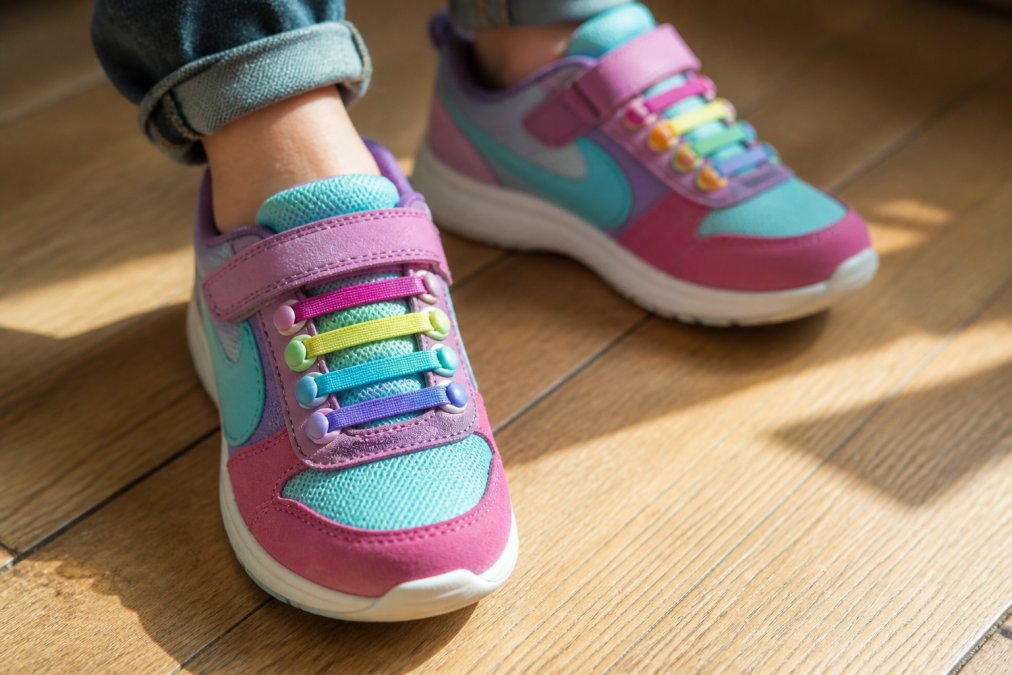
1. uLace Kiddos: Best for Customization and Color
The strongest all-around pick for most kids' sneakers is uLace Kiddos, and the modular design is why.
Unlike single-piece elastic systems, uLace Kiddos uses individual lace segments that thread through each eyelet separately. This means you can mix colors across eyelets, create patterns, and replace a single segment if one wears out. The laces are made from woven, yarn-dyed polyester with Lycra filament, giving them the look of traditional fabric laces rather than rubbery silicone alternatives.
Installation takes roughly three minutes using a simple push-pull method. The laces are sized for medium eyelet spans of 1.75 to 2.25 inches, which covers most children's sneakers. Over 50 color and design options make these genuinely fun for kids to choose themselves, increasing buy-in for wearing the shoes.
You'll need two packs per pair of shoes, since each pack covers one shoe. These require standard eyelets and won't work with loop or hook closure systems.
Visit u-lace.com to take the quiz and find the right fit for your child's sneakers.
2. Zubits Magnetic Lacing Solution: Best for Youngest Kids
For toddlers and children under 6, Zubits takes a completely different approach.
Rather than replacing laces with elastic alternatives, Zubits adds magnetic closures that attach to existing laces. The magnets click together to close and pull apart to open, meaning the shoe opens wide enough to slip on easily. This is the easiest system for young children to operate independently, no threading, no tension adjustment, just click and go.
Initial installation requires threading existing laces through the Zubits hardware, taking about 10 minutes but only happening once. Zubits are reusable across future shoe pairs, which helps justify the cost over time.
3. HOMAR Silicone No Tie Laces: Best for Easy Cleaning
Playground mud, puddles, and lunch spills are a fact of life with kids' shoes. HOMAR's silicone laces handle all of that with a damp cloth.
The silicone material is fully waterproof and weather-resistant, making these the most practical choice for active outdoor use. A unique grip design on both ends prevents the laces from pulling out of the eyelets during vigorous movement. HOMAR offers 13 color options and sizes specifically for children's shoes.
Silicone looks different from fabric laces. Some kids don't care. Others do. If your child is particular about their shoes looking "normal," the woven polyester options like uLace Kiddos will suit them better.
4. Laceez: Best for Size-Specific Fit
Most elastic lace systems use a one-size-fits-most approach. Laceez offers sizes from X-Small to X-Large matched to children's shoe sizes.
That size specificity matters. An elastic lace cut for a size 13 toddler shoe will have too much slack in a size 2 toddler shoe, creating a looser fit and more movement inside the shoe. Laceez calibrates the stretch to the shoe size, delivering a more secure, snug fit for active kids.
The tradeoff compared to modular systems is less customization, you get a single color per pair rather than mix-and-match options.
5. KIWI Sneaker No-Tie Laces: Best Budget Pick
KIWI's no-tie laces use a one-touch elastic adjustment system that gives a snug, knot-free fit at an accessible price point. These are widely available at major retailers, making them a practical grab-and-go option.
The one-touch mechanism delivers a secure feel comparable to tied laces for everyday wear. For school and casual wear, these work well. For competitive sports, step up to a more secure option.
Best No Tie Laces for Sports and Active Play
The biggest concern parents raise is whether elastic laces will stay secure during running, jumping, and playground activity. It's a fair question.
Elastic laces with individual segment tension, like the uLace modular system, distribute compression across each eyelet independently. This means the lace tension adjusts to the foot's shape during movement rather than applying uniform pressure. Many parents find this actually provides a more comfortable fit during sports than traditional tied laces.
For organized sports like soccer or basketball, look for systems with a tension lock or adjustable compression at the toe box. The key feature is whether the lace ends have a secure anchor point in the bottom eyelets, preventing the entire lace from shifting during lateral cuts.
According to guidance on children's footwear and sports safety from the American Podiatric Medical Association, proper shoe fit and secure closure are among the most important factors in preventing ankle injuries during youth sports. A well-fitted elastic lace that maintains consistent tension throughout play addresses both criteria.
How to Install No Tie Laces in Under 5 Minutes
Installing no tie laces is straightforward once you understand the method. The process below applies to most elastic and silicone lace systems.
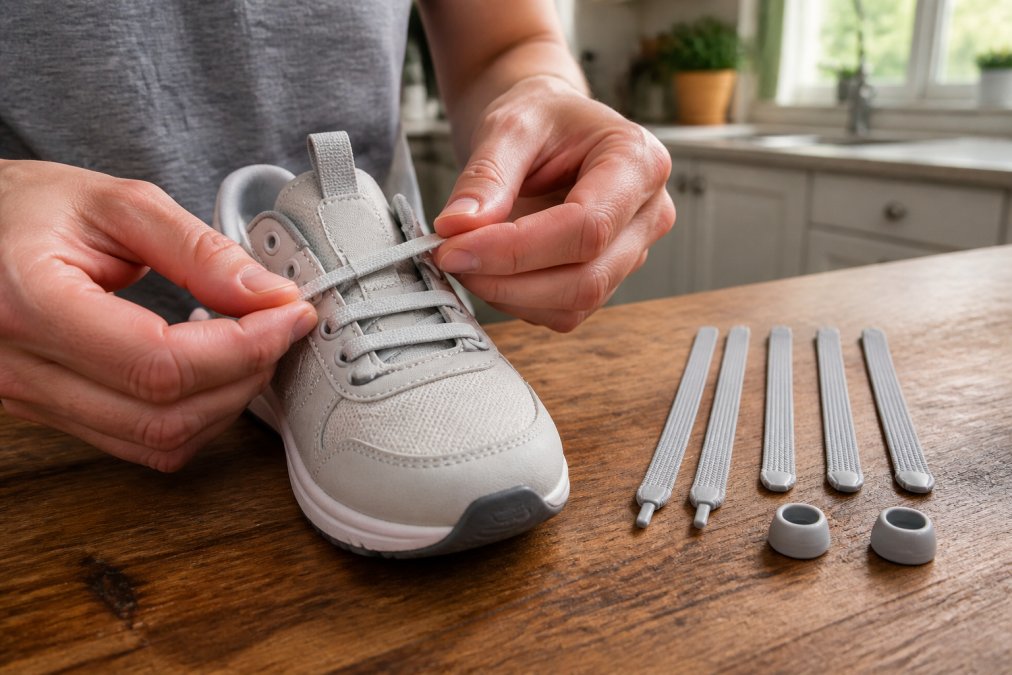
What you'll need: The new laces, the child's shoe, and about three to five minutes.
Step 1: Remove the old laces. Pull the traditional laces out completely, giving you a clear view of all the eyelets.
Step 2: Start at the bottom eyelet. Thread the first lace segment (or the end of a single-piece lace) through the bottom eyelet from the outside in.
Step 3: Work upward through each eyelet. For modular systems like uLace, connect each segment to the previous one as you move up. For single-piece elastic systems, thread the lace through each eyelet in a standard criss-cross pattern.
Step 4: Secure the top eyelet. Tuck the end of the lace or the final segment into the last eyelet. Most systems have an anchor mechanism that prevents pull-through.
Step 5: Test the tension. Slip your hand into the shoe and flex it. The lace should stretch comfortably without excessive slack.
Shoe Compatibility Guide: Which Sneakers Work Best
Not every shoe works equally well with elastic no-tie laces.
Best compatibility:
- Standard lace-up sneakers with 6-8 eyelets
- Running shoes with standard eyelet spacing
- Canvas sneakers and casual trainers
Works with some adjustment:
- Shoes with 10+ eyelets (you may need extra segments for modular systems)
- Shoes with very wide eyelet spans
Poor compatibility:
- Shoes with hook-and-loop closures already installed
- Boots with lace hooks rather than eyelets
- Shoes with decorative loops rather than true eyelets
The eyelet span is the most important measurement. uLace Kiddos, for example, are designed for a medium eyelet span of 1.75 to 2.25 inches, which covers most children's sneakers. When in doubt, measure the distance between the two bottom eyelets before ordering.
| Shoe Type | Elastic Lace Compatibility | Best System | Notes |
|---|---|---|---|
| Standard kids' sneakers | Excellent | uLace Kiddos or Laceez | Most common fit |
| Running shoes | Excellent | HOMAR Silicone or uLace | Check eyelet span |
| Canvas casual shoes | Good | KIWI or Laceez | Wider eyelets may need silicone |
| High-tops | Moderate | Zubits Magnetic | Ankle support may need standard lace |
| Boots with hooks | Poor | Not recommended | Hooks won't anchor elastic ends |
| Loop-closure shoes | Not compatible | Any | Requires true eyelets |
Sizing, Maintenance, and Making Them Last
Sizing: The most common mistake is buying adult-length elastic laces for children's shoes. Children's sneakers have shorter eyelet runs and closer eyelet spacing. Always check whether the product lists a kids-specific size or a shoe size range.
Cleaning: Silicone laces like HOMAR's wipe clean with a damp cloth in seconds. Fabric and polyester laces like uLace Kiddos can be hand-washed with mild soap and air-dried. Never put elastic laces in a dryer, heat degrades elasticity over time.
Longevity: Many parents report that elastic laces outlast the shoes themselves, particularly with modular systems where individual segments can be replaced. The main factors that reduce lifespan are UV exposure, heat, and repeated over-stretching beyond the lace's design range.
Signs it's time to replace: Loss of elasticity, fraying at the eyelet contact points, or visible cracking in silicone materials. With normal use, quality elastic laces typically last through multiple seasons.
Which No Tie Shoelace Should You Pick?
The right choice comes down to three factors: your child's age, their shoe type, and how much customization they want.
For most school-age kids with standard sneakers, uLace Kiddos is the strongest all-around pick. The modular design, authentic fabric look, and 50+ color options make them genuinely appealing to kids who care about how their shoes look.
For toddlers and very young children who need the absolute easiest system, Zubits Magnetic is in a category of its own.
For outdoor and sports use where cleaning is a regular concern, HOMAR Silicone is the practical workhorse.
For parents who want size-specific tension calibration, Laceez is the most precise fit for children's shoes.
For a budget-friendly entry point, KIWI is widely available and covers everyday school wear well.
| Product | Best For | Standout Feature |
|---|---|---|
| uLace Kiddos | Customization and color | Modular, 50+ colors, fabric look |
| Zubits Magnetic | Youngest kids and easiest use | Magnetic click closure |
| HOMAR Silicone | Active outdoor use and easy cleaning | Waterproof, wipe-clean |
| Laceez | Size-specific fit | Sized by shoe size |
| KIWI No-Tie | Budget-conscious families | One-touch adjustment |
The best no tie shoelaces for kids aren't necessarily the most technically sophisticated, they're the ones your child will actually want to use every day. Color, texture, and ease of use at the child's level matter as much as the engineering behind the lace.
Mornings are already complicated enough without a shoe-tying standoff at the door. The right pair of no tie shoelaces turns that friction point into a genuine win for independence. uLace Kiddos remain the top pick for most families, combining a fabric-like appearance, modular customization, and a proven installation system. Take the quiz at u-lace.com to find the exact match for your child's sneakers and get them shipped fast from the USA.
Frequently Asked Questions
Are no tie shoelaces safe for toddlers and young children?
No tie shoelaces are generally safe for toddlers when sized correctly. Elastic styles stretch to allow a secure fit without creating pressure points, and they eliminate the loose, dangling laces that cause trips and falls. Modular systems like uLace Kiddos are sized specifically for children's shoes. Magnetic closures such as Zubits are designed for children aged 5 and up. Always check that the laces sit snug in the eyelets and do not hang loose at the toe or heel before your child heads out.
Can you use no tie laces on any type of sneaker?
Most elastic no tie shoelaces work with standard eyelets found on sneakers and athletic shoes. They are not compatible with shoes that use loops, hooks, or BOA dials instead of eyelets. Flat-bottom footwear with evenly spaced eyelets and an eyelet span between roughly 1.75 and 2.25 inches works best. Boots with many eyelets or shoes with very wide spacing may need a different lacing approach. Check the manufacturer's compatibility guide before buying to confirm your child's specific shoe style will work.
At what age should a child be able to tie their shoelaces?
Most children develop the fine motor skills needed to tie shoelaces between ages 5 and 7, though this varies widely. No tie shoelaces are a practical solution for younger children who are not ready yet, as well as for older kids who find tying frustrating or slow. Using elasticized laces during these years also lets children practice independence, slipping shoes on and off without adult help, which builds confidence even before they master the traditional knot.
How long do elastic no tie laces actually last?
Durability depends on material and how often the shoes are worn. Fabric-based elastic laces like uLace Kiddos, made from woven polyester and Lycra filament, tend to hold their stretch and shape longer than basic silicone alternatives under daily use. Silicone laces are weather-resistant and easy to clean but can stiffen in very cold conditions. With regular use on an active child, quality elastic laces typically last several months to over a year. Checking tension periodically and replacing laces that have lost their stretch keeps the fit secure.
Do elastic laces stay secure during running and sports?
Quality elastic no tie laces with a tension lock or compression fit hold well during running and playground activity. The key is choosing laces rated for active use rather than casual wear only. uLace and similar modular systems distribute tension across each eyelet individually, so the shoe conforms to foot movement without loosening. Silicone laces with grip-end aglets also resist pulling out during high-impact play. If your child plays organized sports, look for laces specifically described as playground-ready or designed for activewear to get the most secure fit.
This article was written using GrandRanker