




No-Tie Shoelaces: Prevent Dangling, Dirty Laces
Table of Contents
- Why Dangling and Dirty Shoelaces Matter for Adaptive Clothing
- How No-Tie Shoelaces Work and Why They Prevent Dangling Laces
- Adaptive Shoes for Limited Mobility: Beyond Traditional Lacing
- How to Keep Shoelaces Clean When You Can't Bend or Reach
- Installation and Security: Making Sure No-Tie Laces Stay Put
- Choosing the Right No-Tie Solution for Your Needs
- Conclusion
- Frequently Asked Questions
Last Updated: October 9, 2026
Why Dangling and Dirty Shoelaces Matter for Adaptive Clothing
Dangling shoelaces create real problems for people with limited mobility, arthritis, or balance challenges.
The adaptive clothing market is growing fast. According to Coherent Market Insights' Adaptive Clothing Market forecast, the industry is projected to reach $35.27 billion by 2034.
At uLace, we've seen how this simple change transforms mornings. One customer told us: "I'm 72 and it's hard for me to bend over all the time to tie my shoelaces.
How No-Tie Shoelaces Work and Why They Prevent Dangling Laces
No-tie shoelaces are elastic laces that replace traditional string laces without any tying.
Here's how they work:
- The elastic stretches to let your foot slide in
- The laces stay threaded through the eyelets permanently
- Once installed, they never come untied or dangle
- The tension holds your foot securely in place
The key difference: traditional laces come loose and trail on the ground, collecting dirt and moisture, while elastic no-tie laces stay permanently installed and flex with your foot.
Research shows that design barriers to adaptive clothing include ease of use and accessibility. No-tie laces directly address this by removing the fine motor skill requirement of tying knots.
Installation takes about two minutes per shoe. You thread the elastic lace through each eyelet, then secure the ends. That's it. No tools needed.
Adaptive Shoes for Limited Mobility: Beyond Traditional Lacing
Not everyone can wear standard laced shoes.
Adaptive footwear solutions fall into several categories:
- Slip-on shoes (no laces at all, but limited style options)
- Velcro or hook-and-loop closures (easier than laces, but less secure for active use)
- Magnetic closures (secure, but expensive and not widely available)
- No-tie elastic laces (transforms any shoe into a slip-on with full security)
The advantage of elastic no-tie laces is flexibility: you don't need special adaptive shoes. Buy the sneakers you love, any brand or style, and transform them.
A 2023 study examining garment construction for wheelchair users identified design barriers including seated posture and fabric pressure as key challenges.
With no-tie shoelaces, there's no bending required. No fine motor control. No daily frustration. Just slip your foot in and go.
How to Keep Shoelaces Clean When You Can't Bend or Reach
Dirty shoelaces are more than an aesthetic problem: they collect bacteria, dirt, and moisture that cause odors and foot health issues. For people with limited mobility, cleaning laces is difficult, so prevent buildup first and keep any cleaning low-effort.
Why elastic no-tie laces stay cleaner than traditional laces
Traditional laces have two dirt traps: the knot, which wicks in moisture and grime, and the loose ends, which drag on the ground.
Prevention first
- Apply fabric protector spray to canvas or mesh uppers and lace runs every few weeks to reduce dirt and moisture bonding to fibers.
- Avoid puddles, wet grass, and muddy ground.
- Store shoes clean and dry on a shelf or boot tray, not the floor.
- Rotate two pairs so each dries fully; moisture in elastic fibers accelerates odor and breakdown.
Routine cleaning for elastic laces
- Wipe visible lace runs with a damp microfiber cloth while the shoes are on your feet, the lowest-effort option, done seated.
- Use a soft-bristle brush or clean toothbrush to lift surface dirt from the lace texture and eyelets.
- For deeper cleaning, hand-wash in lukewarm water with a few drops of mild dish soap. Soak 15 minutes, agitate gently, then rinse until clear.
- Blot with a towel and air dry away from direct heat; high heat degrades elastic, so skip the dryer and radiator.
When you can't bend or reach
- A long-handled sponge or curved-neck dish brush lets you scrub the shoe top seated.
- A grabber tool lifts a shoe to counter height without stooping.
- A caregiver can handle periodic deep cleans while you do quick wipes in between.
- Keep a small kit, cloth, brush, spray, within arm's reach where you put shoes on.
Maintenance schedule that actually works
- Daily or after each wear: quick wipe of lace runs if shoes saw dirt or moisture.
- Weekly: brush the eyelet area and check for fraying or stretched sections.
- Monthly: hand-wash laces (or the shoe if uppers are washable) and reapply fabric protector.
- Seasonally: inspect for permanent staining or lost stretch and replace if either occurred.
Signs it's time to replace rather than clean
- The elastic has lost its snap and no longer holds tension.
- The lace surface is pilled, frayed, or permanently discolored.
- Odor persists after a proper hand wash and full dry.
- The locking mechanism or end caps no longer grip.
Replacement laces are inexpensive compared with a slip or foot-health issue, so treat them as a wear item.
Installation and Security: Making Sure No-Tie Laces Stay Put
Installation is straightforward, but doing it correctly keeps laces secure, comfortable, and out of the way. A poor install is the main reason people report slipping, pressure points, or loose ends, so treat it as a fit process.
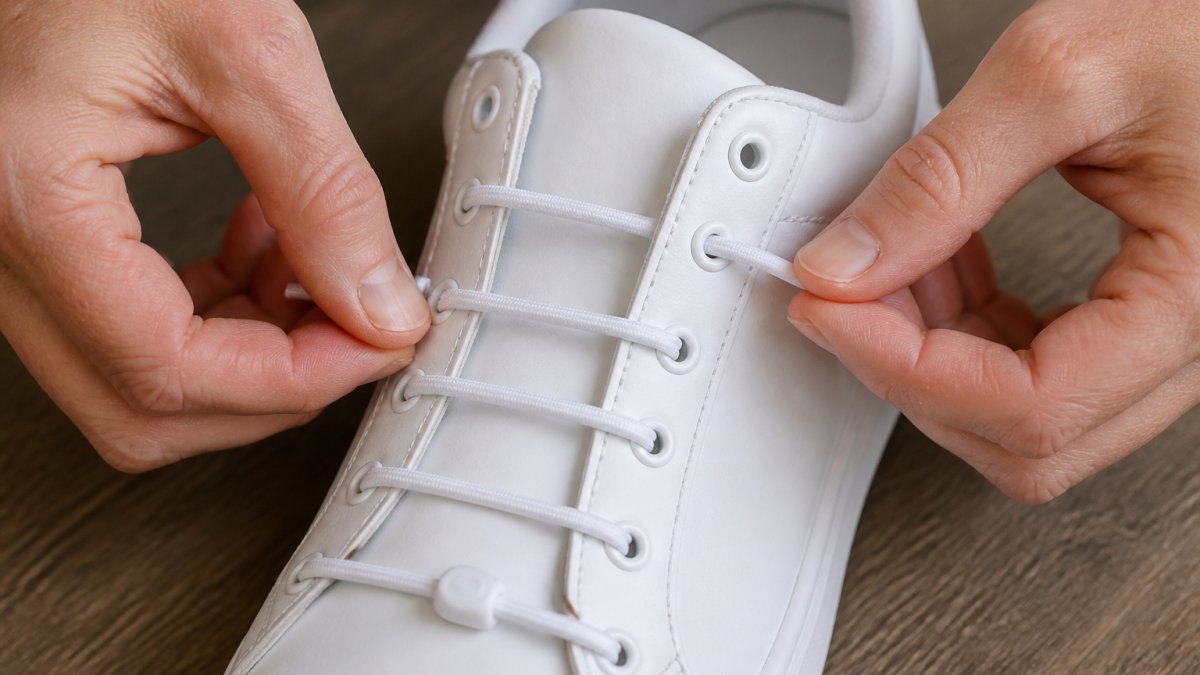
Step-by-step installation
- Remove the old laces completely, including any fragments caught in the eyelets.
- Start at the bottom eyelet, closest to the toes, and thread the elastic lace up through each eyelet in the shoe's normal lacing pattern.
- Pull the lace snug but not tight as you go. Elastic needs slack to stretch when your foot enters.
- Secure the ends at the top using the included locking mechanism or the recommended knot. Trim excess so nothing trails.
- Test the fit by sliding your foot in and out three times, then walking a few steps.
Security check
- Your foot slides in smoothly without excessive resistance.
- The lace feels snug around the midfoot and heel without pinching the instep.
- No pressure points, hot spots, or numbness after a few minutes.
- The lace doesn't slip, loosen, or migrate when you walk.
- No end, loop, or tail hangs below the top of the shoe.
Troubleshooting common problems
- Too tight across the top of the foot. Re-thread with more slack at the lower eyelets, or skip the top eyelet and anchor one rung lower. A stretchier lace helps with a high instep or wide feet.
- Heel slips when walking. Tighten the upper section and check that lace crosses sit flat, not twisted. A heel-lock pattern adds hold without over-tightening the midfoot.
- Loose end or tail dangling. Trim excess and re-secure the end cap or lock. If it keeps working loose, replace the lock.
- Lace pops out of an eyelet. The eyelet may have a burr or the lace may be too short. Re-thread and consider a longer lace.
- Pressure or numbness on top of the foot. Loosen the upper lacing, switch to a flatter lace, or reduce crossed rungs.
- Shoe feels sloppy after a few weeks. Elastic relaxes with use; re-tension the lock or replace if stretch is gone.
Safety notes
- Never leave a lace end long enough to reach the ground; a trailing end is a trip hazard, especially with a cane, walker, or wheelchair.
- Keep lace ends tucked inside the shoe or under the tongue, not looped around the ankle.
- Check laces before each wear if you use a mobility aid, a snag on a wheel or brake lever can cause a fall.
- If a lace breaks or the lock fails, replace it rather than knotting it temporarily; a makeshift knot can work loose mid-stride.
Choosing by dexterity, balance, and mobility needs
- Limited hand strength or arthritis: Choose a simple push-and-pull install with a lock settable one-handed. Avoid tiny end caps that require pinching.
- Balance concerns or mobility aid: Prioritize a low-profile install with no trailing ends and a secure heel hold, so the shoe doesn't shift mid-step.
- Wheelchair or seated dressing: A lace installable and tensionable on your lap is easiest. Test the fit seated before standing.
- Active use or sports: Choose a higher-tension lace and re-check the lock before activity, since elastic relaxes under repeated loading.
The most common installation mistake is pulling the lace too tight. Elastic laces need room to stretch; over-tightening makes them uncomfortable and accelerates wear.
uLace uses a simple push-and-pull method that takes about two minutes per shoe. No special tools. No expertise needed.
Choosing the Right No-Tie Solution for Your Needs
Not all elastic laces are the same. The right choice depends on your mobility level, foot width, and activity level.
| Solution | Best For | Security Level | Ease of Use |
|---|---|---|---|
| uLace Classic | Everyday wear, casual shoes | High | Very Easy |
| uLace Shorts | Wider feet, snug fit needed | Very High | Easy |
| uLace ProFormance | Sports, running, active use | Very High | Easy |
| uLace Kiddos | Children's shoes, smaller sizes | High | Very Easy |
For wider feet: If standard lacing feels tight, uLace Shorts ($12.99) provide extra stretch and security for feet that need more room.

For children: uLace Kiddos ($5.99) come in smaller sizes and bright colors, perfect for kids who can't tie yet or have sensory sensitivities to traditional laces.
For budget-conscious buyers: uLace Classic ($6.49) delivers the core benefit, no-tie convenience and clean laces, at the lowest price point.
Conclusion
No-tie shoelaces solve this completely: they eliminate bending, tying, and retying, keep laces clean and secure, and turn any sneaker you love into a slip-on.
uLace has been the original creator of no-tie elastic shoelaces since 2009. With a wide variety of styles and colors, uLace keeps sneakers neat and tidy with a secure, stretchy fit that lasts all day.
The adaptive apparel design research shows that accessible solutions must address real barriers. Our no-tie laces do exactly that. Get started with uLace and transform your favorite shoes into hassle-free slip-ons that work with your body, not against it.
Frequently Asked Questions
How do no-tie shoelaces actually prevent dangling laces?
No-tie shoelaces use elastic material that stretches to fit your foot and stays securely in place without knots. Unlike traditional laces that come untied and dangle, elastic no-tie laces remain taut and contained within the shoe's eyelets. This eliminates the trip hazard and keeps laces from dragging on the ground where they pick up dirt and moisture. The elastic tension holds the shoe snug around your foot while you move, so the lace ends stay tucked inside the shoe rather than flopping around.
Are no-tie shoelaces secure enough for children and active use?
Yes. No-tie laces are designed to provide secure fastening through elastic tension rather than knots. They stay in place during running, jumping, and playground activity. The elastic material stretches to accommodate your child's foot movement while maintaining tension around the shoe. Many parents find them more reliable than traditional laces, which come untied frequently. uLace Kiddos ($5.99) are specifically designed for children's footwear and offer the same secure fit as adult versions.
Can no-tie shoelaces work with any type of sneaker?
No-tie laces work with most standard sneakers that have traditional eyelets, including athletic shoes, casual sneakers, and canvas shoes. They replace your existing laces completely. However, shoes with unusual eyelet spacing, slip-on designs, or specialized fastening systems may not be compatible. Before ordering, check that your sneaker has a standard lacing pattern with at least five eyelets.
How do I clean elastic no-tie laces without removing them from my shoes?
Since no-tie laces stay permanently in your shoes, you can wipe them down while they're laced. Use a damp cloth or soft brush to gently clean the elastic material and remove surface dirt and dust. For deeper cleaning, mix mild soap with water and use a soft cloth to wipe the laces, then dry them thoroughly with a clean towel. Avoid harsh scrubbing or soaking, as excessive moisture can degrade the elastic over time. Regular wiping prevents dirt buildup and keeps your laces looking neat and tidy.