




Prevent Dangling, Dirty Shoestrings: The Complete Guide
Table of Contents
- Why Dangling and Dirty Shoestrings Matter
- No-Tie Elastic Shoelaces: The Mechanical Prevention Solution
- Proper Cleaning Techniques to Prevent Lace Damage
- Preventing Shoelace Fraying and Aglet Damage
- Air-Drying vs. Machine Drying: Protecting Fiber Integrity
- DIY Repairs for Damaged Laces and Aglets
- Frequently Asked Questions
Last Updated: October 1, 2026
Why Dangling and Dirty Shoestrings Matter
Loose shoelaces aren't just an inconvenience, they're a problem you can solve by learning how to prevent dangling dirty shoestrings. Research from University of California, Berkeley reveals that the loosening of a shoelace knot is caused by a combination of stomping and whipping forces that act like an invisible hand to pull the knot apart. This means your laces will come untied regardless of how tight you tie them, it's physics, not user error.
Dangling laces create safety hazards, tripping risks for children, mobility challenges for seniors, and accessibility barriers for those with fine motor difficulties. Dirty, frayed laces compromise footwear integrity. Preventing dangling, dirty shoestrings requires proper maintenance, protective hardware, and sometimes abandoning traditional lacing altogether.
No-Tie Elastic Shoelaces: The Mechanical Prevention Solution
The most effective way to prevent dangling, dirty shoestrings is to eliminate the problem at its source: traditional laces. No-tie elastic shoelaces represent a mechanical prevention solution that addresses both the dangling hazard and the maintenance burden in one move.
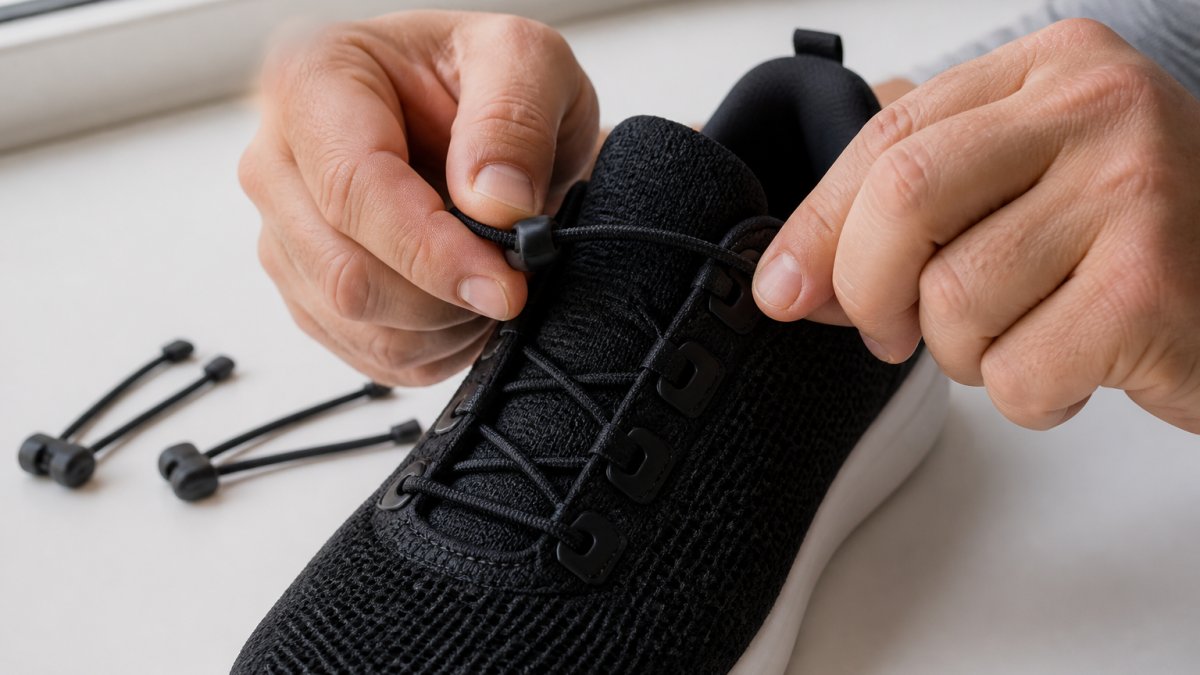
Elastic no-tie laces stay secure throughout your day by transforming sneakers into slip-on shoes. Installation takes minutes with a simple push-and-pull method, no tools required.
For parents managing morning chaos, seniors with mobility constraints, and anyone with fine motor challenges, this approach removes a major friction point. The 99 Invisible podcast on assistive footwear adaptations documented how lace locks and no-tie solutions provide immediate, secure alternatives for individuals with post-injury needs or accessibility requirements. uLace offers several styles designed for different foot shapes and preferences. The uLace Classic starts at $6.49 and works with most standard sneakers, while the uLace Kiddos line ($5.99) is specifically engineered for children's shoes. For active individuals who need maximum security, the uLace ProFormance line ($14.99) provides enhanced durability for sports and running.

| Product | Price | Best For |
|---|---|---|
| uLace Classic | $6.49 | Standard sneakers, everyday wear |
| uLace Kiddos | $5.99 | Children's shoes, quick morning routines |
| uLace Shorts | $12.99 | Narrow or snug-fitting shoes |
| uLace ProFormance | $14.99 | Sports, running, high-activity use |
Proper Cleaning Techniques to Prevent Lace Damage
Laces need regular cleaning without accelerating deterioration. Most people damage laces by machine washing them with shoes, exposing them to high heat, harsh detergent, and mechanical agitation that breaks down fibers.
How to Clean White Shoelaces Without Causing Damage
Hand wash white laces with mild detergent and cold water. Fill a bowl with cool water, add gentle detergent (avoid bleach), submerge laces, and gently agitate for 2-3 minutes. Rinse under cool water until clear, pat dry, and lay flat to air-dry completely.
For stubborn stains, gently scrub with a soft-bristled brush rather than soaking, which preserves aglets and prevents fraying. Persistent discoloration signals replacement is needed.
Protecting Laces During the Washing Process
If you wash your shoes in a machine, your laces need extra protection. Place them in a mesh laundry bag or tie them inside a closed pillowcase before washing. This simple mechanical prevention of tangling during the washing cycle keeps laces from wrapping around the agitator, which causes severe tangling and abrasion. According to Yituo Lace care guidelines, this method prevents them from tangling around the washer's agitator and reduces stress on the fibers.
Use a gentle cycle with cold water. Skip the dryer, machine drying causes shrinkage, distortion, and aglet damage. Remove laces and lay flat to air-dry.
Preventing Shoelace Fraying and Aglet Damage
Fraying occurs when outer fibers separate from the core. Aglet damage makes threading impossible. Both accelerate if ignored, but prevention strategies depend on lace material.
Understanding Material-Specific Vulnerability
Cotton laces fray easily due to poor structural cohesion and moisture absorption. Synthetic laces resist fraying but degrade with heat and UV exposure. Waxed laces resist both fraying and moisture, making them most durable, though the wax coating wears with washing.
Match lace material to usage: synthetic for high-activity use, waxed for humid climates or frequent washing, cotton for casual wear.
Protective Sprays and Preventive Coatings
Applying a protective spray designed for textiles helps repel dirt and moisture, reducing the frequency of deep cleaning required and slowing the onset of fraying. According to Lace Lab maintenance research, protective sprays create a barrier that keeps laces cleaner longer while protecting against environmental damage. Apply spray to clean, dry laces in a well-ventilated area and allow them to dry completely (typically 2-4 hours) before wearing. For synthetic laces, use sprays formulated for polyester or nylon; for cotton, choose sprays labeled safe for natural fibers. Reapply every 2-3 months or after washing.
Alternatively, seal new lace tips with clear fabric glue or nail polish to prevent initial unraveling. Apply only to outermost fibers and allow to dry fully before threading.
DIY Repair for Damaged Aglets
Damaged aglets are repairable if caught early. Once compromised, threading becomes difficult and fraying accelerates.
For cracked or split aglets: Wrap tightly with clear waterproof tape in a spiral pattern. This restores threadability for 2-4 weeks. For aglets more than 50% compromised, replacement is more practical.
For missing or severely deteriorated aglets: Use heat shrink tubing (3/16-inch or 1/4-inch, $3-$8 per pack). Cut a 1-inch segment, slide over the lace end, and shrink with a heat gun held 2-3 inches away. This semi-permanent repair lasts through dozens of wash cycles.
For small holes or tears: Use adhesive fabric repair tape, centering it over damage on both sides if possible. For extensive damage, replacement is more practical.
When Replacement Is the Right Choice
If laces show multiple damage points, replacement is more economical. Choose waxed cotton or high-denier polyester for durability.
Air-Drying vs. Machine Drying: Protecting Fiber Integrity
The drying method you choose directly impacts how long your laces last. Air-drying is the only approach that truly protects fiber integrity, but the conditions under which you air-dry matter significantly. Understanding the mechanics of drying, and the damage machine drying causes, helps you make informed choices about lace care.
Why Machine Drying Damages Laces
Machine drying exposes laces to heat, friction, and stress. High-heat settings (130-160°F) cause shrinkage and aglet damage. Even low-heat settings cause fiber breakdown. Cotton laces experience color bleeding and distortion.
According to textile care standards published by the American Apparel and Footwear Association, synthetic fibers begin to degrade at sustained temperatures above 120°F, and mechanical agitation in a dryer accelerates this degradation by 40-60% compared to air-drying.
Optimal Air-Drying Conditions
Lay laces flat on a clean, dry surface with air circulation underneath. Avoid plastic or sealed surfaces where moisture can trap.
Material-Specific Drying Guidelines
Cotton laces: Air-dry flat in a well-ventilated space away from direct heat. Cotton absorbs moisture slowly and releases it slowly, so drying typically takes 24 hours. Avoid hanging cotton laces over a clothesline or clothespin, which can create permanent creases or stress points. If color bleeding is a concern (particularly with darker dyes), ensure laces are completely dry before storing them with other items.
Drying After Washing: Integration Into Your Routine
After hand-washing laces, gently squeeze out excess water (do not wring or twist, which damages fibers) and pat them with a soft cloth to remove surface moisture. Then lay them flat to air-dry. This two-step process, initial moisture removal plus air-drying, cuts total drying time by 30-40% compared to air-drying soaking-wet laces.
Storage After Drying
Once laces are completely dry (verify by touch, they should feel cool and have no damp spots), store them in a cool, dry place. Avoid sealed plastic bags, which trap residual moisture and can promote mildew growth. Instead, store laces loosely coiled in a drawer or on a shelf with good air circulation. If storing multiple pairs, separate them with paper or cloth to prevent moisture transfer between laces.
DIY Repairs for Damaged Laces and Aglets
Not every damaged lace requires replacement. Simple repairs can extend the life of your laces significantly. For minor aglet damage where the plastic is cracked but not completely missing, wrap the damaged area tightly with clear waterproof tape. This restores the structural integrity and makes the lace threadable again. The tape won't last forever, but it buys you time before replacement becomes necessary.
Frequently Asked Questions
What's the best way to prevent dangling, dirty shoestrings without replacing my laces?
The most effective mechanical prevention is switching to no-tie elastic shoelaces, which eliminate dangling entirely by replacing traditional laces with elastic fasteners. If you want to keep your current laces, use a mesh laundry bag during washing to prevent tangling, air-dry instead of machine drying to avoid heat distortion, and apply a protective spray to repel dirt and moisture. These steps reduce how often you need deep cleaning and keep laces looking tidy throughout the day.
Are no-tie elastic shoelaces better for preventing lace wear and tear?
Yes. No-tie elastic shoelaces eliminate the main causes of lace damage: repeated tying and untying, stomping forces that loosen knots, and the whipping action that frays fibers. Because elastic laces stay permanently secured, they avoid the friction and stress that traditional laces experience. They also prevent aglet damage since there's no constant friction at the lace tips. For individuals with arthritis or mobility challenges, they provide secure support without the need to retie throughout the day.
How do I clean white shoelaces without yellowing or damaging them?
Hand wash white shoelaces in cool water with mild detergent, gently scrubbing with a soft brush to remove dirt. Avoid bleach, which can weaken synthetic fibers and cause discoloration. For white laces specifically, place them in a mesh laundry bag if machine washing, use a gentle cycle with cold water, and never use the dryer. High heat causes shrinkage and distortion. Air-dry flat or hanging to maintain their bright appearance and preserve fiber integrity. Applying a protective spray before wearing helps repel dirt and reduces how often you need to clean them.
What causes shoelace fraying and how can I prevent it?
Fraying occurs when repeated friction, washing, and friction from the shoe's eyelets damage the outer fibers of the lace. To prevent it, avoid machine drying (which accelerates fiber breakdown), place laces in a mesh laundry bag during washing to reduce agitation, and air-dry them completely. For laces already showing fraying, trim loose threads carefully and seal the aglet (plastic tip) with a small amount of clear nail polish or fabric glue to prevent further unraveling. No-tie elastic laces eliminate this problem entirely since they don't experience the constant friction of traditional laces.