




Quick-Tie Shoelaces for Daily Wear: Benefits Explained
Table of Contents
- Why Quick-Tie Shoelaces Are Changing Daily Routines
- How Elastic Laces vs. Traditional Shoelaces Compare
- How to Install No-Tie Shoelaces in 3 Simple Steps
- No-Tie Shoelaces for Kids: Practical Benefits for Parents
- Best No-Tie Shoelaces for Everyday Wear: What to Look For
- Real Benefits Beyond Convenience: Comfort, Security, and Accessibility
- Drawbacks and When Quick-Tie Shoelaces May Not Be the Right Fit
- Frequently Asked Questions
Last Updated: October 7, 2026
Why Quick-Tie Shoelaces Are Changing Daily Routines
Quick-tie shoelaces transform how people interact with their footwear. Instead of bending down to retie laces that come undone, elastic no-tie shoelaces stay secure from morning until night. At uLace, we help families, seniors, and active individuals eliminate a daily frustration.

The science behind why traditional laces fail is straightforward. Research from UC Berkeley researchers on shoelace mechanics found that tightly tied laces require repeated cycles of impact and leg swinging to cause knot failure. For most people, a typical day of walking and movement creates exactly the conditions that untie standard laces. Quick-tie shoelaces solve this by replacing knots with elastic tension, which adapts to foot movement rather than fighting against it.
The shift matters because of how much time and mental energy it reclaims. Parents stop mid-morning to tie their child's shoes. Seniors avoid walking because bending feels risky. People with arthritis or limited dexterity can't manage traditional laces at all. Quick-tie shoelaces aren't a luxury, they're a practical solution to real daily friction.
How Elastic Laces vs. Traditional Shoelaces Compare
Elastic laces and traditional shoelaces operate on different principles. Traditional laces rely on knots for tension; elastic laces use stretch and a locking mechanism for a consistent, adjustable fit.

Traditional shoelaces come untied because knots loosen under stress. Elastic laces stay secure because elasticity adapts to foot movement: when your foot expands as you walk, they stretch with it, then return to their original tension. Traditional laces end up either too tight or too loose.
Here's how the two compare across key everyday situations:
| Scenario | Traditional Laces | Elastic No-Tie Laces |
|---|---|---|
| Morning routine time | 2-3 minutes tying both shoes | 10 seconds to slip on |
| During active play or work | Frequent retying needed | Stays secure all day |
| Comfort during foot swelling | Pressure points or slipping | Adapts to foot changes |
| Accessibility for limited mobility | Requires bending and dexterity | Slip-on convenience |
| Shoe appearance | Laces visible, can look untidy | Neat, simplified look |
The practical difference becomes obvious within the first week: people who switch report they stop thinking about their footwear entirely, no mid-day adjustments, no embarrassment when laces come untied in public, no time wasted retying.
How to Install No-Tie Shoelaces in 3 Simple Steps
Installing quick-tie shoelaces takes less than five minutes per shoe, requires no tools, and won't damage your sneakers.

Step 1: Remove Your Original Laces Untie and pull out the standard laces completely, about 30 seconds per shoe.
Step 2: Thread the Elastic Laces Through the Eyelets Starting at the toe, feed the elastic lace through each eyelet as you would traditional laces, working up to the top of the shoe.
Step 3: Lock and Adjust Pull the lace ends tight to your preferred fit, then secure the locking mechanism. The entire installation takes 3-5 minutes per pair.
After installation, your shoes become slip-ons, the same sneaker you love, with hands-free convenience.
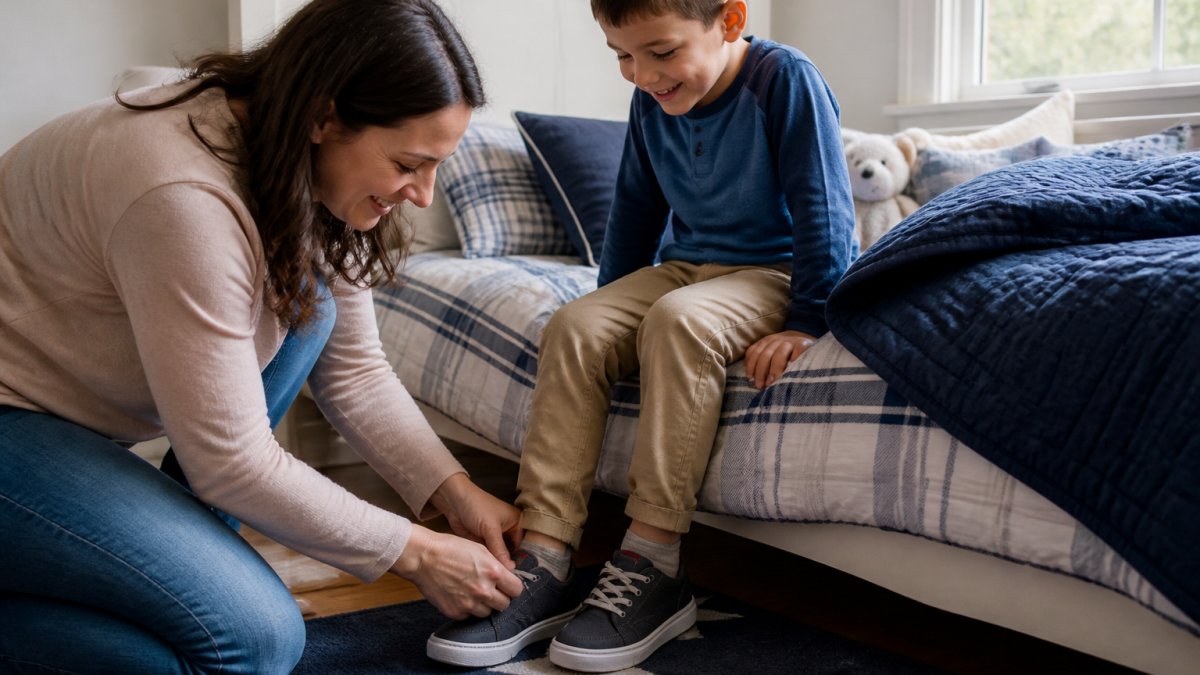
No-Tie Shoelaces for Kids: Practical Benefits for Parents
Parents face a daily battle with shoelaces. Kids tie them too loose or too tight. Laces come untied on the playground. Morning routines stretch longer because of shoe-tying delays. Quick-tie shoelaces eliminate this friction entirely.
For children, elastic laces offer independence without the fine motor skill requirement: a child can slip on their shoes without adult help, building confidence and self-sufficiency.
Safety improves too. Untied shoelaces create tripping hazards on playgrounds and in classrooms, dangling laces catch on equipment, and kids step on their own laces and fall. Elastic laces eliminate these risks; shoes stay secure through running, jumping, and climbing.
Morning routines become noticeably faster: kids slip shoes on in seconds instead of sitting down to tie them, saving parents 5-10 minutes daily across multiple children, hours over a school year.
There's a psychological benefit too: elastic laces don't dangle or come undone, so shoes stay neat all day, which matters to kids who care how they look and parents who want them put-together.
Best No-Tie Shoelaces for Everyday Wear: What to Look For
Choosing the right elastic lace system comes down to three things: how the lace fits your shoe, how the tension holds through a full day, and how the material survives repeated wear.
Check the locking mechanism, not just the lace Two lock types dominate: a spring-loaded cord lock (a plastic barrel you squeeze to release) and a lace-end clip that anchors the lace to the top eyelet.
Prioritize elasticity that recovers, not just stretches What matters isn't how far a lace stretches but whether it returns to its original length. Laces that stretch without recovering go slack within weeks.
Confirm compatibility with your shoe type No-tie laces work best on sneakers, walking shoes, and most casual shoes with standard eyelets.
Weigh upfront cost against replacement frequency The real comparison is cost per year. Conventional laces are cheap but fray, break, and get replaced; elastic laces cost more upfront and last many wear cycles before the stretch fades.
Consider appearance and how the lace sits Elastic laces sit flatter than a tied bow, neater but less traditional.
A note on fit adjustment The biggest complaint about no-tie laces is a fit too tight across the instep or too loose at the heel, usually tension problems, not lace problems. If the instep pinches, loosen the lock one notch; if the heel slips, tighten it. The goal is a setting that keeps the heel locked without pressing on the top of your foot. Achieving this precise balance of tension ensures that your footwear remains secure throughout the day, much like other convenient clothing accessories that prioritize both comfort and functionality for formal events.
Durability and maintenance Heat, direct sun, and repeated stretching degrade elastic over time; noticeable stretch loss after several months of daily wear means it's time to replace the lace.
Real Benefits Beyond Convenience: Comfort, Security, and Accessibility
The convenience of no-tie laces is obvious. The benefits that matter more, comfort, circulation, security, and accessibility, are where elastic laces separate themselves from traditional ones.
Comfort and pressure relief A tied knot concentrates force at one point on the top of the foot, becoming a hot spot over a long day.
Circulation and swelling Feet swell during the day, especially after prolonged standing, in warm weather, or on long flights. Traditional laces can't accommodate that without retying, so they end up too tight (restricting circulation) or too loose (letting the heel slip).
Security without restriction Traditional laces force a trade-off: tight enough to stay secure, or loose enough to be comfortable. Elastic laces break that trade-off, holding the foot securely even at relaxed tension, the heel stays locked and the foot doesn't slide, without the pinch of an over-tight knot. That matters during athletic activity and during a normal day of walking, stairs, and errands.
Fit guidance: getting tension right The most common mistake is setting tension once and never revisiting it. A few practical rules:
- Heel slip means the lace is too loose. Tighten the lock one notch at a time until the heel stays put when you walk.
- Pinching across the instep means the lace is too tight. Loosen one notch. If it still pinches, the lace may be routed too directly across the top of the foot, re-thread it so it crosses under the tongue rather than over it.
- Numbness, tingling, or cold toes are signs the lace is too tight and restricting circulation. Loosen immediately and re-check after a few minutes of walking.
- A lace that feels fine in the morning but loose by afternoon usually means the elastic is losing recovery. Replace the lace.
A good target is a fit you can slip on without untying but that still requires a slight push to get your heel in. If the shoe slides on with no resistance, tension is too low for secure walking.
Accessibility for limited dexterity For people with arthritis, Parkinson's disease, hand injuries, or other conditions affecting grip and fine motor control, tying laces can be difficult or impossible.
Everyday scenarios beyond sports The daily-wear case shows up in places athletic-focused guides ignore:
- Commuting, slipping shoes on and off at security lines, in cars, or at the door without bending down.
- Travel, airport security, hotel rooms, and long flights where feet swell and laces need adjusting.
- Work, jobs that require frequent shoe changes (medical, food service, lab work) benefit from slip-on speed.
- School, kids manage their own shoes, and teachers spend less time re-tying laces.
- Errands and frequent shoe changes, going in and out of the house multiple times a day without re-tying each time.
Consistency through the day Traditional laces loosen gradually, so the fit you leave the house with isn't the fit you have by lunch. Elastic laces hold consistent tension from morning to night, preventing the late-day looseness that causes blisters, heel slip, and foot fatigue.
Drawbacks and When Quick-Tie Shoelaces May Not Be the Right Fit
Elastic laces work well for most people in most situations. But they're not universally suitable for every use case or wearer.
Limited Use for Dress Shoes Elastic laces work best with casual sneakers and athletic shoes. They don't suit formal dress shoes or professional settings where laced shoes are expected to look traditionally tied.
Durability Considerations Elastic material degrades over time. Laces exposed to extreme heat, sunlight, or harsh conditions lose elasticity faster than those kept in normal conditions, so expect more frequent replacement in demanding environments.
Not Ideal for Certain Athletic Activities While elastic laces work well for running and general sports, some athletes prefer traditional laces for activities requiring precise fit adjustments.
As noted in guidance on elastic lace limitations, elastic shoelaces should be evaluated carefully for specific sports and activities. They excel in some contexts and fall short in others.
Adjustment Period People accustomed to traditional laces sometimes need a few days to adjust. A shoe that doesn't require tying feels unfamiliar at first, though most adapt quickly.
Switching to quick-tie shoelaces from uLace addresses one of the most persistent daily frustrations.
Frequently Asked Questions
Are elastic no-tie shoelaces comfortable for all-day wear?
Yes. Elastic shoelaces provide consistent tension that adapts to foot movement without the pressure points that come from traditional knots. Many users report reduced foot fatigue and better circulation since elastic laces don't cut off blood flow like tight knots can. The stretch accommodates natural foot swelling throughout the day, making them especially comfortable for extended wear.
How do you install and adjust no-tie shoelaces?
Installation is straightforward: remove your traditional laces, thread the elastic laces through the eyelets using the push-and-pull method, and adjust the tension by pulling the lace ends until your shoe fits snugly without cutting off circulation. Unlike traditional laces, you adjust them once and they stay at that tension. Most people complete installation in under five minutes per shoe.
Do no-tie shoelaces keep shoes secure during running or sports?
Quick-tie shoelaces are designed to stay secure during daily activities. The elastic system maintains consistent lace tension without loosening like traditional knots do. However, performance varies by activity intensity and shoe type. For high-impact sports, some users prefer tighter initial adjustment or performance-specific elastic laces that offer extra hold during athletic movement.
Can you use no-tie shoelaces in any sneakers?
Quick-tie shoelaces work with most sneakers that have standard lace eyelets, including running shoes, casual sneakers, and athletic shoes. They work best with shoes that have consistent eyelet spacing. Very narrow dress shoes or specialized athletic footwear with unusual eyelet patterns may require adjustment, but most everyday sneakers accommodate elastic laces without modification.