




How Long Do Elastic Shoelaces Last
Table of Contents
- How Long Do Elastic Shoelaces Last: What to Expect
- What Affects Elastic Shoelace Durability
- Benefits of No-Tie Shoelaces Over Traditional Laces
- How to Lace Shoes Without Tying: Installation and Tension Adjustment
- Elastic Shoelace Length Guide: Finding the Right Size
- Signs It's Time to Replace Your Elastic Laces
- Extending the Life of Your Elastic Shoelaces
- Frequently Asked Questions
Last Updated: September 18, 2026
How Long Do Elastic Shoelaces Last: What to Expect
Elastic shoelaces last between 6 months to 2 years depending on how frequently you wear them and the conditions they face, understanding how long elastic shoelaces last helps you plan for replacements. For most daily users, a quality pair of elastic shoelaces will remain functional for at least a year before showing noticeable degradation. At uLace, our elastic shoelaces are designed to withstand regular wear while maintaining their stretch and security, making them a reliable upgrade from traditional laces that constantly come untied.
The lifespan of your elastic shoelaces depends on more than just time. A pair worn daily in athletic settings will degrade faster than the same laces worn casually a few times per week. Understanding what affects durability helps you get the most value from your investment and know when replacement is necessary.
What Affects Elastic Shoelace Durability
Several factors determine how long your elastic shoelaces will actually last. The material quality, your usage patterns, and environmental exposure all play critical roles in longevity.
Material and Synthetic Fiber Quality
The synthetic fibers used in elastic shoelaces directly impact how long they retain their stretch and structural integrity. Higher-quality elastomer blends resist degradation better than cheaper alternatives. Shoelaces made from premium synthetic materials maintain their elasticity longer when exposed to sweat, moisture, and repeated stretching cycles.
Lower-quality elastic materials tend to lose their stretch within 3-4 months of regular use. They become loose and floppy, requiring constant readjustment. Premium elastic shoelaces, by contrast, maintain their compression and fit through extended wear periods. The difference comes down to the polymer composition and manufacturing precision.
Material fatigue occurs naturally as elastic fibers break down over time. Each time you slip your foot into the shoe, the laces stretch. Each time you remove your foot, they contract. This repeated expansion and compression cycle gradually weakens the molecular bonds in the synthetic fibers. Materials engineered to handle thousands of these cycles last significantly longer than budget alternatives.
Frequency of Use and Daily Mileage
How often you wear shoes with elastic laces directly correlates to how quickly they degrade. Someone wearing the same pair of shoes daily will see faster wear than someone rotating between multiple pairs.
Long-distance runners and athletes who log high mileage put extreme stress on their laces through repetitive foot swelling and compression. Each run causes the foot to swell slightly, stretching the laces. As the foot cools post-activity, the laces contract. This cycle repeats hundreds of times during intensive training. Athletes typically need to replace elastic shoelaces every 6-8 months.
Casual wearers who slip on shoes a few times per week experience minimal stress on the laces. Their elastic shoelaces often last 18-24 months or longer. The key variable is frequency, not just total time elapsed.
Environmental Factors and Wear and Tear
Heat, humidity, and UV exposure accelerate the breakdown of synthetic elastomer materials. Shoes stored in hot vehicles or direct sunlight degrade faster than those kept in cool, dry environments. The sun's ultraviolet rays break down polymer chains in elastic materials, reducing their elasticity over time.
Moisture and sweat also impact durability. Shoes worn during intense workouts or in humid climates experience faster material fatigue. Chlorine exposure from swimming pools degrades elastic materials particularly quickly. Salt water and harsh weather conditions similarly reduce the lifespan of elastic laces. Consistent exposure to these environmental stressors inevitably compromises the internal fibers, raising broader questions about how stretch fabric durability holds up under repeated cycles of tension and release.
Friction from repeated rubbing against shoe eyelets and the shoe's interior gradually wears down the laces. Rough or damaged eyelets accelerate this wear. Dirt and debris trapped between the lace and the shoe create additional abrasion points.
Benefits of No-Tie Shoelaces Over Traditional Laces
Elastic no-tie shoelaces solve fundamental problems that traditional laces create. The convenience factor alone makes them appealing, but the practical benefits extend much further.
Traditional laces constantly come untied during activity. Runners stop mid-stride to retie. Kids miss playground time waiting for adults to fix their shoes. Seniors bend repeatedly throughout the day, straining their backs and knees. These frustrations disappear with elastic shoelaces.
No-tie shoelaces eliminate the need to bend over to tie and retie your shoes. For seniors, people with arthritis, and anyone with mobility challenges, this is transformative. You simply slip your foot in and out without any hand coordination required. The shoe stays secure throughout the day.
Elastic laces also prevent the common damage that occurs when people force their feet into traditional laced shoes without untying them. Forcing your heel into a tightly laced shoe crushes the back of the shoe and damages the structure. Over time, this creates permanent deformation. Elastic shoelaces let your foot slip in smoothly, preserving shoe integrity.
The security provided by elastic laces matches or exceeds traditional laces for most activities. The consistent tension keeps your foot locked in place without dangling strings. Your shoes look neater and more intentional with no loose laces flapping around.
How to Lace Shoes Without Tying: Installation and Tension Adjustment
Step-by-Step Installation Process
Installing elastic shoelaces takes just a few minutes and requires no special tools. The process works with virtually any laced shoe, from casual sneakers to athletic footwear.
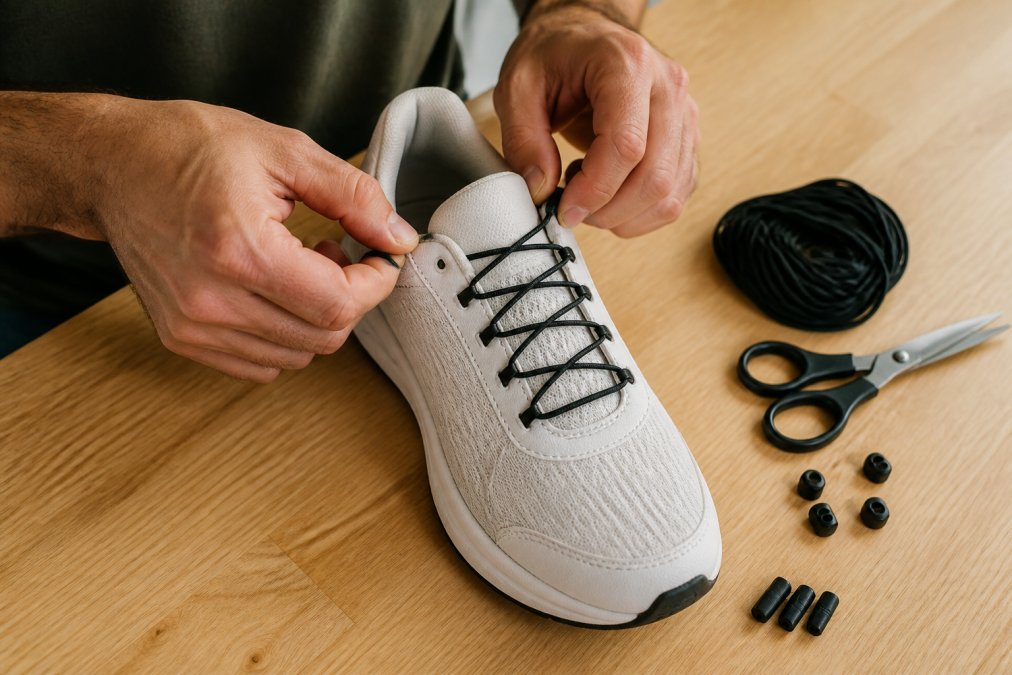
Start by removing your traditional shoelaces completely. Take one elastic lace and thread it through the bottom eyelets just as you would with a regular lace. Push the elastic through each eyelet moving up the shoe. The elastic should pass through every eyelet that currently has a traditional lace.
Once threaded through all eyelets, pull both ends of the elastic lace toward you. This is where the tension adjustment happens. Pull until the lace feels snug around your foot. You want tension that's firm enough to keep your shoe secure but not so tight that it cuts off circulation.
Tie the two ends of the elastic lace together using a simple knot. Some elastic lace systems use special fasteners or clips instead of knots. Once secured, trim any excess length. The lace should now hold your shoe in a slip-on configuration.
Adjusting Tension for the Right Fit
Getting the tension right is critical for comfort and security. Too loose and your shoe falls off. Too tight and your foot experiences discomfort or numbness.
Start with moderate tension and wear the shoes for 15-20 minutes. Walk around your home and notice how the shoe feels. If it slips during walking, increase the tension by retying the knot tighter.
Elastic Shoelace Length Guide: Finding the Right Size
Choosing the correct length for elastic shoelaces is essential for proper fit and security. Too short and you can't achieve proper tension. Too long and you'll have excess lace that's difficult to manage.
Signs It's Time to Replace Your Elastic Laces
Knowing when to replace your elastic shoelaces prevents unexpected failures during activity. Several warning signs indicate that replacement is imminent.
Extending the Life of Your Elastic Shoelaces
Simple maintenance practices significantly extend the lifespan of your elastic shoelaces. Proper care can add months to their functional life.
| Lace Type | Expected Lifespan | Best For | Maintenance Level |
|---|---|---|---|
| Budget elastic laces | 3-6 months | Occasional casual wear | Minimal |
| Standard elastic laces | 6-12 months | Regular daily use | Basic care |
| Premium elastic laces | 12-24 months | Athletic/frequent use | Regular rotation |
| uLace | 12-24 months | Regular daily use, athletic/frequent use | Basic care, Regular rotation |
Frequently Asked Questions
Do elastic shoelaces lose their elasticity over time?
Yes, elasticity retention decreases with regular use. Most elastic shoelaces maintain their stretch for 1-3 years depending on daily mileage and material quality. Synthetic fibers gradually experience material fatigue from repeated compression and stretching. You'll notice the snug fit becoming looser or the laces requiring more frequent tension adjustment as elasticity fades. Proper care and moderate use extend this timeline significantly.
How do you know when to replace your no-tie laces?
Replace elastic shoelaces when they show visible wear and tear, lose their snug fit around your foot, or fail to provide secure lockdown during activity. Signs include fraying at the eyelets, discoloration, reduced stretch, or the shoe slipping off your heel. If you're constantly readjusting tension or the laces no longer compress properly, replacement indicators are clear. Most users find one pair lasts long enough to justify the investment before needing a fresh set.
What makes elastic shoelaces worth it compared to standard laces?
Elastic shoelaces eliminate the need to bend over and tie knots, making them invaluable for mobility aids, seniors, and anyone with fine motor challenges. They provide slip-on convenience without sacrificing footwear stability or secure lockdown. You avoid dangling, dirty shoestrings and prevent damage to sneakers from forcing feet in without untying. The custom fit adapts to foot swelling throughout the day, offering comfort during long-distance running or extended wear that traditional laces cannot match.
Are elastic laces compatible with all shoe types?
Elastic shoelaces work with most sneakers, high-top sneakers, and lace-up boots, but compatibility depends on eyelet count and spacing. Shoes with fewer eyelets or very tight eyelets may not accommodate elastic laces properly. Compression and snug fit work best on shoes with standard eyelet configuration. Before purchasing, verify your shoe type has adequate eyelets and that the elastic shoelace length guide matches your footwear. If unsure, check product specifications or reach out to confirm compatibility with your specific sneaker style.