




How to Choose Easy-On Shoes for Disabled Adults
Table of Contents
- Understanding Easy-On Shoes and Why They Matter for Disabled Adults
- Key Features to Look for in Adaptive Footwear
- Shoes for Adults with Mobility Issues: Finding the Right Support
- Hands-Free Shoes for Adults: Step-In and Easy-Access Design
- Shoes for Sensory Issues: Comfort Without Irritation
- Using Elastic No-Tie Shoelaces to Transform Your Favorite Sneakers
- Step-by-Step Process for Selecting and Fitting Easy-On Shoes
- When to Consult a Professional and Safety Considerations
- Frequently Asked Questions
Last Updated: October 12, 2026
Understanding Easy-On Shoes and Why They Matter for Disabled Adults
Choosing the right footwear is more than just comfort, it's about independence and dignity, which is why learning how to choose easy-on shoes for disabled adults matters so much.
The challenge is real. According to evidence-based footwear recommendations from the American Geriatrics Society, properly fitted, comfortable shoes with secure fastening and slip-resistant outsoles are essential for safety and mobility.
At uLace, we understand this struggle. We've helped thousands of people transform their favorite sneakers into convenient slip-ons using elastic, no-tie laces.

Key Features to Look for in Adaptive Footwear
The best easy-on shoes share specific characteristics. They aren't just convenient, they're designed with accessibility in mind. Look for shoes that combine ease of entry with the support your feet actually need.
Wide Openings and Spacious Fit
A wide opening is non-negotiable for adaptive footwear. Your foot needs room to slip in without forcing or bending. The shoe's collar should open generously, ideally with a gusseted tongue that moves with your foot rather than blocking entry.
Spacious fit matters too. A roomy toe box prevents cramping and allows for swelling throughout the day. Many people with disabilities experience foot swelling or need to wear compression socks, so extra room prevents painful pressure points.
When checking fit at home:
- Slip your foot in without using your hands
- Wiggle your toes to confirm space
- Walk around for at least 5 minutes
- Check for any pressure points on your heel or sides
| Feature | What It Does | Why It Matters |
|---|---|---|
| Wide opening | Allows easy foot entry | Reduces bending and strain |
| Spacious toe box | Prevents cramping | Accommodates swelling and compression socks |
| Gusseted tongue | Moves with foot | Doesn't block entry |
| Removable insoles | Customizable support | Fits different orthotic needs |
Slip-Resistant Outsoles and Stability
Safety depends on traction. A slip-resistant outsole prevents falls, which is especially critical for people with balance issues or mobility problems. Look for deep treads and rubber compounds designed for multiple surfaces, not just smooth, decorative patterns.
Stability features work alongside slip resistance. A firm heel counter keeps your foot centered in the shoe. Moderate cushioning provides comfort without excessive softness that compromises control.
Test slip resistance:
- Walk on smooth floors in your socks
- Try the shoes on slightly slippery surfaces
- Check the outsole tread depth with your finger
Secure Fastening and Adjustable Closures
Easy entry doesn't mean loose fit. Your shoe must stay on your foot during walking and standing. Adjustable closures let you customize the fit without tying.
Common secure fastening options include:
- Hook-and-loop fasteners (Velcro) for quick adjustments
- Zippers for hands-free closure
- Elastic laces that provide consistent tension
- Magnetic closures for one-handed use
The best adaptive shoes combine multiple closure methods. A zipper handles the main closure while elastic laces or Velcro straps fine-tune fit. This redundancy means if one system fails, you still have secure footing.
Shoes for Adults with Mobility Issues: Finding the Right Support
People with shoes for adults with mobility issues need footwear that reduces strain on joints and muscles. Limited mobility often means you're standing longer or walking with altered gait patterns.
Supportive shoes reduce pain and prevent injury. A cushioned midsole absorbs impact. An arch support maintains proper foot alignment.
Consider your specific mobility challenge:
- Limited walking distance: Prioritize cushioning and lightweight construction
- Balance problems: Choose shoes with wide bases and firm heel counters
- Joint pain: Select shoes with shock absorption and arch support
- Swelling: Look for adjustable closures that accommodate changes throughout the day
Many people with mobility issues benefit from professional fitting. A podiatrist or physical therapist can assess your gait and recommend specific features.
Hands-Free Shoes for Adults: Step-In and Easy-Access Design
Hands-free shoes for adults eliminate the need to bend, reach, or grip. Step-in designs let you simply slide your foot in and go.
True hands-free shoes have several design elements working together. The opening extends from toe to heel, allowing your foot to enter without resistance. The collar is soft and flexible, not rigid.
Step-in construction differs from slip-on shoes. A slip-on might feel easy initially but often lacks the security needed for all-day wear.
Test hands-free design:
- Put the shoe on without using your hands at all
- Walk for 10 minutes to check stability
- Remove the shoe without using your hands
- Repeat the process several times to ensure consistency
Avoid shoes that feel too loose just because they're easy to put on. A loose shoe causes blisters and foot fatigue. Hands-free entry should be easy, but fit should still be snug enough to prevent sliding.
Shoes for Sensory Issues: Comfort Without Irritation
People with sensory sensitivities need shoes that don't cause irritation. Seams, tags, and rough textures can make wearing shoes painful or impossible. Shoes for sensory issues prioritize smooth interiors and minimal hardware.
Look for these sensory-friendly features:
- Seamless or flat-seam construction on the interior
- No interior tags or labels
- Soft, breathable mesh uppers
- Minimal metal hardware
- Padded or lined interiors
- Removable insoles for customization
Material matters. Mesh uppers allow air circulation and reduce heat buildup, which can intensify sensory discomfort. Soft linings prevent rubbing and pressure points. Some people find leather or suede more tolerable than synthetic materials.
Test sensory comfort:
- Wear the shoes with thin socks initially
- Check inside for rough seams or tags
- Walk for 15-20 minutes in quiet surroundings
- Note any pressure points or irritation spots
Using Elastic No-Tie Shoelaces to Transform Your Favorite Sneakers
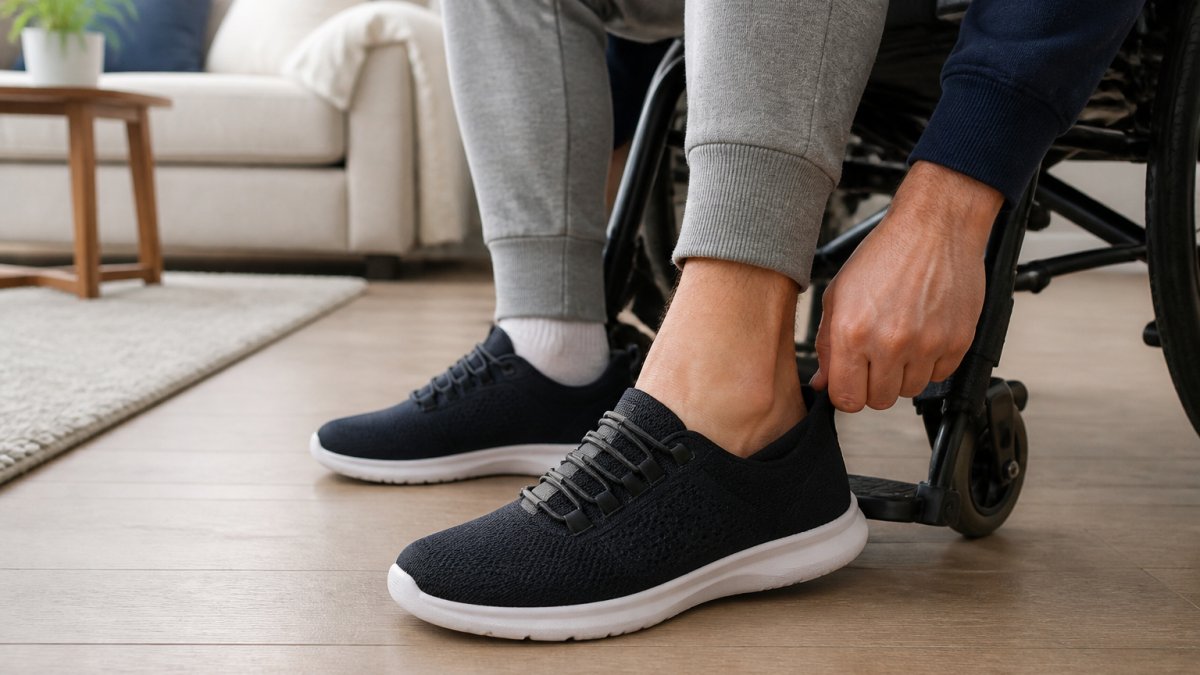
You don't need to buy new shoes to get easy-on convenience. Elastic no-tie shoelaces transform any sneaker into a slip-on.
uLace elastic laces work by replacing traditional laces with stretchy, secure alternatives. The installation takes just a few minutes.
The benefits are immediate:
- No bending to tie or untie
- No dangling laces to trip over
- Shoes stay neat and tidy
- Original shoe structure remains unchanged
- Affordable upgrade compared to buying new shoes
uLace offers multiple styles to match your needs. The uLace Classic ($6.49) works for most standard sneakers.

Installation is straightforward. Thread the elastic lace through each eyelet just like traditional laces. Tie a knot at the end and adjust tension.
Step-by-Step Process for Selecting and Fitting Easy-On Shoes
The right process prevents costly mistakes. Taking time to assess your needs, measure properly, and test fit at home saves money and frustration.
Assess Your Specific Needs
Start by identifying what matters most. Different disabilities create different requirements. Someone with arthritis needs easy fastening. Someone with balance problems needs stability. Someone with sensory issues needs comfort.
Write down your priorities:
- Entry method: How do you need to put shoes on? (hands-free, zipper, Velcro, elastic laces)
- Support level: What support does your condition require? (cushioning, arch support, firm heel counter)
- Fit: Do you need extra width, depth, or length?
- Activity level: Will you wear these for walking, standing, or both?
- Sensory needs: Are seams, materials, or hardware an issue?
- Aesthetic preference: What style matters to you?
Measure and Test Fit at Home
Online shoe shopping requires careful measurement. Foot size changes throughout the day and with activity, so measure in the afternoon when feet are slightly swollen.
Measure both length and width:
- Stand on a flat surface
- Measure from your heel to your longest toe
- Measure across the widest part of your foot
- Compare measurements to the shoe's size chart
- Order a half size larger if you wear compression socks or have swelling
When shoes arrive, test them immediately:
- Put them on without using your hands
- Walk around your home for 20 minutes
- Check for pressure points or irritation
- Sit and stand repeatedly to test stability
- Try removing them without using your hands
If fit isn't perfect, most retailers offer returns. Don't force shoes that don't fit right. The wrong shoe causes pain and defeats the purpose of adaptive footwear.
Evaluate Durability and Return Policies
Quality matters for long-term use. Shoes that fall apart quickly become expensive. Check construction details like stitching, sole attachment, and material quality.
Ask these durability questions:
- Are seams reinforced or single-stitched?
- Is the sole glued and stitched or just glued?
- What's the warranty on construction defects?
- What's the return window if shoes don't work?
- Can the sole be replaced if it wears out?
Research the retailer's return policy before buying. A 30-day return window gives you time to properly test shoes. Some retailers offer extended returns for people with disabilities, so ask.
When to Consult a Professional and Safety Considerations
Professional guidance prevents problems. If you have significant mobility limitations, pain, or complex needs, see a podiatrist or physical therapist before buying shoes.
A professional can:
- Assess your gait and balance
- Recommend specific support features
- Fit custom orthotics if needed
- Identify underlying foot problems
- Ensure shoes prevent injury
According to adaptive footwear guidance from BraunAbility, easy entry and adjustable closures work best when combined with proper fit and support. Professional fitting ensures all these elements work together.
Safety considerations matter. Shoes that are too loose cause falls. Shoes that don't support your specific needs lead to pain and injury. Shoes with inadequate traction increase fall risk.
Red flags that mean you need professional help:
- Pain or numbness in your feet
- Swelling that changes throughout the day
- Balance problems or frequent falls
- Difficulty walking or standing
- Previous foot injuries or surgery
- Diabetes or other conditions affecting foot health
Frequently Asked Questions
What makes elastic no-tie shoelaces different from regular adjustable laces?
Elastic no-tie shoelaces, like uLace, stretch to accommodate your foot without requiring you to bend over or use your hands to tie. Unlike regular laces that come undone, elastic laces maintain consistent tension throughout the day. They're designed with secure fastening that keeps your shoe snug without the hassle of tying. The stretch allows easy entry while providing the support and stability that traditional laces offer.
How do I know if easy-on shoes will work with my specific foot width or shoe type?
Start by checking the shoe's width rating and comparing it to your current shoe size. Easy-on shoes typically come in standard, wide, and extra-wide options. If you're converting existing sneakers to easy-on using elastic laces like uLace, they work with most shoe styles. Test the fit at home first, properly fitted easy-on shoes should allow your foot to slip in smoothly without excessive pressure. If you have very narrow or very wide feet, verify the product specifications before purchasing.
Are easy-on shoes secure enough for active use or walking?
Yes, when properly fitted. The American Geriatrics Society recommends shoes with slip-resistant outsoles, secure fastening, and proper arch support for stability. Easy-on shoes with these features, combined with elastic laces that maintain consistent tension, provide the security needed for everyday walking and standing. However, fit is critical: a shoe that's too loose won't stay secure, while one that's too tight defeats the purpose of easy entry. Always test your shoes at home before relying on them for extended wear.
What should I do if easy-on shoes don't work for me after I buy them?
Check the return policy before purchasing. Many retailers stand behind their products with guarantees. If shoes don't fit properly or don't meet your needs, you should be able to return them within a specified window. Keep your receipt and original packaging. If you're trying elastic laces on existing shoes, most brands offer hassle-free returns if the laces don't work with your shoe style or if they don't provide the security you need.
Choosing easy-on shoes doesn't mean sacrificing support or style. The right adaptive footwear combines convenience with the stability and comfort your body needs. Start by identifying your specific needs, measure carefully, and test fit at home. Consider elastic no-tie laces like uLace to transform shoes you already love into hassle-free slip-ons. When in doubt, consult a professional. With the right approach, you'll find shoes that make daily life easier and keep your feet healthy.