




Slip-On Shoes for Fine Motor Challenges: A Guide
Table of Contents
- Why Slip-On Shoes Matter for Fine Motor Challenges
- How Hands-Free Entry Technology Works
- No Tie Shoelaces for Kids: Simplifying Daily Routines
- Adaptive Footwear for Seniors: Regaining Independence
- Best Shoes for People with Dexterity Issues
- Key Features That Enable Quick Slip-On Convenience
- Choosing the Right Solution for Your Needs
- Conclusion
- Frequently Asked Questions
Last Updated: September 29, 2026
Why Slip-On Shoes Matter for Fine Motor Challenges
Slip-on shoes for fine motor challenges are transforming daily routines for millions of people who struggle with traditional lacing. Whether you're a parent managing a child's morning chaos, a senior dealing with arthritis, or someone navigating dexterity limitations, slip-on shoes fine motor challenges solve the ability to slip on footwear without wrestling with laces changes everything. According to research on footwear's role in preventing slips, trips, and falls, proper accessible footwear design significantly reduces injury risk while improving independence.
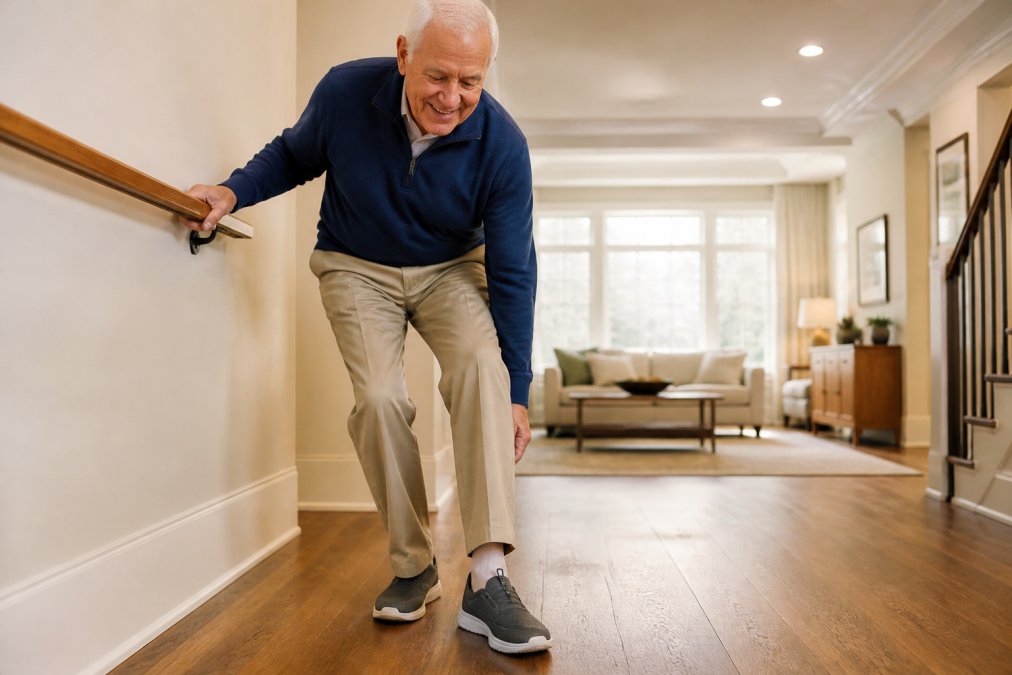
Traditional shoelaces demand fine motor control, balance, and flexibility that not everyone possesses. A child with autism spectrum disorder may find sequencing impossible. An elderly person with arthritis experiences pain bending to reach their feet. Someone with visual impairment can't see laces clearly enough to tie them securely. These are barriers to independence.
Slip-on solutions restore autonomy by eliminating the tying requirement. Choose the sneakers you love, and elastic no-tie laces transform them into slip-ons. No special shoes required. No learning curve. Just put your foot in and go.
How Hands-Free Entry Technology Works
Hands-free entry technology removes the manual dexterity requirement by using elastic tension and mechanical design. The lace material stretches during entry, then returns to a snug fit once your foot is inside, allowing quick slip-on and slip-off convenience without hand adjustment.
Different brands approach this distinctly. Nike's FlyEase uses elastic, sock-like construction for easy entry. Kizik uses a flexible titanium arc in the heel that bends outwardly on insertion, then returns to secure fit automatically. These innovations solve the same problem: entry without effort.
uLace elastic laces work through tension and stretch. When you slide your foot in, the elastic yields to accommodate your foot's width and depth. Once settled, the elastic's natural tension creates a secure lockdown that prevents slipping during activity, eliminating the need to bend, use your hands, or perform fine motor movements.
This technology works for varying foot sizes and shapes without adjustment. A child with swollen feet from edema, a senior with bunions, or someone wearing orthotics can all use the same pair of shoes. The elastic accommodates the variation, making hands-free entry the standard for adaptive footwear.
No Tie Shoelaces for Kids: Simplifying Daily Routines
Getting children ready for school is chaotic without struggling through shoelace tying. Kids lack fine motor development, have attention challenges with sequencing, or get frustrated and give up. No tie shoelaces for kids eliminate this friction point.

Kids who struggled with traditional laces suddenly experience success and build confidence. For children with autism spectrum disorder, ADHD, or developmental delays, this independence becomes transformative, they manage their own footwear instead of waiting for adult help.
uLace Kiddos come in vibrant colors (blue teal, shocking pink, kelly green) designed for children, with elastic material engineered to withstand playground activity. Installation takes minutes: remove standard laces, thread elastic laces through eyelets using the push-and-pull method. One parent shared: "My kid has really wide feet and his shoes are already tight when laced normally. The elastic laces actually stretch enough to slip on easily, and they stay secure during sports."
Adaptive Footwear for Seniors: Regaining Independence
Adaptive footwear for seniors addresses a critical barrier to aging in place: putting on shoes. Arthritis, reduced flexibility, balance issues, and circulation problems make traditional lacing painful or impossible. Many seniors force their feet into shoes without untying them or accept caregiver help for a task they once did independently.
Research from Iowa State University's study on adaptive footwear for individuals with mobility impairments examined 27 participants using ankle-foot orthoses and those with visual impairments. The findings were clear: accessible footwear design that enables independent entry significantly improves quality of life and reduces fall risk. When seniors regain the ability to put on their own shoes without assistance, they maintain dignity and autonomy.
Physical challenges seniors face include painful bending with arthritis, dangerous balance issues during tying, swollen feet from edema, and reduced dexterity. Adaptive footwear using elastic tension and wide openings addresses all these barriers simultaneously.
One 72-year-old customer shared: "It's hard for me to bend over all the time to tie my shoelaces. Now I just slip my foot through my shoes and that's it." That simplicity is the difference between independence and dependence.
uLace Shorts - Peachy Orange →
uLace Shorts ($12.99) and Classic ($6.49) work with any existing sneaker, requiring no new footwear purchase. The elastic material is durable for daily wear, and installation requires no special tools. Affordability means seniors can transform their entire shoe collection without significant expense.

Best Shoes for People with Dexterity Issues
The best shoes for people with dexterity issues share specific features: wide openings for easy entry, elastic or adjustable closures requiring no fine motor control, slip-resistant soles for safety, and materials accommodating orthotic devices. These features work across all dexterity limitations, arthritis, neurological conditions, hand tremors, paralysis, or developmental differences.
Wide openings are non-negotiable. A narrow throat opening requires forcing your foot in, which is impossible without hand strength or fine motor control. Designs opening from heel to toe or using expandable side panels allow your foot to slide in without resistance.
Elastic or hook-and-loop closures beat traditional laces for people with dexterity challenges. Elastic requires zero fine motor control; your foot's natural motion provides tension adjustment. Hook-and-loop systems require minimal hand strength and one-hand adjustment. Avoid shoes with small buttons, complex buckles, or multiple adjustment points.
Slip-resistant outsoles matter because people with dexterity issues often have balance challenges. Look for textured rubber soles with deep tread patterns, not smooth leather or flat rubber that slides on tile or hardwood.
Orthotic-friendly design is essential for people wearing ankle-foot orthoses, custom inserts, or other foot devices. The shoe must have enough internal volume without cramping. Extra-wide shoes provide the room needed.
uLace transforms any shoe into an adaptive solution for dexterity issues. Replacing standard laces with elastic no-tie laces maintains your favorite shoe style while eliminating the dexterity barrier.
| Feature | Why It Matters | uLace Solution |
|---|---|---|
| Wide opening | Allows foot entry without forcing | Works with shoes that have this design |
| Elastic closure | Requires no fine motor control | Elastic laces provide automatic tension |
| Slip-resistant sole | Prevents falls and provides stability | Compatible with any shoe sole |
| Orthotic-friendly volume | Accommodates foot devices | Works inside shoes with adequate space |
Key Features That Enable Quick Slip-On Convenience
The difference between a shoe that merely opens easily and one that allows for quick slip-on and slip-off convenience comes down to specific engineering choices. Tension must be balanced precisely, tight enough to prevent slipping during activity, loose enough to allow entry without forcing. Material must be durable enough for daily wear without degrading. The closure mechanism must be foolproof, requiring no adjustment or monitoring.
Choosing the Right Solution for Your Needs
The path to finding the right slip-on shoes fine motor solution starts with identifying your specific barrier. Are you struggling with fine motor control? Do you have balance issues that make bending dangerous? Are you managing pain with every movement? Is independence the priority, or is speed more important? Your answer determines which features matter most.
Conclusion
Slip-on shoes for fine motor challenges aren't a luxury, they're a pathway to independence. Whether you're a parent simplifying morning chaos, a senior regaining autonomy, or someone managing dexterity limitations, the ability to put on your own shoes without assistance matters profoundly. The solution doesn't require buying new footwear or accepting shoes that don't fit your style. Transform the sneakers you already love with uLace elastic no-tie laces.
Frequently Asked Questions
How do no-tie shoelaces help individuals with fine motor challenges?
No-tie elastic laces eliminate the need to grip, pull, and tie traditional laces, which requires significant fine motor control and dexterity. With slip-on convenience, individuals can put on and remove shoes independently using only their feet and legs. Research shows that footwear design plays a critical role in preventing slips, trips, and falls in older adults (PMC, 2024), and slip-on options reduce the balance risk associated with bending to tie shoes. This is especially valuable for people with arthritis, cerebral palsy, or other conditions affecting hand strength and coordination.
Can any sneaker be converted into a slip-on shoe with adaptive laces?
Yes, most standard sneakers can be transformed into slip-ons using elastic no-tie laces. The conversion works best with shoes that have a flexible upper and adequate opening. A case study from Iowa State University (2025) examined adaptive footwear for individuals using ankle-foot orthoses and found that elastic lace systems accommodated various foot sizes and abilities without manual adjustment. However, shoes with very rigid uppers or narrow toe boxes may require more tension to slip on comfortably. Testing your specific sneaker style before committing to a full set is recommended to ensure proper fit and security.
What should I look for when choosing adaptive footwear for seniors?
Priority features include slip-resistant outsoles to prevent falls, extra-wide openings for swollen feet or orthotic devices, stretchy materials that accommodate different foot sizes, and secure lockdown mechanisms that prevent shoes from sliding off during movement. A survey of 113 participants with disabilities identified that footwear must balance ease of entry with adequate support and stability (ResearchGate, 2025). Memory foam cushioning and ergonomic support are also important for comfort during extended wear. Test the fit with or without socks and ensure the shoe stays secure when walking at a normal pace.
How long do elastic no-tie laces typically last?
Quality elastic laces are designed for long-term durability and can last for years with normal daily use. The lifespan depends on material quality, frequency of use, and how often shoes are worn. uLace has been in business since 2009, demonstrating a commitment to creating reliable adaptive solutions. Factors that extend durability include avoiding excessive heat exposure, not over-stretching during installation, and rotating between multiple pairs of shoes when possible. If laces show signs of wear or lose their elasticity, they can be easily replaced without damaging the original sneaker.