




No-Tie Laces for Wide Feet: A Complete Guide
Table of Contents
- Why No-Tie Laces Are a Game-Changer for Wide Feet
- How No-Tie Laces Improve Shoe Fit and Comfort
- How to Lace Shoes for Wide Feet: Tension and Technique
- Best Elastic Shoelaces for Wide Feet: Material and Design
- Slip-On Sneaker Conversion: Installation and Compatibility
- Troubleshooting Common Installation Issues
- Why Proper Shoe Fit Still Matters
- Frequently Asked Questions
Last Updated: September 27, 2026
Why No-Tie Laces Are a Game-Changer for Wide Feet
Standard laces dig into wide feet, creating pressure points and discomfort, a problem that no tie laces for wide feet are specifically designed to solve. Traditional lacing systems weren't designed with your foot shape in mind.
No-tie laces for wide feet solve this in a way that standard adjustments can't. Instead of fighting against rigid lace tension, elastic systems distribute pressure evenly across your foot, eliminating the pinching that comes from trying to squeeze into shoes that feel tight no matter how you tie them. According to Runner's World's 2026 guide to elastic shoelaces, elastic laces can stretch up to 72 inches in length, giving your feet the room they need without sacrificing the secure hold that keeps shoes on.

Elastic systems let your foot sit in its natural position, reducing swelling and pressure points.
At uLace, we've been solving this problem since 2009. Our elastic no-tie laces transform any sneaker into a slip-on that works for wide feet without forcing you to buy new shoes. You pick the sneakers you love, and we handle the comfort.
How No-Tie Laces Improve Shoe Fit and Comfort
Elastic systems distribute pressure across a wider area instead of creating a fixed compression point where the lace crosses the midfoot.
Reducing Pressure Points and Foot Swelling
Pressure points form where laces pull the shoe walls inward, squeezing your foot between the rigid shoe structure and tight lace.
Elastic laces solve this by stretching rather than pulling. Instead of creating a fixed compression point, they allow your foot to expand slightly into the shoe while still maintaining a secure hold. Research from RunnersConnect's 2026 analysis of lacing techniques shows that specific lacing techniques, including those using elastic systems, can mitigate issues like black toenails and discomfort associated with wide feet.
As your foot swells throughout the day, elastic laces adjust automatically without manual readjustment, while rigid lacing systems become progressively more uncomfortable.
Elastic Stretch Capacity and Mid-Foot Compression
Elastic systems distribute compression across the entire elastic band at your midfoot, the widest part of your foot, rather than creating a single compression line.
The stretch capacity matters here. When elastic laces can stretch, they're not just longer, they're more forgiving. Your foot doesn't have to fight against the lace to get into the shoe. You slip your foot in, and the elastic conforms to your foot's actual shape. That's the difference between a shoe that tolerates your wide feet and a shoe that actually fits them.
How to Lace Shoes for Wide Feet: Tension and Technique
The key is finding the tension where the lace holds your shoe securely without compressing your foot.
Adjusting Tension for High Arches
High arches and wide feet require selective tension: support at the arch and heel, with looser tension across the midfoot.
Position the locking clip lower on the shoe to shift tension toward the heel and arch, away from the midfoot.
This positioning prevents overpronation while keeping pressure off your wide forefoot.
Locking Clips and Secure Hold
Locking clips grip the elastic and hold it at specific tension. For wide feet, clip placement matters as much as tension.
Position the clip on the outer side of the shoe where a traditional knot would sit, holding the lace firmly without cutting into material or foot.
Ensure the elastic lays flat across your foot; a twisted lace creates uneven pressure distribution.
Best Elastic Shoelaces for Wide Feet: Material and Design
Not all elastic laces are created equal. The material and profile of the lace affect how well it works for wide feet. Some laces are designed for aesthetics; others are designed for function. For wide feet, you want function first.
Flat vs. Round Bungee Cord Profiles
Flat elastic laces distribute pressure over a wider surface area than round ones. When you're dealing with wide feet, that surface area matters. A flat lace spreads tension across your midfoot; a round lace concentrates it in a thinner line.
Flat bungee-style laces, typically 8mm in width according to Amazon's product specifications for wide no-tie shoelace variants, are the better choice for wide feet. They conform to your foot's shape more naturally and create less localized pressure.
Round bungee cords work fine for standard feet, but for wide feet, they tend to dig in. The round profile creates a pressure line rather than a pressure zone. Over time, this can lead to the same discomfort you were trying to escape.
Durability and Stretch Capacity
Elastic laces wear out. The material degrades over time, especially if you're using them daily. For wide feet, you need laces that maintain their stretch capacity through months of use.
Look for laces designed for durability, engineered to withstand repeated stretching without losing elasticity.
Stretch capacity degradation is the main failure mode. A lace might drop in elasticity after months of daily use. For wide feet, this matters because the lace becomes progressively tighter as it loses elasticity. The solution is to choose laces designed for heavy use, with thicker elastic and reinforced threading.
uLace ProFormance laces are engineered for durability through repeated stretch cycles. At $14.99, they cost more than basic options, but they maintain their stretch capacity through extended use, critical for wide feet that depend on consistent elasticity.

Slip-On Sneaker Conversion: Installation and Compatibility
Converting your favorite sneakers to slip-ons with elastic laces is straightforward. The installation takes about five minutes per shoe, and once it's done, you never tie laces again. This is where no-tie laces really deliver convenience for wide feet.
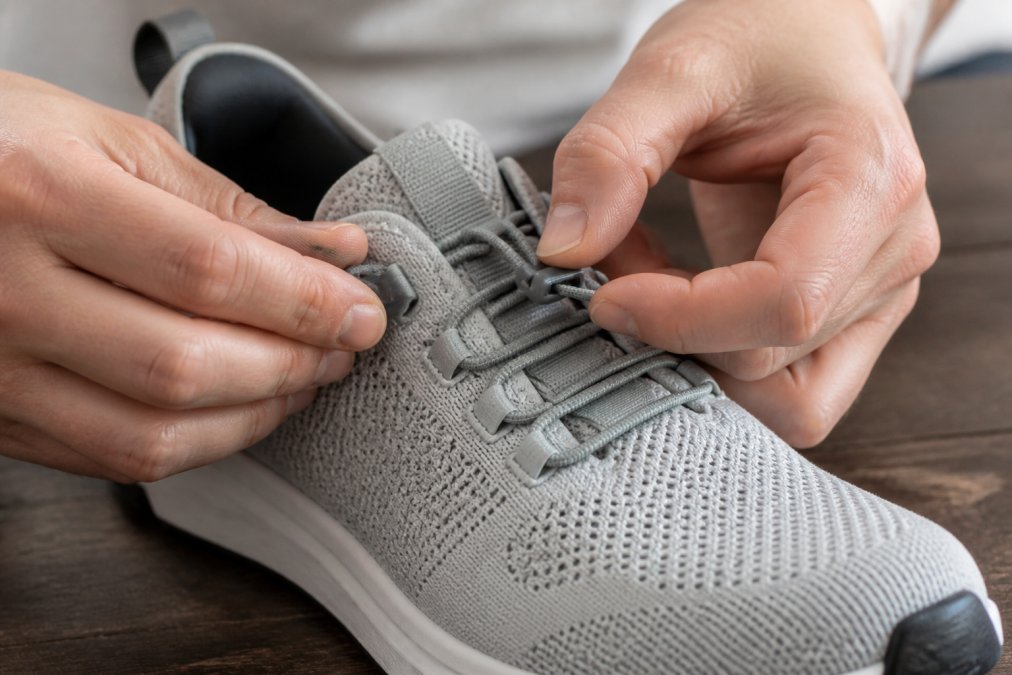
Step-by-Step Installation Guide
What You'll Need:
- Your elastic no-tie laces (uLace Classic or ProFormance)
- The locking clips that come with your laces
- Your sneakers
Step 1: Remove the Original Laces [Time: 1 minute] Take out the standard laces completely. Don't just untie them, remove them entirely so you have a clean slate to work with.
Step 2: Thread the Elastic Lace [Time: 2 minutes] Start at the bottom eyelets, just like you would with standard laces. Thread the elastic through each eyelet, working your way up the shoe. The elastic should follow the same path as your original laces. For wide feet, make sure the lace sits flat across your midfoot, don't twist it.
Step 3: Insert the Locking Clip [Time: 1 minute] Once the elastic is threaded through all eyelets, pull the elastic taut and insert the locking clip at the top. The clip should grip the elastic firmly. Test the tension by pulling on your shoe, it should feel snug but not cutting off circulation.
Step 4: Adjust for Comfort [Time: 1 minute] Put your shoe on and check the fit. If it feels too tight across the midfoot, reposition the locking clip slightly lower. If it feels loose, tighten the clip. For wide feet, you want the elastic to hold your shoe on without compressing your foot.
Works with Sneakers, Boots, and Casual Shoes
The versatility of elastic laces is one of their biggest advantages. They work with almost any shoe that has eyelets. For wide feet, this means you don't have to buy special shoes, you can convert the shoes you already own.
Troubleshooting Common Installation Issues
Even with a straightforward installation process, a few issues come up. Here's how to fix them.
Why Proper Shoe Fit Still Matters
Here's the hard truth: no-tie laces are powerful, but they can't fix a shoe that doesn't fit. If your shoe's toe box is too narrow, elastic laces won't make it wider. If the heel is too loose, elastic laces won't tighten it enough.
Frequently Asked Questions
What lacing technique works best for wide feet?
For wide feet, skip the top eyelets entirely and lace only the lower portion of the shoe to reduce pressure across the widest part of your foot. Alternatively, use no-tie laces with adjustable tension, they distribute pressure more evenly than traditional laces. Elastic shoelaces can stretch, giving you flexibility to customize the fit without creating tight pressure points that aggravate swelling or discomfort.
Do no-tie shoelaces provide enough support for wide feet?
Yes, when installed correctly. No-tie laces with locking clips create a secure hold that prevents your foot from sliding inside the shoe, which is especially important for wide feet that may otherwise shift during movement. The mid-foot compression from elastic laces helps stabilize your arch without the restrictive pressure of traditional laces. However, if your shoe itself is too narrow, no-tie laces cannot compensate, proper shoe fit is the foundation.
Can no-tie laces be used on any type of sneaker?
No-tie laces work with most sneakers, boots, and casual shoes that have standard eyelets. However, shoes with very few eyelets or non-standard lacing patterns may not be compatible. Before purchasing, test compatibility with your specific footwear before committing to multiple pairs.
How long do elastic no-tie laces actually last?
Quality elastic laces are built to last months of regular use. Lifespan depends on frequency of use and how aggressively you stretch them during installation. Proper installation and avoiding over-stretching extends durability significantly.
Finding the right solution for wide feet means addressing both the shoe and the lacing system. No-tie laces handle the lacing part beautifully, but you still need shoes built for wide feet. Once you have those shoes, elastic laces like uLace transform them into convenient slip-ons that work all day without pressure points or discomfort. The combination of proper fit and elastic lacing is what actually solves the problem, not the laces alone.