




Preventing Tripping Hazards in Children's Footwear
Table of Contents
- Why Preventing Tripping Hazards in Children's Footwear Matters
- Understanding How No Tie Shoelaces for Kids Reduce Trip Risk
- Key Features That Prevent Slipping and Tripping
- How to Keep Shoelaces Tied and Secure
- Identifying and Eliminating Trip Hazards in Your Child's Shoes
- Footwear Maintenance and Inspection for Safety
- Frequently Asked Questions
Last Updated: September 19, 2026
Why Preventing Tripping Hazards in Children's Footwear Matters
Some falls cause real injury. Preventing tripping hazards in children's footwear is one of the easiest ways to keep kids safe during their most active years. At uLace, we help parents simplify shoe management while protecting their children from preventable accidents.
Loose shoelaces are a genuine safety risk. A child running across a playground, climbing stairs, or playing sports can catch a heel on a dangling lace and fall. Many parents spend mornings re-tying laces, only to find them undone by midday, creating repeated tripping hazards throughout the day.
Proper footwear design and maintenance eliminate most trip risks. This guide covers the specific features that matter, how to inspect shoes for hazards, and practical solutions that work in real life.
Understanding How No Tie Shoelaces for Kids Reduce Trip Risk
Loose shoelaces are the most common footwear-related trip hazard for children. Traditional laces untie constantly, creating a persistent safety gap that most traditional shoes can't solve.
No tie shoelaces for kids eliminate this problem entirely. Elastic laces stay secured in place all day without retying, dangling, or loosening during active play.
Elastic laces stretch when your child puts on the shoe, then contract to hold the foot firmly in place. There's no knot to come undone, no loose ends to catch on equipment, and no moments when your child steps on a lace and stumbles.
uLace Kiddos laces come in bright, fun colors like Kelly Green and Scarlet Red. Installation takes just a few minutes with no special tools required, transforming any sneaker into a slip-on that stays secure.

Key Features That Prevent Slipping and Tripping
Slip-Resistant Soles and Traction
A worn sole with poor traction is a serious trip hazard. Slip-resistant soles provide friction between the shoe and the surface, preventing your child's foot from sliding unexpectedly.
Deep grooves and channels in the sole grip different surfaces. Shallow or worn tread provides almost no grip and causes trips or falls.
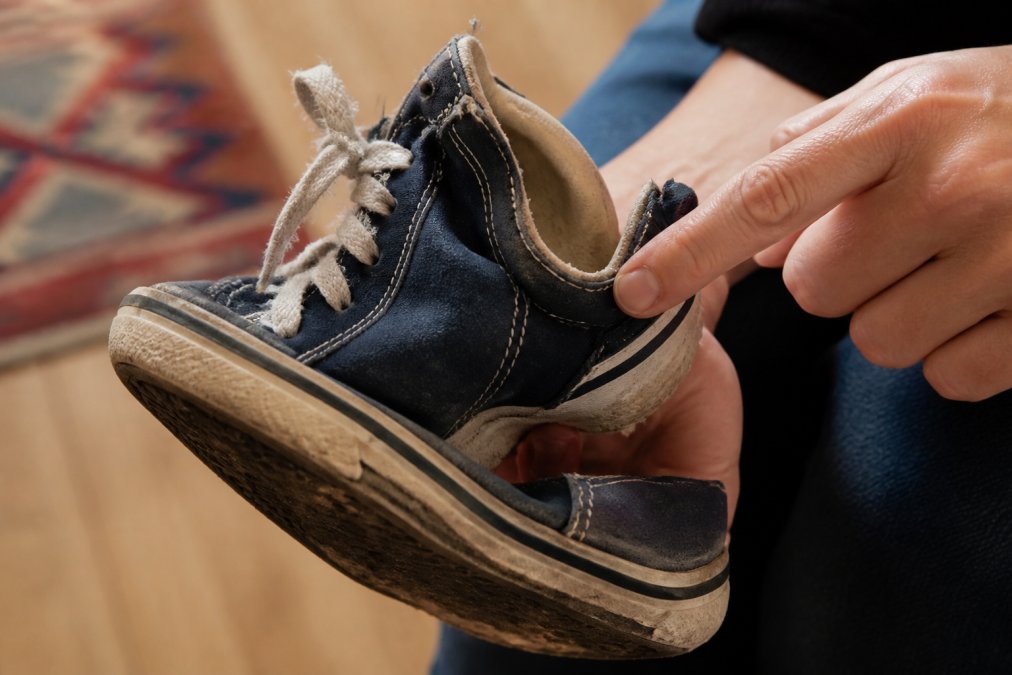
Check your child's shoes monthly by running your finger across the sole. If the tread feels smooth or worn flat, the shoe is a trip hazard. Quality soles combine deep tread patterns with durable rubber that doesn't harden or crack with age.
Heel Support and Ankle Stability
Poor heel support allows excessive foot motion inside the shoe, changing gait and increasing trip risk. Proper heel support keeps the foot positioned correctly, reducing missteps.
The collar should be firm enough to prevent ankle rolling but not so tight it restricts movement. When a child's ankle rolls inward or outward, they lose balance and trip.
Quality children's shoes have reinforced heel cups that prevent sliding and a midsole that provides cushioning without collapsing under weight, keeping the foot stable and positioned correctly.
Proper Shoe Fit for Kids and Developmental Stages
Proper shoe fit for kids is non-negotiable for preventing tripping hazards. Children's feet grow quickly, and ill-fitting shoes cause trips and falls because the foot doesn't sit securely inside the shoe.
Between ages 2-5, feet are flexible and need soft, flexible soles. Between ages 6-10, arches develop more structure and need better support. By age 11, foot structure is nearly adult.
Measure your child's feet every 2-3 months. A properly fitting shoe has about a thumb's width of space between the longest toe and the end, a snug heel, and a secure midfoot. The shoe should move with their foot, not slide around inside.
Width matters as much as length. Shoes that are too narrow or too wide cause foot shifting and instability. Proper width keeps the foot stable and positioned correctly.
How to Keep Shoelaces Tied and Secure
Different closure types, traditional laces, velcro, slip-ons, and elastic laces, each present different trip hazards. Understanding these trade-offs helps you choose the closure type that best matches your child's activity level and developmental stage.
Traditional Laces: The Persistent Problem
Traditional shoelaces come untied constantly during active play, creating a trip hazard that reappears multiple times daily.
The knot is the weak point. A standard bow knot relies on friction to hold tension, but foot-strike vibrations gradually loosen it. Within minutes to hours, the knot fails.
Double knots resist loosening longer but still come undone eventually and become harder to untie, frustrating children.
Lace locks offer temporary improvement but add bulk, can break, and still require the initial knot to be tied correctly.
Traditional laces require constant parental management, retying multiple times daily, inspecting for damage, and replacing when worn, creating repeated trip opportunities.
Velcro Straps: Convenience with Durability Limits
Velcro closures eliminate lace-tying. A child simply pulls the strap tight and presses it down. For young children and parents seeking simplicity, velcro is appealing.
Velcro has a critical weakness: durability. The hook surface gradually fills with lint and dirt, losing its grip after weeks or months. The shoe becomes loose during active play, creating a trip hazard again.
Velcro wears unevenly, creating an unstable fit that increases trip risk.
Replacing worn velcro requires careful application, making velcro shoes more expensive over time than shoes with other closure types.
Velcro works best for children ages 2-5 whose shoes are replaced frequently due to rapid growth. For older children, velcro's durability limitations become a liability.
Slip-On Shoes: Simplicity Without Security
Slip-on shoes offer maximum convenience. Your child simply slides the shoe on and off with no closures to manage.
The trade-off is security. During active play, a slip-on shoe can shift or partially come off, causing a child to step on the heel and trip.
Slip-on shoes work best for low-activity situations. They are not appropriate for sports or playground play. For active children, a slip-on shoe is a trip hazard.
Elastic No-Tie Laces: Permanent Security
Elastic no-tie laces solve the core problem: the knot that gradually loosens. Elastic laces stretch when your child puts on the shoe, then contract to hold the foot firmly in place with no knot to come undone. Securing these laces ensures a consistent fit that prevents stumbles, much like how addressing sharp edges through child proofing furniture creates a safer environment for a toddler to navigate.
The elastic material provides constant tension. Unlike a knot, elastic laces actively pull the shoe snug around the foot and stay secure as long as the material hasn't degraded.
Elastic laces work with any shoe that has lace holes. Installation takes just a few minutes: remove traditional laces, thread elastic laces through the holes, and tie a single knot at the end. Once installed, your child slips the shoe on and off all day with no retying.
High-quality elastic laces maintain their stretch for months or years.
Elastic laces are especially valuable for children ages 5-12 who are highly active but old enough to manage a slip-on shoe independently.
Choosing the Right Closure for Your Child
The best closure type depends on your child's age, activity level, and how frequently you replace shoes:
- Ages 2-4, low activity: Velcro straps offer quick on-and-off convenience. Plan to replace shoes every 3-4 months as feet grow and velcro wears out.
- Ages 2-4, high activity: Elastic no-tie laces on a supportive sneaker provide security without the constant retying that traditional laces require.
- Ages 5-8, any activity: Elastic no-tie laces are ideal. They stay secure during active play and work with any shoe your child already owns.
- Ages 9-12, low activity: Traditional laces with double knots or velcro straps work adequately. Inspect frequently for loosening.
- Ages 9-12, high activity (sports, playground): Elastic no-tie laces or velcro straps provide the security needed for intense movement. Avoid slip-ons for active play.
Identifying and Eliminating Trip Hazards in Your Child's Shoes
Footwear Maintenance and Inspection for Safety
Shoes deteriorate with use. Regular maintenance extends their life and keeps them safe. Inspection catches problems before they cause accidents.
Frequently Asked Questions
Are loose shoelaces considered a major tripping hazard for children?
Yes. Untied or loose shoelaces are one of the most common tripping hazards children face. Dangling laces catch on playground equipment, stairs, and other objects, causing kids to stumble or fall. This risk is especially high during active play when children move quickly and may not notice their laces coming undone. No-tie shoelaces eliminate this hazard entirely by keeping laces secure and out of the way.
What features should I look for in children's shoes to prevent tripping?
Look for slip-resistant soles with good tread patterns, secure heel support, and ankle stability. The shoe should fit snugly without being tight, with about a thumb's width of space at the toe. Proper arch support and cushioning help maintain balance. Secure fastening mechanisms, whether traditional laces, velcro, or no-tie elastic laces, are essential. Avoid shoes with loose straps or closures that can flap during movement.
How can no-tie laces improve safety for children?
No-tie elastic laces stay secure throughout the day without coming undone, eliminating the primary tripping hazard. They provide consistent fixation that keeps the foot positioned correctly inside the shoe, reducing slipping. Children can slip shoes on and off independently without creating trip risks from loose laces. They also reduce the temptation for kids to kick off shoes improperly, which can cause falls or lost footwear during active play.
How do I ensure a proper fit to prevent falls in children?
Measure your child's feet regularly, as they grow quickly. There should be about a thumb's width of space between the longest toe and the shoe's end. The heel should not slip when walking, and the shoe should feel snug around the midfoot without pinching. Consider your child's developmental stage, younger children need more ankle support, while older kids may prefer flexibility. Have your child walk and run in the shoes before buying to test comfort and stability.