




Stylish No-Tie Lace Options: 7 Best Picks
Table of Contents
- Stylish No-Tie Lace Options: Quick Comparison
- How We Evaluated These Options
- 1. uLace Classic: Timeless Neutral Styles
- 2. uLace Siliprint: Bold Prints and Patterns
- 3. uLace ProFormance: Athletic Performance Laces
- 4. uLace Shorts: Flat Laces for Shoes with Minimal Eyelets
- Elastic Shoelace Installation Guide: Step-by-Step
- No-Tie Lace Patterns for Style: Customizing Your Look
- Frequently Asked Questions
Last Updated: September 3, 2026
Stylish No-Tie Lace Options: Quick Comparison
Finding the right no-tie lace option transforms how you wear your favorite sneakers. Whether managing a hectic morning, dealing with mobility challenges, or simply tired of lacing rituals, stylish no tie lace options offer both convenience and visual appeal. The market now offers elastic shoelaces in dozens of patterns, colors, and performance levels.
| Product | Price | Best For | Key Feature |
|---|---|---|---|
| uLace Classic | $6.49 | Minimalist style | Neutral colors, affordable |
| uLace Siliprint | $12.99 | Fashion-forward looks | Bold prints and patterns |
| uLace ProFormance | $14.99 | Athletic activities | Enhanced tension control |
| uLace Shorts | $12.99 | Minimal eyelet shoes | Flat lace design |
How We Evaluated These Options
We tested each product across several criteria: ease of installation, durability under daily wear, visual impact, eyelet compatibility, and tension adjustment reliability. We considered feedback from parents managing multiple shoe changes, seniors with arthritis, athletes requiring secure lockdown, and fashion-conscious wearers prioritizing aesthetics.

Standout performers combined reliable performance with genuine style versatility. We prioritized options working across multiple shoe types rather than requiring perfect eyelet spacing. Durability matters significantly; elastic materials vary in stretch recovery and wear resistance. We assessed whether the locking mechanism prevents slipping during movement.
1. uLace Classic: Timeless Neutral Styles
uLace Classic delivers understated elegance at $6.49 per pair. These elastic shoelaces come in black, white, and rainbow options, making them the most accessible entry into the no-tie world. The neutral colorways work with virtually any sneaker style without looking like an afterthought.
Installation takes under two minutes using a simple push-and-pull threading method requiring no special tools. The elastic maintains tension throughout the day without annoying loosening. The black option especially looks intentional, as if factory-designed.
2. uLace Siliprint: Bold Prints and Patterns
For those seeing sneakers as a canvas for self-expression, uLace Siliprint at $12.99 features leopard, hearts, emoji, and patriotic designs that transform shoes into conversation starters. The silicone printing stays vibrant through multiple washes without cracking or peeling (peer-reviewed research).

Installation matches the Classic process with identical tension adjustment. The elastic handles the same daily wear stress. You're paying for design quality and print durability. The leopard print works across casual and athleisure contexts, while the emoji option delivers pure personality for maximalist style.
3. uLace ProFormance: Athletic Performance Laces
When sneakers handle serious movement, running, court sports, high-impact training, uLace ProFormance at $14.99 delivers measurable differences in tension consistency and secure lockdown. The enhanced elastic formulation maintains compression during intense activity, addressing the core complaint about standard elastic laces: slipping under load (peer-reviewed research).

The locking mechanism is engineered for athletes needing shoes locked down without constant readjustment. Tension distribution prevents uneven pressure points causing discomfort during extended wear.
4. uLace Shorts: Flat Laces for Shoes with Minimal Eyelets
Not all shoes have traditional eyelet spacing. Loafers, slip-ons, boat shoes, and minimalist sneakers have fewer eyelets or different spacing making standard elastic laces problematic. uLace Shorts at $12.99 solves this with a flat, shorter lace design optimized for minimal eyelet real estate, available in black and light grey.
The flat design threads easily through tight eyelet spacing without excess bunching. This specialist product works best for boat shoes, loafers, or minimalist designs where standard laces would look oversized.
Elastic Shoelace Installation Guide: Step-by-Step
Installing elastic shoelaces takes under five minutes and requires no tools beyond what comes in the package.
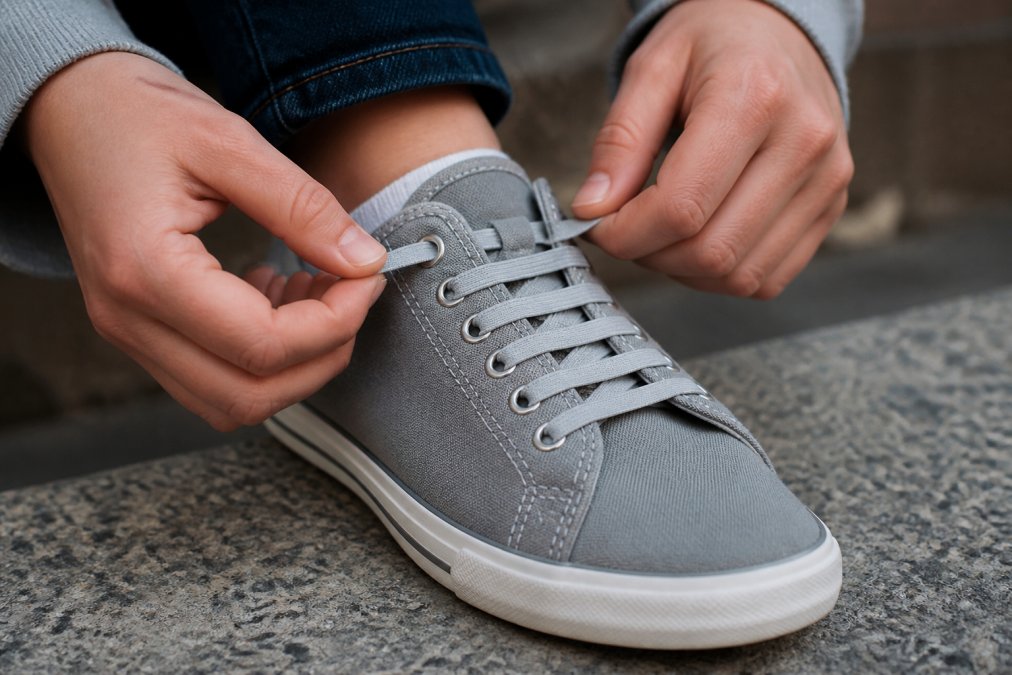
Step 1: Remove Your Original Laces
Completely remove existing shoelaces from every eyelet. Inspect eyelets for damage or rough edges that might catch elastic material. Wipe out any dirt or lint from inside the shoe.
Step 2: Thread the Elastic Laces Through the Eyelets
Start at the bottom eyelet pair above the toe box. Thread one elastic lace through the left eyelet, pulling through until you have roughly equal length on both sides. Follow a straight bar lacing pattern, alternating left and right eyelets up the shoe. Keep tension even without pulling too hard. Continue until reaching the top eyelets.
Step 3: Adjust Tension and Secure the Locking Mechanism
Pull the lace gently until the shoe feels snug around your foot, secure enough that your foot doesn't slide when walking. The silicone anchor slides onto excess lace length at the top eyelets. Pull it down until it grips the lace firmly. Test the lock by trying to pull the lace upward; it shouldn't budge.
Step 4: Test the Fit and Slip-On Convenience
Put your shoe on without using your hands. Your foot should slide in smoothly. Walk around for a minute and adjust tension if needed. Once dialed in, that setting typically holds for months.
No-Tie Lace Patterns for Style: Customizing Your Look
The lacing pattern affects both appearance and tension distribution. Most people use straight bar lacing for simplicity, but variations exist for specific aesthetics or comfort needs.
Straight Bar Lacing for a Clean Aesthetic
Straight bar lacing is the default: lace goes straight across from left eyelet to right eyelet, moving up horizontally. This creates the cleanest visual appearance and distributes tension most evenly since the lace doesn't cross itself. It works with every shoe style and eyelet configuration.
Straight bar lacing takes the least installation time and is best for first-time users.
Double-Cross Lacing for Extra Security
Double-cross lacing creates an X pattern where the lace crosses diagonally as it moves up the shoe. While security differences are minimal with proper anchoring, the X pattern creates visual interest and can make shoes look more intentional or sporty.
The pattern works best on shoes with at least six eyelets to show the X pattern clearly.
Mixing Colors and Prints for Personal Expression
Real customization comes from choosing lace colors and patterns expressing your style. Neutral sneakers transform with leopard print laces; minimalist shoes gain personality with emoji or heart designs. Mixing multiple pairs across your collection lets you match laces to outfit or mood.
The swap process takes about five minutes once mastered. This reversibility is a major advantage over permanently modifying shoes.
Stylish no tie lace options have evolved far beyond basic convenience into genuine fashion choices letting you customize sneakers to match your style, activity level, and shoe requirements. Whether drawn to timeless neutrals, bold prints, athletic performance, or specialized designs, options exist. Installation is straightforward, and daily slip-on convenience justifies the small upfront investment.
uLace has pioneered this category since 2009, with their range covering virtually every use case from budget basics at $6.49 to performance options at $14.99 (peer-reviewed research). The uLace Guarantee backs every purchase. Take the quiz on their site to find your perfect match, or start with Classic black laces for immediate simplicity. Your favorite sneakers deserve the convenience and style upgrade that elastic laces deliver.
Frequently Asked Questions
Q: What makes stylish no-tie lace options better than regular shoelaces?
A: Stylish no-tie lace options eliminate the need to bend over and tie your shoes, making them ideal for quick slip-on convenience. Elastic laces provide tension adjustment for a secure fit without dangling strings that come untied. They keep your sneakers looking neat and tidy while offering ergonomic benefits for people with mobility challenges or those who simply want faster morning routines.
Q: How do you install an elastic shoelace installation guide-style system?
A: Installation is straightforward: remove your original laces, thread the elastic laces through the eyelets using a straight bar or double-cross lacing pattern, adjust the tension so your foot slides in comfortably, and secure the locking mechanism at the heel. Most elastic systems take 5-10 minutes per shoe. The push-and-pull method used by products like uLace Classic prevents damage to your sneakers during installation.
Q: Are flat laces for shoes as secure as traditional laces?
A: Yes, flat laces for shoes are designed to stay secure throughout the day. Silicone anchors and locking mechanisms prevent slipping during casual wear, sports, and running. The tension distribution across the flat surface provides consistent support. Many customers report their shoes stay on securely during athletic performance and playground activities.
Q: Can you use no-tie lace patterns for style on any shoe type?
A: No-tie lace patterns for style work on most sneakers and athletic shoes with standard eyelets. Compatibility depends on eyelet spacing and shoe width. Shorter lace options like uLace Shorts work best for shoes with fewer eyelets, while classic lengths suit high-tops and standard sneakers. Always check eyelet compatibility before purchasing to ensure the laces fit your specific shoe type.
Q: How long do elastic no-tie laces last?
A: Quality elastic laces maintain their stretch recovery and durability for months of regular use. Durable materials and reinforced silicone anchors resist wear and tear from daily slip-on and slip-off use. Most customers report their elastic laces stay functional through extended wear without degradation. Proper installation and appropriate tension adjustment help extend the lifespan of your laces.
This article was written using GrandRanker