

Stylish Performance Socks: Long-Distance Running Guide
Last Updated: November 7, 2026
Quick Summary
Stylish performance socks for long distance running combine moisture-wicking fibers, a snug heel hold, and cushioning matched to your foot strike. Fit and fabric matter more than any single feature, and a colored mid-calf sock can look intentional while holding up over long training runs.
- Cushioning preference varies from runner to runner, so the right amount depends on the individual.
- A double-blind study found fewer blistering events with synthetic socks than with identical cotton socks.
- The COLR By uLace Mid-Calf Socks cost $9.99 a pair in five colorways.
- Size your shoe with the sock you'll actually race in to avoid black toenails.
- Replace socks when the heel or forefoot thins or the arch band stops holding.
Table of Contents
- What Makes a Running Sock Worth Wearing for 26.2 Miles
- Best Running Socks for Long Distance: What to Look For
- Running Socks for Blister Protection: Friction, Moisture, and Fit
- Stylish Performance Socks for Long Distance Running Women's Picks
- Stylish Performance Socks for Long Distance Running Men's Picks
- Sock-and-Shoe Compatibility: Matching Your Socks to Your Sneakers
- How We Tested: A Standardized Long-Distance Protocol
- Durability, Cost Per Wear, and When to Replace
- Frequently Asked Questions
What Makes a Running Sock Worth Wearing for 26.2 Miles
A running sock earns its place over 26.2 miles by managing moisture, cushioning impact, and holding fit without bunching. Everything else, from color to cuff height, is a preference layered on top of those three jobs.
At uLace, we think about feet the way we think about laces: the small piece of gear that decides whether the whole setup works. A stylish performance sock for long distance running has to survive hours of sweat, friction, and pounding before style even enters the conversation.
Research from a 2025 impact and plantar-pressure study of running socks found that professional running socks showed better cushioning performance under impact testing than standard options. That's the baseline. Here's what separates a sock you forget about from one you're peeling off at mile 18.
Best Running Socks for Long Distance: What to Look For
The best running socks for long distance combine moisture-wicking fibers, a snug heel hold, and cushioning matched to your foot strike. Fit and fabric matter more than any single feature.
Feetures' marathon sock guide lists four factors that decide a long-distance sock: fit that holds for hours, moisture management, cushioning level, and sock height. Notice what's missing from that list. Brand name, price, and looks.
Cushioning: Where It Helps and Where It Hurts
Cushioning is not a "more is better" feature. Cushioning preference varies from runner to runner, so the right amount depends on the individual rather than a single ideal.
- Forefoot cushioning helps runners who land hard on the ball of the foot over long road miles.
- Heel cushioning matters on downhill sections and for anyone with a heavy heel strike.
- Ultralight, uncushioned socks suit runners who want maximum ground feel and race-day speed.
A common mistake is buying the thickest sock available for a marathon. Extra bulk can change how your shoe fits, which creates the friction you were trying to avoid.
Height, Cuff, and Coverage Decisions
Cuff height is a fit and protection decision first, a style decision second. Mid-calf and crew socks cover more skin, which helps with ankle protection on trail running and keeps debris out on rough ground. Quarter crew and no-show cuts suit road running and hot weather, where less fabric means more ventilation.
Mid-calf coverage is one option among several for different running conditions. The extra fabric covers more of the lower leg.
Running Socks for Blister Protection: Friction, Moisture, and Fit
Running socks for blister protection work by cutting friction and moving sweat away from skin. Blisters form when moisture softens the skin and repeated rubbing finishes the job.
A double-blind study of long-distance runners found fewer blistering events with synthetic socks than with otherwise identical cotton socks, according to Feetures' summary of the research. Cotton holds sweat against the foot. Synthetic performance fibers push it outward.
Three things drive hot spots:
- Moisture: damp skin tears more easily under friction.
- Fit: a loose heel or bunched toe box rubs with every stride.
- Seams: a bulky toe seam creates a pressure point on long runs.
A seamless toe and a snug arch support address two of those three at once. If blisters are a recurring problem, our guide on 7 ways to prevent blisters with elastic shoelaces covers the lacing and fit side of the equation.
Stylish Performance Socks for Long Distance Running Women's Picks
Style and technical performance don't have to compete, but they are judged on different scales. A colorway either works with your kit or it doesn't in about two seconds. A sock either holds its fit at mile 20 or it doesn't, and you find that out the hard way.
How to judge the style side. Most running socks are sold in white, black, or gray, which means they disappear into the shoe and add nothing to the kit. A colored mid-calf sock is a small, low-risk way to make a race photo look intentional.
How to judge the performance side. Mid-calf height covers more of the lower leg than a no-show or quarter cut. Look for a heel that stays seated when you push off and a sock that stays comfortable over long distances. Those checks matter more than any single fabric claim.
Pairing with shoes and kit. A mid-calf sock works best when the shoe is sized with that sock on. Whether you choose a quiet color pairing or a bolder contrast, make sure the sock sits smoothly against your shoe and skin, since friction can turn a stylish setup into a distraction on long runs with Krush Khaos.
Best for: runners who want a sock that looks intentional with their kit and holds up over long training runs. Skip if: you race exclusively in no-show socks, or your shoes are loud enough that a colored sock competes with them.
You can shop the Blue Teal mid-calf socks directly.

Stylish Performance Socks for Long Distance Running Men's Picks
For men's kits, Army Green is the quiet option that still looks considered. The COLR By uLace Mid-Calf Socks in Army Green are priced at $9.99.
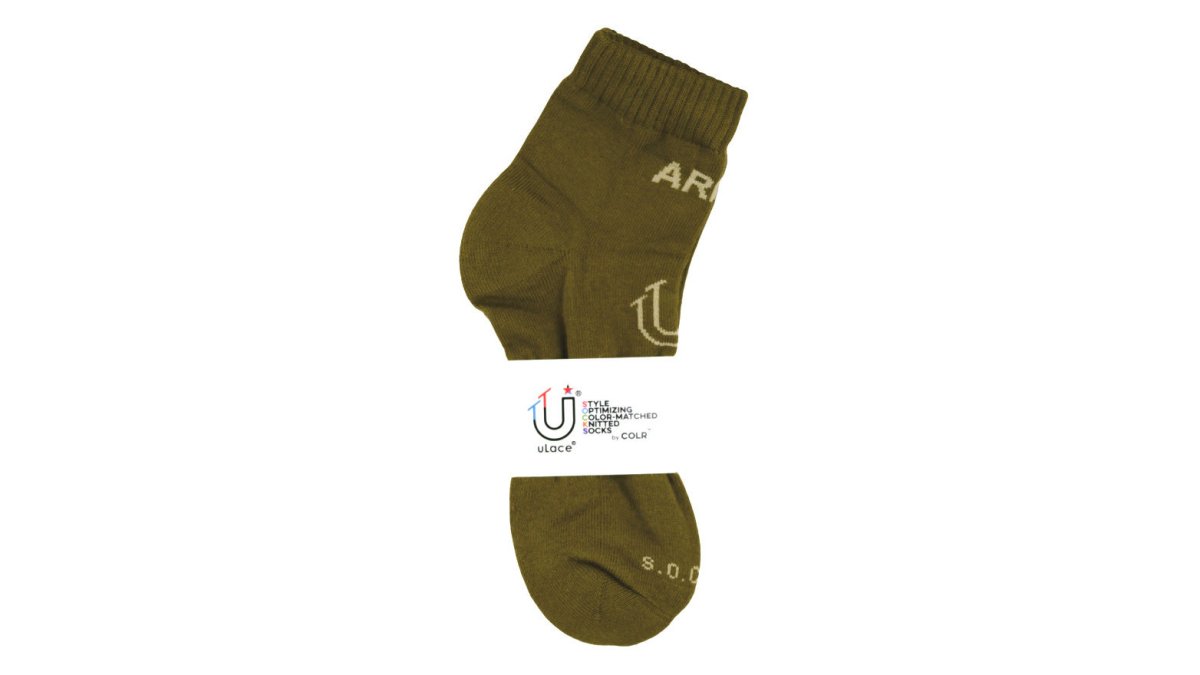
A colored mid-calf sock can add a deliberate look to a running kit. Black is the safe pick if you want the sock to disappear entirely.

Best for: runners building a kit that looks put together without trying too hard. Skip if: your shoes are loud enough on their own.
The Army Green mid-calf socks are available now.
| Sock | Color | Height | Price | Best For |
|---|---|---|---|---|
| COLR Mid-Calf | Army Green | Mid-calf | $9.99 | Neutral kits, trail days |
| COLR Mid-Calf | Black | Mid-calf | $9.99 | Disappearing into any kit |
| COLR Mid-Calf | Blue Teal | Mid-calf | $9.99 | Standing out on race day |
| COLR Mid-Calf | Bright Green | Mid-calf | $9.99 | High-visibility training |
| COLR Mid-Calf | Bright Purple | Mid-calf | $9.99 | Warm colorways |
Sock-and-Shoe Compatibility: Matching Your Socks to Your Sneakers
Sock thickness changes how a shoe fits, and lace tension decides whether that fit holds. A thick sock in a snug shoe squeezes the forefoot; a thin sock in a roomy shoe lets the heel lift.
This is where lacing earns its keep. Elastic no-tie laces provide a stretchy fit that can stay in place without tying. If you're tuning a marathon setup, our roundup of the best no-tie shoelaces for marathon runners covers lace options that pair well with technical socks.
Lacing can also affect how a shoe feels over the instep. Our guide to lacing techniques for better circulation in running shoes covers related lacing options.
Watch out: matching a thick cushioned sock to an already-tight race shoe is the fastest route to black toenails. Size the shoe with the sock you'll actually race in.
How We Tested: A Standardized Long-Distance Protocol
Most sock reviews describe a sock after one run and call it tested.
The run block. Each sock is worn for a defined block of long runs rather than a single outing. The block includes at least one run of 18 miles or longer, plus shorter easy runs and one workout, so the sock sees both steady effort and harder efforts.
Shoe pairing. Each sock is tested in at least two shoes: one trainer with a roomier toe box and one race shoe with a snugger fit. This is the check most reviews skip. A sock that feels fine in a trainer can crowd the toe box of a race shoe and cause the exact hot spots it was supposed to prevent.
What we measure.
- Moisture retention: checked by feel and by weighing the sock before and after a long run, then comparing across socks in the same conditions.
- Hot spots: logged by location (heel, arch, ball of foot, toes) and by when they appeared in the run.
- Fit retention: judged by whether the heel stayed seated, the arch band held without pinching, and the cuff stayed up without sliding into the shoe.
- Visible wear: checked after a defined number of wash cycles, looking for pilling, seam wear, thinning at the heel and forefoot, and loss of elasticity.
The wash cycle. A sock that performs on run one and pills by run ten isn't a long-distance sock. We wash each pair on a normal cycle without fabric softener and inspect after every few cycles, tracking shrinkage, pilling, elasticity retention, and seam wear. Fabric softener is the most common mistake here: it coats performance fibers and reduces moisture wicking over time, so we never use it in testing and don't recommend it in care.
What we don't claim. We don't publish lab numbers we can't verify. Where the research supports a mechanism, such as synthetic fibers moving sweat away from skin better than cotton, we say so and link to it.
How to read the results. A sock that scores well on moisture and fit but shows seam wear after repeated washes is a short-block sock, not a race-day sock. A sock that holds its shape through the wash cycle but runs warm in heat is a cool-weather pick.
Durability, Cost Per Wear, and When to Replace
Cost per wear can matter more than sticker price. A $9.99 pair worn twice a week for a year works out to a low cost per run.
Replace running socks when the heel or forefoot thins, when the elastic arch band stops holding, or when seams start rubbing.
Care routines can affect how a sock wears over time.
The right sock setup is the one you never think about mid-run. If your laces are the other half of that equation, uLace has been making elastic no-tie laces since 2009, with a push-and-pull install that turns any sneaker into a slip-on and a fit that stays secure all day. Browse the COLR sock collection or take our fit quiz to match the right laces to your shoes.
Frequently Asked Questions
What socks do long-distance runners wear?
Most long-distance runners choose synthetic or merino wool socks with moisture-wicking fibers, a snug fit that holds through hours of running, and cushioning placed where they need it. Research has examined running socks in impact and plantar-pressure testing. Many runners pair technical socks with a secure lacing system to keep the fit locked in.
How do I choose running socks that help prevent blisters?
Look for moisture-wicking fibers, a seamless toe, and a fit that stays snug without bunching. Friction and trapped sweat are the two biggest causes of hot spots, so breathability and moisture management matter as much as cushioning. Test a few options on training runs before race day, since cushioning preference varies between runners.
Should long-distance running socks be thin or cushioned?
There is no universally best cushioning level. The Feetures guide states that cushioning preference is not universal, so sock choice depends on the runner rather than a single ideal level. Thin, ultralight socks suit runners who want maximum breathability and a close feel inside the shoe, while cushioned socks add comfort on long road miles. Match the cushioning to your shoe fit and your typical distance, and test any change on a training run first.
How do performance socks work with no-tie laces like uLace?
uLace elastic no-tie laces create a stretchy fit without tying. uLace COLR Mid-Calf Socks cost $9.99 and come in colors like Black, Army Green, Blue Teal, Bright Green, and Bright Purple, so you can match your sock height and style to your sneakers.
