




Where Can I Buy Shoelaces? A Store and Online Guide
Last Updated: November 10, 2026
Quick Summary
You can buy shoelaces at pharmacies, discount stores and shoe retailers, or online for the widest choice of lengths and materials. Stores suit a quick purchase, while online listings let you compare lengths in inches before ordering.
- Pharmacies and discount stores carry basic flat or round laces in black, white and brown at low prices.
- Shoe stores and athletic retailers offer a wider range of styles and lengths for specific brands.
- Check the length against your shoe's eyelet count before buying, since a too-short lace is the most common mistake.
- Sneakers with six eyelet pairs usually take a lace around 45 inches long; eight pairs need about 54 inches.
- Add 10 to 15 percent to the chart length if you plan to use a criss-cross lacing pattern.
Table of Contents
- Where Can I Buy Shoelaces in Stores?
- Where Can I Buy Shoelaces Online?
- Where Can I Buy Shoelaces Nearby Today?
- How to Find the Right Sneaker Shoelace Length
- Choosing Among Shoe Lace Styles
- Getting Your Sneakers Laced Up Without the Hassle
- Frequently Asked Questions
Where Can I Buy Shoelaces in Stores?
Shoelaces are easy to find in the United States. Pharmacies, discount stores and shoe retailers all carry them, though each stocks a different range. Knowing where to look saves a trip to the wrong aisle.
Pharmacies and Discount Stores
Many pharmacy chains and discount stores keep a small shoelace section, often near footwear accessories or the sewing aisle. Stock tends to be basic: standard flat or round laces in a few lengths, usually in black, white and brown, and packs are typically inexpensive.
Selection is limited, though. If you need a specific length, a waxed lace or an elastic no-tie style, check the shelf before you make the drive.
Shoe Stores and Athletic Retailers
Shoe stores and athletic retailers generally carry a wider range of styles and lengths than discount stores, and many sell replacement laces for specific brands. Ask the staff to confirm the length before you pay, since a lace that is too short is the most common mistake.
Where Can I Buy Shoelaces Online?
Online shopping gives you the widest choice of lengths, colors and materials, and most shoelace listings show the length in inches so you can compare directly. Major marketplaces list hundreds of options, and specialty brands sell styles you will not find on a store shelf.
Uncertain about which style fits? uLace offers no-tie elastic laces with a simple push-and-pull installation. You can browse the uLace Classic - Black, priced at $6.49, and the uLace ProFormance - Performance No-tie Laces - Black, priced at $14.99.
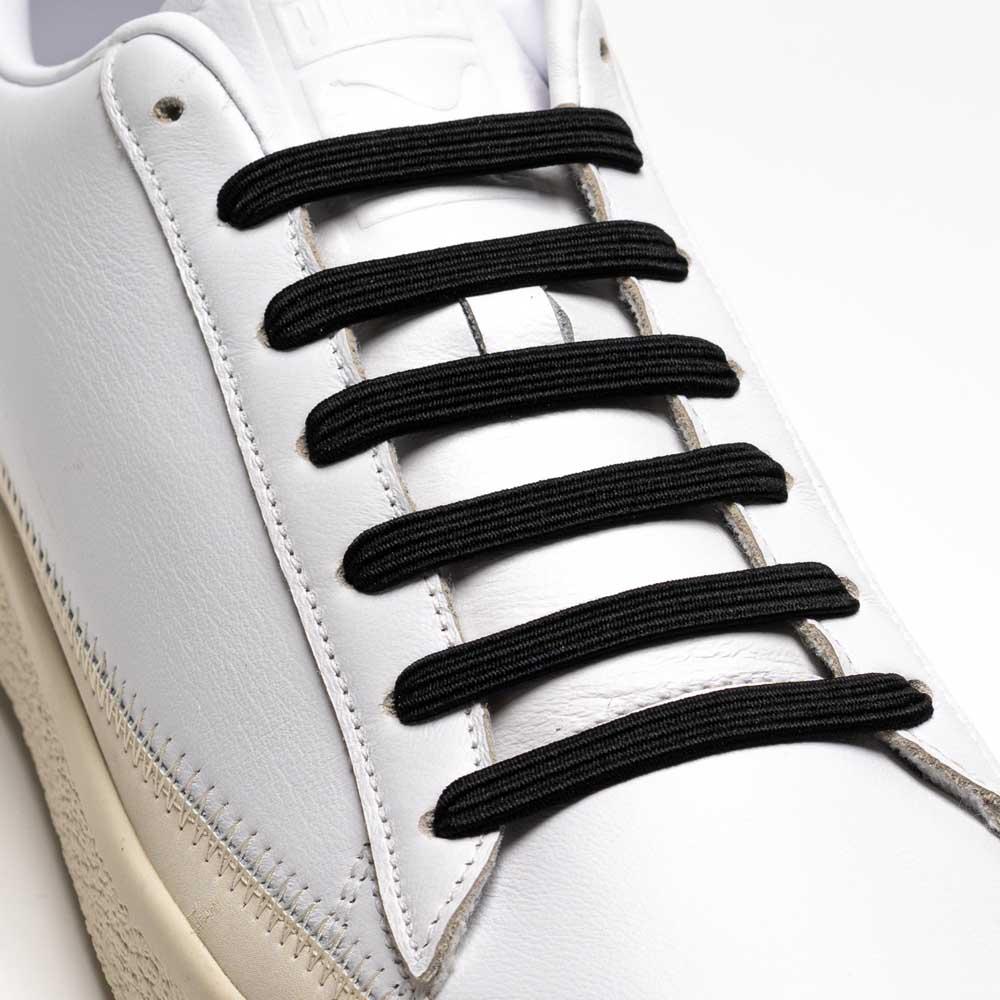
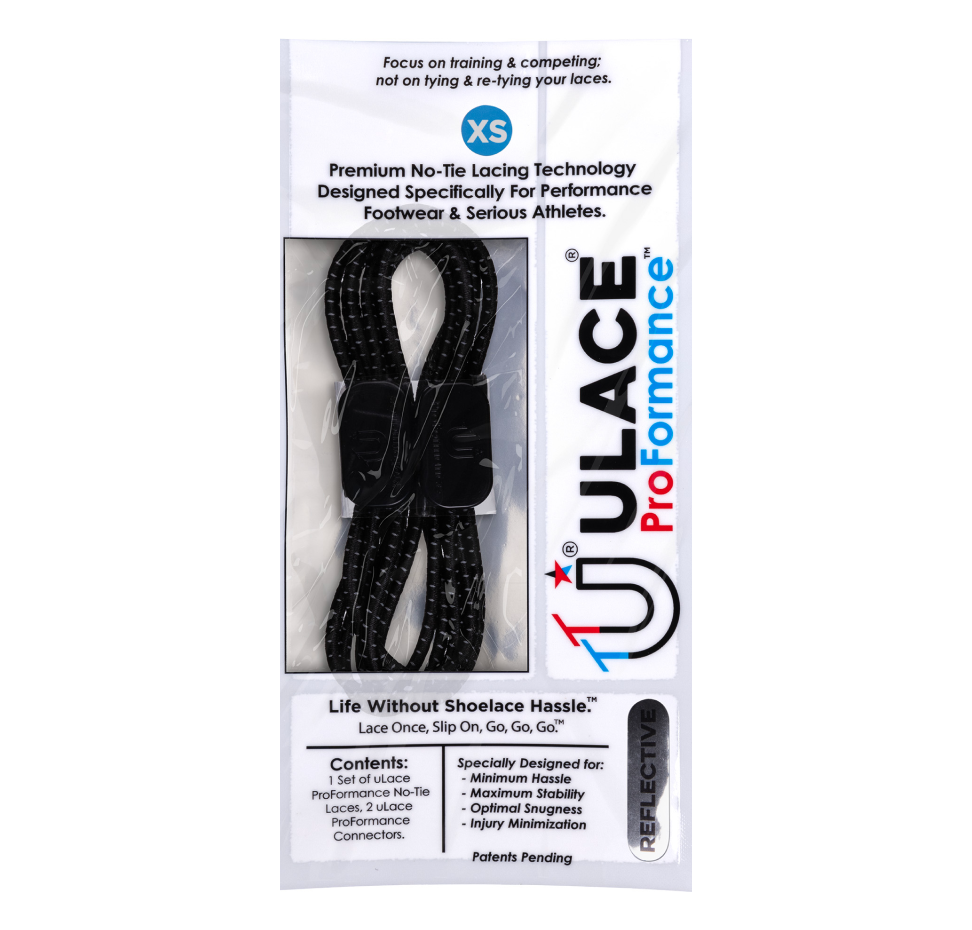
Before you order, check the lace length against your shoe's eyelet count, and read the return policy in case the fit is off.
Where Can I Buy Shoelaces Nearby Today?
When you need laces today, start with a local search for "shoelaces near me" in a map app. Store listings usually show whether a pharmacy or shoe store has the item in stock, which saves a wasted trip. Calling ahead is also worth the minute it takes, especially for specialty laces.

How to Find the Right Sneaker Shoelace Length
Getting the right length matters more than most buyers expect. A lace that is too short will not close the shoe properly, and one that is too long leaves loose ends that can catch on things, pool at the ankle or come untied during activity. The right length depends on the number of eyelets, the lacing pattern you plan to use and whether the shoe has a toe cap or extra top eyelets.
Measuring Your Current Laces
Pull out the old lace and lay it flat next to a ruler or tape measure. Measure from end to end, including the aglets (the plastic or metal tips). Then compare that measurement with the length chart on the package. Measure both laces if they are different lengths, because a worn lace can be shorter than its partner.
If the old lace is missing or badly frayed, measure the shoe instead. Count the eyelet pairs on one side, then use the chart in the next subsection. Note whether the top pair is a set of hooks rather than eyelets, since hooks change how much lace is needed at the top.
Using Lace Length Charts by Eyelet Count
As a general guide, sneakers with six pairs of eyelets usually take a lace around 45 inches long, while those with eight pairs usually take about 54 inches. Shoes with five pairs often fit a 36- to 45-inch lace, and high-top boots with ten or more pairs commonly need 72 inches or longer. These ranges are starting points, not guarantees, because a crisscross pattern uses more lace than a straight bar pattern.
Eyelet count is a more reliable starting point than shoe size, because two shoes of the same size can have different lacing patterns, eyelet spacing and tongue heights. Always confirm against the specific product listing and the length printed on the package before you buy.
Adjusting for Your Lacing Pattern
The pattern you choose changes the required length. A straight bar lace, where each crossing runs directly across the shoe, uses the least lace. A criss-cross pattern uses noticeably more, so add roughly 10 to 15 percent to the chart figure if you lace that way. A heel-lock or extra-top-eyelet pattern adds more still. Lace the shoe once with a string or your old lace before buying, so you can see how much material the pattern actually consumes.
The article gives these starting lengths by eyelet count and the adjustment for lacing pattern.
| Eyelet pairs | Typical lace length | Note |
|---|---|---|
| Five | 36 to 45 inches | Starting point only |
| Six | About 45 inches | Starting point only |
| Eight | About 54 inches | Starting point only |
| Ten or more (high-top boots) | 72 inches or longer | Starting point only |
| Criss-cross pattern | Add 10 to 15 percent | Uses more lace than bar lacing |
Choosing Among Shoe Lace Styles
Lace styles differ in how they fit, how they hold and how they look. Choosing well means matching the lace to the shoe's eyelet size, the activity you wear it for and how often you plan to re-tie it.
Flat, Round and Oval Laces
Flat laces are the most common and suit everyday sneakers and canvas shoes. Their wide surface spreads pressure across the tongue and holds a knot well, but they can loosen during long walks. Round laces give a snugger, more even tension and suit dress shoes, boots and many athletic models, though they can slip out of the knot if they are not tied firmly. Oval laces sit between the two and are a reasonable default when you are unsure.
Check the eyelet opening before you choose. A round lace in a flat-eyelet shoe will thread, but it may rub the eyelet edge and wear it down over time.
Waxed, Cotton and Synthetic Materials
Waxed laces resist fraying and water absorption, which makes them the usual choice for boots and work shoes exposed to mud or rain. Cotton laces feel soft and look traditional, but they stretch and absorb moisture, so they often need retying. Polyester and nylon laces hold their shape, resist stretching and dry quickly, which suits running and training shoes. Blended laces are common in mid-range sneakers and offer a balance of grip and durability.
Elastic and No-Tie Laces
Elastic laces stretch to fit over the foot and then stay in place, so you never have to tie or untie them. They suit people with limited hand mobility and anyone who wants to slip shoes on quickly. For a comparison of no-tie methods, see our guide to seven ways to lace shoes without tying.
Matching Lace Style to Shoe Type
For everyday sneakers, a flat or oval polyester lace is the safest default. For boots and outdoor shoes, choose waxed or round laces that resist moisture and hold a double knot. For running and training shoes, look for slim, low-stretch laces that stay put through repeated flexing. For dress shoes, a thin round or flat cotton lace in a matching color keeps the look clean. When in doubt, buy the same style your shoe came with, then experiment once you know how it fits.
Getting Your Sneakers Laced Up Without the Hassle
If bending over to tie laces is the problem, a no-tie system solves it. uLace is the original creator of no-tie elastic shoelaces, and installation uses a simple push-and-pull method. Customers have said they find them easy to use and that they can slip their shoes on without bending over.
For ideas beyond uLace, read our guide to seven ways to lace shoes without tying, covering straight bar, elastic and other methods.
Ready to stop tying? Take the quiz to find the uLace style that fits your sneakers. Fast shipping from the USA and a guarantee behind every pair mean you can wear the shoes you love without the hassle.
Frequently Asked Questions
What store can I buy shoelaces at?
Many pharmacy chains, discount retailers and shoe stores sell replacement shoelaces. Selection and pricing vary by store, and shoe stores and athletic retailers generally carry a wider range of lengths and styles. If you want no-tie elastic laces, uLace sells its Classic and ProFormance models directly at u-lace.com, with the Classic at $6.49 and ProFormance at $14.99.
How do I know what size shoelaces to buy?
Measure your old laces or count the eyelets on your shoe. Most sneakers use laces between 27 and 54 inches, and the number of eyelets on each side determines the length you need. A shoe with 6 eyelet pairs usually takes about 45 inches, while 8 pairs usually takes about 54 inches. Check the lace length printed on the package and compare it to your measurement before buying.
Does CVS sell shoelaces?
Many CVS stores sell replacement shoelaces, though selection varies by store, so check the store's website or call ahead if you need a specific length. For no-tie elastic laces, you can order online from uLace at u-lace.com.
