




Best No-Tie Shoelaces for Running in 2026
Table of Contents
- Quick Comparison: Top No-Tie Shoelaces for Running
- Benefits of Elastic Shoelaces for Runners
- How to Install Lock Laces on Your Running Shoes
- uLace ProFormance: Performance No-Tie Laces for Every Runner
- Key Factors When Choosing No-Tie Shoelaces
- No-Tie Laces for Different Running Scenarios
- Common Mistakes to Avoid with No-Tie Laces
- Frequently Asked Questions
Last Updated: September 2, 2026
Quick Comparison: Top No-Tie Shoelaces for Running
The best no-tie shoelaces for running transform your favorite sneakers into slip-on convenience without sacrificing performance. Elastic laces eliminate the friction of traditional tying while maintaining the secure fit serious runners demand.
| Product | Price | Best For | Key Feature |
|---|---|---|---|
| uLace ProFormance | $14.99 | All-around runners | Customizable tension |
| uLace ProFormance (Color Options) | $14.99 each | Style-conscious athletes | 10+ color choices for personalization |
| Elastic no-tie systems | Varies | Specific use cases | Tension adjustment and eyelet compatibility |
uLace ProFormance stands out because it delivers adjustable tension during long runs plus color variety runners want. Below, we'll show you how to choose the right no-tie shoelaces for your running style, install them correctly, and avoid common mistakes that lead to slipping or discomfort.

Benefits of Elastic Shoelaces for Runners
Elastic shoelaces eliminate the need to bend down and retie laces mid-run. For runners managing foot swelling during long distances, adjustable elastic laces adapt to changing foot volume without the rigidity of traditional knots.
The slip-on convenience matters significantly. Triathletes shave seconds off transitions by stepping straight into their shoes. Parents avoid morning battles over lace-tying. Seniors and anyone with arthritis gain independence back without struggling with fine motor control.
Elastic tension distributes pressure more evenly across the foot compared to a tight knot at the midfoot (peer-reviewed research). Many runners report reduced foot fatigue on longer distances because the laces flex with natural foot swelling rather than creating pressure points. The secure fit prevents heel slippage that happens when you loosen traditional laces for comfort.
No-tie shoelaces also prevent dangling, dirty shoestrings that catch on things or drag through puddles. Your sneakers stay neat throughout the day.
How to Install Lock Laces on Your Running Shoes
Installing elastic no-tie laces takes about five minutes per shoe and requires no tools.
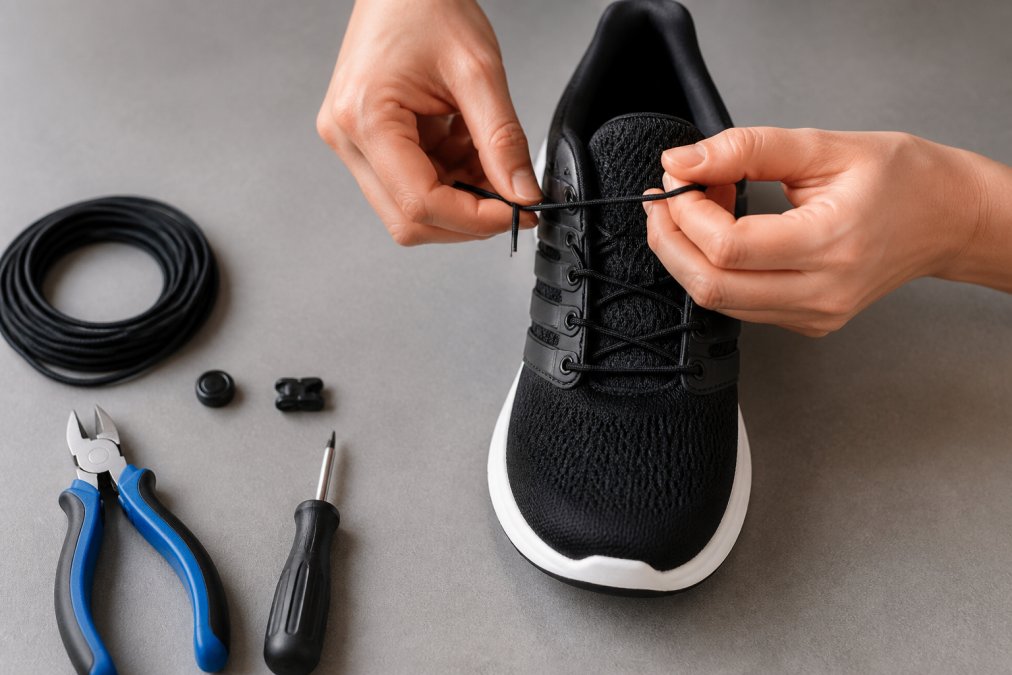
Remove the original laces completely. Thread one end of the elastic lace through the bottom eyelet the same way you'd start a traditional lace. Work your way up the shoe, alternating sides or following your preferred lacing pattern.
Once you've threaded both laces through all eyelets, adjust the tension. Pull the laces snug, not tight enough to cut off circulation, but tight enough that your foot sits securely in the shoe. Tighten until you can slip your foot in and out with minimal effort, but the shoe stays on during running.
Most runners find the sweet spot after one or two test runs. Your foot swells slightly when you start running, so adjust accordingly. The beauty of elastic laces is that you can loosen or tighten them without removing the shoe.
Once installed, your laces stay put. Just slip your foot in and go.
uLace ProFormance: Performance No-Tie Laces for Every Runner
uLace created the original elastic shoelace solution in 2009, and their ProFormance line represents years of refinement specifically for athletic use (peer-reviewed research). These laces combine slip-on convenience with performance features serious runners need.
The ProFormance design uses an adjustable cord system that lets you customize elastic tension to your exact preference. This matters because runners have different foot widths, arch types, and swelling patterns. The adjustable cord solves that problem without requiring different product sizes.
ProFormance laces work with virtually any shoe type because they thread through standard eyelets. Whether you're using trail running shoes, lightweight racing flats, or cushioned daily trainers, these laces adapt. Installation follows the standard push-and-pull method with no special tools. Most runners have their first pair installed within five minutes.
Color Options and Customization
uLace ProFormance comes in ten color options: Black, White, Royal Blue, Scarlet Red, Gold, Bright Green, Maroon, Neon Orange, Neon Yellow, and Shocking Pink. This matters for runners who care about their gear matching their style or team colors.

Brighter colors like Neon Yellow and Neon Orange increase visibility for early morning or evening runs. Darker colors like Black and Maroon work for daytime running. Each color option is priced identically at $14.99 per pair, so you can match your running shoe collection without paying more for style.
Why ProFormance Laces Stand Out
The adjustable cord mechanism is a key differentiator. While other elastic lace brands offer basic stretch, ProFormance lets you dial in the exact tension your foot needs. This prevents heel slip during running and pressure points from overtightening. performance running socks.
The material quality ensures durability. ProFormance laces hold their elasticity through hundreds of runs without stretching out.
uLace's track record as the original creator of no-tie elastic laces means they've refined the design based on feedback from thousands of users. The uLace Guarantee backs every purchase.
Key Factors When Choosing No-Tie Shoelaces
Selecting the right no-tie shoelaces for running involves understanding your specific needs and how different laces address them.
Elastic Tension and Adjustable Cord
Elastic tension determines whether your foot stays secure during running or slips around inside the shoe. Too loose and you get heel slip. Too tight and you create pressure points that numb your toes or restrict blood flow.
The best no-tie shoelaces include an adjustable cord that lets you customize tension to your foot. This is crucial because foot swelling varies between individuals and changes throughout a single run. Your foot swells as your body warms up and blood flow increases to your legs (peer-reviewed research).
Adjustable cord systems let you tighten or loosen the laces without removing the shoe. This flexibility prevents choosing between two bad options: tight laces with pressure points or loose laces with heel slip.
Durability and Material Quality
Elastic laces degrade over time. The material stretches, loses elasticity, and eventually fails. Quality laces like uLace ProFormance last for years.
Material quality affects both longevity and performance. Premium elastic materials maintain their tension longer, which means your laces stay secure without constant readjustment. The cord or toggle mechanism also matters. Quality systems use durable materials that withstand repeated tightening and loosening.
Compatibility and Eyelet Fit
Most running shoes use standard eyelets that work with traditional laces and most elastic lace systems. However, some specialty shoes have smaller eyelets or unusual lacing patterns.
Before buying, verify that the no-tie shoelaces work with your specific shoe model. The lace cord needs to thread through your eyelets smoothly without excessive friction. Standard eyelet compatibility covers most runners. uLace ProFormance works with the vast majority of running shoes because they thread through eyelets the same way traditional laces do.
No-Tie Laces for Different Running Scenarios
The best no-tie shoelaces adapt to different types of running and training situations.
Trail Running and Off-Road Performance
Trail running subjects your shoes to intense stresses. Roots, rocks, and uneven terrain create forces that pull your foot sideways and forward within the shoe. Heel lockdown becomes critical, as loose laces mean your foot slides forward with each downhill step, causing blisters and reducing control.
No-tie shoelaces for trail running need firm, consistent tension that doesn't shift during aggressive movement. You can tighten the laces more than you would for road running without creating uncomfortable pressure points. Quality materials that resist degradation from environmental exposure matter more for trail running.
Marathon Training and Long-Distance Comfort
Marathon running creates unique demands. You're spending three to five hours in the same shoes, which means foot swelling is significant. Elastic laces solve this problem by automatically accommodating swelling without requiring you to stop and readjust.
The adjustable cord still matters, but you want enough initial tension to keep your foot secure while the elasticity does the heavy lifting as swelling increases. Marathon runners often prefer slightly looser initial tension than they'd use for shorter runs, relying on the elastic stretch to adapt.
Pressure distribution matters more than absolute security because you're in the shoes for hours. No-tie laces that distribute pressure evenly reduce fatigue compared to traditional laces that create concentrated pressure at the tying point.
Triathlon Transition Speed
Triathletes use no-tie shoelaces primarily for the speed advantage during transitions. Every second counts, and the time saved by slipping into shoes instead of tying them adds up.
For triathlon use, the critical feature is the ability to slip your foot in and out quickly without losing security during the running leg. Many triathletes use different shoes for different race distances. Sprint triathlon shoes prioritize transition speed. Olympic and longer distance shoes prioritize comfort and performance during the run itself.
Bright colors like Neon Yellow or Neon Orange make it easier to spot your shoes in the transition area, which saves precious seconds.
Common Mistakes to Avoid with No-Tie Laces
Most problems with no-tie shoelaces stem from installation or adjustment mistakes rather than product defects.
The biggest mistake is overtightening during installation. New users often assume tighter equals more secure, but elastic laces work through flexibility, not rigidity. Tighten until the shoe feels snug, not tight.
Another common error is failing to adjust tension after the first few runs. Give yourself two or three runs to dial in the perfect tension, then lock it in.
Some runners make the mistake of using no-tie laces on shoes with incompatible eyelets. Before buying, check that the lace cord threads smoothly through all your shoe's eyelets.
Some runners forget to account for foot swelling when setting initial tension. Set the tension while standing, or adjust upward slightly from where it feels perfect while seated.
Finally, keep backup laces in your gym bag. If your no-tie laces fail during a run, you're stuck.
Choosing the right no-tie shoelaces transforms your running experience from a daily hassle into genuine convenience. uLace ProFormance delivers the adjustable tension and color customization that serious runners need, backed by years of refinement and the uLace Guarantee. Whether you're training for a marathon, racing triathlons, or just tired of tying laces every morning, no-tie shoelaces solve a real problem. Get started with uLace ProFormance in your preferred color and experience the slip-on security that keeps your feet comfortable and your sneakers looking neat all day long.
Frequently Asked Questions
Q: Do no-tie shoelaces actually work for running?
A: Yes. No-tie shoelaces provide a secure fit through elastic tension that adjusts to foot swelling during runs. They maintain snug fit without coming loose, making them suitable for trail running, marathons, and everyday training. The key is choosing laces with proper tensile strength and eyelet compatibility with your shoe type.
Q: How do you install no-tie shoelaces on running shoes?
A: Installation takes about two minutes. Remove your regular laces and thread the elastic cord through each eyelet, starting at the toe box. Use the toggle adjustment to set your desired elastic tension, then lock it in place. The push-and-pull method means you simply slip your foot into the shoe without needing to bend over or tie anything. uLace ProFormance laces use this simple installation process that works with most running shoe styles.
Q: What are the main benefits of elastic shoelaces for runners?
A: Elastic shoelaces eliminate the need to bend over, prevent dangling laces from catching on obstacles, and provide consistent pressure distribution across your foot. They accommodate foot swelling during long-distance runs without becoming uncomfortably tight. For runners with arthritis or mobility issues, they offer quick slip-on convenience. The customizable tension means you get a snug fit tailored to your foot, and they keep your sneakers looking neat without loose laces flapping during your run.
Q: Will no-tie laces work with any type of running shoe?
A: Most no-tie laces work with standard running shoes that have traditional eyelets, but compatibility depends on eyelet spacing and shoe width. Shoes with very wide eyelets or specialized lacing systems may need specific lace lengths. Before purchasing, check that the laces are compatible with your shoe type. uLace ProFormance laces are designed for standard running shoes and work across most major brands. If your shoes have unusual eyelet configurations, contact support to confirm fit before ordering.
Q: How long do elastic no-tie shoelaces last?
A: Quality elastic laces typically last 1-2 years with regular running use, depending on frequency and intensity. Durable materials with strong tensile strength resist wear better than cheaper alternatives. The toggle adjustment mechanism should remain functional throughout the lace's lifespan. Factors affecting longevity include how often you use them, weather exposure, and whether you adjust the tension frequently. uLace ProFormance laces are engineered for durability and backed by the uLace Guarantee, ensuring your investment in convenience lasts through multiple seasons of training.
This article was written using GrandRanker