




Will Elastic Laces Fit All Sneakers? A Fitting Guide
Table of Contents
- Will Elastic Laces Fit All Sneakers?
- Understanding Shoe Eyelet Compatibility
- How to Install No-Tie Shoelaces
- Shoelace Length Guide for Sneakers
- Elastic Laces for High-Top Sneakers
- Tension Adjustment and Long-Term Durability
- Medical and Adaptive Use Cases
- Conclusion
Last Updated: August 30, 2026
Will Elastic Laces Fit All Sneakers?
Not every sneaker works perfectly with elastic laces, but most modern designs do. Success depends on eyelet compatibility, spacing, and construction. At uLace, we've helped thousands of customers transform their favorite sneakers into hassle-free slip-ons. Understanding eyelet spacing, shoe construction, and proper measurement ensures your elastic laces stay secure, comfortable, and looking sharp.
Understanding Shoe Eyelet Compatibility
Shoe eyelet compatibility is the foundation of whether elastic laces will work with your sneakers. Eyelets are the small holes that laces thread through, and their size, spacing, and material directly affect grip and security.
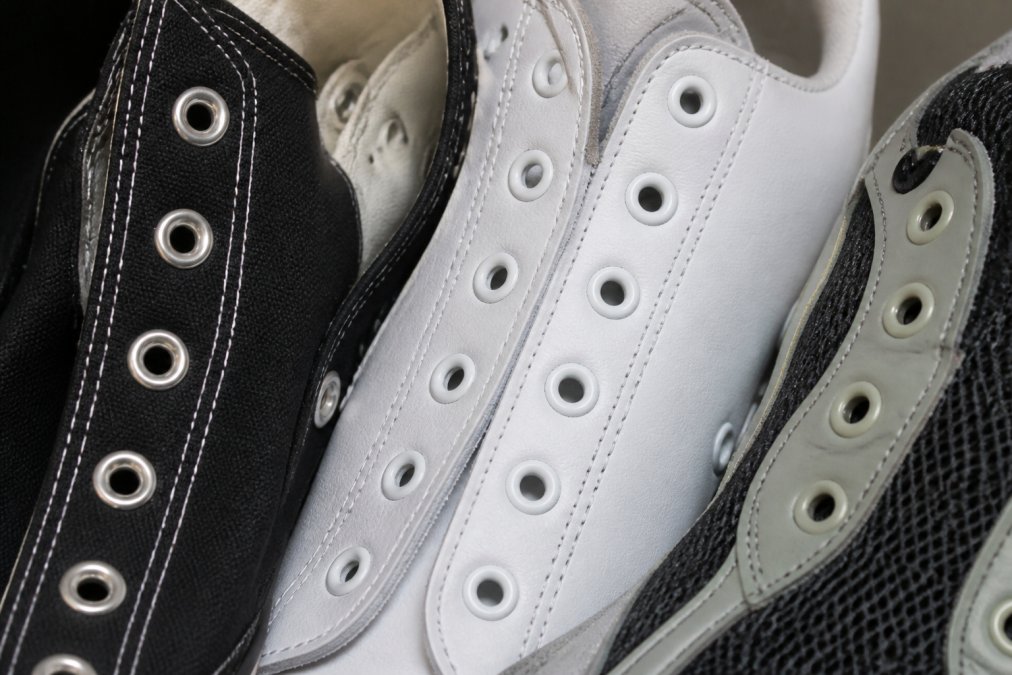
Standard metal eyelets are ideal for elastic laces, they're smooth, durable, and provide consistent grip. Canvas sneakers with reinforced eyelet trim work well too, as long as the trim is flat. Decorative or oversized eyelets can pose challenges.
Eyelet spacing matters significantly. If eyelets are spaced too far apart, tension won't distribute evenly and loose spots will shift during activity. Too-close spacing creates uncomfortable pressure points. Most modern sneakers have eyelet spacing between 1.5 and 2.5 inches, which works well with standard elastic laces.
Metal eyelets grip elastic consistently and won't degrade over time. Plastic eyelets can crack under pressure, especially with frequent wear. Some premium sneakers use reinforced fabric eyelets, which can snag elastic if edges aren't smooth.
Before purchasing elastic laces, examine your sneaker's eyelets for consistency in size and spacing, check for rough edges or damage, and verify the eyelet material is sturdy enough to handle elastic tension.
How to Install No-Tie Shoelaces
Installing elastic laces is straightforward once you understand the basic technique. The uLace push-and-pull method is simple enough for children yet effective for athletes needing a secure fit throughout the day.
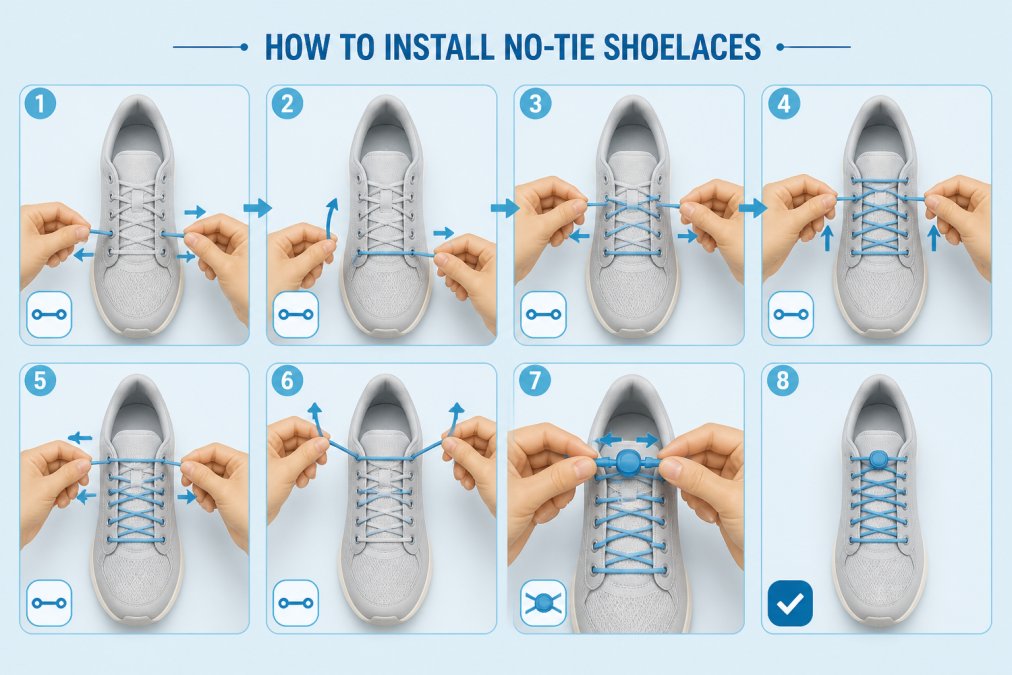
Start by removing your original laces completely. Thread your elastic laces through each eyelet from top downward, just as you would with traditional laces. Instead of tying a knot, pull the elastic snug through each eyelet, adjusting tension as you go.
Here's the correct sequence:
- Thread the elastic lace through the top two eyelets, pulling gently to establish initial tension
- Move down to the next pair of eyelets and pull with slightly more tension
- Continue this pattern, gradually increasing tension as you move toward the shoe's opening
- At the final eyelet, pull the elastic until it feels snug but not painfully tight
- Tuck any excess elastic material inside the shoe or trim it if it extends beyond the heel
The sweet spot is when you can slide one finger between the elastic and your ankle without excessive resistance. Your foot may feel different in the first few wears as the elastic settles and molds to your foot shape, this is normal and typically resolves within a few days.
Shoelace Length Guide for Sneakers
Getting the right lace length is critical to achieving a secure fit. Shoelace length varies based on shoe style, eyelet count, and desired tightness.
Low-top sneakers with 5-6 eyelets require laces between 27 and 36 inches. Mid-top sneakers with 6-8 eyelets need 36 to 45 inches. High-top sneakers with 8-10 eyelets require 45 to 54 inches or more.
To measure, count the number of eyelets and add two inches for tying or tucking. For unusual lacing patterns, measure the actual path the lace will take.
The uLace Classic works well for standard low-to-mid-top sneakers, while the uLace Shorts suit shoes with fewer eyelets. The uLace ProFormance offers extended length for athletic shoes and high-tops.

Width matters as much as length. Standard elastic laces are typically 0.25 to 0.5 inches wide, fitting through most eyelets without snagging. Wider elastic provides more surface area for pressure distribution; narrower elastic is easier to thread but may create concentrated pressure points. style joggers with sneakers.
If uncertain about the right length for your specific sneaker, use the TAKE THE QUIZ option to identify the right product for your shoe type and foot width.
Elastic Laces for High-Top Sneakers
High-top sneakers present unique challenges because the extended collar height creates additional pressure points and requires more total lace material. High-tops typically have 8-12 eyelets, and eyelets near the ankle collar are under significantly more stress than those at the shoe's opening.
The installation process is identical to low-tops, but you need to be deliberate about tension management. Start with moderate tension at lower eyelets and increase gradually as you move upward. The upper eyelets near the ankle should have the most tension because that's where the shoe needs to feel most secure during activity.
For high-tops used in athletic contexts, consider elastic laces with a locking mechanism or reinforced construction. The uLace ProFormance is engineered for athletic performance and provides the durability high-top wearers need during intense activity.

Before installing elastic laces in a high-top, examine the collar construction carefully. Thick padding extending into the eyelet area may require tension adjustment or a slightly longer lace.
Tension Adjustment and Long-Term Durability
The tension you create during installation isn't permanent. Elastic material naturally degrades over time as it's stretched repeatedly, exposed to moisture, and subjected to friction.
New elastic laces typically feel firmer than they will after a few weeks of wear. This break-in period is normal as the elastic conforms to your foot shape. During the first week, you may need to adjust tension slightly.
Long-term tension degradation is gradual, typically taking months or years depending on frequency of wear. Athletic shoes worn daily show noticeable tension loss within 6-12 months (peer-reviewed research). Casual sneakers worn a few times weekly may maintain acceptable tension for 18-24 months or longer.
Rotating between multiple pairs of shoes extends lifespan significantly. Alternating shoes allows the elastic to rest and recover between wears. Moisture accelerates degradation, so allow shoes to dry completely between wears and store them in cool, dry places.
When tension noticeably decreases, when the shoe shifts during activity or multiple fingers fit between elastic and ankle, reinstall the laces by removing them, threading them back through eyelets, and pulling tight again. This usually adds another 3-6 months of usable life.
Medical and Adaptive Use Cases
Beyond convenience, elastic laces serve critical accessibility needs for individuals with mobility challenges, arthritis, and conditions that make traditional lace tying difficult or impossible.
Seniors and individuals with arthritis often struggle with the fine motor coordination required to tie laces. Bending over to reach shoe laces can be painful or impossible for people with back pain, hip problems, or reduced flexibility. Elastic laces eliminate the need to bend, reach, or perform intricate finger movements.
Individuals with mobility disabilities, including those using wheelchairs or walkers, face similar challenges (ada.gov). Elastic laces transform any sneaker into a fully accessible shoe that can be donned and removed with minimal physical effort.
People with fine motor disabilities, including cerebral palsy and Parkinson's disease, often find traditional lace tying impossible. Elastic laces provide a solution that maintains independence.
For these populations, durability and security matter more than for casual users. A loose or failing elastic lace is a potential safety hazard. Choosing high-quality elastic laces with proven durability is essential. The uLace Guarantee and commitment to durability make these laces a trusted choice for users who depend on them for daily independence.
Conclusion
Will elastic laces fit all sneakers? Yes, for the vast majority of modern sneakers, provided you understand eyelet compatibility, measure correctly, and install with proper tension. Whether you're simplifying your child's morning routine, seeking faster athletic transitions, or managing mobility challenges, elastic laces can transform the sneakers you already love. uLace has been helping customers do exactly that since 2009. Start with the uLace Classic for everyday sneakers or the uLace ProFormance for athletic performance. Take the TAKE THE QUIZ to find your perfect fit today.
Frequently Asked Questions
Q: Do elastic laces really work on all sneaker types?
A: Elastic laces fit most sneakers, but success depends on eyelet size and spacing. Standard eyelets (about 4-6mm diameter) work best. Shoes with very small eyelets or unusual spacing may need adjustment. Flat elastic laces work better than round ones on tight eyelet configurations. Test fit before committing to multiple pairs. uLace products are designed for standard sneaker eyelets and work across most casual and athletic shoes.
Q: How do I know what length shoelace to order for my sneakers?
A: Count your eyelets and measure the distance from the first to the last eyelet. Most standard sneakers (6-8 eyelets) need 35-45 inch laces. High-tops require 45-54 inches. uLace offers Classic and Shorts lengths to match different shoe types. When in doubt, order the longer option, excess elastic can be trimmed or hidden inside the shoe. Measure diagonally across the shoe's lacing pattern for accuracy.
Q: Can elastic laces work on high-top sneakers?
A: Yes, elastic laces work on high-tops when you choose the correct length. High-top sneakers typically have 8-10 eyelets and need longer laces (45-54 inches) to reach from ankle to toe. The increased lace length provides consistent tension distribution across the entire shoe. Elastic laces for high-top sneakers offer the same slip-on convenience as low-tops while maintaining secure foot stability during activity. Ensure eyelets are evenly spaced for best results.
Q: How long do elastic laces last before they lose tension?
A: Quality elastic laces maintain tension for 12-24 months with regular daily wear. Degradation happens gradually as the elastic material stretches over time. Factors affecting durability include shoe type, frequency of use, and environmental conditions (heat, moisture, UV exposure). uLace products are engineered with durable materials designed for extended wear. Replacing laces annually or when you notice reduced tension keeps your slip-on convenience consistent without compromising fit security.
This article was written using GrandRanker