




No-Tie Laces for Seniors: The Complete 2026 Guide
Table of Contents
- Why No-Tie Laces Matter for Seniors
- How to Install No-Tie Laces: Step-by-Step for Limited Hand Strength
- Adaptive Footwear for Seniors: What Makes No-Tie Laces Different
- No-Tie Laces for Arthritis and Dexterity Challenges
- Durability, Maintenance, and Long-Term Performance
- Choosing the Right No-Tie Laces for Your Shoes
- Conclusion
Last Updated: August 26, 2026
Why No-Tie Laces Matter for Seniors
Bending to tie shoelaces creates a genuine safety risk for seniors (the CDC). Falls happen when balance falters during that awkward crouch to reach your feet. No-tie laces eliminate this hazard by transforming regular sneakers into slip-on shoes that require zero bending and zero risk of losing your balance.
For seniors with arthritis, reduced hand strength, or mobility limitations, traditional laces often become impossible to tie (the NIH). Elastic no-tie laces let you keep your favorite sneakers while removing the physical demand that made wearing them difficult.
uLace has been solving this problem since 2009 with the original elastic no-tie lace system. Their approach focuses on one core principle: buy the sneakers you love, let uLace transform them into hassle-free slip-ons. For seniors navigating arthritis, limited dexterity, or simply wanting to avoid unnecessary bending, this solution addresses real physical challenges that standard footwear advice ignores.
How to Install No-Tie Laces: Step-by-Step for Limited Hand Strength
Installing elastic no-tie laces requires no special tools and works for people with limited hand strength or arthritis. The process takes roughly 5-10 minutes per shoe.
Step 1: Remove Your Old Laces Take out the standard laces completely. If your hands tire easily, sit down while doing this to avoid fatigue or balance issues.
Step 2: Thread the Elastic Laces Through the Eyelets Start at the bottom eyelet and thread one end of the elastic lace through, just like a regular shoelace. Work your way up, alternating sides. The elastic material is flexible and forgiving, it won't jam or resist like stiff traditional laces.
Step 3: Adjust the Tension Once threaded, pull the elastic laces snug but not tight. The goal is a secure fit that holds your foot in place without cutting off circulation. You're simply pulling to the tightness that feels right for your foot.
Step 4: Secure the Locking Mechanism uLace products use a simple locking system that holds your chosen tension. Push the locking toggle or clip into place. This locks in your tension so the laces stay exactly where you set them.
Step 5: Test the Fit Slip your foot in and out of the shoe a few times. The laces should feel snug but comfortable, with no pressure points. If they feel too loose or tight, adjust and re-lock.
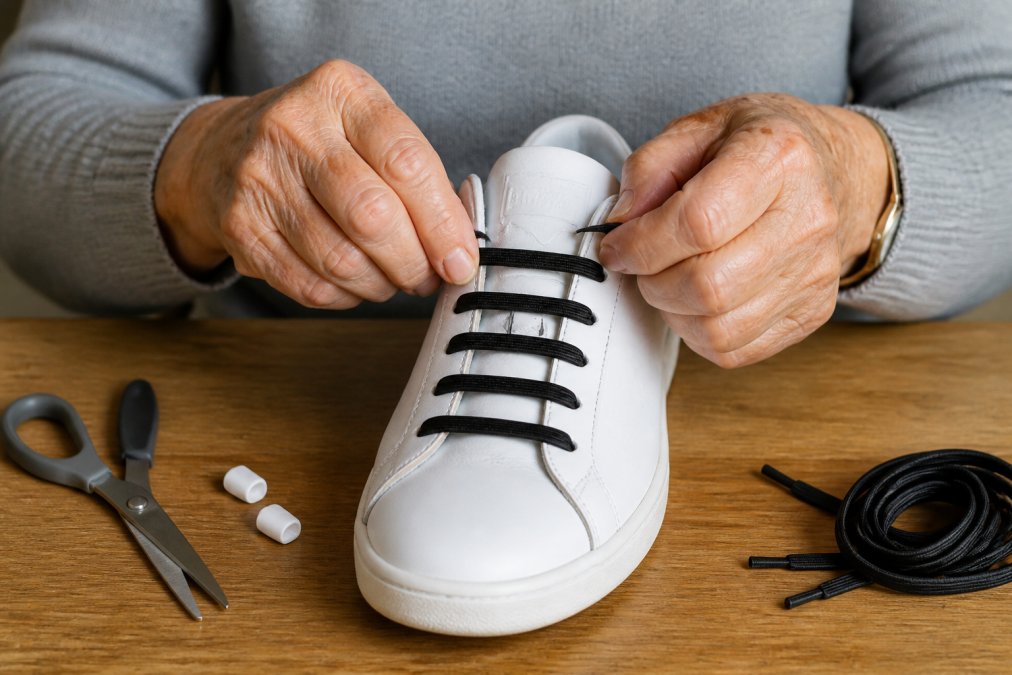
Installation happens once. After that, you simply slip your shoes on and off like any other shoe. No retying, no re-tensioning, no daily struggle.
Adaptive Footwear for Seniors: What Makes No-Tie Laces Different
Adaptive footwear typically means shoes designed with seniors in mind: wider widths, softer materials, orthopedic support. But most adaptive shoes still use traditional laces. No-tie laces take a different approach: they work with the shoes you already own, transforming any sneaker into adaptive footwear without replacing your entire shoe collection.
A senior who has worn the same brand of running shoes for 20 years doesn't want to switch to a completely different shoe just because tying became difficult. With no-tie laces, you keep your trusted shoes and remove only the problematic part: the laces themselves.
Traditional laces require you to crouch, balance on one leg, and use both hands in coordination. For someone with balance issues, arthritis, or reduced strength, this creates a fall risk every time you put on shoes. No-tie laces eliminate this multi-step physical demand. You sit down, slip your foot in, and you're ready to go. The shoe stays secure through the elastic tension system, not through a knot that might come undone.
uLace products come in multiple styles and colors, so your shoes don't have to look medical or clinical. You get adaptive function without sacrificing the appearance you want.
No-Tie Laces for Arthritis and Dexterity Challenges
Arthritis in the hands makes tying laces painful and often impossible. The fine motor control required, pinching, looping, pulling tight, aggravates joints and causes discomfort that can last hours. For people with moderate to severe arthritis, traditional laces become a barrier to independence.
Elastic no-tie laces remove this barrier entirely. There's no pinching, no looping, no pulling with force. Installation requires only simple threading and a gentle pull to set tension. Once installed, putting on your shoes becomes a simple slip-on action that requires no hand strength at all.
A senior with arthritis might avoid wearing their favorite shoes because the pain of tying them isn't worth the effort. With no-tie laces, those shoes become wearable again. The psychological shift is real: regaining the ability to wear what you want, when you want, without pain.
Hand strength naturally decreases with age, and arthritis accelerates this decline (peer-reviewed research). No-tie laces acknowledge this reality and work with it rather than against it. The elastic tension system provides security without requiring the strength that traditional laces demand.
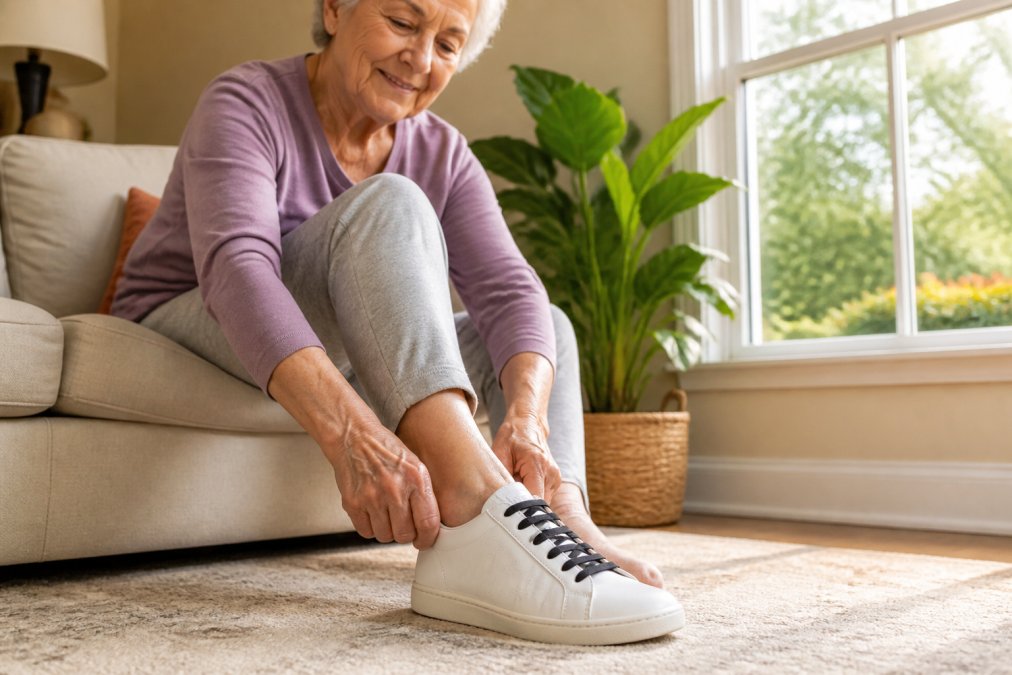
Many people with dexterity challenges report that the biggest relief comes during daily wear. Putting on shoes stops being a stressful, painful task. It becomes automatic: slip, adjust if needed, go about your day. This removes a small but real source of daily frustration.
Elastic laces also stay secure throughout your entire day. Traditional laces can come untied, requiring you to bend down and retie them. For someone with arthritis in the knees or back, this creates repeated stress on painful joints. Elastic laces, once locked in place, stay secure. You're not retying shoes every few hours.
Durability, Maintenance, and Long-Term Performance
Most elastic no-tie laces remain functional for a significant period of regular daily wear. This varies based on shoe type, activity level, and how often you put the shoes on and take them off. The elastic gradually loses some of its original tension, but this happens gradually.
Maintenance is minimal. Elastic laces don't require special care. You can wash your shoes normally, including the laces. The elastic material resists mold and mildew, so you don't need to worry about moisture damage.
The locking mechanism is where durability matters most. A well-designed system holds tension reliably for the life of the laces. uLace products use a locking mechanism refined since 2009, tested across thousands of users.
One advantage of elastic laces over traditional laces is that they don't fray or unravel. Traditional laces develop loose threads and eventually separate. Elastic laces maintain their structural integrity much longer.
When elastic laces eventually lose tension, replacement is straightforward. You remove the old laces and install a new pair using the same simple threading method. A fresh pair costs significantly less than buying new shoes.
Choosing the Right No-Tie Laces for Your Shoes
Not all elastic laces work equally well with all shoe types. Shoe width, material, and eyelet spacing affect how well no-tie laces perform.
Shoe Width Considerations
Narrow shoes and wide shoes require different approaches. For narrow shoes, you might need a lighter tension setting. For wide shoes, you might need a slightly firmer tension. The elastic material accommodates both scenarios.
Eyelet Spacing and Shoe Style
Athletic shoes, casual sneakers, and dress shoes have different eyelet patterns. Elastic laces work with all patterns, but the threading process and final appearance vary. Athletic shoes with many eyelets create a more traditional laced look. Casual sneakers with fewer eyelets show more of the elastic material.
Material and Color Options
uLace offers elastic laces in multiple colors and materials. Classic black and white work with virtually any shoe. Patterned options let you add visual interest. Consider what look you want your shoes to have.
| Feature | Best For | Consideration |
|---|---|---|
| uLace Classic (Black or White) | Most shoe types, professional settings | Neutral appearance, versatile pairing |
| uLace Shorts | Shorter shoe collar, athletic wear | More visible elastic, casual aesthetic |
| uLace ProFormance | High-activity wear, sports | Enhanced durability, performance-focused design |
| Patterned options | Personal expression, casual wear | Visual impact, distinctive look |
Testing Before Full Commitment

If you're uncertain whether no-tie laces will work with your specific shoes, start with one pair. Install them on your most-worn sneaker first. Wear them for a week and assess comfort, security, and appearance.
Choosing no-tie laces for seniors addresses a real physical challenge that standard footwear advice often overlooks. The combination of safety, convenience, and independence makes this solution valuable for anyone struggling with traditional laces.
uLace has spent 15 years refining this product for exactly this use case. The elastic laces eliminate the need to bend over, require minimal hand strength to install, and provide all-day security without readjusting. For seniors managing arthritis, reduced dexterity, or simply wanting to avoid unnecessary balance challenges, this is the most practical solution available.
Get started with uLace and transform your favorite sneakers into convenient slip-ons. The uLace Classic collection starts at $6.49 and works with virtually any shoe. For those seeking enhanced performance features, the uLace ProFormance option offers durability designed for active wear. Installation takes minutes, and the security lasts all day, no readjusting, no retying, just slip on and go.

Frequently Asked Questions
Q: Are no-tie laces good for seniors with arthritis?
A: Yes. No-tie laces eliminate the need to bend, grip, and manipulate traditional shoelaces, which are common pain points for people with arthritis. The elastic design allows shoes to slip on and off without requiring fine motor control or hand strength. Seniors with arthritis can maintain independence and put on shoes quickly without aggravating joint pain or stiffness.
Q: How do I install no-tie laces if I have limited hand strength?
A: Installation is simple and requires minimal hand strength. The basic method involves threading the elastic laces through the eyelets using a push-and-pull motion, no knots or complex maneuvers needed. If gripping is difficult, you can ask a family member to help with initial installation. Once installed, you never need to adjust them again; you simply slip your foot in and out of the shoe.
Q: Will no-tie laces stay secure during daily activities?
A: No-tie laces are designed with locking mechanisms that hold the elastic tension securely. Once installed and adjusted to fit snugly around your foot, they stay in place during walking, light exercise, and daily activities. The stretchable material adapts to your foot's movement while maintaining a consistent fit. For seniors with normal activity levels, this provides reliable security without the risk of laces coming untied.
Q: Can I use no-tie laces on any type of sneaker?
A: No-tie laces work on most standard sneakers with traditional lace eyelets. However, they may not fit shoes with very narrow widths or unusual eyelet spacing. If you have wide feet or wear orthopedic shoes, confirm compatibility with the product details or contact customer support to ensure a proper fit.
Q: How long do elastic no-tie laces last?
A: The lifespan of no-tie laces depends on the material quality, frequency of use, and how often you remove and put on your shoes. If you notice the elastic losing tension or material fraying, it's time to replace them, a much more affordable option than buying new shoes.
Q: How do I clean and maintain no-tie laces?
A: Elastic no-tie laces are low-maintenance. Wipe them with a damp cloth to remove dirt and dust. If they accumulate odor, hand wash with mild soap and water. Proper care prevents material breakdown and keeps them looking fresh.
This article was written using GrandRanker