




How Do You Choose the Right Size Kids' Socks?
Quick Summary
Choose kids socks by your child's shoe size, not their age, and measure the foot at home for the most accurate fit. Once the socks are on, check that the heel pocket cradles the heel bone, the toe seam sits just past the longest toe, and the cuff lies without deep marks.
- Measure both feet with a tape measure or paper strip and use the larger measurement.
- Use the sock chart matched to shoe size, since age is a less reliable guide.
- Confirm whether a sock chart uses US or EU sizing before buying.
- Leave about 0.5 inches (12 mm) of fabric beyond the longest toe.
- Remeasure every few months because kids' feet grow faster than expected.
Table of Contents
- Why Shoe Size Matters More Than Age for Kids' Socks
- How to Measure Your Child's Foot at Home
- Kid Sock Size Chart by Shoe Size
- How to Check Fit: Heel, Toe, and Length
- Signs of Ill-Fitting Socks in Children
- Sensory-Friendly Sizing, Growth Spurts, and Material Differences
- How Simpler Footwear Routines Help Kids Dress Themselves
- Getting the Right Fit for Your Child's Next Pair of Socks
- Frequently Asked Questions
Last Updated: November 14, 2026
Choosing the right size for kids socks is less about a child's age and more about their shoe size. Most parents buy socks by the label on the package, then wonder why a pair bunches at the toe or slides down the heel by lunchtime. A sock that fits well keeps children comfortable, prevents blisters, and reduces the daily battle over what goes on first.
This guide walks through the fit process step by step, from measuring your child's foot at home to checking heel, toe, and length once the socks are on. We also cover what poorly fitting socks look like, how to choose between US and EU sizing, and how the right fit supports a simpler morning routine.
Why Shoe Size Matters More Than Age for Kids' Socks
Sock sizing for children is primarily determined by shoe size rather than age. Two children of the same age can have very different foot lengths, so a sock label based on age often misses the mark. The shoe size is the more reliable starting point.
Shoes and socks work together. A sock that matches the shoe's fit keeps the foot stable inside the shoe, which cuts down on rubbing and slipping.
How to Measure Your Child's Foot at Home
Measuring at home takes about five minutes and needs only a tape measure or a strip of paper. Measuring in the afternoon can give a more accurate size, since feet tend to be slightly larger after a day of activity.
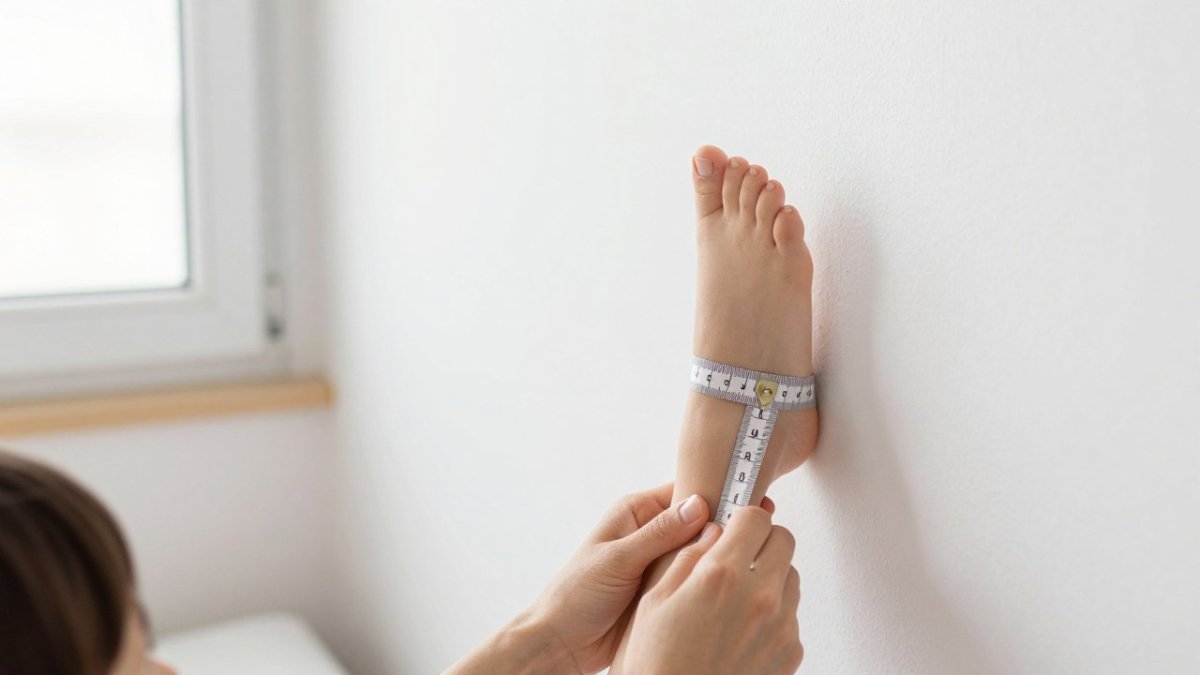
- Sit your child on the floor with the back against a wall.
- Place a strip of paper flat under the heel and mark the tip of the longest toe.
- Measure from the wall to the mark in inches or centimeters.
- Repeat with the other foot, since feet are often slightly different sizes.
Use the larger measurement when you choose socks.
Kid Sock Size Chart by Shoe Size
Use your child's shoe size, not their age, to pick the sock size. Each brand may label its sizes a little differently, so check the manufacturer's chart before you buy.
Toddler vs. Youth Sizing
Toddler and youth sizes overlap at certain shoe sizes. Toddler socks usually cover the smaller shoe sizes, while youth socks fit the larger ones. If your child falls between two sizes, choose the larger one for a bit of room, and check the heel placement once the socks are on.
US and EU Size Conversions
Sock labels in the US and Europe use different systems. A US shoe size and an EU shoe size can describe the same foot, so always confirm which system a sock chart uses. A conversion table on the package or product page will tell you which size matches your child's shoe.
How to Check Fit: Heel, Toe, and Length
Once the socks are on, three checks tell you whether they fit. Do them with the child standing, not sitting, because the foot spreads and the sock settles under body weight.
- Heel: The heel pocket of the sock, the shaped cup, not the flat tube, should cradle the back of the heel bone. Run a finger down the back of the ankle: if the pocket sits above the heel bone, the sock is too large and will slide down into the shoe; if it sits below and pulls the cuff tight, the sock is too small. A correct heel pocket stays put when the child rises onto tiptoes.
- Toe: The toe seam should sit just past the tips of the toes, with roughly 0.5 inches (about 12 mm) of fabric beyond the longest toe. Press the fabric at the tip: it should give slightly, not pull taut. A seam that presses on the toenails or curls under the toes is a sign the sock is short in the foot.
- Length: The cuff should sit at the ankle or lower calf without leaving a deep imprint, and the fabric under the arch should lie flat. Pinch the fabric at the instep, if you can gather more than about a quarter inch, the sock is baggy and will bunch inside the shoe.
A quick visual test: with the child standing in the socks on a hard floor, the heel pocket should be centered on the heel, the toe seam should be straight across (not twisted to one side), and the cuff should be level all the way around. A twisted toe seam usually means the sock is too long for the foot and the child has rotated it to compensate.
Watch out: A sock can pass the heel check and still fail at the toe if the brand cuts its foot length long and its heel pocket shallow, check both ends before you decide a size is right.
If one check fails, move one size up or down and repeat all three. Fit matters more than the label, and a sock that passes two checks but fails the third will still cause blisters or bunching by the end of the day.
Once the socks are on, three checks show whether they fit, with the child standing:
| Check | What to look for | Sign of a problem |
|---|---|---|
| Heel | Heel pocket cradles the heel bone | Pocket above heel: too large; tight cuff: too small |
| Toe | About 0.5 inch (12 mm) past longest toe | Seam presses toenails or curls: too short |
| Length | Cuff at ankle or lower calf, arch flat | Over a quarter inch gathered at instep: baggy |
Signs of Ill-Fitting Socks in Children
Kids rarely say their socks feel wrong, so watch for these clues:
- Red marks or blisters on the heel or toes after wearing
- Bunching under the toes or arch
- Socks that slide down into the shoe during play
- Tightness around the ankle or calf that leaves an imprint
- Frequent complaints about shoes feeling uncomfortable
If you see these signs, measure your child's foot again and check the size chart.
Sensory-Friendly Sizing, Growth Spurts, and Material Differences
Size and sensory comfort are linked more tightly than most size charts admit. For a child who is sensitive to seams, tight bands, or thick fabric, a sock that is technically the right size can still fail because the failure mode is different: a slightly large sock bunches under the toes and creates a lump the child feels with every step, while a slightly small sock puts pressure on the toe seam and the cuff. Both read as "wrong" to a sensory-sensitive child even when the label matches the shoe size.
For these children, fit the sock to the foot first and the shoe second. Look for flat toe seams (often labeled seamless-toe), a knit-in heel pocket rather than a sewn one, and a cuff that is wide and soft rather than ribbed tight. Then check the three fit points above with the child standing and, if possible, walking a few steps in stocking feet, a sock that twists or migrates during a short walk will bother a sensitive child all day. Because a sock that fits the heel and toe starts with an accurate foot measurement, Tees and Kids Toys can be a useful next stop when checking how to measure a child’s feet.
Growth spurts change the math. A child's foot can grow a full size in a few months, and the growth is often uneven, length first, then width. That means a sock that fit in the fall may be short at the toe by spring while still feeling loose at the ankle. Check fit at the start of each season and again midway through, and remeasure rather than relying on the last size you bought. Sizing up one size can extend wear, but only if the heel pocket still lands on the heel; a sock that is a full size too large will slide down and bunch, which defeats the purpose.
Material changes how a given size feels. Cotton stretches and softens with washing, so a cotton sock that fits snugly out of the package will relax over a few wears, buy it true to size rather than sizing up. Synthetic blends, especially those with spandex or elastane, hold their shape and recover after washing, so they stay closer to their original fit and are less forgiving if you buy too small. Wool and performance blends can feel thicker underfoot, which effectively shortens the foot of the sock; if your child is between sizes in a thick wool sock, go up rather than down. Compression-style or athletic socks with graduated tightness will feel snugger at the ankle even at the correct foot size, so judge those by the heel and toe first and treat cuff tightness as a separate check.
Watch out: Do not assume a sock that fit well in one material will fit the same in another, a cotton crew and a synthetic crew in the same labeled size can differ by enough at the toe to cause blisters.
How Simpler Footwear Routines Help Kids Dress Themselves
Socks that fit well are easier for children to pull on alone. A snug, correctly sized sock goes on smoothly, with no tangled cuffs or heels stuck inside out. Pairing well-fitting socks with footwear that is easy to put on helps kids build independence. For a broader look at comfortable footwear for active children, see A Parent's Guide to Comfortable Shoes for Active Toddlers.
Many families also find that simple closures reduce the morning struggle. Benefits of Adaptive Footwear for Children explains how no-tie options help kids dress themselves.
Getting the Right Fit for Your Child's Next Pair of Socks
Start with your child's current shoe size, check the chart, and confirm the heel, toe, and length once the kids socks are on. Remeasure every few months, since kids grow faster than most parents expect. If you need help with a sock that keeps slipping or bunching, Preventing Tripping Hazards in Children's Footwear covers the fit problems that matter most for active kids.
Keeping track of fit is a small habit that pays off in comfort and fewer morning arguments. Start with the measurement, and the rest of the choices get easier.
Frequently Asked Questions
How do I know what size socks my child needs?
Start with your child's shoe size rather than age, because sock sizing for children follows shoe size in standard industry practice. Measure the foot in the afternoon when it is slightly swollen, check the sock packaging for the shoe-size range, and pick the size that matches the foot length. Athletic socks are often sized slightly down for a snug fit that stays put during play. If your child is between sizes, choose the larger size for everyday wear and leave about 12 mm (0.5 inches) of room at the toe.
Are kids' sock sizes based on age or shoe size?
Kids' sock sizes are based primarily on shoe size, not age. Two children of the same age can have very different foot lengths, so age-based labels such as 'ages 4-6' are only a rough guide. Use the shoe-size range as your starting point, then check heel placement and toe room once the socks are on.
What happens if kids' socks are too small?
Socks that are too small can cause tightness across the toes and top of the foot, pressing the seams into the skin and leading to red marks or blisters during long wear. They can also roll down at the ankle or pull the fabric thin in the heel, which shortens the life of the sock. Snug athletic socks are fine when they stay in place, but if the heel sits too low or the toes feel cramped, move up one size.
Do kids' sock sizes vary by brand?
Yes. Sizing is not standardized across manufacturers, so a size labeled 'Small' or a range such as 'shoe sizes 10-13' can fit differently from brand to brand. Always compare the brand's own size chart against your child's shoe size and foot length rather than assuming a label matches another brand's fit.
