




Top 5 No Tie Lace Brands for Adults: Tested Picks
Table of Contents
- Why Adults Are Switching to No Tie Lace Brands
-
The Top 5 No Tie Lace Brands for Adults Compared
- 1. uLace ProFormance: Best Overall for Everyday Sneakers
- 2. uLace ProFormance White: Best for Clean, Classic Looks
- 3. uLace ProFormance Neon Yellow: Best for Visibility and Training
- 4. uLace ProFormance Scarlet Red: Best for Statement Color
- 5. uLace ProFormance Light Navy Blue: Best for Subtle, Versatile Style
- Feature and Price Comparison Table
- Best No-Tie Laces for Running Shoes and Training
- How to Install No-Tie Shoelaces on Any Sneaker
- No-Tie Laces That Stay Tight: What to Look For
- No-Tie Laces for Seniors: Comfort and Independence
- Which No Tie Lace Brand Should You Pick?
- Frequently Asked Questions
Last Updated: October 21, 2026
Why Adults Are Switching to No Tie Lace Brands
Adults are switching to no tie lace brands because they turn everyday sneakers into slip-ons, cutting out the bend, the knot, and the daily retie.
The appeal is simple. No-tie shoelaces are elastic laces that thread through your existing eyelets and hold tension on their own, so the shoe slides on and off without a knot. Traditional laces demand fine motor control and a full bend at the waist.
That difference matters most for three groups: adults with arthritis or limited dexterity, frequent travelers who live in airport security lines, and anyone tired of stopping to retie a lace on a run. The Arthritis Foundation's guidance on adaptive footwear notes that lace-free closures are a common recommendation for people managing hand and joint pain.
Below, we rank the five uLace ProFormance colors we would actually buy, then cover installation, tension, and fit so you can pick the right pair the first time.

The Top 5 No Tie Lace Brands for Adults Compared
Every pick here is a uLace ProFormance lace at $14.99 per pair, one-time purchase. We rank them by the job they do best, not by a color wheel. Each pair uses the same push-and-pull installation, so the choice comes down to how you use your shoes and what you want them to look like.
Quick Picks:
- Best Overall: uLace ProFormance Black, the pair that disappears into almost any sneaker
- Best Classic Look: uLace ProFormance White, for clean leather and canvas shoes
- Best for Training: uLace ProFormance Neon Yellow, high visibility on early runs
- Best Statement Color: uLace ProFormance Scarlet Red, for sneakerheads who want the lace to lead
- Best Subtle Style: uLace ProFormance Light Navy Blue, a quiet alternative to black
1. uLace ProFormance: Best Overall for Everyday Sneakers
Our top pick is the uLace ProFormance in Black, and it wins on versatility rather than flash.

The ProFormance line uses a push-and-pull install: feed the lace, lock it, and adjust tension once. After that, the shoe becomes a slip-on.
Pros: works across sneaker styles, hides dirt, pairs with almost any colorway. Cons: on all-white shoes, black laces read as a deliberate contrast rather than an invisible fix.
uLace ProFormance Black
2. uLace ProFormance White: Best for Clean, Classic Looks
White is the pair to buy if your rotation leans on canvas low-tops, white leather sneakers, or anything with a bright midsole.
One caveat we will state plainly. White laces show scuffs and street grime faster than dark ones.
Pros: matches the original lace on most white sneakers, keeps a tidy appearance. Cons: shows dirt quickly; best for shoes you rotate rather than live in.
uLace ProFormance White
3. uLace ProFormance Neon Yellow: Best for Visibility and Training
Neon Yellow is the training pick. If you run before sunrise or walk a shoulder-less road after work, a bright lace adds a visible marker at ankle height, which is exactly where drivers and cyclists scan.
The trade-off is styling. Neon yellow clashes with most business-casual outfits, so treat this pair as athletic-only. Pair it with your running shoes and leave the office sneakers alone.
Pros: high visibility, strong contrast on dark uppers, easy to spot in a gym bag. Cons: limited outfit compatibility; not a subtle look.
uLace ProFormance Neon Yellow
4. uLace ProFormance Scarlet Red: Best for Statement Color
Scarlet Red is for the sneaker enthusiast who wants the lace to carry the outfit.
Where it falls short: red is loud, and it fights with other accent colors on the shoe. If your sneakers already have colored logos or heel tabs, this pair will compete with them.
Pros: bold contrast, strong on monochrome uppers, easy to match with team colors. Cons: clashes with multi-color shoes; harder to keep looking neat over time.
uLace ProFormance Scarlet Red
5. uLace ProFormance Light Navy Blue: Best for Subtle, Versatile Style
Light Navy Blue sits between black and a true blue, which makes it the quietest option after black.
The limitation is range. Light navy reads as slightly casual on black leather, so it suits canvas and mesh better than dress-adjacent sneakers.
uLace ProFormance - Performance No-tie Laces - Black →
Pros: versatile, softer than black, works across casual shoes. Cons: less invisible than black on dark uppers; limited formal use.
uLace ProFormance Light Navy Blue
Feature and Price Comparison Table
All five picks share the same construction and price, so the table below separates them by use case rather than specs. Every pair is $14.99, sold as a one-time purchase with no subscription.
| Pick | Price | Best For | Shoe Types | Standout Trait |
|---|---|---|---|---|
| ProFormance Black | $14.99 | Everyday wear | Sneakers, trainers, casual | Blends into nearly any upper |
| ProFormance White | $14.99 | Classic clean look | Canvas, white leather | Matches original laces |
| ProFormance Neon Yellow | $14.99 | Training and visibility | Running, athletic shoes | High-contrast safety marker |
| ProFormance Scarlet Red | $14.99 | Statement styling | Monochrome sneakers | Bold color pop |
| ProFormance Light Navy Blue | $14.99 | Subtle versatility | Mesh, canvas, denim tones | Softer than black |
Best No-Tie Laces for Running Shoes and Training
The best no-tie laces for running shoes are elastic laces with a locking fastener that holds tension under repeated flex, and the ProFormance line is built for exactly that. A running shoe flexes thousands of times per mile.
Two things separate a training-ready lace from a novelty one. First, the lock: a mechanical fastener holds the lace at your chosen tension instead of relying on a knot.
For training shoes with narrow eyelet spacing, feed the lace through every other eyelet to reduce bulk. On high-top shoes, keep the top two eyelets slightly looser so the ankle can flex.
How to Install No-Tie Shoelaces on Any Sneaker
Installing no-tie shoelaces takes about five minutes per shoe and needs no tools.
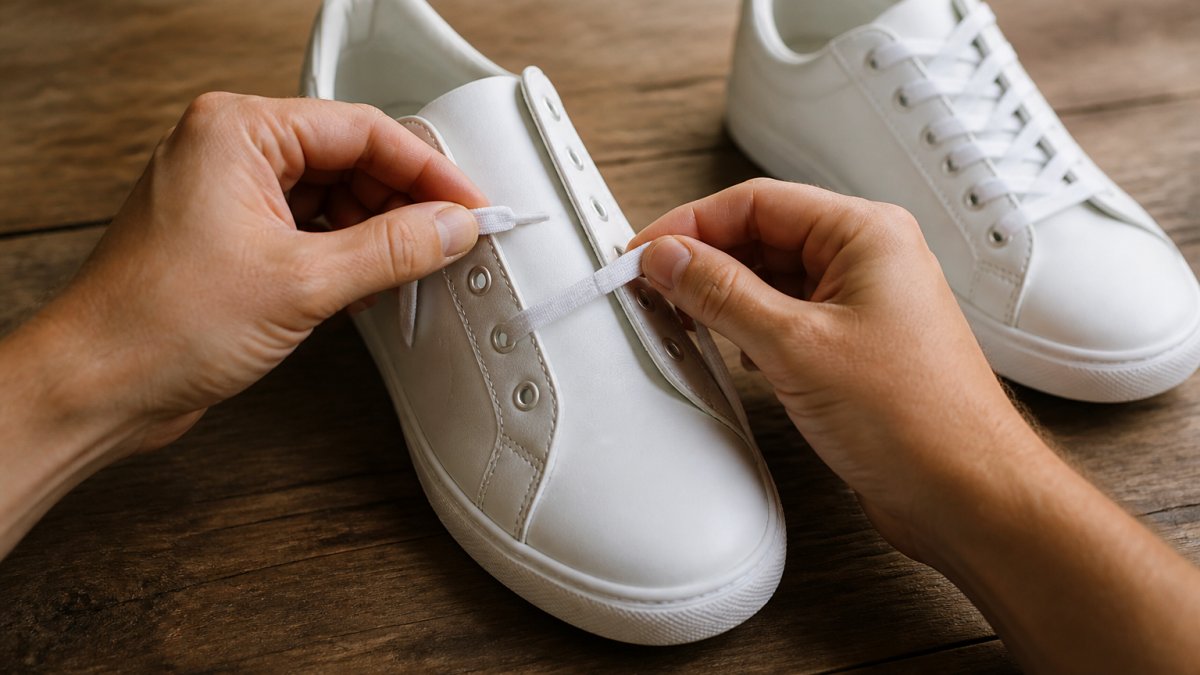
Here is the process we walk customers through:
- Pull the old laces out and note the pattern so you can repeat it.
- Start at the bottom eyelets and thread the elastic lace upward, alternating sides.
- Choose your lacing style. Straight lacing looks tidier on low-tops; crisscross holds tension more evenly on athletic shoes.
- Feed the lace ends into the lock and slide it down to your preferred tension.
- Step into the shoe and adjust while standing, since fit changes under weight.
- Trim excess lace and tuck the end under the lock or the tongue.
Expected result: the shoe slides on and off with a firm pull, and the lace stays put through a full day of walking.
No-Tie Laces That Stay Tight: What to Look For
No-tie laces that stay tight share three traits: a mechanical lock rather than a friction knot, elastic that recovers its shape, and a length matched to your eyelet count.
A common mistake is buying a lace that is too long.
The second mistake is judging tension while seated. Elastic behaves differently under body weight, so always set fit standing up.
What most guides miss is that lace tension is personal.
No-Tie Laces for Seniors: Comfort and Independence
No-tie laces for seniors solve a specific problem: bending to tie a shoe becomes difficult, painful, or unsafe. Elastic laces remove that step entirely, so the shoe goes on with a slip of the foot and stays secure without a knot.
The feedback we hear most often is about independence rather than convenience. One customer told us she is 72 and found it hard to bend over constantly to tie her shoelaces, and now she simply slips her foot through.
For adults managing arthritis, the CDC's data on arthritis prevalence shows how common joint pain is among older adults, which is why lace-free closures come up so often in adaptive footwear conversations. A few practical notes for this group:
- Choose a slightly looser tension so the heel slides in without a shoehorn.
- Keep the lock low on the tongue so it does not press on the instep.
- Pick dark colors if the shoes are worn daily, since they hide scuffs.
Which No Tie Lace Brand Should You Pick?
Pick based on how you use the shoe, not on which color looks best in a photo. For most adults, the ProFormance Black is the safe, versatile choice. For training, go Neon Yellow. For styling, Scarlet Red.

We built uLace around one idea: buy the sneakers you love, then let uLace turn them into hassle-free slip-ons. Every pair installs with a simple push and pull, ships from the USA, and comes with the uLace Guarantee.
Frequently Asked Questions
Are no-tie laces good for adults?
Yes, no-tie laces work well for adults in most everyday situations. They turn regular sneakers into slip-ons, which helps anyone who bends over less easily, has hand or wrist pain, or just wants to save time. Elastic laces keep steady tension across the foot instead of loosening through the day. The main trade-off is that you give up fine-tuning tightness the way you can with traditional laces, so pick a set with a secure fastener and check the fit after the first few wears.
Do elastic no-tie laces stay tight during running and training?
They can, as long as the lace tension is set correctly on the first install. Running and training shoes see repeated push-off and side-to-side force, so a loose initial fit will feel sloppy within a few miles. Thread the laces snug at the midfoot, leave a little stretch at the toe box, and lock the ends firmly. uLace ProFormance laces are built for athletic shoes and come in colors like Neon Yellow and Scarlet Red that suit training pairs.
How do you install no-tie shoelaces in sneakers?
Start by removing the old laces and threading the elastic lace through the bottom eyelets. Work upward in a standard crisscross or straight pattern, keeping tension even on both sides. Once you reach the top, pull the lace to your preferred tightness, cut any excess, and attach the fastener or lock. Most adults finish a pair in five to ten minutes. Try the shoe on before trimming, since the right tension depends on your foot and sock thickness.
What is the difference between elastic no-tie laces and lock-style laces?
Elastic no-tie laces stretch across the whole lacing path, so the shoe flexes with your foot and slips on without any tightening step. Lock-style laces use a sliding fastener or clamp to hold tension, which lets you loosen and tighten quickly but adds a small piece of hardware at the top of the shoe. Elastic sets tend to look cleaner and sit flatter, while lock-style sets offer more on-the-fly adjustment. Both work for adults; the choice comes down to whether you want a set-and-forget fit or adjustable tension.
Can no-tie laces make regular sneakers easier to slip on?
Yes. Once elastic laces are installed, the shoe opening stretches enough for your foot to slide in without untying anything. That helps with high-top shoes, tight sneakers, and pairs you wear daily. It also reduces the habit of forcing your foot in with the laces tied, which stretches the heel and collar over time. For adults with wide feet, set slightly looser tension at the top eyelets so the opening gives more room without losing midfoot support.
Tying laces should not be the hardest part of your morning. uLace makes elastic no-tie laces that install in minutes, hold tension all day, and come in colors that match the sneakers you already own. Take the uLace quiz to find your pair, or start with the ProFormance Black at $14.99 and see how much simpler your routine gets.