




Best Shoes for Balance Problems in Seniors
Table of Contents
- Why Footwear Matters for Senior Balance and Fall Prevention
- Key Stability Features in Shoes to Prevent Falls in Seniors
- Best Walking Shoes for Seniors: What the Research Shows
- Wide Walking Shoes for Seniors: Fit and Comfort Considerations
- No-Tie Shoes for Seniors: Convenience Without Compromising Security
- Practical Steps to Test and Fit Balance Shoes Correctly
- When to Replace Balance Shoes and Long-Term Care
- Frequently Asked Questions
Last Updated: October 15, 2026
Why Footwear Matters for Senior Balance and Fall Prevention
Balance problems affect millions of older adults, increasing the risk of falls that can lead to serious injury. Shoes balance problems seniors face require far more than simple comfort, they're a critical part of fall prevention strategy. At uLace, we understand that seniors often struggle with traditional lacing, which can make it harder to find and wear the supportive footwear they need most.
Footwear choice directly impacts stability and gait. A shoe with the wrong foundation, inadequate support, or poor traction can destabilize even a healthy walker. Research from the National Library of Medicine's PubMed Central shows that shoes designed with an increased ground surface enhance balance and postural stability during movement.
The challenge many seniors face is finding shoes that combine stability features with ease of use. This is where solutions like uLace elastic no-tie laces come in: they let you keep the supportive sneakers you love while eliminating the hassle of tying.
Key Stability Features in Shoes to Prevent Falls in Seniors
When evaluating shoes for balance concerns, focus on specific structural features that directly support stability. Senior footwear recommendations emphasize motion control and stability as the foundation of fall prevention.
Wide Base and Stable Sole
A wide base distributes your weight evenly and lowers your center of gravity, making it harder to tip or twist your ankle. According to PAHI USA guidance on senior footwear, shoes with a wider base, low and stable heel, and a sole that grips rather than slides are associated with better balance while standing.
The outsole should be firm and substantial, not thin or flexible. A flimsy sole allows your foot to roll inward or outward, destabilizing your gait. Look for shoes where the sole extends fully under your heel and forefoot, creating a platform that resists tipping. This is especially important if you walk on uneven surfaces or have a history of ankle instability.
Heel Lockdown and Secure Fit
Your heel must stay planted inside the shoe during each step. Heel slippage forces your foot to work harder to stay stable, increasing fatigue and fall risk. A secure fit means your heel doesn't lift away from the shoe's back when you walk.
Look for shoes with a firm heel counter (the structure that wraps around your heel) and an adjustable closure system, laces, velcro, or elastic no-tie laces like those from uLace. An adjustable system lets you customize the fit around your midfoot and ankle without forcing your foot into a shoe that's too tight or too loose. Many seniors find that elastic laces provide the security of a tied shoe without the daily hassle of bending to tie and retie.
Traction and Slip Resistance
A slippery sole is one of the fastest ways to lose your footing, especially on tile, linoleum, or wet surfaces. The outsole should have a tread pattern with visible grooves and a material that grips rather than slides.
Rubber soles generally offer better traction than synthetic materials. Check the sole under different lighting, you should see clear tread lines, not a smooth, polished surface. Some shoes marketed for seniors specifically emphasize slip resistance, testing their soles against standard slippery surfaces to verify performance.
Cushioning and Shock Absorption
Cushioning reduces impact stress on your joints with each step, which matters especially if you have arthritis or spend long periods on your feet. However, too much cushioning can feel unstable, your foot sinks into the shoe, making balance harder.
The ideal is moderate cushioning in the heel and midfoot, with a firmer forefoot for push-off. Current senior-shoe guides compare models by shock absorption performance, with many identifying shoes that balance comfort with the stability needed for safe walking.
Best Walking Shoes for Seniors: What the Research Shows
Industry guidance identifies specific shoe models and features that support balance and safety for older adults. Verywell Fit's 2026 senior walking shoe recommendations identifies the New Balance 928v3 as a top choice for seniors needing motion control and stability.
RunRepeat's 2026 guide to senior walking shoes names the Brooks Glycerin GTS 22 as best overall for its balance of cushioning and support, and the Saucony Hurricane 26 as best for shock absorption. These models share common traits: wide toe boxes for comfort, firm heel counters for lockdown, and outsoles designed for traction.
When choosing a shoe, prioritize fit and stability features over brand loyalty. A well-known brand that doesn't fit your foot correctly is less safe than a less-famous option that provides the support you need. Walk in any shoe for at least 10-15 minutes before buying, testing it on different floor surfaces if possible.
Wide Walking Shoes for Seniors: Fit and Comfort Considerations
Many seniors have feet that are wider than standard shoe sizing accommodates, making width a critical factor in addressing shoes balance problems seniors experience. A shoe that's too narrow compresses your foot, reducing stability and causing pain that makes you favor one side, throwing off your balance.
Look for shoes explicitly labeled in wide (D or 2E) or extra-wide (4E or 6E) widths. Brands vary in how generously they cut their widths, so trying on multiple options is essential. A wide shoe should feel snug around your midfoot and heel without pinching your toes or the sides of your foot.
Wide shoes often come with the same stability features as standard widths: firm heel counters, motion control, and good traction. The extra width doesn't mean sacrificing support, it means you get support in a shoe that actually fits your foot.
No-Tie Shoes for Seniors: Convenience Without Compromising Security
One common concern about slip-on shoes is whether they provide the same security as laced shoes. According to Healthy Seventy's 2026 guide to balance footwear, slip-on sneakers can be safe if they have a firm heel, meaning the heel counter is rigid enough to prevent slipping.
This is where elastic no-tie laces like uLace make a real difference. They transform any sneaker into a secure slip-on by replacing traditional laces with stretchy, elastic laces that hold your foot firmly in place.
uLace laces work with most standard sneakers, letting you keep the exact shoe you've already chosen for its balance features. Installation takes minutes, no special tools needed.
For seniors with arthritis, limited mobility, or simply less patience for lace management, this convenience can mean the difference between wearing supportive shoes daily and reaching for easier but less stable slip-ons. The security uLace provides comes from the same principle as a well-tied shoe: consistent tension around your midfoot and heel.
Practical Steps to Test and Fit Balance Shoes Correctly
Finding the right shoe requires more than reading reviews, you need to test fit and feel in person. Here's how to evaluate shoes for balance problems seniors systematically.
In-Store Assessment and Gait Testing
Visit a shoe store in the afternoon, when your feet are slightly swollen (closer to their size after a day of walking). Bring the socks you normally wear.
Walk on different floor surfaces if the store allows: tile, carpet, and smooth flooring. Notice which surfaces feel slippery and which feel secure. Try the heel-lift test mentioned earlier.
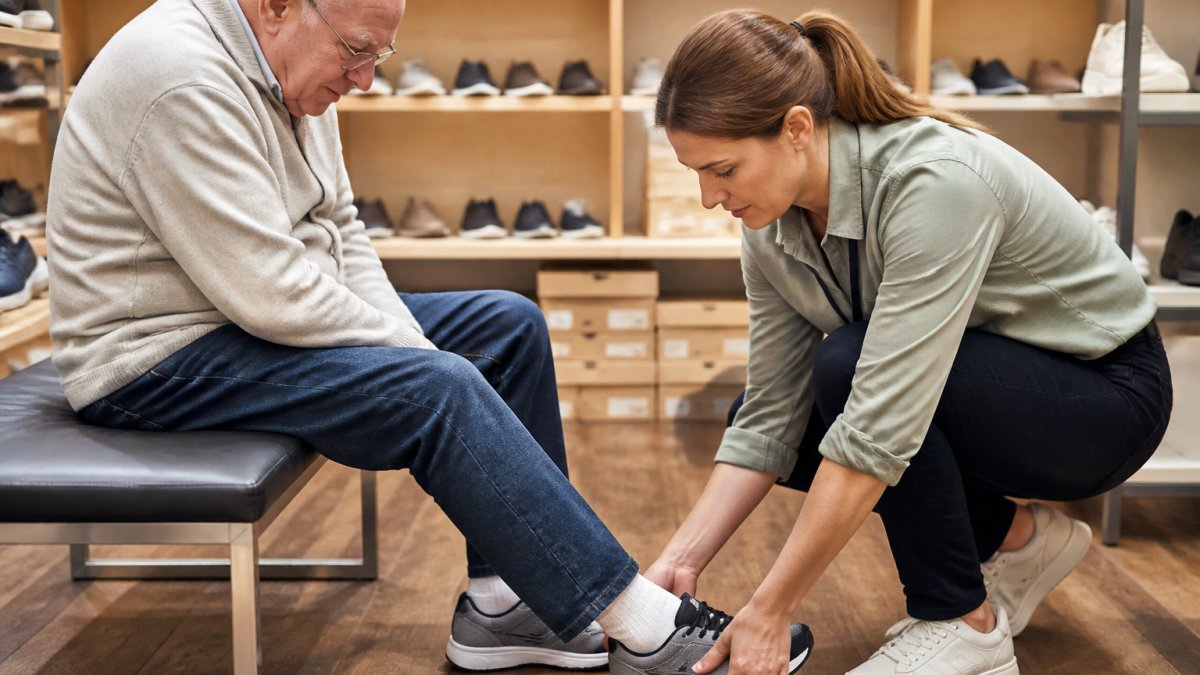
Ask the staff to measure your foot length and width. Many seniors wear the wrong size because their feet have spread with age. A proper measurement takes just a minute and can make the difference between a shoe that supports balance and one that destabilizes it.
Break-In Period and Transition Safety
New shoes need a break-in period. Wear them for short periods at home first, 30 minutes to an hour, before wearing them for extended walking. This lets you feel how the shoe supports your balance in a safe environment.
Pay attention to any pressure points or areas where the shoe rubs. Minor discomfort often resolves within a few days as the shoe molds to your foot, but sharp pain or blistering means the shoe isn't right for you. If you're switching from very loose or very tight shoes, give yourself a week to adjust to the new fit.
During the break-in period, avoid walking on slippery surfaces or uneven ground. Stick to familiar, safe routes until you feel confident in how the shoe supports your balance. If you use a cane or walker, practice with your new shoes while using your mobility aid.
When to Replace Balance Shoes and Long-Term Care
Shoes wear out, and worn-out shoes lose the stability features that make them safe. Most walking shoes last 300-500 miles before the cushioning and traction degrade. For a senior walking 1-2 miles per day, that's roughly 6-12 months of regular use.
Signs it's time to replace your shoes include:
- Visible wear on the outsole or tread
- Heel or midsole that feels softer or more compressed than when new
- Reduced traction on smooth floors
- Visible creasing or cracking in the upper
- Heel slippage that wasn't present when the shoes were new
To extend the life of your shoes, clean them regularly and let them air dry after walks. Avoid machine washing, which can damage the glue holding the sole to the upper.
If you use elastic no-tie laces like uLace, they're easy to transfer to a new pair of shoes when your current pair wears out. You keep the convenience and security of slip-on entry while getting the fresh support and traction of new shoes.
Finding the right shoes for balance problems seniors isn't just about comfort, it's about safety and independence. The features we've covered, a wide, stable base, secure heel lockdown, good traction, and appropriate cushioning, work together to reduce fall risk and let you walk with confidence.
Frequently Asked Questions
What type of shoes are best for seniors with balance problems?
Shoes for balance problems in seniors should have a wide, stable sole base, firm heel counter, and traction-rich outsole. Research shows that a broader ground surface enhances stability during standing and walking. Look for models with motion control and arch support, secure fastening (laces or straps), and cushioning that absorbs shock without reducing ground feel. Lightweight construction also helps reduce fatigue during longer walks.
Can no-tie shoes for seniors provide the same security as traditional laced shoes?
Yes, when designed correctly. No-tie shoes with elastic construction can deliver a secure fit if they have a firm heel counter and adjustable tension. The key is ensuring the shoe stays snug without slipping during walking or transitions. Many seniors prefer no-tie options because they eliminate bending, reduce fall risk during the tying process, and maintain a consistent fit throughout the day. Test the fit before committing to ensure the shoe doesn't slide during movement.
Are wide walking shoes for seniors actually better for balance?
A wider base improves stability by increasing the contact area between the foot and ground. However, wide shoes alone don't guarantee better balance. The shoe must also have a low, stable heel, a firm midsole, and proper arch support. Width is most beneficial when combined with these other stability features. If your foot naturally fits a wider width, a properly fitted wide shoe will be more comfortable and supportive than a narrow shoe forced onto a wide foot.
How often should seniors replace their balance and walking shoes?
Most walking shoes last 300 to 500 miles before the midsole and cushioning begin to break down. For seniors walking 3 to 5 days per week, this typically means replacing shoes every 6 to 12 months. Watch for signs of wear: compressed cushioning, visible sole damage, reduced traction, or heel wear that creates an uneven surface. Worn shoes lose their shock absorption and stability features, increasing fall risk. Replace them promptly to maintain proper support and safety.