




Elastic Laces for Seniors With Arthritis
Table of Contents
- Why Elastic Laces Matter for Seniors With Arthritis
- Benefits of Elastic Laces for Arthritis and Mobility
- How to Install No-Tie Shoelaces on Your Favorite Sneakers
- Adaptive Footwear for Seniors: Choosing the Right Solution
- Secure Fit Without the Struggle: Tension and Support
- Compatibility, Durability, and Long-Term Care
- Conclusion
- Frequently Asked Questions
Last Updated: September 20, 2026
Why Elastic Laces Matter for Seniors With Arthritis
Tying shoelaces becomes genuinely painful when arthritis affects your hands and fingers. The repetitive motion, the grip strength required, the bending over, it all compounds into a daily struggle that most people never think about. For seniors managing joint inflammation and limited range of motion, something as simple as getting dressed turns into a test of endurance.
This is where elastic laces for seniors with arthritis change everything. Instead of fighting with knots every morning and evening, you slip your foot in and you're done. No bending, no fine motor skills required, no pain. At uLace, we've spent years helping people reclaim that independence, the ability to put on the shoes they actually want to wear without modification or compromise.
The real value isn't just convenience. It's dignity. It's not needing help with something you've done yourself your whole life. It's choosing your favorite sneakers instead of settling for whatever slip-ons are available. That shift matters more than most guides acknowledge.
Benefits of Elastic Laces for Arthritis and Mobility
Elastic laces eliminate the primary pain point for anyone with arthritis: the act of tying itself. When joint inflammation makes gripping difficult and range of motion is limited, the traditional lacing system becomes an obstacle rather than a functional feature.
The slip-on convenience removes the bending requirement entirely. Seniors don't need to crouch down, balance on one leg, or reach their hands to foot level. You simply slip your foot through the opening and the elastic provides secure tension that adjusts to your foot's shape. This matters for people managing chronic pain, every movement avoided is energy preserved.
Accessibility extends beyond the tying motion. Many seniors experience foot swelling throughout the day, especially those managing arthritis or circulation issues. Elastic laces adapt to these changes automatically. The tension distributes evenly across the shoe opening rather than creating pressure points the way traditional laces do when you tighten them. Your foot gets comfortable support without the sensation of being squeezed.
The ergonomic design also prevents the frustration of shoes coming untied during the day. Traditional laces fail, that's not a flaw, it's just how they work. You tie them, you walk, they come loose, you stop to retie. Elastic laces eliminate this cycle entirely. The cinch lock mechanism keeps tension consistent.
For people with limited hand dexterity, the independence factor is profound. You're no longer dependent on someone else to help you get your shoes on. That autonomy extends to travel, to staying active, to maintaining the routines that keep seniors engaged and mobile.
How to Install No-Tie Shoelaces on Your Favorite Sneakers
Installation takes about five minutes per shoe, and you only do it once. The process is straightforward enough that someone with significant arthritis can manage it, though having a second person to help makes it easier if your hand strength is limited.
What You'll Need Before Starting
Gather these items before you begin. Having everything ready prevents frustration if your hands tire quickly.
- Your sneakers (any style works, canvas, leather, athletic shoes)
- Your uLace elastic laces (Classic or Shorts length depending on your shoe type)
- A small amount of patience (seriously, this is simple)
That's it. No tools required. No special knowledge needed. The beauty of the uLace system is that it's designed for accessibility.
Step-by-Step Installation Process
Step 1: Remove the original laces. Pull out the standard shoelaces completely. Don't worry about saving them, you won't need them again. This takes about one minute per shoe.
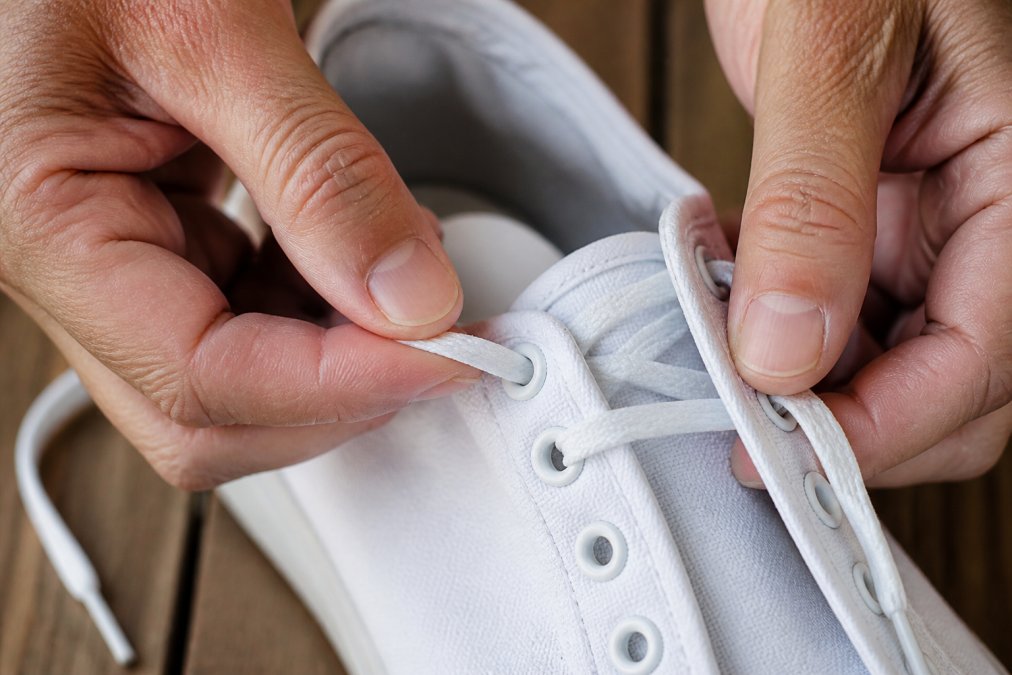
Step 2: Thread the elastic lace through the bottom eyelet. Start at the lowest eyelet on your shoe, the one closest to your toes. Insert the elastic lace through from the outside, pulling it so both ends hang evenly.
Step 3: Cross and thread upward. Cross the lace at each eyelet as you would with traditional laces, threading upward toward the top of the shoe. The elastic stretches slightly as you pull, which is exactly what you want. Keep tension even, not tight, just snug enough that the lace stays in place.
Step 4: Reach the top eyelets. Continue this pattern until you've threaded both sides through the top eyelets. At this point, you'll have one end of the elastic lace coming out each side of the shoe's opening.
Step 5: Adjust tension and secure. Pull both ends of the elastic lace so the shoe opening feels snug but not restrictive. The uLace cinch lock mechanism holds the tension in place automatically. You're not tying a knot, the lock mechanism does the work.
Step 6: Trim excess (optional). If the lace ends extend beyond your preference, you can trim them. Most people leave a small amount of extra length for adjustment if needed later.
Troubleshooting Common Installation Issues
Problem: The lace keeps slipping out of the eyelets while you're threading.
This usually happens if you're not pulling the elastic taut as you go. The elastic needs slight tension to stay seated in the eyelet. Try pulling each section snug before moving to the next eyelet. If your hand strength is limited, have someone else hold the shoe steady while you thread.
Problem: The shoe feels too tight or too loose after installation.
Adjust the tension by loosening or tightening the cinch lock. You're not retying anything, you're simply adjusting the tension at the lock point. Loosen it if the shoe feels restrictive, tighten it if you feel movement inside the shoe. This takes 10 seconds and requires no tools.
Problem: One side of the shoe has more tension than the other.
This happens when the elastic isn't threaded evenly. Check that both sides have the same amount of lace pulled through the lock mechanism. Adjust by pulling one side slightly tighter until balance is even.
Problem: The elastic lace feels uncomfortable against your ankle.
Some people prefer the elastic to sit slightly lower on the ankle rather than tight against the bone.
Adaptive Footwear for Seniors: Choosing the Right Solution
Elastic laces for seniors with arthritis work because they address the actual problem: the physical act of tying. But they're one option within a broader category of adaptive footwear solutions, each designed for different needs and preferences. Selecting the right pair of shoes often involves balancing these modifications with other comfortable footwear options that prioritize stability and ease of movement.
Secure Fit Without the Struggle: Tension and Support
One legitimate concern people have about elastic laces is whether they provide adequate support. The worry is understandable, if the lace stretches, won't the shoe feel loose or unstable?
Compatibility, Durability, and Long-Term Care
Elastic laces work on virtually any sneaker or casual shoe with eyelets. Canvas shoes, leather sneakers, athletic trainers, casual slip-ons, the system adapts to the shoe, not the other way around.
| Feature | Elastic Laces | Traditional Laces | Adaptive Shoes |
|---|---|---|---|
| Cost per pair | $6.49-$12.99 | $3-$5 | $80-$150+ |
| Installation time | 5 minutes | N/A | N/A |
| Works on existing shoes | Yes | Yes | No |
| Requires retying | No | Yes | No |
| Adjustment for swelling | Easy | Difficult | Limited |
| Lifespan | 12-18 months | 3-6 months | 2-3 years |
Conclusion
Arthritis shouldn't force you to choose between the shoes you love and the independence you want. Elastic laces for seniors with arthritis solve that false choice by letting you keep your favorite sneakers while eliminating the pain and struggle of tying. The installation takes five minutes, the adjustment is intuitive, and the daily convenience compounds over time.
Frequently Asked Questions
What makes elastic laces for arthritis better than regular shoelaces?
Elastic laces eliminate the need to bend over, tie knots, or use fine motor skills, all challenging tasks for people with arthritis. They transform any sneaker into a slip-on, reducing joint inflammation from repetitive hand and finger movements. The stretchy material adapts to foot swelling throughout the day, providing consistent comfort without requiring readjustment. Unlike traditional laces that come untied, elastic laces stay secure all day long.
Are elastic laces easy to install if I have limited hand dexterity?
Yes. uLace uses a simple push-and-pull installation method that doesn't require fine motor skills or strength. You thread the elastic lace through the shoe's eyelets using basic hand movements, no tying, twisting, or complex techniques needed. Most people complete installation in minutes. If you struggle with the threading, ask a family member or caregiver to help with the initial setup; after that, you simply slip your shoes on and off.
Will elastic laces stay secure during daily activities?
Elastic laces are designed for a secure fit that adapts to your foot throughout the day. The tension distributes evenly across the shoe, preventing slipping while accommodating foot swelling common in arthritis. They work well for walking, light exercise, and everyday movement. They work well for walking, light exercise, and everyday movement. However, if you engage in high-impact sports or running, consult the product guidelines to ensure they match your activity level.
How do I know elastic laces will work with my specific shoes?
Elastic laces work with most sneaker styles that have standard eyelets. uLace offers different lengths and styles, including the Classic and Shorts options, to fit various shoe types and widths. The Classic works with most standard sneakers, while Shorts are designed for shoes with fewer eyelets or tighter spacing. If your shoes have unusual eyelet patterns or are very narrow, measure your current laces and compare them to product specifications before ordering.