




Elastic Laces vs Regular Laces: Which Is Better?
Table of Contents
- Elastic Laces vs Regular Laces: Key Differences at a Glance
- Fit, Security, and Running Mechanics: How Each Lace Performs
- The Benefits of No-Tie Shoelaces for Daily Wear
- No-Tie Shoelaces for Seniors and People with Mobility Issues
- How to Install Elastic Laces in Five Minutes
- Durability, Eyelets, and Shoe Longevity: What to Expect
- Which Lace Type Should You Pick?
- Frequently Asked Questions
Last Updated: September 4, 2026
Elastic Laces vs Regular Laces: Key Differences at a Glance
Choosing between elastic laces vs regular laces comes down to one question: do you want a shoe that slips on instantly or one that you lace up manually each time? Elastic laces replace the traditional tie with a stretchy cord that holds your foot securely while allowing you to step in and out without touching the laces. Regular laces offer the classic, customizable fit that runners and hikers have trusted for generations, but they demand bending over and tying every single wear.
At uLace, we have spent years helping people convert their favorite sneakers into hassle-free slip-ons. The core tension in this debate is security versus convenience, and the right answer depends entirely on how you use your shoes. Below, we break down the performance differences, the specific benefits of no-tie shoelaces, and exactly who should choose which system.
Fit, Security, and Running Mechanics: How Each Lace Performs
Regular laces win on precision. A traditional lace lets you calibrate tension across each eyelet, which matters for runners who need a snug midfoot lock and a relaxed toe box. This adjustability directly influences foot stability and running mechanics, allowing you to manage plantar pressure and lace pressure exactly where your foot needs it.
Elastic laces trade that precision for consistent, even compression. The stretch distributes tension across the entire foot, which can reduce hot spots caused by overtightened sections of a regular lace. For most daily activities, walking, gym sessions, light jogs, this even pressure feels more comfortable than a rigid tie.
The real question is heel lock. A properly tied regular lace creates a mechanical lock that holds the heel firmly in place. High-quality elastic laces achieve a similar result through material elasticity and tension adjustment. If you set the initial tension correctly, the lace grips your foot through the full gait cycle without slipping.
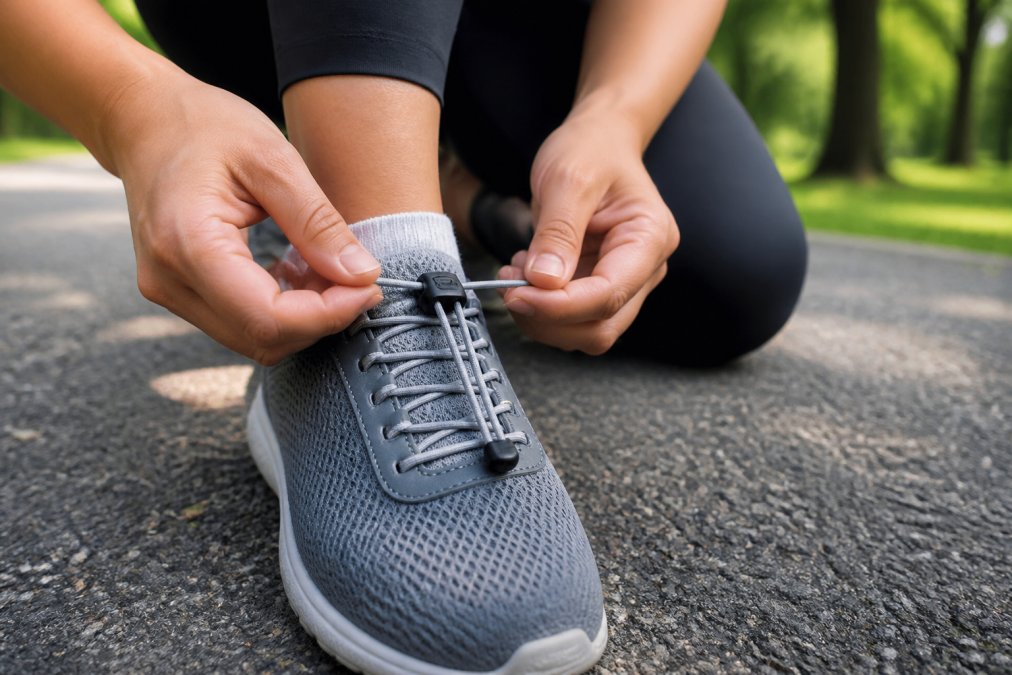
A common mistake is installing elastic laces too loose. Unlike regular laces, you cannot tighten them mid-run, so the initial setup must be snug. For sports with sudden direction changes, look for performance-oriented elastic laces with a higher tension rating. Standard elastic laces suit casual wear and light activity, while a dedicated performance line handles more aggressive movement.
The Benefits of No-Tie Shoelaces for Daily Wear
The most obvious benefit of no-tie shoelaces is the slip-on convenience. You step in, give a slight tug, and you are out the door. This saves genuine time for commuters, travelers, and parents managing young children. Triathlon transition times shrink because you eliminate the tying step entirely.
Beyond speed, elastic laces keep your shoes looking neat. Regular laces come undone, dangle, collect dirt, and get dragged through puddles. A no-tie system stays tucked and tidy all day. Many parents also find that switching to elastic laces prevents kids from tripping on loose laces during playground running.
Another overlooked benefit is foot swelling. Feet naturally expand throughout the day, especially during travel or long periods of standing. A regular lace tied in the morning can feel restrictive by evening. Elastic laces flex with your foot, accommodating minor swelling without cutting off circulation. This makes them a practical choice for long-haul flights and all-day wear.
No-Tie Shoelaces for Seniors and People with Mobility Issues
For seniors and individuals with arthritis, back pain, or limited flexibility, the benefits of no-tie shoelaces go far beyond convenience. Bending over to tie laces can be painful or impossible for many people. One uLace customer in their 70s shared that they struggled to bend down and tie their shoes every morning, and elastic laces let them simply slip their foot through and go. But the clinical picture is broader than anecdote.
For people with osteoarthritis in the hands, the fine motor movements required to form a bow knot can be agonizing (the NIH). The pinch grip needed to pull a lace loop tight places direct stress on the distal interphalangeal joints, which are often the first to show arthritic changes. Elastic laces, by contrast, require only a gross grasp to pull the lace through the eyelet during installation. Once set, the locking mechanism eliminates the need for any daily manipulation.
Post-surgical recovery is another area where elastic laces shine. After hip replacement, knee arthroscopy, or foot surgery, patients are often instructed to avoid bending at the waist for six to eight weeks (peer-reviewed research). Standard laces make shoe-wearing a logistical challenge that requires a reacher or help from a caregiver. Elastic laces convert any slip-on-friendly shoe into a true hands-free option, allowing patients to maintain a normal walking routine during recovery.
There is also a safety dimension that is rarely discussed. For older adults, the act of bending to tie shoes increases fall risk. The Centers for Disease Control and Prevention reports that falls are the leading cause of injury-related death among adults aged 65 and older (the CDC). Every time an older adult bends forward to tie a shoe, they shift their center of gravity and momentarily compromise their balance. Elastic laces eliminate this recurring hazard entirely.
The key concern for this group is security. Many worry that elastic laces will feel loose around the ankle or slip off during walking. The solution is proper tension calibration. Install the laces while wearing the shoes, and pull them snug enough that your heel stays seated when you walk. The elastic should stretch slightly as you flex your foot, but the resting tension should hold firmly. For individuals with peripheral neuropathy, a condition that reduces sensation in the feet, we recommend a two-finger test: you should be able to slide two fingers flat under the lace across the top of your foot. If you can only fit one finger, the lace is too tight; if you can fit three, it is too loose.
How to Install Elastic Laces in Five Minutes
Installing elastic laces takes about five minutes per pair of shoes. The process is straightforward and requires no special tools. Most quality elastic lace systems, including uLace, use a simple locking mechanism that secures the lace at your desired tension.
Step 1: Remove the old laces. Unlace your shoes completely and set the regular laces aside.
Step 2: Thread the elastic laces. Starting from the bottom eyelets, thread each end of the elastic lace through the eyelets just as you would a regular lace. Work your way up to the top.
Step 3: Put on the shoes. Wear the socks you plan to use with these shoes. This is critical because sock thickness affects the ideal tension.
Step 4: Adjust the tension. Pull the elastic lace ends until the shoe feels snug but not tight. You should be able to slide a finger under the lace across the top of your foot.
Step 5: Lock and trim. Secure the locking mechanism, then trim any excess lace. Test the fit by slipping the shoe on and off a few times.
The entire process takes less time than a typical trip to the shoe store. If you are converting multiple pairs, the second pair goes faster once you understand the tension you prefer.
| Lace Type | Fit Precision | Slip-On Ease | Best For | Installation Time |
|---|---|---|---|---|
| Regular Laces | High, full control | Low, requires tying | Running, hiking, dress shoes | Already installed |
| Elastic Laces | Moderate, even tension | High, step in and go | Daily wear, seniors, kids, travel | 5 minutes per pair |
Durability, Eyelets, and Shoe Longevity: What to Expect
A frequent concern is whether elastic laces damage shoe eyelets over time. Regular laces, especially those with rough texture, can wear down eyelet edges through repeated friction. Elastic laces sit relatively still once installed, which means less abrasive movement against the eyelets. This can actually extend the life of your eyelets and grommets.
Material quality matters significantly. A high-quality elastic lace uses durable woven elastic that resists fraying and maintains its stretch over years of use. Cheaper alternatives may lose elasticity within months, leaving you with a loose fit. When evaluating elastic laces, check the material construction and whether the brand offers a guarantee on durability.
Shoe longevity also improves because you stop forcing your foot into a tied shoe. Many people stretch out the heel counter or collapse the back of their sneakers by stepping in without untying. Elastic laces eliminate this habit entirely, preserving the structure of your shoes over time.
The environmental angle is worth noting. A single set of elastic laces replaces dozens of regular laces over the life of your shoes. Regular laces break, fray, and get replaced frequently. Quality elastic laces transfer between multiple pairs of shoes, reducing waste and saving money long-term. For the price of a couple of standard lace sets, you get a reusable system that lasts for years.
Which Lace Type Should You Pick?
The decision between elastic laces vs regular laces depends on your primary use case. For runners and athletes who need precise tension control for performance, regular laces remain the standard. The ability to adjust lace pressure across different foot zones is essential for serious training.
For everyone else, elastic laces offer a compelling upgrade. Parents with young children will appreciate the quick transitions and the elimination of tripping hazards. Seniors and those with mobility challenges gain independence without the pain of bending. Travelers and commuters save time every single day. If you value a secure fit without the hassle of tying, uLace provides the original no-tie elastic shoelace system, trusted since 2009.

Start with a pair of uLace Classic Black no-tie shoelaces at $6.49 to test the fit on your most-worn sneakers. For athletic use, the ProFormance line at $14.99 offers higher tension for active movement. The uLace Kiddos line at $5.99 keeps young feet secure on the playground. Every set installs in minutes and transforms any shoe into a slip-on.
Frequently Asked Questions
Do elastic laces really work for running and sports?
Yes, when chosen correctly. Standard elastic laces may allow slight movement during high-intensity activity. Performance-focused elastic laces, like the uLace ProFormance at $14.99, use stronger tension to maintain a secure fit through your gait cycle. The key is proper tension adjustment. If you can slide your heel out easily, tighten the laces. For most runners, elastic laces eliminate the distraction of retying and reduce lace pressure across the top of the foot.
Are elastic laces better for seniors or people who struggle to bend over?
They can be life-changing. No-tie shoelaces for seniors remove the need to bend down and tie laces, which is a daily challenge for many older adults. They also help people with arthritis in their hands who cannot grip standard laces. The elastic stretch allows the shoe to open wide enough to slip on without forcing the heel, then contracts for a secure fit. A 72-year-old uLace customer shared that he now just slips his foot through his shoes without the struggle.
Can I replace my regular laces with elastic ones on any shoe?
Most lace-up shoes work, including sneakers, casual shoes, and some boots. Shoes with fewer eyelets or unusual lacing patterns need a specific length. uLace offers Shorts ($12.99) for shoes with limited eyelets and Classic laces ($6.49) for standard sneakers. The installation takes about five minutes using the simple push-and-pull method. If you have very wide feet or high arches, look for laces with extra stretch to accommodate the extra volume without pressure points.
Which type of laces stay tied the best during daily wear?
Elastic laces win for consistent security. Regular laces come untied because the bow loosens with movement and friction. Elastic laces have no bow to fail. They hold tension across the eyelets, so the fit stays constant all day. This matters for kids who play actively. uLace Kiddos ($5.99) are designed to stay secure through playground activity. The locking mechanism keeps tension even when the shoe flexes, so you are not stopping to retie laces several times per day.
Do elastic laces damage shoe eyelets over time?
Quality elastic laces do not damage eyelets more than regular laces. The material is smooth and flexible, so it does not grind against the eyelet. Regular laces can wear down eyelets because the friction of tying and untying pulls the lace back and forth. Elastic laces stay in place once set, which reduces wear. The main risk comes from overtightening, which can stress the eyelet. Follow the tension guide and adjust to a comfortable level to protect your shoes.
Choosing the right lacing system is about matching the tool to your daily reality. If you are tired of retying, bending, and chasing loose laces, uLace offers a proven solution that has served customers since 2009. Our elastic laces are easy to install, comfortable for all-day wear, and come in styles for every member of the family. Take the uLace quiz to find the perfect fit for your sneakers and experience the freedom of a true slip-on.
This article was written using GrandRanker