




Best Sneakers for Kids with Wide Feet: Fit Guide
Last Updated: October 23, 2026
Quick Summary
The best sneakers for kids with wide feet combine a wide or extra-wide width with a roomy toe box, so the toes have room to splay while the heel stays secure. Measure both feet at home, treat the width label as a filter rather than a decision, and check heel fit and fastening when the shoes arrive.
- A wide children's shoe is a standard-length shoe built on a wider last, not a differently shaped shoe.
- There is no single industry-wide width standard, so a wide from one brand can fit like a medium from another.
- Measure both feet at home in the afternoon and add roughly a quarter inch of growing room to the length.
- Never size up to gain width, because extra length puts the flex point in the wrong place.
- A wide-width sneaker with a roomy toe box is usually safer than a barefoot-style shoe when a child needs support.
Table of Contents
- Why Standard Sneakers Fail Kids with Wide Feet
- Wide Shoes for Kids: What the Width Label Actually Means
- Extra-Wide Shoes for Kids: When Wide Isn't Enough
- How to Measure a Child's Feet for Shoes at Home
- Kids' Sneakers with a Wide Toe Box: Natural Width vs. Sized Width
- Heel Fit, Fastening, and Soles: The Fit Checks That Matter
- Matching Sneakers to Activity and Age
- Frequently Asked Questions
Why Standard Sneakers Fail Kids with Wide Feet
Most children's sneakers are built on a last, the foot-shaped mold a shoe is formed around, that assumes an average width. A child with wide feet gets squeezed from the first step.
The American Podiatric Medical Association's guidance on buying children's footwear is blunt about the fix: judge fit by toe room and make sure the toe box is at least as wide as the widest part of the foot.
That gap between the label and the actual foot is where most shopping trips go wrong.
Wide Shoes for Kids: What the Width Label Actually Means
A "wide" children's shoe is a standard-length shoe built on a wider last, not a differently shaped shoe. The width label describes the mold, not your child's foot.
Here's the part most parents miss: there is no single industry-wide width standard. New Balance, for example, offers children's shoes in about two additional widths beyond standard, while Stride Rite advertises a full run of wide and extra-wide kids' sizes.
What a wider last actually changes
When a brand cuts a wide, it usually does one of three things:
- Adds volume through the forefoot and midfoot while keeping the heel closer to standard. This is the most common approach and the best match for a foot that is wide across the ball but normal at the heel.
- Scales the whole shoe wider, including the heel. This gives all-over room but can let a narrow heel slip, which is why fastening matters as much as width.
- Raises the instep to accommodate a high arch or thick midfoot. A high instep can make a correctly wide shoe feel tight across the top of the foot even when the sides have room.
Ask which of these a brand does before you buy. A customer-service chat or the brand's fit guide usually answers it, and it tells you more than the letter on the box.
Translating measurements into a width letter
Most kids' width charts run narrow, medium (standard), wide, and extra-wide, sometimes labeled with letters like M, W, and XW. The letters are not standardized across brands, so use your at-home measurements as the anchor:
- Measure the widest part of the forefoot in inches (see the measuring section below).
- Compare that number to the brand's published width chart for your child's length.
- If the measurement falls between two widths, choose the wider one for a growing foot, but only if the heel can be secured.
- Recheck after two to three months. Young feet widen before they lengthen, so a shoe that fit in spring can pinch by fall.
Treat the label as a filter, not a decision. It narrows the shelf. Your child's actual foot measurements make the call.
Extra-Wide Shoes for Kids: When Wide Isn't Enough
Extra-wide sizing exists for a reason: some feet are wider than a wide shoe allows. If a wide sneaker still leaves pressure marks along the sides, or your child's foot spills over the midsole edge when standing, move up a width rather than up a size.
A few practical rules:
- Never size up to gain width. Extra length puts the flex point of the shoe in the wrong place under the foot.
- Try the next width in the same model first. Brands that cut wide often cut extra-wide on the same last.
- Check the instep, too. A high instep can make a correctly wide shoe feel tight across the top of the foot.
If extra-wide still pinches, the problem may be shoe shape rather than width. That's where toe-box design comes in.
How to Measure a Child's Feet for Shoes at Home
To measure a child's feet for shoes at home, trace each foot on paper while the child stands, then measure from heel to longest toe and across the widest part of the forefoot. Measure both feet, in the afternoon, and use the larger numbers.
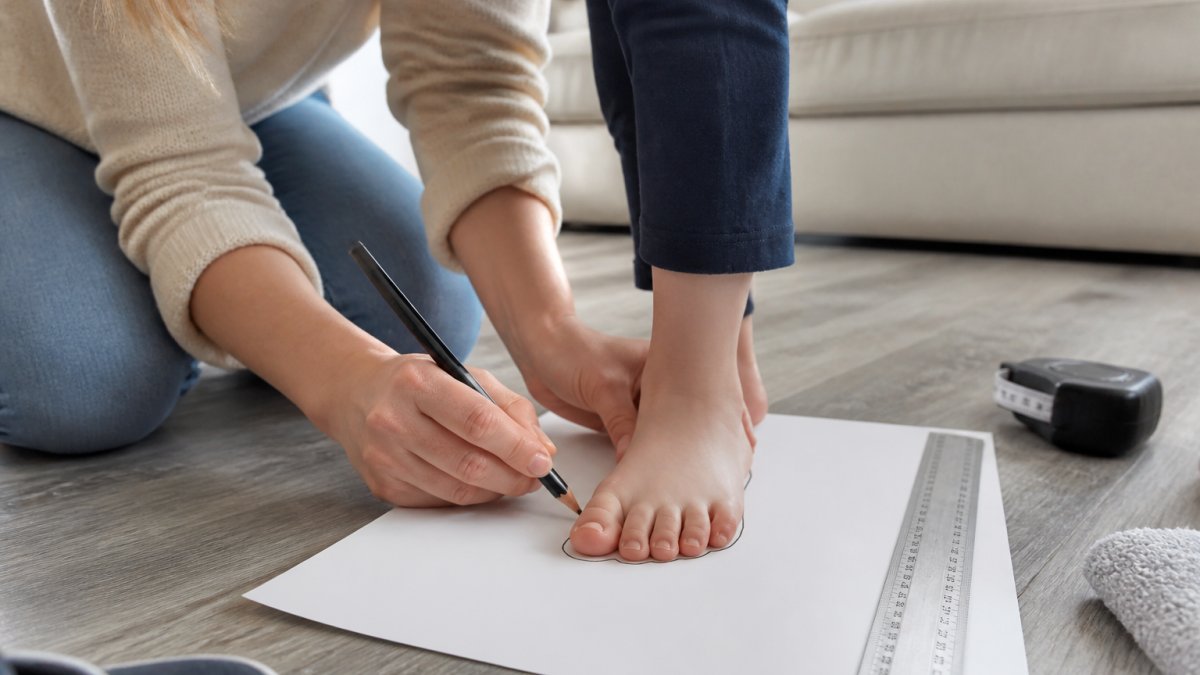
Here's the full process:
- Tape a sheet of paper to the floor and have your child stand on it, weight evenly distributed.
- Trace the outline with the pencil held straight up and down.
- Measure heel to longest toe in inches for length.
- Measure straight across the widest part of the forefoot for width.
- Add roughly a quarter inch of growing room to the length, no more.
- Repeat for the other foot and record both.
Bring those numbers to the store or the sizing chart. They beat guesswork every time.
Kids' Sneakers with a Wide Toe Box: Natural Width vs. Sized Width
A wide toe box is space at the front of the shoe that lets toes spread flat, while a wide width is a wider cut through the whole shoe. They solve different problems, and the best sneakers for kids with wide feet often combine both.
Sized width widens the entire shoe, including the heel. Natural toe-box designs keep a closer heel and open up the front.
| Design | What It Widens | Best For | Watch Out For |
|---|---|---|---|
| Standard width | Nothing | Average feet | Pinching on wide feet |
| Wide width | Whole shoe | Fuller feet needing all-over room | Loose heel on narrow heels |
| Extra-wide width | Whole shoe, more | Very wide feet | Limited model choices |
| Wide toe box | Front only | Toe splay, natural movement | Less midfoot support |
| Barefoot style | Front, plus thin flexible sole | Natural foot development | Little cushioning |
The trade-off is real. A naturally wide toe box gives toes room to splay, which supports foot development. A sized wide shoe gives more all-over room but can swim at the heel.
Heel Fit, Fastening, and Soles: The Fit Checks That Matter
A good fit means the heel stays put, the toes have room to wiggle, and the sole bends where the foot bends. For a deeper look at sole and fit issues, see this guide on preventing tripping hazards in children's footwear. Run these checks the moment the shoes come out of the box:
- Press the toe box: at least a thumb's width of room past the longest toe
- Squeeze the sides: no bulging over the midsole edge
- Walk and watch the heel: it should not lift or slip
Fastening is where wide sneakers quietly fail. A wide shoe with traditional laces often can't cinch down far enough at the heel, so kids force their feet in without untying and crush the counter. Elastic no-tie laces solve this neatly: they stretch to let a wide foot in, then hold the heel securely. Parents who want to keep wide sneakers snug can browse no tie shoelaces for kids.
Matching Sneakers to Activity and Age
Most wide-shoe lists stop at "buy a wide width." The harder question is which wide sneaker fits which job. Use this decision guide to match the shoe to the child's age and the way the shoes will actually be worn.
By age
- Toddlers and first walkers (roughly 1-3): Prioritize a thin, flexible sole and a wide toe box so the foot can feel the ground and toes can splay. Look for a wide or extra-wide width only if the standard width pinches; many toddler shoes are already cut generously. Fastening should be a hook-and-loop strap or slip-on, because laces are a tripping risk at this age.
- Preschool and early school age (roughly 4-7): This is where playground mileage climbs. Choose a wide-width sneaker with a durable toe cap and a sole that flexes at the ball of the foot. Elastic no-tie laces or straps keep the midfoot secure without a bow to trip over.
- Older kids and youth (roughly 8-12): Feet widen and lengthen quickly, and activity splits between school, sports, and casual wear. A wide-width sneaker with a secure heel and a roomy toe box covers most days; add a sport-specific pair only if the child plays organized sports several times a week.
By activity
- Everyday school and casual wear: A wide-width sneaker with a breathable upper and a flexible sole. The priority is all-day comfort and a heel that stays put during recess.
- Running and playground sprinting: A secure midfoot and a heel that locks down matter more than extra cushioning. A wide shoe that slips at the heel will cause blisters on longer runs.
- Court sports (basketball, tennis): Look for a wide-width court shoe with lateral support and a snug midfoot. A naturally wide toe box alone is not enough here, the shoe also needs stability for side-to-side movement.
The width-plus-support trade-off
Some children need both room and support, a wide forefoot plus cushioning or stability for sports. If a child needs adaptive footwear, our guide to the benefits of adaptive footwear for children explains how accessible designs support independence and comfort.
Age changes the fastening question, too. A kid-friendly variety pack lets children pick colors while getting a stretchy, secure fit they can put on themselves.
Frequently Asked Questions
What shoe brand is good for kids with wide feet?
Several brands sell children's shoes in wide and extra-wide widths. New Balance offers kids' sizes in about two additional widths for fuller feet, and Stride Rite advertises a range of wide- and extra-wide-width children's shoes. Brand names only get you so far, though. The American Podiatric Medical Association advises checking that the toe box is at least as wide as the widest part of your child's foot, so measure first and treat the width label as a starting point rather than a guarantee.
How can I tell if my child needs wide-width shoes?
Look at the shoe, not just the foot. If the upper bulges over the sole edge, if the widest part of the foot presses against the side, or if your child complains of pinching and pressure points, the shoe is too narrow. Measure both feet at home, since one is often wider, and compare that measurement to the shoe's stated width.
Should kids with wide feet size up in sneakers?
Sizing up is usually the wrong fix. A longer shoe gives you length you don't need while the width stays tight, and it lets the heel slide, which causes blisters and an unstable fit. Choose the correct length and then move to a wider width or a shoe with a roomier toe box. Check toe room by pressing the top of the shoe just past the longest toe; you want a small gap, not a loose shoe. If the right length still pinches at the sides, the width is the problem, not the size.
Are barefoot shoes a good option for kids with wide feet?
They can be, for the right child. Barefoot and minimalist shoes use thin, flexible soles and naturally wide toe boxes that let toes splay. The trade-off is cushioning and support, which some kids need for sports or long days on hard surfaces. If your child needs both width and support, look for a wide-width sneaker with a roomy toe box instead.
Wide feet don't have to mean a daily battle with shoelaces and pinched toes. At uLace, we've been making elastic no-tie laces since 2009, the original no-tie elastic shoelace, designed to turn the sneakers you already buy into secure slip-ons. Our laces install with a simple push and pull, come in a wide range of styles and colors, and ship fast from the USA, all backed by the uLace Guarantee. Get started with uLace and give your child a wide sneaker that slips on easy and stays put all day.
