




How to Choose Comfortable Athletic Shorts for Training in 2026
Last Updated: November 16, 2026
Quick Summary
Choose athletic shorts by matching the cut to your training: 5 to 5.5-inch inseams for lifting and cycling, four-way stretch spandex blends for running and HIIT, and 7 to 9-inch inseams for court sports and lifting. Check fabric composition, flatlock or seamless construction, and a gusset, then run a five-step fitting test before cutting the tags.
- A 2026 IIUM analysis found generic one-size-fits-all shorts fail because they ignore movement-specific cuts and seams.
- Look for 10 to 20 percent spandex; below 10 percent shorts bind in a deep squat.
- Flatlock seams, a gusset, or seamless designs reduce inner-thigh chafing on long sessions.
- Skip the liner if you prefer your own compression shorts or want maximum airflow for hot-weather running.
- The five-step fitting test checks the squat, lunge, waistband, chafe points, and pocket bounce.
Table of Contents
- Start With How You Move, Not the Size Chart
- Gym Shorts Length: Matching Inseam to Your Training
- Fabric and Construction That Hold Up to Sweat
- The Best Men's Workout Shorts With Liner, and When to Skip the Liner
- The Best Workout Shorts for Big Guys: Width, Rise, and Stretch
- The Best Workout Shorts for Curvy Figures: Coverage That Stays Put
- A Five-Step Fitting Test Before You Cut the Tags
- Lock In the Fit With Laces That Stay Put
- Frequently Asked Questions
Start With How You Move, Not the Size Chart
The most comfortable athletic shorts for training are the ones cut for your specific movement pattern, not the pair that matches your waist number on a size chart. A 2026 analysis from the Centre for Foundation Studies, IIUM found that effective performance shorts must be built with specific cuts and seams that mimic human movement, and that generic one-size-fits-all designs fail to do this.
That single finding reframes the whole shopping decision. Before you measure anything, ask what your training actually demands.
- Lifting and cycling: shorter 5 to 5.5-inch inseams keep fabric clear of your knees
- Running and HIIT: four-way stretch with a spandex blend lets your stride open fully
- Court sports and lifting: 7 to 9-inch inseams add coverage and pocket utility
Match the cut to the movement first. The size chart comes second.
Gym Shorts Length: Matching Inseam to Your Training
Gym shorts length comes down to one measurement: the inseam, which is the distance from the crotch seam to the hem. Standard performance lengths fall into three categories, and each suits different training.
5-Inch, 7-Inch, and 9-Inch Inseams in Practice
The 5-inch inseam is the shortest mainstream option. It clears the knee entirely, which is why Aurolaus's 2026 summer workout shorts guide recommends 5 to 5.5-inch lengths for strength training and cycling. Squats and pedal strokes happen without fabric catching.
The 7-inch inseam is the versatility pick.
The 9-inch inseam suits lifters who want thigh coverage and anyone who prefers pockets that hold a phone without swinging.
| Inseam | Best For | Trade-off |
|---|---|---|
| 5-inch | Lifting, cycling, mobility work | Less coverage on tall frames |
| 7-inch | Running, HIIT, all-around training | Can bunch on short legs |
| 9-inch | Court sports, heavy lifting, storage | Restricts deep squats for some |
Fabric and Construction That Hold Up to Sweat
Fabric decides whether shorts feel comfortable at minute five or minute fifty. Sports clothing plays a critical role in thermoregulation, and material properties directly influence your physiological responses during exercise, according to research published by the National Institutes of Health. That means the right fabric is not just soft, it moves heat and moisture away from skin fast enough to keep your core temperature stable through a full session.
Read the Fabric Composition, Not the Marketing Label
Most training shorts blend two or three fibers, and each one does a different job. A common pattern in performance shorts is a polyester or nylon base for durability and quick drying, plus 10 to 20 percent spandex (elastane) for stretch and shape recovery. Below roughly 10 percent spandex, shorts tend to bind in a deep squat; above roughly 20 percent, they can feel slick and lose some structure. Cotton blends feel soft at first but hold moisture, dry slowly, and stretch out at the waistband, a poor match for sweaty sessions.
Fabric weight matters too. Lighter knits breathe better and dry faster, which suits hot gyms and outdoor conditioning. Heavier knits feel more substantial but trap more heat. If you train indoors in a warm room, lean lighter; if you train outdoors in cool weather or do a lot of floor work, lean heavier.
Knit Structure and Stretch Direction
Four-way stretch means the fabric stretches both crosswise and lengthwise, which is what lets a short follow a squat, a lunge, and a sprint without pulling. Two-way stretch only gives in one direction and binds when you hinge or squat deep.
Knit structure also affects breathability. Open, mesh-like panels behind the knee, down the inner thigh, or across the back let air escape where you sweat most. Dense, smooth knits feel sleek but can trap heat. Look for ventilation where your body actually heats up, not just where a logo sits.
Seams, Gussets, and Chafe Points
Construction details separate durable shorts from disposable ones. Flatlock seams sit flush against skin and reduce chafing on long sessions; standard overlock seams create a raised ridge that rubs under repeated friction.
A gusset, a diamond or triangular panel sewn into the crotch, is one of the most underrated construction features.
Watch out: a short can pass the mirror test and still fail the sweat test, so walk briskly for two minutes in the fitting room before you commit.
If you are building a sweat-ready kit, our guide to performance running gear essentials for outdoor athletes pairs well with breathable shorts, and moisture-wicking socks for daily exercise handle the other end of the sweat problem.
The Best Men's Workout Shorts With Liner, and When to Skip the Liner
The best men's workout shorts with liner combine a built-in brief with an outer shell, giving you support and coverage in one layer. A liner replaces underwear, reduces chafing between the thighs, and keeps everything in place during jumps and sprints. precisely because it adds utility and pocket storage without extra layers, according to Men's Health's 2026 shorts coverage.
Know the Three Liner Types Before You Buy
Liners are not one thing. The brief liner is the lightest option: a short, snug inner layer that provides support and minimal coverage, best for running and hot-weather training where airflow matters most.
Liner fabric matters as much as the outer shell. Look for the same moisture-wicking knit as the shell, with flatlock or bonded seams at the inner thigh. A liner with a center seam or a coarse overlock stitch is the most common cause of chafing in lined shorts.
Test the Liner, Not Just the Shell
A liner can fit perfectly standing still and still ride up on the first sprint. Before you cut the tags, do three checks:
- The high-knee march. March in place with knees to hip height for 30 seconds. The liner should stay in place without creeping up the thigh.
- The split squat. Drop into a split squat on each side. The liner should not pull tight across the front of the hip or gap at the back.
- The seam scan. Run a finger along the inner-thigh seam. Any ridge you can feel now will rub once you sweat.
Watch out: a liner that feels snug when dry can feel restrictive once wet, so if you are between sizes, consider sizing up.
When to Skip the Liner
Skip the liner in three situations:
- You prefer your own compression shorts underneath, which gives you control over compression level and seam placement
- You want maximum airflow for hot-weather running, where an unlined shell over a lightweight brief dries faster
- You plan to wear the shorts casually as well as in the gym, where a liner adds bulk and limits underwear choice
A lined pair with a phone pocket and a secure waistband covers most training needs. An unlined pair gives you flexibility, but you will need to supply your own support layer, and if you chafe easily, that support layer should be seamless or flatlock, not a standard cotton brief.
The Best Workout Shorts for Big Guys: Width, Rise, and Stretch
The best workout shorts for big guys prioritize width through the thigh, a higher rise, and generous stretch over a slim silhouette. A size chart that only lists waist measurement tells you almost nothing about whether shorts will clear your quads.
Three fit details matter most. First, check the thigh opening: a wider leg opening prevents fabric from riding up during squats. Second, look for a higher rise so the waistband sits at your natural waist rather than below your stomach. Third, confirm four-way stretch, because two-way stretch binds when you squat deep.
Drawstrings help here. An elastic waistband with an internal drawstring lets you dial in tension independently of the elastic, which matters if your waist and hips fall in different size brackets. Size up if you are between sizes and rely on the drawstring to take up the slack.
The Best Workout Shorts for Curvy Figures: Coverage That Stays Put
The best workout shorts for curvy figures deliver coverage that stays put through movement, which means a secure waistband, a longer rise, and hems that do not creep upward mid-set.
Start with the waistband. A wide elastic band distributes pressure better than a thin one and resists rolling down. Pair it with a drawstring for a locked-in feel.
Inseam length does more work on curvy frames than any other spec. A 7-inch inseam usually prevents inner-thigh ride-up without restricting movement.
A Five-Step Fitting Test Before You Cut the Tags
Run this five-step test in the fitting room or your living room before you remove the tags. Each step checks a different failure point.
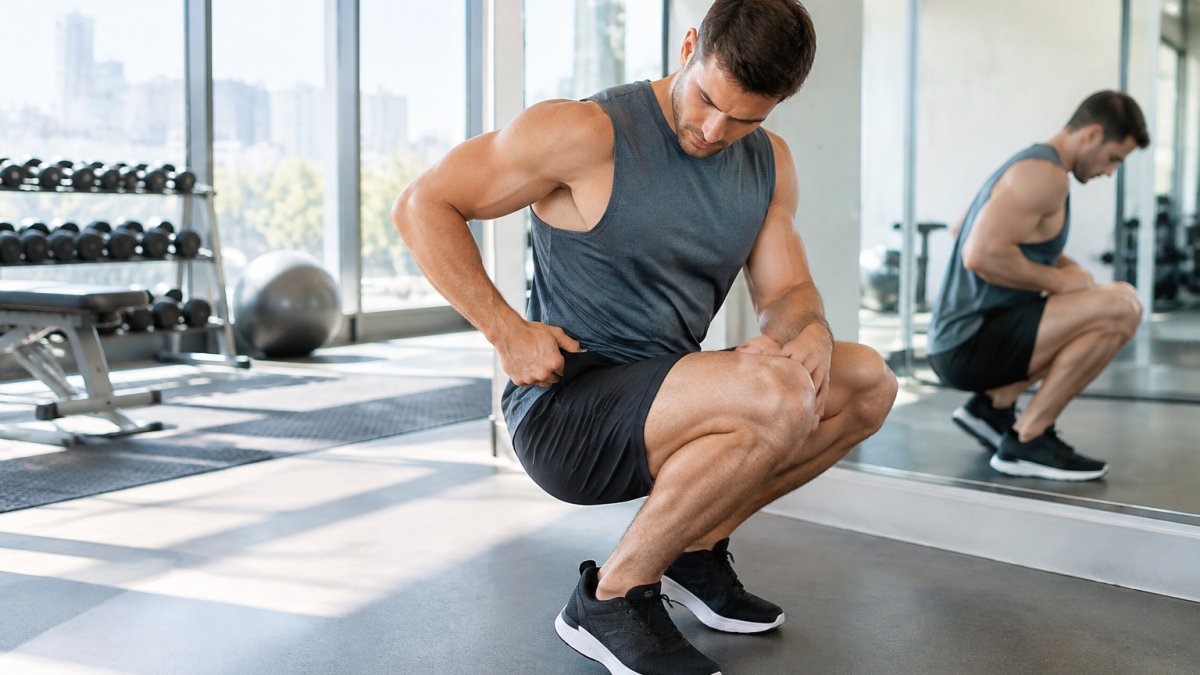
- The squat test. Sink into a full squat. The waistband should stay level and the hem should not climb past mid-thigh.
- The lunge test. Step into a deep lunge on each side. Check that the fabric across the front of the hip does not pull tight or gap.
- The waistband check. Slide two fingers under the band. Any more slack means the shorts will slide down during running.
- The chafe scan. Walk briskly for two minutes. Any seam that rubs now will blister at mile three.
- The pocket test. Put your phone in and jog in place. A pocket that swings or bounces will annoy you every session.
The man is American.
Lock In the Fit With Laces That Stay Put
A perfect pair of shorts still shifts if your shoes fit loosely, and loose shoes change how you move through every rep. That is where the footwear side of the fit equation comes in.
Traditional laces loosen mid-session, forcing you to stop and retie, or worse, to force your foot into a tied shoe and damage the heel counter. uLace offers elastic no-tie laces that turn sneakers into slip-ons.
For runners chasing a locked-in feel, our guide to no-tie shoelaces for running covers the options. If you are still sorting out your footwear, read up on what training shoes are and how they differ before you buy.
Frequently Asked Questions
What should you look for in workout shorts?
Prioritize four things: a four-way stretch fabric with a spandex blend so the shorts move with you, a flat waistband that stays put without digging in, seams placed away from high-friction zones, and an inseam that matches your activity. Try the shorts on and squat, lunge, and sprint before committing.
How should athletic shorts fit for training?
They should feel secure at the waist with no gaping, allow a full squat without the hem catching your thigh, and leave roughly a finger of room at the leg opening. If you can slide a hand inside the waistband while standing but the shorts stay up during a jump test, the fit is close. Anything that bunches, twists, or rides up mid-movement is too loose or the wrong cut.
What fabric is best for workout shorts?
Look for a stretch blend with spandex and low water vapor resistance. In practice, that means lightweight, breathable knits with moisture-wicking finishes beat heavy cotton for anything that makes you sweat. Seamless construction is also increasingly preferred for comfort across training styles.
Are lined or unlined workout shorts better?
Lined shorts pair an outer shell with a built-in brief or compression layer, which adds support and pocket storage and cuts down on chafing. Choose a liner for running, high-intensity intervals, and anything with lots of leg drive. Skip it if you prefer your own compression shorts underneath or train in a sport like basketball where you want a looser feel. Either way, check that the liner does not bunch at the crotch during a squat.
