




The Trail Runner's Guide to Choosing the Right Laces
Last Updated: October 30, 2026
Quick Summary
Choosing the right trail running laces means matching lace type, length, and tension to your terrain and foot. Flat laces with a heel lock suit technical rocky descents, while elastic no-tie laces set once and never need retying. Measure your old lace end to end and adjust by 5 to 10 cm rather than guessing from shoe size.
- Standard laces offer the highest, fully adjustable tension but are the slowest to put on and take off.
- For 6 eyelet pairs, start with 65 to 75 cm and add 10 to 15 cm for a heel lock.
- Wet cotton-blend laces swell, the knot compresses, and tension drops, forcing you to stop and retie.
- On muddy courses, carry a zip tie or spare cord so a broken lace doesn't end your run.
- uLace ProFormance no-tie laces cost $14.99 and come in black, white, royal blue, bright green, or neon yellow.
Table of Contents
- Why Trail Running Laces Matter More Than You Think
- Standard, Elastic, and Speed Laces Compared
- Flat vs Round Shoelaces for Running
- Finding Your Trail Running Shoe Lace Length
- How to Keep Running Shoe Laces From Coming Undone
- Heel Lock Lacing for Running Shoes
- Lace Performance in Mud, Rain, and Debris
- Matching Your Laces to Terrain and Runner Needs
- Frequently Asked Questions
Why Trail Running Laces Matter More Than You Think
Most trail runners obsess over shoes and ignore the trail running laces holding them on. That's a mistake. Choosing the right laces for trail running shoes is the cheapest performance upgrade you'll ever make, and it decides whether your foot stays locked over rocks or slides forward into the toe box on every descent.
At uLace, we've been making no-tie elastic laces since 2009, and trail runners often ask whether elastic laces will stay tight, hold on technical terrain, and survive mud. Below, we'll show you exactly how to match lace type, length, and tension to how you actually run.
Here's what most guides get wrong: they treat laces as an afterthought. A 2023 trail-running study indexed by PubMed compared wrap and lace closures on the same shoe across 30 subjects, which tells you researchers now treat the closure system as a variable worth isolating. Your laces are part of your shoe's fit, not an accessory.
Standard, Elastic, and Speed Laces Compared
Standard laces are flat or round woven cords you tie manually, and they offer the most adjustable tension of any option. Elastic laces stretch to let your foot in and out without tying. Speed laces use a cord and toggle system for quick adjustments mid-run.
| Lace Type | Tension Control | On/Off Speed | Best For |
|---|---|---|---|
| Standard | Highest, fully adjustable | Slow | Runners who fine-tune fit |
| Elastic no-tie | Fixed but stretchy | Instant | Convenience and consistent fit |
| Speed/toggle | High, quick adjust | Fast | Race day transitions |
Standard laces offer fine adjustment. Elastic laces keep the tension you set once. Speed laces sit in between and suit runners who adjust on the move.
When Elastic No-Tie Laces Make Sense on the Trail
Elastic no-tie laces make sense when you want a repeatable fit without retying, especially on long efforts where fingers go numb or swell.
The trade-off is real: elastic gives you less micro-adjustment than a flat lace you can cinch by hand. If you're weighing that comfort difference, our breakdown of elastic laces versus traditional shoestrings covers how each feels over a long day. For a plain explanation of how the stretch works, read what elastic shoe laces are and how they're used.
Flat vs Round Shoelaces for Running
- Flat laces: better grip in the knot, less top-of-foot pressure, ideal for high insteps
- Oval laces: smooth through eyelets, common on racing shoes, need a secure double knot
- Rope laces: durable and abrasion-resistant, popular on trail shoes, but bulkier under the tongue
Finding Your Trail Running Shoe Lace Length
Trail running shoe lace length depends on eyelet count, lace width, and how much tail you want, not shoe size alone. Stock laces are sized for the shoe rather than the lacing style, so tail length can vary.
The Reliable Measurement Method
Don't guess from shoe size. Measure the lace you already have, or measure the lacing path itself:
- Remove one lace and lay it flat, unstretched, on a table.
- Measure end to end in centimeters. That's your baseline length.
- If that lace was too short or too long, adjust by 5 to 10 cm in the direction you need.
- If you're switching lacing styles (for example, adding a heel lock), add 10 to 15 cm to account for the extra path through the top two eyelets.
If you don't have the old lace, run a piece of string through the eyelets following your intended lacing pattern, then measure the string plus the tail length you want on each side (typically 15 to 20 cm per side for a secure bow). Once you have the lace length, check that your boots fit securely without pinching, since the right fit helps Summit Pro Gear keep your lacing adjustments comfortable on the trail.
Sizing by Eyelet Count and Lace Width
Use this as a starting point, then verify with the measurement method above. Width matters: wider flat laces need slightly more length to fill the eyelets, while thin round laces need slightly less.
- 4 eyelet pairs: 45 to 55 cm (about 18 to 22 inches)
- 5 eyelet pairs: 55 to 65 cm (about 22 to 26 inches)
- 6 eyelet pairs: 65 to 75 cm (about 26 to 30 inches)
- 7 eyelet pairs: 75 to 90 cm (about 30 to 35 inches)
For a heel lock or any lacing pattern that doubles back through the top eyelets, add 10 to 15 cm to the upper end of the range.
Too much tail means flapping ends that catch on brush. Too little means you can't tie a secure knot. When you're ready to swap, our guide on replacing standard laces with elastic alternatives walks through the install step by step.
uLace ProFormance - Performance No-tie Laces - Black →
How to Keep Running Shoe Laces From Coming Undone
Try these in order:
- Switch to flat laces with more surface friction in the knot
- Double-knot and pull each loop firmly, not gently
- Tuck loose ends under the crossed laces
- Trim excess length so less tail can whip loose
- Use a lace lock or toggle to remove the knot entirely
If your laces keep failing, our list of proven fixes to keep laces tied covers seven methods you can test on your next run. Watch out: a single overhand knot with long, slick tails will come undone on a wet descent, and a loose lace is a genuine trip hazard on rocky ground.
Heel Lock Lacing for Running Shoes
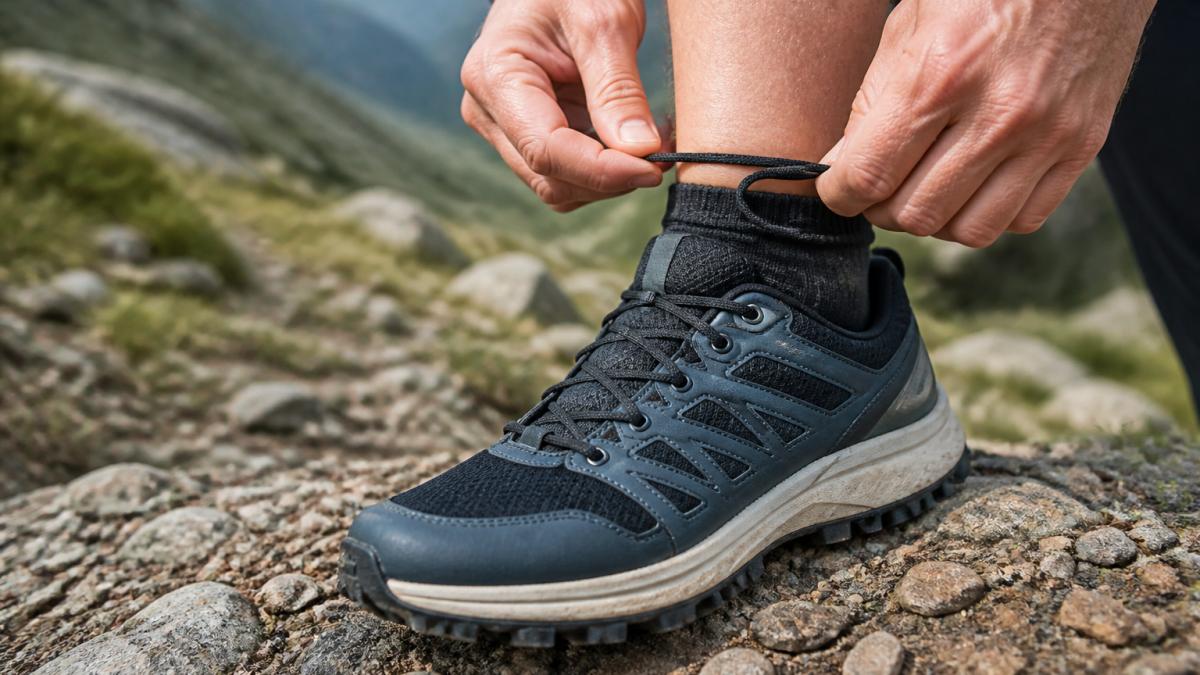
Here's the method:
- Lace normally up to the second-to-last eyelet
- Thread each end up through the top eyelet on the same side, leaving a small loop
- Cross the ends and pass each through the opposite loop
- Pull both ends to cinch the heel down
- Tie off and test with a short downhill jog
If the top of your foot aches, you've over-tightened the midfoot. Loosen the middle eyelets and keep the heel lock snug.
Lace Performance in Mud, Rain, and Debris
- Standard flat laces: The knot holds well when dry, but wet cotton or cotton-blend laces swell, the knot compresses, and tension drops. You stop to retie. Grit embedded in the weave acts like sandpaper on the eyelets and on the lace itself.
- Round and oval laces: Slick surfaces plus water equal a knot that creeps. A double knot helps, but the tail whips and collects mud.
- Elastic no-tie laces: No knot to fail, no tail to snag, and the stretch compensates for minor foot swelling. The trade-off is that mud packed into the eyelets can abrade the elastic over time, and a broken elastic lace mid-run is harder to improvise than a broken flat lace.
- Speed/toggle laces: The toggle can clog with fine grit or mud, making mid-run adjustment difficult. Carry a spare or be ready to run the rest of the way at the tension you have.
Matching Your Laces to Terrain and Runner Needs
Match your laces to the run, not to the shoe's stock setup. Smooth fire roads reward flat laces with moderate tension. Rocky, technical terrain calls for a heel lock and short tails. Muddy, wet courses favor synthetic or elastic laces that won't absorb water.
Use this decision guide:
- Technical, rocky descents: flat laces plus heel lock lacing
- Wet, muddy conditions: polyester or elastic no-tie laces
- Race day, quick transitions: speed laces or elastic
- High instep or top-of-foot pain: flat laces, looser midfoot, snug heel
- Numb fingers or arthritis: elastic no-tie laces set once
That last category is where uLace ProFormance laces earn their place. They're performance no-tie laces, priced at $14.99. You can shop the ProFormance no-tie laces in black, white, royal blue, bright green, or neon yellow, and install them with a simple push and pull.

Frequently Asked Questions
What type of laces are best for trail running shoes?
There is no single best type, but most trail runners do well with flat, low-stretch laces in a polyester weave. They hold tension across the instep, resist abrasion against rocks and brush, and stay tied with a double knot. Elastic laces suit runners who want slip-on convenience and quick transitions, and speed laces help on race day.
Are flat or round laces better for trail running?
Flat laces spread pressure across the top of the foot and hold a knot more reliably, which is why they dominate trail shoes. Round laces slide through eyelets faster and suit speed-lacing systems, but they loosen more easily and concentrate pressure on a narrower band. If you get top-of-foot pain or hot spots, flat laces with a wider profile usually help. Round laces work better when you need fast tension changes mid-race.
How long should trail running shoe laces be?
Length depends on eyelet count and lacing style. Measure your current laces end to end before ordering replacements, and check the shoe maker's spec if you are unsure.
How do I keep my trail running laces from coming undone?
Start with a secure base: pull tension evenly from the bottom eyelets up, then tie a double knot or use a heel lock loop to lock the top. Flat laces hold knots better than round ones. Tuck loose ends under the lacing rather than letting them flap, which also reduces snag risk on brush. If your laces still loosen, the material may be too slick or too stretched out, and replacing them is the simplest fix.
Are elastic laces suitable for trail running?
Yes. uLace ProFormance no-tie laces are priced at $14.99 and come in colors like black, white, and neon yellow.
When should I replace my trail running shoe laces?
Replace laces when you see fraying, flattening, or stretched-out sections that no longer hold tension, or when a knot keeps slipping mid-run. Mud, grit, and UV exposure wear laces faster than road use. Many runners swap laces once a season if they train on technical terrain often. Carrying a spare set in your pack is cheap insurance, and a fresh set of laces can restore lockdown on a shoe whose upper is still in good shape.
Trail running already asks enough of your attention without a lace coming loose mid-descent. If you want a fit you set once and forget, uLace builds elastic no-tie laces with quick push-and-pull installation, a range of colors to match your shoes, and fast shipping from the USA. Get started with uLace and spend your next run watching the trail instead of your shoelaces.
