




Custom Lacing Patterns for High Instep Shoes That Relieve Pressure
Last Updated: November 5, 2026
Quick Summary
Custom lacing patterns for high instep shoes relieve pressure by routing the lace so it stops pulling the shoe's sides together over the highest point of your foot. Window lacing is the best starting point because it skips the criss-cross over the instep, leaving an open gap where the shoe can flex instead of press.
- A high instep is the height of the top of your foot, not the curve of your sole.
- Window lacing skips the cross over the highest point and crosses only at the top two eyelets.
- Straight-bar lacing spreads tension evenly and keeps the midfoot snug without cranking the top.
- A heel-lock cups the heel without squeezing the top, and the second-from-top eyelet stays loose.
- With five eyelets or fewer, keep skips to one row because there is less flexibility.
Table of Contents
- Why Standard Lacing Hurts a High Instep
- Window Lacing for High Instep: The Pattern That Opens the Top of the Foot
- How to Lace Shoes for High Arches Without Squeezing the Midfoot
- Running Shoe Lacing for Foot Pressure: Locking the Heel, Freeing the Top
- Different Ways to Lace Shoes Step by Step
- Matching the Pattern to Your Shoe Construction and Eyelet Layout
- Troubleshooting Fit and Knowing When Lacing Is Not Enough
- Take the uLace Quiz to Find Your Fit
- Frequently Asked Questions
Why Standard Lacing Hurts a High Instep
If the top of your foot throbs every time you tighten your sneakers, the problem is usually the lacing pattern, not the shoe. Standard criss-cross lacing pulls two rows of eyelets toward each other.
The fix is simpler than most people expect.
Here's the part most guides skip: a tight lace job doesn't just feel bad. A study on shoe-lacing patterns and dorsal foot pressure, published in the PubMed-indexed study by Hagen et al., examined how different lacing patterns affect pressure across the top of the foot.
Below, we'll show you exactly which patterns open up the top of the foot, how to tie each one, and when laces alone can't fix the fit.
High Instep vs. High Arches: They Are Not the Same
A high instep is the height of the top of your foot, measured from the sole to the highest point. High arches describe the curve of your sole. You can have one without the other, and they need different lacing fixes.
- High instep: the top of the foot sits tall. Laces press down on it.
- High arches: the middle of the sole lifts high. The shoe can feel loose in the middle.
- Both together: common, and the hardest to fit. You need a pattern that eases top pressure and still holds the midfoot.
Most people blame the wrong one. If the pain is on top, it's an instep issue. If your foot slides or the arch aches, that's an arch issue.
Window Lacing for High Instep: The Pattern That Opens the Top of the Foot
Window lacing for high instep is the best place to start. It skips the criss-cross over the highest part of your foot, leaving an open "window" where the shoe can flex instead of press.
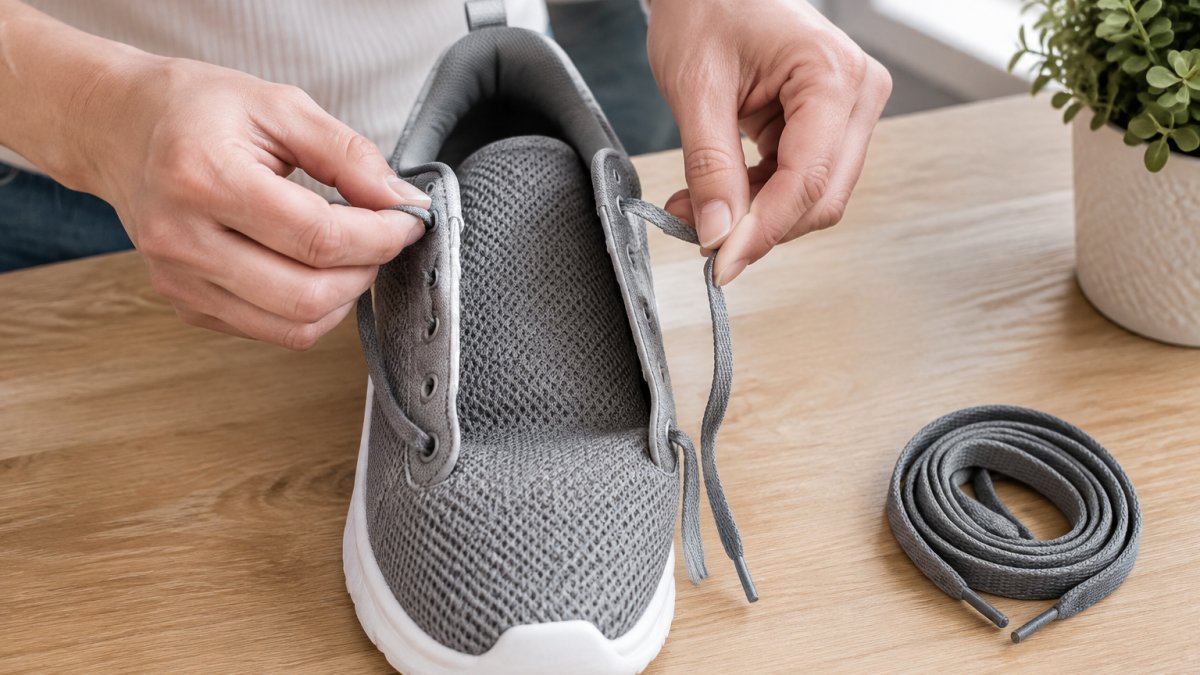
Here's how to do it:
- Start at the bottom eyelets and lace straight across.
- On each side, run the lace straight up the outside to the next eyelet, skipping the cross.
- At the top two eyelets, cross once and tie off.
The result is a gap across the top of the foot. That gap is the whole point: it removes downward pressure right where a high instep hurts.
A common mistake is skipping too many eyelets. Leave the window over the highest point only. Skip more and the shoe gets sloppy.
How to Lace Shoes for High Arches Without Squeezing the Midfoot
Learning how to lace shoes for high arches comes down to one rule: keep the midfoot snug without cranking the top. Straight-bar lacing does this well.
Also called parallel lacing, it runs the lace horizontally across the shoe instead of diagonally. That spreads tension evenly and stops the sides from pinching inward.
Try this sequence:
- Lace straight across the bottom pair of eyelets.
- Run one end up the inside and straight across the next pair.
- Repeat, alternating sides, so every cross is horizontal.
- Tie at the top with light tension.
For a deeper look at patterns built around circulation and midfoot pressure, our guide to lacing techniques for better circulation in running shoes walks through the options.
Watch out: pulling straight-bar lacing tight at the top undoes the benefit. Keep the top two rows loose and let the lower rows do the holding.
Running Shoe Lacing for Foot Pressure: Locking the Heel, Freeing the Top
Running shoe lacing for foot pressure follows a split strategy: lock the heel, free the top.
Use a heel-lock at the top. Thread the lace ends back down into the top eyelet on the same side, leaving a small loop on each side. Cross the ends through the opposite loops and pull.
Then leave the second-from-top eyelet loose. That single loose row takes pressure off the instep while the heel stays put.
If you want laces built to hold this setup through runs, our review of durable elastic shoelaces for running covers what holds up.
uLace ProFormance - Performance No-tie Laces - Black →
Different Ways to Lace Shoes Step by Step
There are dozens of different ways to lace shoes step by step, but four cover most high-instep needs. Here's the quick comparison:
| Pattern | Best For | Top-of-Foot Pressure | Difficulty |
|---|---|---|---|
| Window lacing | High instep | Lowest | Easy |
| Straight-bar (parallel) | High arches, wide forefoot | Low | Easy |
| Criss-cross (loose top) | General fit | Medium | Easy |
| Heel-lock | Heel slip | Low at top | Medium |
Criss-cross lacing is the default most shoes ship with. It works fine if you keep the top rows loose. The mistake is cranking every row equally tight.
Loop lacing threads the lace back through a loop before crossing. It adds hold without extra top pressure, useful on narrow shoes.
Pick one pattern, wear it for a day, then adjust. Fit is personal, and a small tweak often beats a whole new pattern.
Matching the Pattern to Your Shoe Construction and Eyelet Layout
Shoe construction changes which pattern works. A chunky high-top has more room over the instep than a slim low-top, and eyelet count decides how much you can skip.
- Six or seven eyelets: plenty of room to build a window or straight-bar run.
- Five eyelets or fewer: less flexibility. Keep skips to one row.
- Wide-set eyelets: straight-bar lacing shines here. It pulls evenly.
- Narrow-set eyelets: window lacing relieves the top best.
Lace length matters too. Straight-bar and window patterns use less lace than criss-cross, so long laces may dangle. Shorter, elastic laces solve that neatly. If you're comparing options for your specific shoe, our roundup of elastic laces for sport shoes breaks down the choices.
Troubleshooting Fit and Knowing When Lacing Is Not Enough
A new pattern fixes most high-instep pressure, but not all of it. When something still feels wrong, work through the problem one variable at a time instead of relacing the whole shoe from scratch.
Isolate the symptom first
Before you change anything, notice where the problem actually is. Pressure on top, heel slip, toe tightness, and uneven tension each point to a different fix.
- Still tight across the top: skip one more eyelet over the highest point of the instep. Change only that one row, retie, and walk for a few minutes. If it's still tight, switch from criss-cross to window lacing over that section rather than loosening the whole shoe.
- Heel slipping: add a heel-lock at the top two eyelets. Thread each lace end back down into the top eyelet on the same side to form a small loop, cross the ends through the opposite loops, and pull. This cups the heel without adding tension over the instep.
- Toe box too tight: start your lacing one eyelet higher, or leave the bottom row completely unlaced. Toe pressure usually comes from the lowest crossings pulling the forefoot narrow.
- Pressure on one side only: your feet are probably different sizes or shapes. Lace each shoe separately and don't assume the tension should match. A half-eyelet difference between left and right is normal.
- Laces too long after relacing: straight-bar and window patterns use noticeably less lace than criss-cross. If the ends dangle, switch to shorter elastic laces rather than doubling knots.
- Laces keep loosening: flat cotton laces slip more than elastic or textured laces. A double knot or a heel-lock holds better than tightening the whole pattern.
When the shoe, not the lace, is the problem
Some shoes will never clear a high instep, no matter how you route the lace. Look for these signs that lacing has hit its limit:
- A low, stiff tongue that sits directly on the dorsal ridge with no padding.
- A narrow last that pinches the sides of the forefoot even when the laces are loose.
- A seam or overlay running straight across the top of the foot where the pressure concentrates.
- Insufficient shoe volume, the shoe is simply too shallow for the height of your foot.
In those cases, a different shoe style, a wider width, or a shoe with a higher-volume last will help more than any lacing pattern. Custom orthotics can also change how your foot sits inside the shoe, which shifts where pressure lands, but that's a fit change, not a lacing fix.
When to stop adjusting and get advice
Lacing is a comfort tool, not a treatment. If you have persistent pain, numbness, tingling, or skin irritation on top of the foot that doesn't improve after you've tried a pressure-relieving pattern for a week or two, talk to a podiatrist or other qualified clinician.
For anyone who wants to skip tying altogether, our guide to the best no-tie shoelaces for running shows what's available.
Take the uLace Quiz to Find Your Fit
Custom lacing patterns for high instep shoes work best with laces that hold tension without over-squeezing. That's where uLace comes in. We've made elastic, no-tie laces since 2009, and our push-and-pull install takes minutes.
Our uLace ProFormance no-tie laces come in black, white, royal blue, and scarlet red at $14.99 a pair. They slip on and off without bending, and they keep sneakers neat and tidy.

Answer a few quick questions and we'll match you to the right lace for your shoe and foot.
Frequently Asked Questions
How should you lace shoes if you have a high instep?
Start with a straight-bar or window lacing pattern that keeps the lace off the top of the foot. Run the lace straight up the sides and skip the eyelets sitting directly over the highest point of your instep. Keep tension light across the middle and firmer near the ankle so the shoe stays secure without pressing down. Research on lacing patterns has examined how they affect dorsal foot pressure, which suggests that how you thread the lace can change the pressure you feel on top of the foot.
What lacing pattern relieves pressure on the top of your foot?
Window lacing and straight-bar lacing are the two patterns that relieve pressure best. Both keep the lace running vertically along the sides instead of crossing over the instep, which removes the downward squeeze. If you still feel tightness, skip one eyelet on each side at the widest part of your foot. Pair the pattern with a flat, low-stretch lace rather than a round one so the tension spreads out instead of digging in.
Can different shoe-lacing patterns make shoes feel roomier?
Yes. Changing the pattern changes where the lace pulls, and that changes how much vertical space you get over the instep. Straight-bar and window patterns leave the center of the shoe open, so the tongue can lift slightly and the shoe feels less tight across the top. Criss-cross lacing pulls the two sides together, which is why it feels snugger. If you need more room, combine an open pattern with a skip-an-eyelet adjustment.
How do you lace running shoes for a high arch?
Use a heel-lock pattern for running shoes: thread normally up to the second-to-last eyelet, then run each lace end back through the top eyelet on the same side to create a loop, and pull the loops tight. This holds the heel down without cranking tension across the instep. Keep the middle section looser than the top. If you want to skip tying altogether, uLace ProFormance no-tie laces ($14.99) install with a push-and-pull method.
Your high instep doesn't have to mean a daily squeeze. Start with window lacing, keep the top rows loose, and let the lower rows hold the fit. When you're ready to skip the tying entirely, uLace makes elastic no-tie laces that install in minutes, hold through runs, and come in colors to match your sneakers. Take the uLace quiz and find your fit.
