




Elastic Laces vs Magnetic Closures for Everyday Shoes
Last Updated: November 2, 2026
Quick Summary
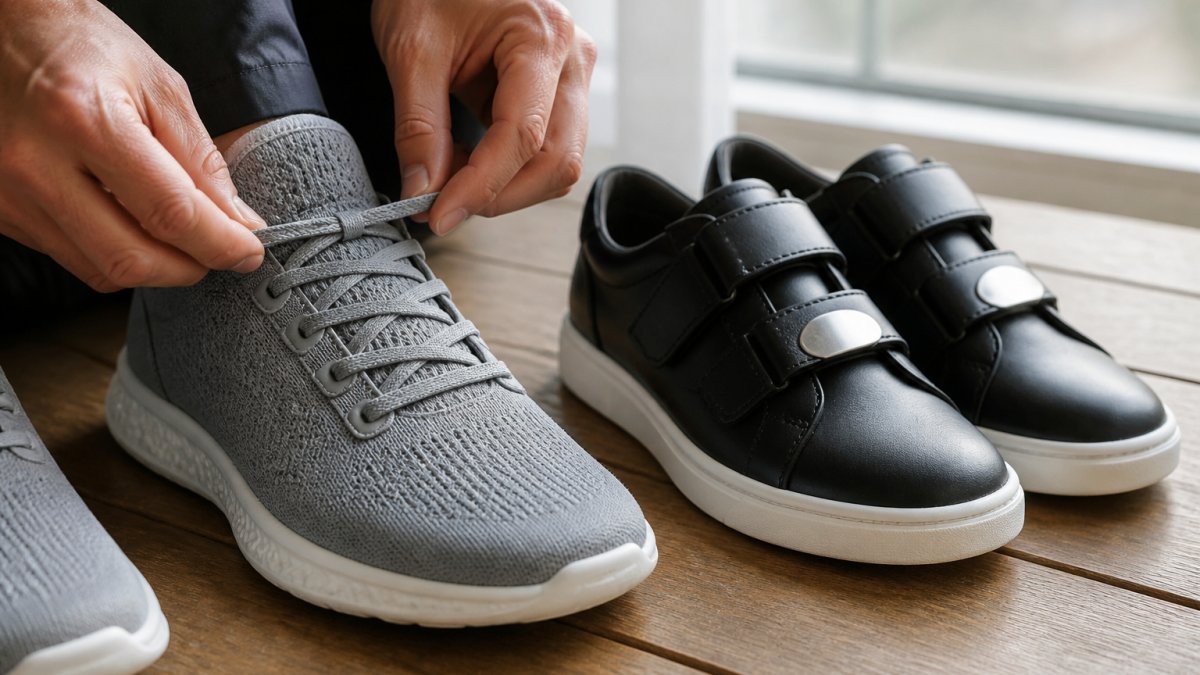
Elastic laces vs magnetic closures differ in how they secure your shoe: elastic laces stretch around your foot and hold it with continuous tension, while magnetic closures use two hardware pieces that snap together at the top of the shoe. Elastic laces adjust fit through a lace lock, whereas magnetic fit is fixed by hardware position.
- Elastic laces stretch wide for entry because every eyelet pair contributes stretch.
- A magnetic clasp can pop open suddenly during lateral movement, while elastic cord wears gradually.
- A set of uLace ProFormance no-tie laces runs $14.99 and replaces your laces for the life of the shoe.
- Magnetic closures typically win on speed of entry because the clasp connects in one motion.
- We recommend elastic laces for most readers because they combine fit control with predictable wear.
Table of Contents
- Elastic Laces vs Magnetic Closures: How They Differ
- Magnetic Shoe Laces: How to Use Them and What to Expect
- Elastic Shoe Laces No Tie: The Stretch-and-Slip Alternative
- The Best No Tie Shoelaces for Fit, Security, and Daily Wear
- Zubits Magnetic Lacing Solution: A Closer Look at Magnetic Fasteners
- Side-by-Side Comparison: Performance, Safety, and Cost
- Find Your Fit with uLace No-Tie Laces
- Frequently Asked Questions
Elastic Laces vs Magnetic Closures: How They Differ
Elastic laces vs magnetic closures comes down to one core difference: elastic laces stretch around your foot and hold it with continuous tension, while magnetic closures use two hardware pieces that snap together at the top of the shoe. Research published in PubMed from a 2011 running mechanics study found that laces help runners get a better foot-shoe fit, which raises perceived comfort and lowers peak plantar pressure. Here at uLace, we have made elastic no-tie laces since 2009, so we have watched this comparison play out on thousands of sneakers. Below, we break down how each system works, who it suits, and where each one falls short.
Elastic laces are stretchy cords threaded through your shoe's eyelets that flex as your foot enters and hold tension without a knot. Magnetic closures are hardware pieces, usually a clasp or fastener, that connect across the shoe opening and release when you pull them apart.
The table below summarizes the trade-offs before we go deeper.
| Feature | Elastic Laces | Magnetic Closures |
|---|---|---|
| How it secures | Continuous stretch tension | Two pieces snap together |
| Fit adjustment | Adjustable via lace lock | Fixed by hardware position |
| Opening size | Stretches wide for entry | Fixed by clasp placement |
| One-handed use | Yes, slip on and off | Yes, but needs aim to connect |
| Failure risk | Cord wear over time | Accidental release under force |
| Cost | About $14.99 per set | Varies by system |
Magnetic Shoe Laces: How to Use Them and What to Expect
Magnetic shoe laces how to use is simpler than it sounds: you thread the magnetic fastener onto your existing laces or replace the lace ends with magnetic tips, then the two ends click into place at the top of the shoe. Most systems attach to standard laces, so you keep your original cord and add the magnetic clasp. To take the shoe off, you pull the clasp apart or slide your foot out.
How the mechanism actually works. A magnetic closure is two hardware pieces that connect across the shoe opening. Magnetic closures are two hardware pieces that connect across the shoe opening and release when pulled apart.
Installation and setup. Most magnetic systems attach to your existing laces: thread the fastener onto the lace ends and position the clasp where you want the shoe to open. Because clasp position sets the fit, place it before trimming or tightening anything.
What to expect in daily wear:
- Fast entry: The clasp snaps together in one motion.
- Fixed fit: You set the tension once when you install the fastener, then it stays put.
- Hardware weight: Metal or plastic clasps add a small amount of bulk at the top of the shoe.
- Compatibility: Works best on shoes with a standard eyelet layout and a fairly flat throat; high-volume or wide shoes may need the clasp repositioned or a different system.
Compatibility and fit guidance. Magnetic closures are generally suited to shoes with a relatively flat opening. If you wear orthotics or your foot volume changes through the day, an adjustable elastic system gives you more range.
Magnetic systems depend on the clasp staying connected, so check retention under the movements you actually do. For walking and daily errands that is rarely an issue; for court sports, test them first. A clasp that releases mid-stride can leave the shoe loose and lace ends exposed, so check retention under the movements you actually do.
Elastic Shoe Laces No Tie: The Stretch-and-Slip Alternative
Elastic shoe laces no tie systems replace your laces entirely with a stretchy cord and a lace lock. You thread the cord through the eyelets, set your tension with the lock, trim the ends to length, and you are done. From then on, the shoe stretches open as your foot goes in and contracts to hold it.
Podiatrist Suzanne C. Fuchs told Runner's World that "elastic shoelaces offer convenience, comfort, and accessibility for individuals of all ages and abilities." That accessibility point matters. Elastic laces remove the fine-motor task of tying and retying, which helps children learning independence, adults with limited dexterity, and anyone who struggles to bend over.
The catch most guides skip: budget spiral versions wear out faster than standard laces, according to user reports on Reddit's dyspraxia community. If you are new to the category, our guide to what elastic shoe laces are and how they work covers the basics, and our step-by-step installation walkthrough shows how to thread, trim, and secure a set in under five minutes.
The Best No Tie Shoelaces for Fit, Security, and Daily Wear
The best no tie shoelaces balance three things: secure fit, easy on and off, and durability. Fit comes first: a no-tie system only works if lace tension holds your heel without pinching across the top of the foot. Security comes second: you want a closure that stays put through a full day of walking. Durability decides your long-term cost.
Here is how we would judge any no-tie system before buying:
- Does the tension adjust, or is it fixed at one setting?
- Does the shoe opening stretch wide enough for your foot shape?
- Can you operate it one-handed?
- Does the cord or clasp show wear within the first few months?
- Does it fit your specific shoe style and width?
That last point trips people up. A system that works on a low-profile sneaker may feel tight on a wide, high-volume shoe. Measure your shoe's eyelet count and width before you order, and check the return policy if buying online without trying first.
Zubits Magnetic Lacing Solution: A Closer Look at Magnetic Fasteners
Magnetic fasteners attach to your existing shoelaces and create an opening for entry. You keep your original laces, add the magnetic clasp, and step in without tying.
uLace ProFormance - Performance No-tie Laces - Black →
Where magnetic fasteners shine:
-
No lace replacement: You keep the cord you already have.
-
Simple operation: Snap together to close, pull apart to open.
Where they fall short: the fit is set by where the clasp sits, so fine-tuning tension means repositioning hardware. Traditional laces are still considered superior for keeping a shoe firmly placed on the foot compared with some no-tie alternatives, per LER Magazine. If you need precise, repeatable fit adjustment, an elastic system with an adjustable lock gives you more control.
Side-by-Side Comparison: Performance, Safety, and Cost
Performance, safety, and cost are where elastic laces and magnetic closures diverge most. Below is a transparent comparison method you can run at home, followed by what each system typically does under those tests.
A simple home test method. Use the same shoe model for both systems if possible, or two pairs of the same size and width. Time three things with a stopwatch: (1) time to put the shoe on from seated, starting with the shoe on the floor and ending with the heel seated and closure engaged; (2) time to take it off; (3) opening width at the throat when fully released, measured across the widest point. Then do a retention check: walk 10 minutes, jog 30 seconds, and perform five lateral shuffles each direction, noting whether the closure stays put, loosens, or releases.
Performance. Elastic laces offer fit adjustment through the lace lock, and the stretch flexes as your foot enters and holds it in place. Magnetic closures typically win on speed of entry because the clasp connects in one motion, but fit is set by hardware position, so fine-tuning means repositioning the clasp.
Safety and failure modes. The key question is how each system fails. An elastic cord that wears out loosens gradually, giving you warning over days or weeks; a lace lock can slip, but you can retighten it.
Cost. Cost is closer than it looks, and purchase price is only part of it. For a deeper value breakdown, our 2026 review of whether elastic laces are worth the price walks through long-term cost, and our Lock Laces vs Xpand Laces comparison gives you another head-to-head if you are still weighing elastic options.
| Criteria | Winner | Why |
|---|---|---|
| Fit adjustment | Elastic laces | Adjustable lace lock across the lacing path |
| Speed of entry | Magnetic closures | Single snap motion |
| Opening width | Elastic laces | Stretch across all eyelets |
| Failure predictability | Elastic laces | Wears gradually, not suddenly |
| One-handed operation | Tie | Both work, different motions |
| Long-term cost | Elastic laces | One $14.99 set per shoe |
Find Your Fit with uLace No-Tie Laces
Finding the right no-tie setup starts with matching the system to your daily routine. If you want adjustable fit, predictable wear, and a lace that disappears into your sneaker's look, elastic laces are the stronger pick. If you want the fastest possible entry and your shoes see mostly walking, magnetic closures can work well. For most readers, we recommend elastic laces because they combine fit control with a failure mode you can see coming.
uLace has been making no-tie elastic laces since 2009, and our ProFormance line comes in Black, White, Royal Blue, and Scarlet Red at $14.99 per set. Installation is a simple push-and-pull method, and our laces are designed to keep sneakers looking neat and tidy while giving you a secure, stretchy fit. Now I just slip my foot thru my shoes and that's it." If you are ready to see the flagship option, take a look at the uLace ProFormance no-tie laces in Black.

Frequently Asked Questions
Do elastic shoelaces really work?
Elastic shoelaces work by using stretch to hold the foot securely while allowing the shoe to slip on and off. Elastic laces can maintain consistent tension without tying. They suit daily wear, but traditional laces may offer more adjustable tightness for high-impact sports. For most everyday sneakers, elastic laces provide a reliable, comfortable fit.
Are magnetic shoe closures secure for everyday wear?
Magnetic closures use a clasp or fastener to snap the shoe opening shut, which is secure for walking and daily activities. However, some user reports note that magnetic clasps can separate during high-intensity lateral movement. For casual use, they offer quick one-handed operation and easy on and off. If you need maximum retention for sports, elastic laces with a locking mechanism may be more dependable.
Are elastic laces or magnetic closures better for sports shoes?
Elastic laces maintain constant tension, and magnetic closures offer convenience for everyday footwear. Runners and athletes should prioritize a secure fit; elastic laces with a lace lock provide that balance. Magnetic systems work well for recovery shoes or casual sneakers where quick slip-on access matters most.
Can you use no-tie laces with orthotics?
Fit adjustment matters when using orthotics, so check that the shoe opening has enough room for the insert.
How do you install elastic no-tie shoelaces?
Installation typically involves threading the elastic cord through the shoe eyelets, adjusting to the desired tension, and securing the ends with a lace lock or clip. Most systems require no tools and take a few minutes per shoe. Cut excess lace to length and tuck it away. uLace uses a simple push and pull method for easy installation, and the stretch laces stay in place once set, eliminating traditional tying and retying.
The real challenge is not choosing between elastic laces and magnetic closures. It is finding a no-tie system that fits your specific shoes and your specific hands. uLace makes that decision easier with adjustable elastic laces, a simple push-and-pull install, a wide range of styles and colors, and fast shipping from the USA. Get started with uLace and turn the sneakers you already love into hassle-free slip-ons.
