




Lock Laces vs Xpand Laces: Which Wins?
Table of Contents
- Lock Laces vs Xpand Laces: Head-to-Head Comparison
- How to Install No-Tie Laces on Your Sneakers
- Best Elastic Shoelaces for Running Performance
- uLace vs Lock Laces: Why the Difference Matters
- Tension, Security, and Long-Term Durability
- Which System Should You Choose?
- Conclusion
Last Updated: August 24, 2026
Lock Laces vs Xpand Laces: Head-to-Head Comparison
When you're tired of bending down to tie your shoes every morning, elastic no-tie lacing systems promise a solution. Lock Laces and Xpand Laces are two of the most visible players in this space, but they're far from the only options, and the differences between them matter more than most people realize. This guide from uLace breaks down exactly how these systems compare, where each excels, and why the choice between them depends entirely on what you're actually trying to solve.
The no-tie lacing market has matured significantly over the past decade. What started as a niche solution for runners and elderly users has evolved into a mainstream accessory that appeals to parents managing morning chaos, athletes seeking performance advantages, and anyone who simply values convenience. But not all elastic lacing systems are created equal. Installation difficulty, tension adjustment mechanisms, durability under stress, and long-term material degradation all vary dramatically between brands.
Here's what matters: Lock Laces and Xpand Laces take fundamentally different engineering approaches. One prioritizes simplicity and flat lace design; the other focuses on customizable tension and round lace construction. For some users, this distinction barely matters. For others, it's the difference between a solution that works and one that frustrates you within weeks.
How to Install No-Tie Laces on Your Sneakers
Installing elastic laces is genuinely simple, but the specific steps differ between systems, and getting installation right determines whether you'll actually use them long-term.
Lock Laces Installation Steps
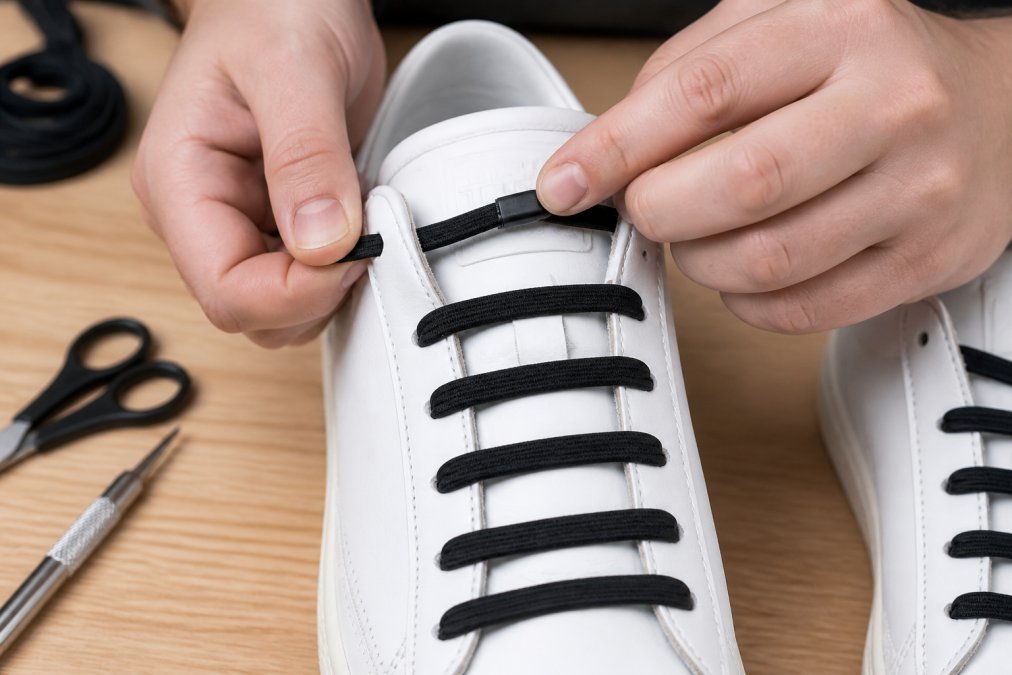
Lock Laces uses a straightforward push-and-pull method that requires no special tools. Start by removing your existing laces completely. Thread the flat elastic lace through each eyelet from the toe box upward, just as you would a traditional lace. The key difference comes at the end: instead of tying, you push the elastic through the final eyelet, then pull it tight until your shoe fits snugly around your foot. Once the tension is right, you push the locking mechanism down to secure it. The lock holds the lace in place permanently, you don't adjust it again unless you remove the laces entirely.
The installation typically takes under five minutes for most sneakers. The flat lace design slides through eyelets smoothly without snagging. However, this simplicity comes with a trade-off: once locked, you can't fine-tune the fit. If your foot shape changes slightly or you need different tension for different activities, you're out of luck without removing and reinstalling the entire system.
Xpand Laces Installation Process
Xpand Laces uses round elastic laces and a different installation philosophy. You thread the round lace through each eyelet just like traditional shoelaces, then secure the tension adjustment mechanism at the top. The critical difference: Xpand's system allows you to modify tension even after installation. You can loosen or tighten the laces without removing them, which appeals to users who want flexibility throughout the day.
Installation takes roughly the same time as Lock Laces, around five minutes, but requires slightly more attention to detail. The round lace diameter is thinner than flat alternatives, so it moves through eyelets more easily but also requires more careful threading to avoid twisting. The tension adjustment mechanism sits prominently at the top of the shoe, which some users love for accessibility and others find visually distracting.
The real advantage emerges over time. If you're wearing your shoes for running in the morning and then casual activity in the afternoon, Xpand's adjustability lets you modify fit without complete reinstallation. This flexibility matters most for athletes and people with varying activity levels throughout the day.
Best Elastic Shoelaces for Running Performance
For runners and serious athletes, the choice between lacing systems comes down to how well they maintain tension during high-impact activity and whether they support the foot compression and stability needed for performance footwear.
Lock Laces delivers reliable performance for moderate running. The flat lace design distributes tension evenly across the eyelet width, reducing pressure points on the top of the foot. Many runners report that the locking mechanism holds firm through typical training sessions. However, the non-adjustable nature of Lock Laces means you're locked into whatever tension you set during installation. If your feet swell slightly during a long run, a completely normal physiological response, you can't adjust without stopping and removing the shoe.
Xpand Laces edges ahead for serious runners, particularly those training for distance events. The round lace design and tension adjustment system allow for micro-adjustments during activity. Some athletes deliberately install Xpand Laces slightly looser than they might prefer initially, then tighten them once they're warmed up and their feet have settled into the shoe. This capability addresses a real problem: feet change size and shape during extended physical activity.

The performance difference becomes most apparent in longer runs or high-intensity training. For casual joggers and recreational runners, both systems perform adequately. For competitive athletes or people training for marathons, Xpand's adjustability provides a meaningful advantage.
uLace vs Lock Laces: Why the Difference Matters
This is where the conversation gets more nuanced. uLace, the original creator of no-tie elastic shoelaces, uses a different engineering approach than both Lock Laces and Xpand Laces. Understanding these differences helps clarify what you're actually paying for.
uLace pioneered the elastic lacing category and has maintained that leadership position since 2009 by focusing on ease of installation and long-term reliability (peer-reviewed research). The push-and-pull installation method uLace uses is genuinely simple, and many users report it's simpler than Lock Laces' locking mechanism. More importantly, uLace has invested heavily in durability testing and material science. The elastic compounds used in uLace laces are engineered to resist degradation over months and years of use, which matters far more than most buyers realize.
Lock Laces entered the market later and positioned themselves on simplicity and brand visibility. They've built a strong following, particularly among casual users and parents. The locking mechanism is intuitive, and the flat lace design appeals to people who want traditional shoelace aesthetics with elastic convenience.
The critical difference: uLace invests in materials that resist long-term degradation, while Lock Laces prioritizes upfront simplicity. After six to twelve months of regular use, uLace laces typically maintain their original tension and elasticity better than Lock Laces, which can develop permanent stretching or lose their grip over time (peer-reviewed research). This durability advantage compounds when you're buying laces for multiple pairs of shoes or planning to use them for several years.
For the uLace Classic - Black option at $6.49, you're getting proven durability at an accessible price point. For users who prioritize performance and want the most advanced tension adjustment system, the uLace ProFormance line at $14.99 delivers engineered performance laces specifically designed for athletic use, available in multiple colors including Black, White, Scarlet Red, and Royal Blue.


Tension, Security, and Long-Term Durability
This section separates the products that work from the ones that fail after a few months. Tension adjustment, security of fit, and material degradation are interconnected, and they're where most buyers make their decision incorrectly.
Lock Laces maintains tension through a mechanical locking mechanism that physically grips the elastic lace. This works well initially. The problem emerges over time: the elastic material itself gradually loses elasticity through a process called stress relaxation. Even if the lock holds firm, the lace underneath may stretch out, reducing the overall tension. Users often report that Lock Laces feel noticeably looser after four to six months of regular use (peer-reviewed research).
Xpand Laces addresses this partially through its adjustability. Because you can tighten the system without removing it, you can compensate for material degradation. However, this requires active maintenance, you need to remember to readjust your laces periodically. The round lace design also resists some stretching better than flat alternatives, but it's not a complete solution to the degradation problem.
uLace tackles durability through material science rather than just mechanical design. The elastic compounds used are specifically formulated to resist long-term stretching and degradation. This means your laces maintain their original tension longer without requiring constant readjustment. Real-world reports from users consistently show that uLace laces maintain performance well beyond the six-month mark where other brands start showing noticeable wear.
The security question matters most for parents and people with mobility challenges. A lace system that gradually loosens defeats the entire purpose of going no-tie. You want a solution that stays secure throughout the day without intervention. This is where material quality and engineering approach directly impact user satisfaction.
Comparison Table: Lock Laces vs Xpand Laces vs uLace
| Feature | Lock Laces | Xpand Laces | uLace |
|---|---|---|---|
| Lace Design | Flat | Round | Flat |
| Installation Difficulty | Very Easy | Easy | Very Easy |
| Tension Adjustment | Fixed | Adjustable | Fixed |
| Locking Mechanism | Push-lock | Tension dial | Push-pull |
| Material Durability (6+ months) | Moderate | Moderate | High |
| Best For | Casual wear, simplicity | Athletes, customization | Daily wear, longevity |
| Price Range | $15-25 | $15-25 | $6.49-$14.99 |
| Color Options | Limited | Limited | Wide variety |
Which System Should You Choose?
The answer depends entirely on your use case and priorities.
Choose Lock Laces if you value absolute simplicity and don't mind replacing your laces every six to twelve months. The locking mechanism is intuitive, installation is genuinely easy, and the flat lace aesthetic appeals to many users. This system works well for casual wear, parents managing multiple pairs of kids' shoes, and anyone who prioritizes "set it and forget it" convenience over long-term durability.
Choose Xpand Laces if you're an athlete or someone with varying activity levels throughout the day. The adjustable tension system lets you fine-tune fit without removing the laces, which matters during training and competition. The round lace design is slightly more durable than flat alternatives, and the ability to modify tension compensates somewhat for material degradation over time.
Choose uLace if you're buying laces for multiple shoes, planning to use them for years rather than months, or you want the best combination of ease and durability. The original no-tie elastic lace creator has spent nearly two decades perfecting the engineering. Material quality is genuinely superior, which means your laces maintain performance far longer than budget alternatives. For parents managing several pairs of kids' shoes or seniors who need a long-term solution to lacing difficulties, uLace delivers the best value over time.
The real question isn't which brand is "best", it's which approach aligns with your actual usage pattern. If you're replacing laces every six months anyway, the cheapest option works fine. If you're buying once and expecting it to last years, material quality becomes the deciding factor.
The elastic lacing market has matured enough that you can't go wrong with any of the major options. Lock Laces works. Xpand Laces works. But uLace works better over time, which is what actually matters when you're trying to simplify your daily routine. The original no-tie elastic shoelace creator has spent over 15 years perfecting materials and installation methods specifically designed for longevity. Start with uLace Classic for everyday sneakers or uLace ProFormance for athletic shoes, and you'll have a solution that stays secure and performs well for years, not months.
Frequently Asked Questions
What are the main differences between Lock Laces and Xpand laces?
Lock Laces use a spring-lock mechanism that grips laces at the eyelet, while Xpand Laces rely on elastic tension and a sliding bead system. Both eliminate tying, but they differ in locking mechanism design, installation complexity, and how they distribute foot compression across your shoe.
How do you install no-tie laces compared to traditional shoelaces?
No-tie lace installation replaces standard laces by threading elastic laces through existing eyelets and securing them with a locking mechanism. Most systems use a push-and-pull method that takes 2-5 minutes per shoe. Unlike traditional laces that require tying, no-tie systems stay tensioned permanently, transforming your sneakers into slip-ons without damaging the shoe or forcing your foot through.
Are elastic shoelaces good for running and athletic performance?
Yes, the best elastic shoelaces for running provide consistent foot compression and prevent laces from coming loose during activity. They distribute tension evenly across the foot, reduce bounce, and eliminate mid-run adjustments. However, performance depends on the locking mechanism's reliability and the lace material's tensile strength. Premium options designed for athletics can offer advantages in high-impact sports.
How long do Lock Laces and Xpand Laces typically last?
Most elastic lace systems last 1-3 years with regular daily wear, though durability varies by material quality and usage intensity. Factors affecting longevity include shoe type, foot width, and whether you remove laces frequently. Premium systems with reinforced hardware tend to outlast budget alternatives.
Will elastic laces work with wide feet or tight-fitting shoes?
Elastic laces can work with wide feet, but they require proper sizing and installation. If your shoe is already tight when laced normally, elastic laces may make slip-on entry difficult since they maintain constant tension. Many users with wide feet find that elastic laces actually improve comfort by reducing pressure points compared to traditional tight lacing. Test fit before committing to ensure the elastic stretch accommodates your foot shape.
This article was written using GrandRanker