




Hickies Alternatives for Wide Feet
Table of Contents
- Why Hickies May Not Work for Wide Feet
- How to Lace Shoes for Wide Feet
- uLace vs Hickies Comparison
- Best No-Tie Shoelaces for Wide Feet
- Converting Standard Sneakers into Slip-Ons
- Accessibility and Ease of Use
- Conclusion
Last Updated: August 28, 2026
Why Hickies May Not Work for Wide Feet
Standard lacing systems, including Hickies, create too much pressure across the midfoot and don't accommodate the extra volume wide feet need. The elastic tension designed for average-width feet compresses your foot rather than supporting it, making the slip-on experience uncomfortable instead of convenient.
The issue isn't just about size; it's about how tension distributes across the toe box, midfoot, and instep. When elastic laces are too tight, they restrict circulation and can cause nerve compression along the metatarsal region, defeating the purpose of switching to a no-tie system (peer-reviewed research).
Not all elastic lacing systems are created equal. Some alternatives are specifically engineered with high-volume feet in mind, offering greater stretch capacity and customizable tension that actually works for wider shoe sizes. This is where solutions like uLace come in, providing slip-on convenience without sacrificing the secure lockdown your wider feet need.
How to Lace Shoes for Wide Feet
Proper lacing technique is fundamental when you have wide feet. The goal isn't to pull every eyelet as tight as possible; instead, you're creating a lacing pattern that distributes tension evenly across the foot, preventing pressure points while maintaining a secure fit.
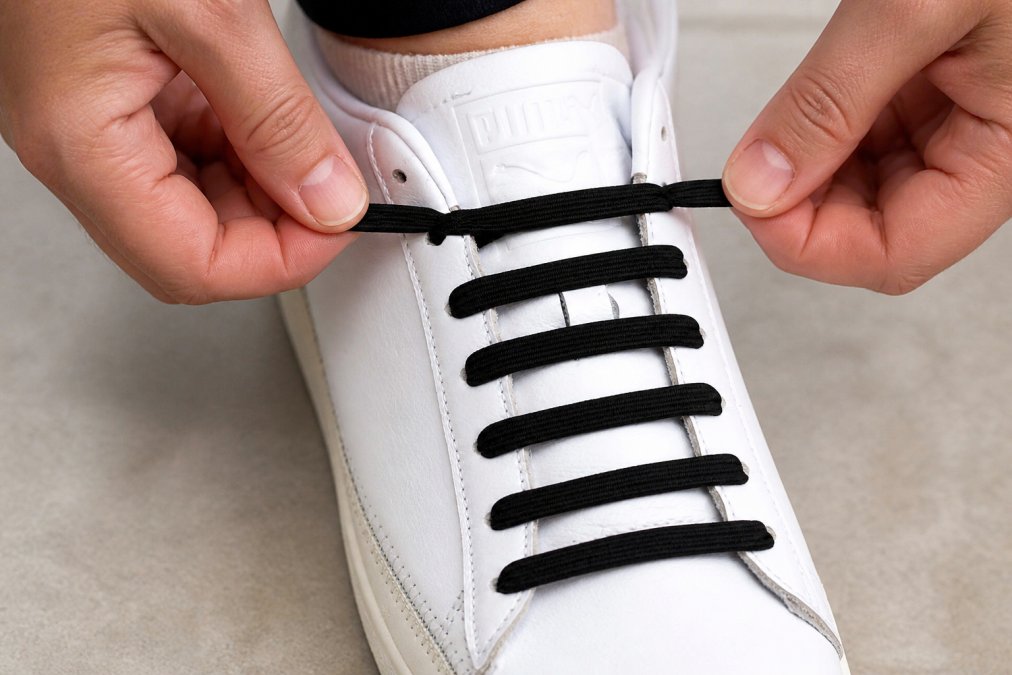
Start by threading your elastic laces through the eyelets from the heel forward, but don't cinch each one equally. The lower eyelets (near your toes) should be looser to accommodate the volume of your wider toe box. As you move toward the midfoot and instep, gradually increase tension. This graduated approach allows your foot to slide in comfortably while still preventing heel slippage during movement.
Tension-Specific Mapping for Wide Feet
For wide feet, understanding which parts of your foot need firm support and which need flexibility is critical. The metatarsal area, just behind your toes, should have moderate tension, too tight causes discomfort, too loose causes shifting. Your arch region benefits from slightly firmer tension to support your foot's natural curve.
Many people with wide feet find that skipping every other eyelet in the lower sections helps. This creates larger openings that accommodate extra volume without forcing your foot into an unnatural shape. Test different patterns on your specific shoes to find what works best for your foot width and instep height.
Eyelet Configuration and Spacing
Eyelet configuration directly impacts how elastic laces distribute pressure. Shoes designed for standard widths often have eyelets spaced too close together, creating concentrated pressure points rather than spreading tension evenly.
Wider spacing (typically found in athletic or specialized shoes) gives elastic laces room to lay flat and distribute tension naturally. Shoes with eight or more eyelets allow for finer tension control compared to shoes with only five or six, enabling a more gradual tension curve that better accommodates your foot's actual shape.
uLace vs Hickies Comparison
Both uLace and Hickies offer elastic lacing solutions, but they're engineered differently, and those differences matter significantly for wide feet.
Hickies uses a fixed-tension elastic design that works well for average-width feet. Once installed, tension is essentially locked in place. For wide feet, this often means either too-tight pressure or insufficient security.
uLace offers multiple product lines specifically designed for different foot types. The elastic cord design provides greater flexibility in tension adjustment, and the installation method allows you to customize how tightly the laces are secured. This adaptability is crucial when dealing with wide feet that don't fit the standard mold.
Material Durability and Stretch Capacity
Hickies uses silicone-based elastic, which is durable but relatively inelastic. This means less give when your feet swell during activity or heat exposure.
uLace employs high-stretch elastic cord that maintains elasticity over time and resists degradation from repeated stretching and UV exposure (peer-reviewed research). For wide feet that experience varying levels of swelling, this greater stretch capacity means your laces adapt throughout the day rather than becoming uncomfortably tight.
Customizing Tension for a Secure Fit
uLace truly differentiates itself for wide feet through its installation process, which allows you to adjust tension as you thread the laces through your shoe's eyelets. You're not locked into a one-size-fits-all tension level; instead, you can create the exact secure fit your wide feet need.
With Hickies, tension is predetermined. For wide feet, this inflexibility often means choosing between uncomfortable pressure or insufficient security. With uLace, you can tighten specific sections to prevent heel slippage while keeping the toe box looser for comfort.
Best No-Tie Shoelaces for Wide Feet
For wide feet, you need laces that offer genuine stretch capacity, secure lockdown, and compatibility with your shoe's eyelet configuration.
uLace Classic and Slims for Standard Width
The uLace Classic line ($6.49 per pair) represents the entry point for elastic lacing. These laces work well for people with standard to slightly-wide feet who want basic slip-on convenience. The uLace Slims ($5.99 per pair) are designed for shoes with narrower eyelet spacing. For most wide-footed users, Classic offers better tension control and more comfortable long-term wear.

uLace ProFormance for Active Users
The uLace ProFormance line ($14.99 per pair) is engineered for runners, athletes, or anyone needing maximum security during high-impact activities. These laces feature enhanced elastic properties that maintain tension even during intense movement and resist degradation from sweat and friction.
uLace Shorts for High-Volume Feet
For people with genuinely high-volume feet who struggle to fit into standard shoe sizes, the uLace Shorts ($12.99 per pair) offer an effective solution. These shorter laces are designed for shoes that already have significant internal volume, providing slip-on convenience without forcing your foot into uncomfortable compression.
| uLace Product | Price | Best For | Key Feature |
|---|---|---|---|
| Classic | $6.49 | Standard to wide feet | Balanced tension, easy customization |
| Slims | $5.99 | Narrow eyelet spacing | Thin profile, clean appearance |
| ProFormance | $14.99 | Athletic activities | Enhanced durability, secure lockdown |
| Shorts | $12.99 | High-volume feet | Reduced pressure, easier installation |
Converting Standard Sneakers into Slip-Ons
One of the biggest advantages of elastic lacing systems is that you don't need to buy new shoes. You can take the sneakers you already love and transform them into convenient slip-ons, saving money while maintaining your personal style.
Step-by-Step Installation Process
Converting your sneakers takes about five minutes per pair and requires no tools:
-
Remove your existing laces. Untie your shoe completely and pull out the standard laces.
-
Thread the elastic laces starting from the bottom. Begin at the lowest eyelets (closest to your toes) and thread the elastic cord through, just like regular laces.
-
Adjust tension as you go. For wide feet, keep the lower eyelets slightly looser and gradually increase tension as you move toward the midfoot.
-
Work toward the top of the shoe. Continue threading through each eyelet, maintaining your graduated tension pattern.
-
Secure the laces at the top. Most elastic lacing systems include a locking mechanism or knot method to keep the laces from slipping out.
-
Test the fit. Slip your foot in and check how it feels. Adjust tension if needed by re-threading sections that feel too tight or too loose.
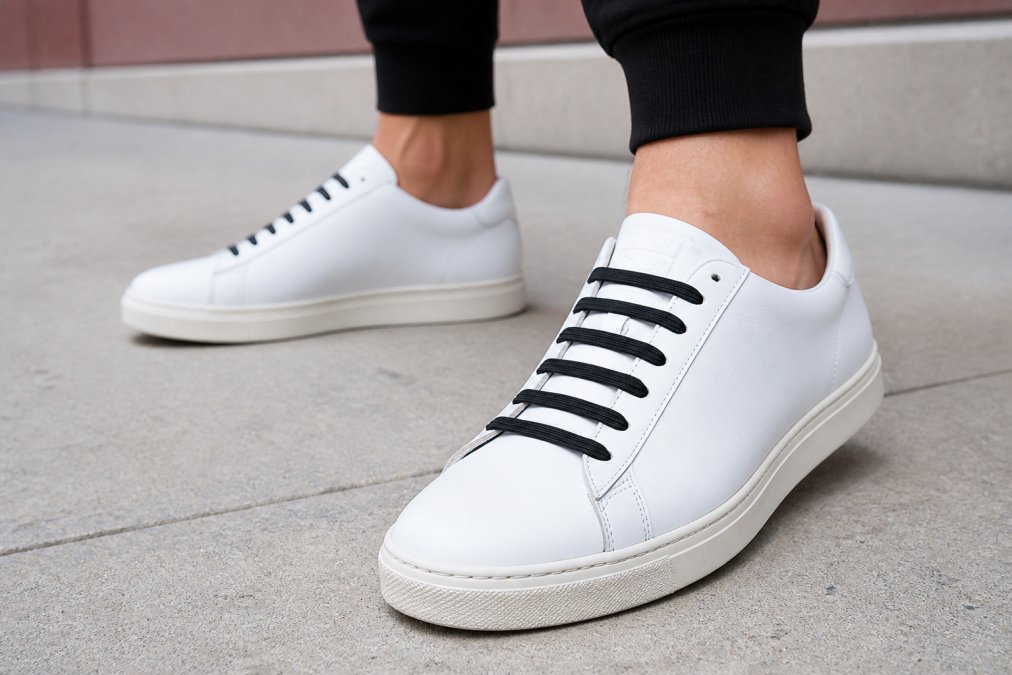
After installation, your sneaker becomes a true slip-on. No more bending over to tie laces or worrying about laces coming untied during the day.
Addressing Pressure Points on the Bridge
The bridge of your foot, the area across the top of your midfoot, is where pressure problems often develop with elastic lacing systems. When installing elastic laces, pay special attention to the eyelets that sit directly over your foot's bridge. For wide feet, you want moderate tension here, firm enough to prevent heel slippage, but not so tight that it restricts circulation.
If you experience bridge discomfort after installation, loosen the relevant eyelets slightly and re-secure the laces. You're looking for a tension level where the shoe feels snug but not constrictive. Some people with wide feet find that skipping one eyelet at the bridge helps distribute pressure more evenly.
Accessibility and Ease of Use
Elastic lacing systems were originally designed with accessibility in mind. For people with limited mobility, arthritis, or other physical challenges, the ability to slip shoes on and off without bending or fine motor control is transformative.
Benefits for Individuals with Limited Mobility
Bending over to tie laces becomes increasingly difficult with age or physical limitations. Elastic lacing eliminates this barrier entirely. You can put on your shoes while standing, sitting, or in any position that works for your body.
For people with arthritis in their hands, elastic laces remove the fine motor requirement of tying (the NIH). Once installed, they require nothing more than sliding your foot into the shoe. The slip-on functionality also benefits people with balance issues, as you don't need to stand on one leg while putting on shoes.
Orthotic Compatibility and Long-Term Foot Health
If you wear orthotics, custom insoles prescribed for foot pain or structural issues, elastic lacing systems need to work with them rather than against them. The extra volume orthotics add means your shoe is already at capacity, leaving little room for additional compression from standard laces.
Elastic laces, especially when properly customized for wide feet, accommodate orthotics better than rigid lacing systems. Over months and years, this means less foot pain, better circulation, and reduced risk of developing pressure-related issues like bunions or metatarsal pain.
If you've got wide feet, you know that standard shoe solutions often feel like compromises. Elastic lacing systems like uLace eliminate that frustration by letting you wear the sneakers you actually love while gaining the slip-on convenience and customizable fit your feet need. With uLace, you get a system designed to adapt to your unique foot shape rather than forcing your feet into someone else's standard. Start with uLace Classic in Black or White at $6.49 per pair, or explore uLace Shorts at $12.99 if you have high-volume feet. Your sneakers, transformed into hassle-free slip-ons, that's the power of uLace.


Frequently Asked Questions
Q: Are elastic no-tie laces good for wide feet?
A: Yes, elastic no-tie laces work well for wide feet when chosen correctly. They provide customizable tension that accommodates toe box volume and foot swelling without requiring constant readjustment. The stretch capacity of quality elastic lacing systems allows your foot to slip in and out comfortably while maintaining a secure lockdown. Look for options with durable and flexible cord that won't lose elasticity over time.
Q: How do I know which no-tie shoelaces will work with my wide sneakers?
A: Check your shoe's eyelet configuration and spacing first. Most elastic lacing systems, including uLace, work with standard eyelet patterns on casual sneakers. For wide feet, ensure the laces have sufficient stretch capacity to accommodate metatarsal comfort without creating pressure points on the bridge of the foot. uLace offers multiple styles (Classic, Slims, ProFormance, Shorts) designed for different shoe types and foot widths, making it easy to find the right fit for your specific sneakers.
Q: Can elastic laces help with foot swelling and circulation issues?
A: Elastic laces can help manage foot swelling by allowing gradual pressure distribution rather than fixed tension. Unlike traditional laces that cut off circulation if tied too tightly, elastic lacing systems adapt to changes in foot volume throughout the day. This customizable fit helps reduce nerve compression and promotes better circulation. However, if you have significant swelling or circulation concerns, consult a healthcare provider to ensure elastic laces are appropriate for your condition.
Q: How do elastic laces compare to traditional lacing for wide feet?
A: Elastic laces eliminate the need to retie throughout the day and can help prevent some circulation problems that can come from tight traditional laces. For wide feet, elastic systems offer ergonomic design that adapts to your foot's natural shape and volume. They provide no-tie convenience while maintaining secure lockdown during activity. The key difference is that elastic laces distribute pressure more evenly across the foot, which can reduce discomfort in high-volume areas like the toe box and metatarsal region.
This article was written using GrandRanker