




No Tie Shoelaces vs Elastic Bands for Shoes
Last Updated: October 27, 2026
Quick Summary
No tie shoelaces are a full lace replacement that threads through your shoe's existing eyelets, while elastic bands are a separate strap system that wraps around the outside of the shoe. That structural difference decides fit, security, appearance, and how long the closure lasts. Neither option is universally better.
- No-tie laces spread pressure across the whole lacing area, while elastic bands concentrate it at contact points.
- Elastic laces can allow more movement inside the shoe, which may contribute to blisters.
- A quality elastic lace holds usable tension through months of daily wear, while a cheap one goes slack within weeks.
- Wipe laces or bands with a damp cloth rather than machine washing, which accelerates elastic fatigue.
- uLace Classic is $6.49, Slims are $5.99, and ProFormance is $14.99.
Table of Contents
- No Tie Shoelaces vs Elastic Bands for Shoes: The Short Answer
- How the Two Systems Differ
- Comparison Table: No-Tie Laces vs Elastic Bands at a Glance
- No-Tie Shoelaces for Running: Security and Fit Under Load
- No-Tie Laces for Kids: Independence Without the Morning Battle
- How to Install Elastic No-Tie Laces on Any Sneaker
- Safety, Pressure, and Circulation: What Elastic Closure Does to Your Foot
- Durability, Cost, and Value Over Time
- Match the System to Your Shoe: Styles to Start With
- Frequently Asked Questions
No Tie Shoelaces vs Elastic Bands for Shoes: The Short Answer
No tie shoelaces are a full lace replacement that threads through your shoe's existing eyelets, while elastic bands are a separate strap system that wraps around the outside of the shoe. That structural difference decides fit, security, appearance, and how long the closure lasts. At uLace, we have offered elastic no-tie laces since 2009.
Neither option is universally better.
How the Two Systems Differ
No-tie laces and elastic bands are not the same category of product.
What each option actually is
No-tie shoelaces are a full lace replacement.
- Cord-lock laces, a thin elastic cord with a spring-loaded toggle; the toggle sets tension and the cord stretches over the instep.
- Flat elastic laces, a wider elastic band-lace that mimics the look of a traditional flat lace and ties or locks at the top.
- Silicone laces, individual stretchy silicone tabs that pop over the eyelets, popular on casual sneakers.
- Magnetic or buckle closures, a lace with a magnetic or snap buckle at the top that connects instead of tying.
Elastic bands are a separate strap system that sits outside the lacing path. They loop over the instep, around the heel, or both, and attach with hooks, snaps, or hook-and-loop fasteners. They do not thread through the eyelets and they do not replace the lace, they work alongside or instead of it as an external hold.
The structural difference that drives everything else
| Dimension | No-tie shoelaces | Elastic bands |
|---|---|---|
| Where stretch lives | In the lace, along the eyelet path | In the strap, at a few contact points |
| Pressure distribution | Spread across the whole lacing area | Concentrated where the band contacts the foot |
| Tension adjustment | Continuous, set once with a lock or toggle | Fixed by strap length or hook position |
| Appearance | Looks like a normal lace | Visible external strap |
| Shoe compatibility | Any shoe with eyelets | Depends on shoe shape, width, and heel height |
| Installation | Thread through eyelets, trim, secure | No threading; clip or wrap on |
| Best use | Daily wear, running, kids, limited mobility | Quick temporary slip-on access |
Why the path matters
A no-tie shoelaces guide covering elastic, silicone, cord-lock, and magnetic systems notes that no-tie closures come in several designs, not just one. The label "no-tie" describes a category, not a single product, and the same is true of elastic bands, which range from thin hook-and-loop straps to wide neoprene wraps.
If you want a deeper brand-by-brand breakdown of elastic lace options beyond this basic comparison, our comparison of lock laces vs elastic lace brands covers the differences in more detail.
Comparison Table: No-Tie Laces vs Elastic Bands at a Glance
| Factor | No Tie Shoelaces | Elastic Bands |
|---|---|---|
| How it attaches | Threads through existing eyelets | Wraps over or around the shoe |
| Look | Standard lace appearance | Visible strap or band |
| Tension control | Adjustable along the full lacing path | Fixed at contact points |
| Best for | Daily wear, running, kids, limited mobility | Quick temporary slip-on access |
| Works with any shoe | Yes, if it has eyelets | Depends on shoe shape and width |
| Installation | Simple push-and-pull threading | No threading, but fit is less precise |
| Durability concerns | Elastic fatigue over time | Strap stretch and hook wear |
No-Tie Shoelaces for Running: Security and Fit Under Load
One caution worth knowing: a Triathlete article on when to use elastic shoelaces points out that elastic laces can allow more movement inside the shoe, which may contribute to blisters.
Biomechanical claims deserve skepticism too. A LER Magazine discussion of laces versus alternative closures notes it is unclear whether these closure technologies actually improve biomechanics. Treat performance claims from any brand, including ours, as marketing until your own feet confirm them.
What to Check Before You Run in Them
- The lace holds tension when you push off hard from a standstill
- No hot spots or pressure points on the top of the foot after a short jog
- The heel stays locked without you re-tightening mid-run
- There is no slack loop that could catch on a pedal or branch
For a closer look at whether elastic laces hold up under sustained running, our guide on whether elastic laces stay secure digs into the details.
No-Tie Laces for Kids: Independence Without the Morning Battle
For kids, no-tie laces can make it easier to slip shoes on without tying them.
If you are shopping specifically for children's sizing and styles, our guide to the best elastic shoelaces for kids walks through the options.
How to Install Elastic No-Tie Laces on Any Sneaker
uLace laces install with a simple push-and-pull method.
uLace ProFormance - Performance No-tie Laces - Black →
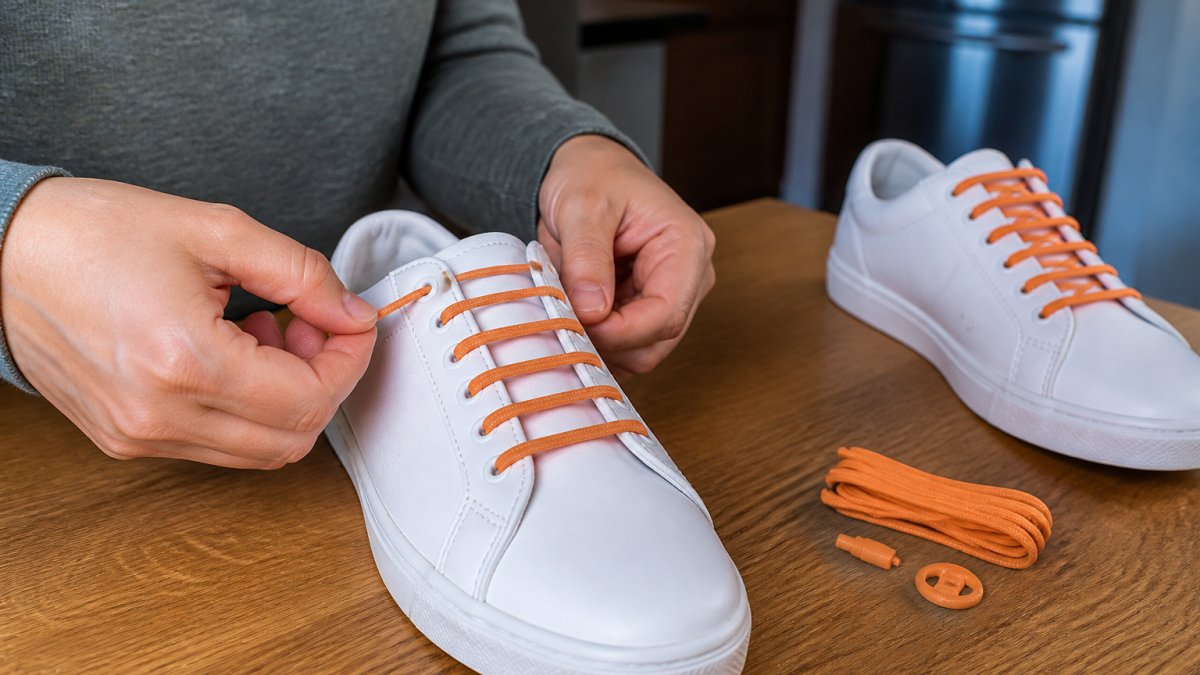
Expected result: the shoe slips on and off without tying, and the lacing stays even across the top of the foot. If you want a slower, more visual walkthrough, our step-by-step installation guide covers each stage in detail.
Safety, Pressure, and Circulation: What Elastic Closure Does to Your Foot
A practical test: wear the shoe for an hour, then check for red marks or numbness. Any persistent marking means the tension is too high.
Durability, Cost, and Value Over Time
Elastic loses tension over time in every product in this category. The useful question is what wears out first, how fast, and what it costs to keep the closure working.
What actually fails, and when
A quality elastic lace holds usable tension through months of daily wear, while a cheap one goes slack within weeks. The same applies to bands: a thin hook-and-loop strap on a daily-wear shoe tends to lose grip before a well-made elastic lace loses rebound.
Cost of ownership, not just purchase price
| Cost factor | No-tie laces | Elastic bands |
|---|---|---|
| Typical purchase | One set per pair of shoes | One or two bands per pair of shoes |
| Replacement trigger | Elastic fatigue or lock slip | Strap stretch or fastener failure |
| Replacement frequency | Months of daily wear for quality sets | Often sooner on daily-wear shoes because the fastener wears |
| Maintenance | Wipe clean, check tension monthly | Clean hook-and-loop, check fastener grip |
| Hidden cost | None beyond the set | Replacing a band that fails at one contact point |
At uLace, Classic is $6.49, Slims are $5.99, and ProFormance is $14.99.
Maintenance that actually extends life
- Wipe the lace or band with a damp cloth rather than machine washing, which accelerates elastic fatigue.
- Check tension monthly by sliding the shoe on and pressing the instep; re-set the lock or strap if it feels loose.
- Clean hook-and-loop fasteners with a stiff brush to remove lint that reduces grip.
- Replace at the first sign of slip, not after the shoe starts feeling unstable, a slipping closure is a fit problem before it is a safety problem.
If you want realistic expectations on lifespan before you buy, our guide on how long no-tie laces last sets out what to expect.
Match the System to Your Shoe: Styles to Start With
The right system depends on the shoe and the wearer, not on which product has the loudest marketing.
uLace Classic ($6.49) turns classic-styled sneakers into easy-on, easy-off slip-ons. uLace Shorts ($12.99) also turn classic-styled sneakers into easy-on, easy-off slip-ons. uLace Slims ($5.99) and Siliprint 100 Emoji ($12.99) offer additional style options.
Best for: people seeking slip-on convenience, including children, seniors, and individuals with mobility challenges.
uLace offers elastic no-tie laces that install with a simple push and pull, come in a wide variety of styles and colors, and keep sneakers looking neat while providing a secure, stretchy fit. uLace has been in business since 2009, and the uLace Guarantee is available. Turn the sneakers you already love into hassle-free slip-ons.
Frequently Asked Questions
Are no-tie shoelaces better than elastic bands for shoes?
It depends on the shoe and the wearer. uLace offers elastic no-tie laces that turn sneakers into easy-on, easy-off slip-ons.
Are elastic no-tie laces secure enough for running or sports?
uLace offers elastic no-tie laces, but the verified product information does not establish their suitability for running or sports.
What is better for kids: no-tie shoelaces or elastic bands?
uLace laces are designed to make sneakers easy to slip on and off without tying, which can help simplify a child's routine.
Can elastic laces cause blisters or circulation problems?
The verified product information does not establish whether uLace laces cause blisters or circulation problems.
How long do no-tie laces last, and what do they cost?
The verified product information does not specify how long uLace laces last. uLace Slims are $5.99, Classic is $6.49, ProFormance is $14.99, Shorts are $12.99, and Siliprint 100 Emoji is $12.99.
